
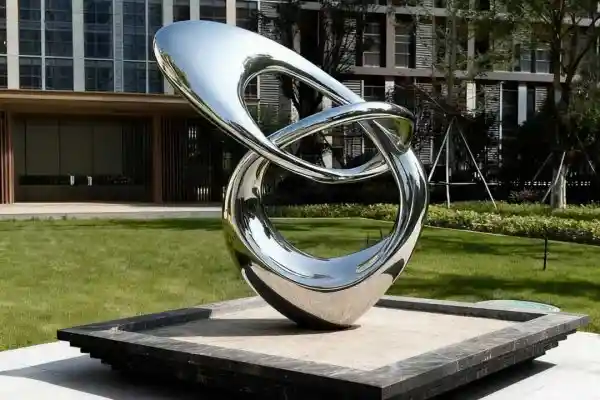
Material Science
Sculpture Material Comparison: Stainless Steel vs Bronze vs Corten vs FRP
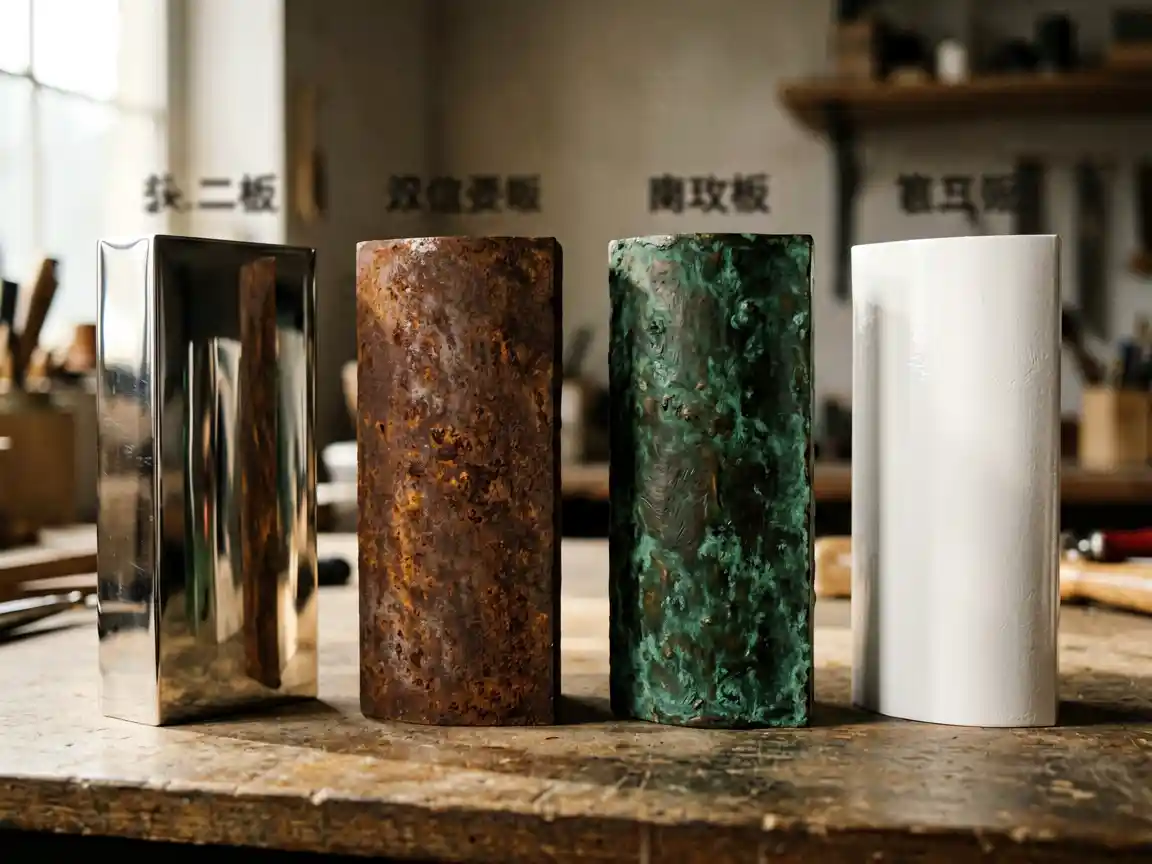
If you’re planning a custom sculpture, the single most important decision you’ll make is the material. It determines the aesthetic, the lifespan, the maintenance schedule, the fabrication cost, the weight, the shipping logistics, and even the installation requirements. Get the material right and everything else flows smoothly. Get it wrong and you’re looking at premature corrosion, cracked surfaces, or a piece that just doesn’t deliver the visual impact you wanted.
I’ve worked with all four major sculpture materials — stainless steel, bronze, corten steel, and FRP (fiberglass reinforced plastic) — across hundreds of projects ranging from small desktop pieces to 8-meter monumental installations. Here’s my no-nonsense comparison to help you choose the right material for your next project.
The Material Comparison at a Glance
| Property | Stainless Steel | Bronze | Corten Steel | FRP (Fiberglass) |
|---|---|---|---|---|
| Cost per kg (fabricated) | $$-$$$ | $$$-$$$$ | $$ | $ |
| Weight | Heavy (7.9 g/cm³) | Very heavy (8.7 g/cm³) | Heavy (7.8 g/cm³) | Light (1.5-2.0 g/cm³) |
| Outdoor lifespan | 50+ years (304/316) | 100+ years with care | 50+ years | 10-25 years |
| Maintenance | Low | Moderate (patina care) | Low (self-protecting) | Moderate (gel coat) |
| Surface finish options | #4 brushed, mirror, PVD, bead blast, colored | Patina (green/brown/black/gold), polished | Rust patina (natural/sealed) | Any color gel coat, metallic, textured |
| Fabrication complexity | Medium-High | High (lost wax casting) | Medium | Medium |
| Repairability | Moderate | Good (welding, re-patination) | Moderate | Difficult (delamination risk) |
| Best for scale | Small to monumental | Small to medium-large | Medium to monumental | Small to very large |
| Shipping cost factor | High (weight) | Very high (weight + fragility) | High (weight) | Low (lightweight) |
| Lead time | 6-10 weeks | 10-16 weeks | 6-10 weeks | 4-8 weeks |
| UV resistance | Excellent | Excellent | Excellent | Good (UV-stabilized gel coat) |
| Custom color options | Limited (PVD, paint) | Limited to patina range | None (rust only) | Unlimited |
Stainless Steel Sculpture
Stainless steel is, in my experience, the most versatile material for outdoor sculpture. It combines strength, corrosion resistance, and a wide range of finish options. The material you want is either 304 stainless (standard outdoor) or 316 stainless (marine/coastal environments). 316 includes molybdenum for extra chloride resistance — if your sculpture is going within 5km of salt water, don’t compromise on 316.
Finish Options
- #4 Brushed finish: The most common. Linear grain pattern, moderate reflectivity, hides fingerprints fairly well. Great for architectural settings.
- Mirror polish (#8 finish): Highly reflective, dramatic visual impact. Shows every fingerprint and requires regular cleaning. Stunning in the right setting but high maintenance.
- PVD coating: Physical vapor deposition adds color (gold, rose gold, gunmetal, black) to stainless. Very durable, UV-resistant. Costs 20-40% more but eliminates polishing maintenance.
- Bead blast / satin: Matte, uniform surface. Low glare, modern industrial look.
Pros of Stainless Steel
- Excellent corrosion resistance — 316 grade can last 50+ years in harsh coastal environments
- Wide range of finishes from matte to mirror-polished
- Can be fabricated into virtually any complex geometric form
- Structural strength allows for thinner sections and lighter internal framing
- Hybrid projects possible — stainless combined with water features or lighting works brilliantly
- Recyclable at end of life
Cons of Stainless Steel
- Heavy — shipping and foundation costs are significant
- Welding requires skilled TIG welders; poor welds are visible and compromise corrosion resistance
- Mirror-polished finishes show every scratch, smudge, and water spot
- Cost is moderate to high depending on finish complexity
- Color options are limited unless you use PVD or paint coatings
Best Applications
Stainless steel excels in modern architectural settings — corporate plazas, shopping mall atriums, civic buildings, and contemporary parks. It’s the default choice for abstract geometric sculpture and kinetic art. If you want a custom metal sculpture that balances striking appearance with long-term durability, stainless is usually the right answer.
Bronze Sculpture
Bronze is the grand old material of sculpture — it’s been used for thousands of years, and for good reason. The lost-wax casting process allows for incredible detail, while the natural patina that develops over time gives bronze a rich, living surface that no other material can replicate. Our material comparison guide — Fiberglass vs Bronze vs Stone: The Ultimate Material Comparison Guide — covers the pros and cons of each option with real cost data.
Alloy Types
- C22000 (90/10 bronze): 90% copper, 10% tin. Traditional statuary bronze. Takes patina beautifully, but expensive.
- C83600 (85/5/5/5): 85% copper, 5% tin, 5% lead, 5% zinc. “Red brass” or “ounce metal.” More affordable, easier to cast, but patina behaves differently.
- Silicon bronze: Great for welding repairs, strong patina bonding.
Patina Colors
The patina is what makes bronze special. Unlike paint, patina is a chemical transformation of the metal surface itself — it’s part of the sculpture, not a coating. Common patina colors include: our spirit of sport cartoon sculptures sports park project
- Verde green: Classic aged copper look (ammonium chloride + vinegar)
- Dark brown / chocolate: Traditional statuary finish (potassium sulfide)
- Black: Modern architectural finish (selenium + liver of sulfur)
- Gold / brass: Simulated gilding (iron nitrate)
- Blue-green: Coastal aged look (copper nitrate)
Pros of Bronze
- Unmatched detail reproduction — captures fingerprints, fabric folds, and fine textures
- Patina creates a living, evolving surface that gains character over time
- Extremely durable — bronze sculptures last centuries with basic maintenance
- High perceived value; bronze signals quality and permanence
- Weldable and repairable; damaged sections can be re-cast and patinated to match
Cons of Bronze
- Very expensive — material costs are high and lost-wax casting is labor-intensive
- Extremely heavy — 8.7 g/cm³ means large pieces need substantial foundations
- Lead times are long — the casting process has many stages (mold, wax, shell, burnout, pour, cleanup, patina)
- Patina requires periodic maintenance (waxing every 1-2 years in harsh climates)
- Thin sections can crack during cooling if not properly designed
- Theft risk — bronze has significant scrap value, so public installations need anti-theft mounting
Best Applications
Bronze is the premier choice for figurative sculpture, portrait busts, commemorative statues, religious figures, and any piece where fine detail and traditional prestige matter. If you’re commissioning a custom bronze statue for a memorial, museum, or high-end private collection, bronze is the standard.
Corten Steel Sculpture
Corten steel (also called weathering steel, COR-TEN, or A606) is the material of the moment in landscape architecture and public art. It develops a stable rust patina that protects the underlying steel from further corrosion — essentially, it rusts until it’s done rusting, and then stays stable for decades. our the birth of neo spark project
How Corten Works
The magic of corten is in its alloy composition — small amounts of copper, chromium, nickel, and phosphorus create a tightly adherent oxide layer that seals the metal. This patina goes through phases: orange-rust at 1-3 months, dark brown at 6-12 months, and then a stable dark chocolate-brown at 2-3 years. The final surface is dense, textured, and remarkably protective.
Pros of Corten Steel
- Unique aesthetic — warm, earthy rust tones that complement natural landscapes
- Self-protecting — no painting or coating needed once patina forms
- Low long-term maintenance — essentially zero after initial patina stabilization
- Very cost-effective for large-scale work — material cost is low relative to bronze or stainless
- Strong and durable — can be fabricated in very large sections with minimal internal framing
- Weldable with proper technique and matching filler rods
Cons of Corten Steel
- Staining — during the first 1-2 years, rust runoff can stain adjacent concrete, paving, or landscaping. Must be designed with drainage and drip edges.
- Not for coastal environments — chlorides prevent stable patina formation. Corten within 2km of salt water will eventually corrode through.
- Limited color — it’s rust. You get one color (though the shade evolves attractively).
- Welding requires special rods and post-weld treatment to match patina at joints
- Initial “ugly phase” — the first few months of mottled orange rust look messy before the stable patina forms
- Sharp edges can be hazardous — corten edges can become razor-sharp when rusted
- Not suitable for indoor use (rust stains floors and furnishings)
Best Applications
Corten steel is the defining material for landscape-oriented public art, park entrances, garden sculptures, and architectural screens. It works brilliantly in natural settings where the rust tones complement stone, wood, and native plants. It’s also excellent for large-scale abstract forms where budget matters but visual impact can’t be compromised. our the regal sentinel bronze lion project
FRP / Fiberglass Sculpture
FRP (fiberglass reinforced plastic) — also called GRP or just fiberglass — is the modern workhorse of the sculpture world, especially for brand mascots, theme park figures, and large-scale lightweight installations. It’s a composite of polyester or epoxy resin reinforced with glass fibers, formed over a mold.
FRP Fabrication Process
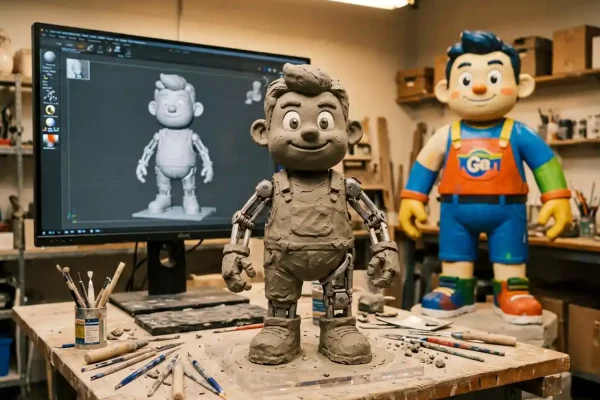
- Master model: Clay or foam sculpted to final form
- Mold making: Silicone or fiberglass mold taken from the master
- Lay-up: Resin and fiberglass mat layered into the mold
- Curing: Room-temperature or oven cure
- Demolding & trimming: Part removed from mold, edges cleaned
- Finishing: Gel coat, paint, clear coat, assembly
Pros of FRP
- Lightweight — roughly 1/5 the weight of metal. Huge advantage for shipping and installation
- Low cost — most affordable material for large-scale sculpture
- Unlimited color options — any Pantone color possible in the gel coat or paint
- Complex organic shapes — FRP can reproduce intricate curves and undercuts that are difficult in metal
- Can be molded for exact replication — perfect for multiple identical pieces
- Weather-resistant with proper UV-stabilized gel coat
- Can be made fire-retardant with additives
Cons of FRP
- Limited lifespan — 10-25 years outdoors before gel coat degradation and fiber bloom
- Difficult to repair — delamination and gel coat cracking are tricky to fix invisibly
- UV degradation eventual — even UV-stabilized gel coat loses integrity over time
- Lower perceived value — FRP can look cheap compared to metal
- Not recyclable — thermoset resin cannot be remelted
- Brittle under impact — can crack if hit (especially in cold weather)
- Color matching for repairs is nearly impossible with aged gel coat
Best Applications
FRP dominates the world of FRP fiberglass statues for brand mascots, character sculptures, theme park installations, retail displays, and trade show exhibits. It’s also excellent for architectural ornaments where weight is a constraint — cornices, capitals, and decorative wall features. For indoor sculptures and short-to-medium-term outdoor installations where budget matters, FRP is hard to beat.
Side-by-Side Decision Guide
| If you need… | Choose… | Why |
|---|---|---|
| Fine detail (facial features, fabric) | Bronze | Lost-wax captures microscopic detail |
| Modern corporate aesthetic | Stainless steel | Clean lines, mirror finish, professional |
| Natural landscape integration | Corten steel | Earth tones complement greenery and stone |
| Budget-friendly large piece | FRP | Lowest cost per cubic meter by far |
| Coastal outdoor installation | 316 Stainless | Only material that really holds up to salt |
| Brand mascot / cartoon character | FRP | Full color, lightweight, moldable |
| Heritage / commemorative statue | Bronze | Traditional, high perceived value |
| Minimal maintenance | Corten steel | Self-protecting, no coatings needed |
| Lightweight rooftop installation | FRP | Low structural load requirement |
| Mirror-polished statement piece | Stainless steel | Only material that achieves true mirror finish |
FAQ: Common Material Questions
Which material is most weather-resistant?
For coastal environments: 316 stainless steel, without question. For inland outdoor use: bronze and corten steel both perform excellently. FRP is weather-resistant for 10-20 years with UV-stabilized gel coat but will eventually degrade. The key factor isn’t just the material — it’s whether the fabrication includes proper drainage (no water pooling), adequate thickness (no thin sections that corrode through), and appropriate finishing (proper patina sealing, gel coat application).
What’s the most affordable material for a large sculpture?
FRP is significantly cheaper than any metal option for large-scale work. A 3-meter FRP sculpture might cost $3,000-8,000, while the same piece in stainless steel would be $8,000-20,000 and bronze $15,000-40,000+. However, factor in the shorter lifespan of FRP — a bronze piece at $30,000 that lasts 100 years has a much lower annual cost than an FRP piece at $6,000 that needs replacement after 15 years.
Can I combine materials in one sculpture?
Yes, and it’s done frequently. Stainless steel and corten steel combine well for mixed-metal designs. Bronze elements on stainless steel bases are common. FRP can be mounted on metal armatures. The trick is managing differential expansion (metals expand at different rates from FRP) and galvanic corrosion (dissimilar metals in contact). A good sculpture fabrication facility will design proper isolation between materials.
How does weight affect installation cost?
Massively. A 3-meter bronze sculpture weighs about 1,500-2,000 kg. That requires a concrete foundation of 3-5 cubic meters ($1,000-2,500 just for concrete), a crane for installation ($500-2,000), and possibly a structural engineer to certify the foundation. A comparable FRP sculpture weighs 100-200 kg — installable by a small crew with a lifting frame, on a much simpler foundation. Weight compounds all downstream costs. For a head-to-head comparison of sculpture materials, read our guide: Stainless Steel vs Bronze vs Corten vs FRP: Honest Factory Comparison.
What about powder coated steel vs stainless?
Powder coated steel is a budget alternative to stainless. A welded steel sculpture with powder coating costs about 40-60% of the equivalent in stainless steel. However, the powder coating will eventually chip or peel (typically 5-10 years), and once moisture gets under the coating, rust spreads invisibly. Stainless steel’s corrosion resistance is inherent throughout the material, not dependent on a surface layer. If the budget allows, stainless is almost always a better long-term investment.
Final Recommendation
If I had to pick one material for a client who wants the best combination of durability, aesthetics, and value: stainless steel with a #4 brushed finish. It works in almost every setting, lasts decades with minimal maintenance, and the brushed finish hides the everyday wear and tear that drives owners crazy. For figurative work with high detail requirements, bronze remains unmatched. For budget-conscious large-scale or colorful character work, FRP is the practical choice. And for landscape-focused projects where you want the material to harmonize with nature, corten steel creates a connection to the environment that no other material can replicate.
D
Written by David Chen
David Chen is Design Director at Y Sculptures with 18+ years in large-scale sculpture design and fabrication. He specializes in FRP, stainless steel, and bronze sculpture engineering, overseeing design-to-production workflows for theme park attractions, public art installations, and brand IP mascots. David has personally directed over 300 custom sculpture projects for clients across 20+ countries.
Related Projects
Browse real projects matching this topic
Related Insights
Continue reading related articles

Custom Sculpture Insights & Guides
Jun 29, 2026
FRP vs Stainless Steel vs Bronze: Outdoor Sculpture Material Guide
Our Sculpture Solutions
Explore our full range of custom sculpture services

IP Character Replication
Learn More →

Large Sculpture Custom
Learn More →

Original IP Development
Learn More →

Solutions Services
Learn More →

Custom Inflatables
Learn More →

FRP & Fiberglass Sculpture Manufacturing
Custom FRP and fiberglass sculpture manufacturer - design, fabrication, and finishing.
Learn More →
Stainless Steel & Metal Sculpture Manufacturing
Custom stainless steel, bronze, corten, and aluminum sculpture manufacturer.
Learn More →
Theme Park Sculpture Services – Custom Amusement Park Statues
Custom Theme Park Sculptures – Bringing Imagination to Life Theme parks, amusement parks, zoos, and entertainment destinations thrive on immersive...
Learn More →
Commercial Sculpture Services – Custom Brand Mascots & Mall Art
Custom Commercial Sculptures – Elevate Your Brand & Space In today's competitive retail and commercial environment, first impressions matter. Commercial...
Learn More →