
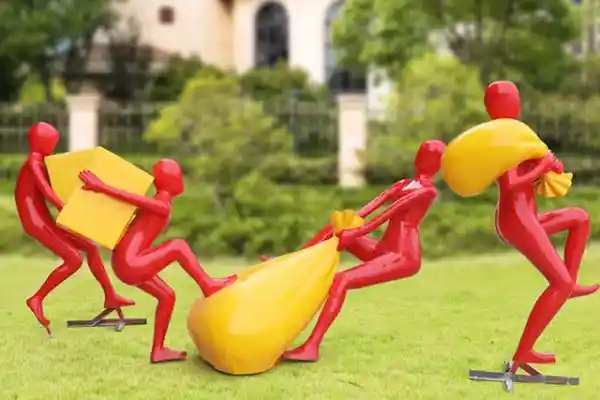
Material Science
Stainless Steel vs Bronze vs Corten vs FRP: Honest Factory Comparison

I’ve been building custom sculptures for over a decade. Fiberglass, stainless steel, bronze, corten — I’ve fabricated, repaired, and in some cases personally destroyed each one of these materials in the name of testing their limits.
Here’s the thing nobody tells you: there’s no single “best” sculpture material. Every choice is a trade-off between cost, durability, aesthetics, weight, and maintenance. What works for a rooftop installation in coastal Florida will fail in a dry desert plaza. What looks incredible in bronze patina might be twice the budget you have.
This is an honest, no-BS comparison from someone who actually builds these things. If you’re commissioning a custom sculpture and trying to choose your material, read this first.
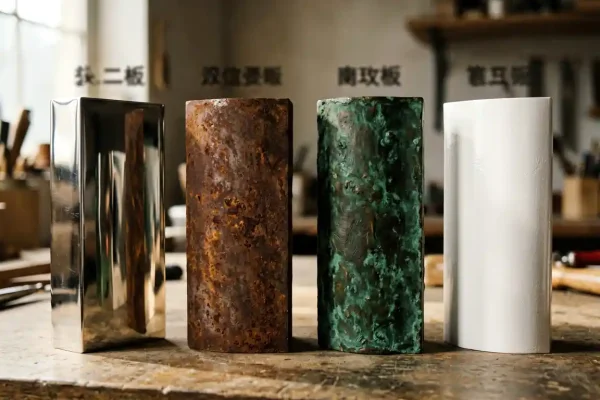
The Four Contenders — Quick Overview
| Material | Best For | Price per m³ (relative) | Outdoor Life |
|---|---|---|---|
| Stainless Steel 304/316 | Modern, polished, architectural | $$$$ | 50+ years (316 in coastal) |
| Bronze / Brass | Traditional, classical, patina art | $$$$$ | 80+ years with maintenance |
| Corten (Weathering Steel) | Industrial, monumental, rusty aesthetic | $$$ | 60+ years (controlled rust) |
| FRP / Fiberglass | Large scale, complex shapes, budget-conscious | $$ | 15-25 years with gelcoat |
Notice something? The cheapest material upfront (FRP) has the shortest lifespan. The most expensive (bronze) lasts the longest. But that tidy narrative falls apart when you factor in weight, installation costs, and maintenance — which is why we need to go deeper.
Stainless Steel Sculpture — The Premium Workhorse
What stainless steel actually is
Genuine stainless steel contains at least 10.5% chromium, which forms a passive oxide layer that self-repairs when scratched. Grade 304 (18/8: 18% chromium, 8% nickel) is your standard architectural grade. Grade 316 adds molybdenum for saltwater resistance — non-negotiable for coastal installations.
A common trick from budget stainless steel sculpture shops: they’ll quote 304 but source “304-like” steel from mills with loose QA. The chromium content might be 9.5% instead of 10.5%. Looks the same for the first 6 months. Then pitting starts. Always request a PMI test certificate with your material.
Surface finishes that matter
- #4 Brushed (240 grit) — industry standard, hides fingerprints OK, easy to repair
- #8 Mirror — gorgeous but shows every fingerprint, needs regular polishing
- Bead-blasted (matte) — muted reflection, hides scratches well, popular for public art
- PVD coating — titanium or zirconium applied via vacuum deposition. Gold, bronze, gunmetal colors. Extremely durable. Adds $3,000-$8,000 depending on size.
- Powder coated — much cheaper than PVD. Offers color. But it’s a coating on top of the steel — if it chips, moisture gets trapped and crevice corrosion starts underneath.
I’ve seen powder coated stainless steel sculptures fail in 18 months because the coating chipped during installation and nobody noticed. The corrosion crept under the coating for 50mm in all directions before it became visible. If you want color on a metal sculpture, PVD is the way to go — but budget for it.
Real-world costs
| Size | 304 Brushed | 316 Mirror | 316 PVD Gold |
|---|---|---|---|
| 2m figure | $12K – $18K | $18K – $26K | $22K – $32K |
| 4m abstract | $25K – $40K | $38K – $55K | $45K – $65K |
| 8m monumental | $60K – $100K | $85K – $140K | $100K – $170K |
Bronze Sculpture — Old Money for a Reason
The lost wax process (yes, it really matters)
Genuine bronze sculpture is made via the lost-wax investment casting process. A master pattern is sculpted in clay or wax, a ceramic shell is built around it, the wax is melted out, and molten bronze (typically C87500 or C92200, containing 85-90% copper + tin/zinc) is poured in. After cooling, the shell is chipped off, and the raw casting is chased, welded, and patinated.
Here’s the problem: cheap “bronze” sculpture is sometimes just sand-cast aluminum with a bronze-colored powder coating. I’ve cut open a $6,000 “bronze” statue from a discount gallery. The inside was grey — aluminum, not bronze. The powder coat was already flaking. A real bronze piece at that size would cost $18,000 minimum. For a head-to-head comparison of sculpture materials, read our guide: Fiberglass vs Bronze vs Stone: The Ultimate Material Comparison Guide.
Patina is chemistry, not paint
This is what separates an $18,000 bronze from a $40,000 bronze: the patina. A cheap patina is a single chemical application — ammonium sulfide for brown, cupric nitrate for green. A museum-quality patina involves 4-7 layered applications, heat treatments, waxes, and sealants. The result has depth — you see different colors as the light changes throughout the day.
Patina maintenance: bronze in an outdoor urban environment needs re-waxing every 12-18 months. Without wax, the patina will eventually wash off and the bronze will return to its natural brown. Some people like that look. Just know what you’re signing up for.
Weight — the hidden cost
A 2m bronze figure weighs roughly 400-600kg. That means reinforced concrete foundations, crane rental for installation, and significant shipping costs. A comparable stainless steel piece at 3mm wall thickness weighs 100-150kg. The difference in installation cost alone can be $5,000-$15,000. our oceans whimsy little girl whale sculpture project
Corten Steel Sculpture — The Industrial Aesthetic
It doesn’t rust — it “weathers”
Corten (ASTM A588 / COR-TEN) is a weathering steel alloy that forms a stable rust-like patina when exposed to the elements. The key word is stable. Unlike regular carbon steel, which rusts until it flakes apart, Corten’s patina layer is dense and adherent — it actually protects the underlying metal.
The patina takes 6-18 months to fully stabilize, depending on your climate. Dry climates (Arizona, Dubai) = slow. Humid coastal = faster but risk of uneven patina. Water pooling on horizontal surfaces can delay stabilization and cause accelerated corrosion at drainage points — design for water runoff from day one.
Where Corten fails (real examples)
- Coastal environments: Salt spray accelerates corrosion beyond what the patina can stabilize. Corten within 2km of ocean will eventually develop deep pitting. Don’t do it.
- Poolside: Chlorine vapor attacks the patina. I’ve seen Corten sculptures next to swimming pools develop orange bleeding stains within a year.
- Inside buildings: Corten needs wet/dry cycles to stabilize. Indoors, the patina never fully sets, and the rust transfers to everything it touches — floor, clothing, hands.
- Over pedestrian walkways: Rust runoff stains concrete. This is permanent on light-colored stone. Design with drip edges or a collection system.
Cost and fabrication reality
Corten is cheaper than stainless steel — roughly $3,000-$5,000/T cheaper at the mill level. But it’s harder to weld. It requires specialized MIG wire (ER70S-6 or matching Corten filler) and preheating for thick plates. Not every custom metal sculpture workshop has the experience. If a fabricator says “it’s just rusty steel, anyone can do it,” find someone else.
| Size | Corten | Stainless 304 | Bronze |
|---|---|---|---|
| 3m abstract | $15K – $25K | $20K – $32K | $35K – $55K |
| 6m figure | $35K – $55K | $45K – $70K | $85K – $140K |
FRP / Fiberglass Sculpture — The Misunderstood Workhorse
Why FRP gets a bad reputation
FRP (Fiber Reinforced Polymer) is the material equivalent of one bad contractor ruining it for everyone. There’s an ocean of cheap FRP sculptures — hollow, thin-walled, made with budget resin and no UV protection — that crack, fade, and turn chalky within 3 years. They’re sold at trade show prices and installed by people who don’t know what they’re buying. And they make FRP look like garbage.
But aerospace-grade FRP? That’s what helicopter blades are made of. Proper marine-grade FRP is used in boat hulls that spend 20+ years in salt water. The material itself isn’t the problem — it’s how it’s made. our urban elegance abstract shopping figure sculpture mall project
What separates good FRP from bad FRP
| Feature | Budget FRP | Premium FRP (Marine Grade) |
|---|---|---|
| Resin | Orthophthalic polyester | Vinyl ester or isophthalic |
| Glass content | 25-30% | 40-50% (hand-layup with proper compaction) |
| Gelcoat | 0.3-0.5mm, no UV stabilizer | 0.8-1.2mm, UV-inhibited, ISO/NPG gelcoat |
| Reinforcement layers | 2-3 layers chopped strand mat | 5+ alternating CSM + woven roving + core material |
| Backup structure | None or foam blocks | Steel armature or closed-cell PVC foam core |
| Color fastness | Fades in 12-24 months | 5-8 years before noticeable fading |
| Weight for 3m piece | ~40kg | ~80-120kg (heavier = more reinforcement) |
FRP is the king of complex geometry
Here’s where FRP crushes every other material: you can’t make a double-curvature organic shape in stainless steel without spending a fortune on CNC forming or English wheel work. Bronze can do it, but you’re paying for the mold plus casting. Corten? Forget it — too brittle for sharp compound curves.
FRP can reproduce any shape, any texture, any surface detail. Want a sculpture that looks like a tree trunk with 200 individual bark ridges? FRP can mold that from a clay original. Want a 6m tall character with undercuts, overhangs, and intricate folds in the clothing? FRP handles that in a single molded part. Stainless steel would require 200 individually welded panels.
For the same complexities, the cost comparison looks like:
| Shape Complexity | FRP | Stainless Steel | Bronze |
|---|---|---|---|
| Simple geometric (sphere, cylinder) | $$ | $$$ | $$$$ |
| Organic curves (seated figure) | $$ | $$$$$ | $$$$$ |
| Highly detailed (dragon with scales) | $$$ | $$$$$$+ | $$$$$$$$+ |
At a certain level of complexity, FRP becomes not just cheaper — it’s the only practical option without an unlimited budget.
Head-to-Head Comparison Table
| Criterion | Stainless 304/316 | Bronze | Corten | FRP (Premium) |
|---|---|---|---|---|
| Initial cost (2m sculpture) | $12K-$18K | $18K-$30K | $10K-$16K | $6K-$12K |
| Lifespan (outdoor) | 50+ years | 80+ years | 60+ years | 15-25 years |
| Weight (relative) | Medium | Very heavy | Medium | Light |
| Maintenance | Minimal (wash yearly) | Re-wax every 12-18mo | None after patina sets | Re-gelcoat every 8-12yr |
| Coastal safe | Yes (316 only) | Yes | No | Yes (vinyl ester resin) |
| Complex shapes | Expensive | Moderate | Very limited | Excellent |
| Color options | Silver/metallic/PVD | Brown/green patina | Rust only | Any color (gelcoat + paint) |
| Repairability | Welding visible | Re-cast part | Welding + re-patina | Good (resin repair, re-spray) |
| Custom metal sculpture fabrication ease | High skill needed | Foundry + chasing | Specialized welding | Mold-based, versatile |
How I’d Choose If It Were My Money
For a public plaza installation (high visibility, vandalism risk)
Stainless steel 316, bead-blasted finish. Vandal-resistant (harder to scratch than mirrored), low maintenance, lasts decades. Budget $25K-$50K for 3-4m scale.
For a hotel lobby or luxury retail
Bronze with layered patina or stainless steel with PVD gold. The warmth of real metal reads as luxury. Clients touch it. If budget is tighter, FRP with a bronze coating finish can pass the 10-foot test but costs 1/3 of the price. our cyber vanguard ip character sculpture project
For a park or garden (children will interact)
FRP with gelcoat finish. Lightweight, safe (no sharp metal edges), can be any bright color, and if a kid climbs on it and chips the finish, repairs are cheap. I’d grade up to marine-grade resin and specify UV-inhibited gelcoat for 8+ year color life.
For a massive 8m+ landmark piece (visibility over 500m)
Corten or stainless steel. At that scale, material cost dominates. Corten gives you the best visual impact per dollar. Stainless offers a cleaner architectural look. FRP at that size needs internal armature and becomes cost-comparable to steel anyway.
FAQ
Can FRP look like stainless steel? Like bronze?
Yes, with two main approaches. Metallic paint: modern automotive-grade paints with metal flake can mimic stainless or brushed aluminum very convincingly. Bronze coating (铜粉涂层): real bronze powder suspended in clear resin, applied over FRP, then chemically patinated. Looks 90% like real bronze from 3m away. Lasts 5-8 years before needing refresh. Costs about 30-40% of real bronze. If you are deciding between materials, Sculpture Material Comparison: Stainless Steel vs Bronze vs Corten vs FRP provides an honest factory-level comparison.
Which material is best for a sculpture that needs to be painted?
FRP, without question. The gelcoat IS the color — you can get any custom color mixed in. Stainless steel can be powder coated but it’s an added process with longevity concerns. Corten and bronze should never be painted — that defeats their entire purpose and aesthetic.
How do I know if a “bronze” sculpture is real bronze?
Scratch-test a hidden area (base plate). Bronze scratches are brassy-yellow. Aluminum is grey-white. Check the weight — genuine bronze is 8.7 g/cm³. A 1m sculpture should feel surprisingly heavy. Request a material certificate from the foundry. If they can’t provide one, it’s suspicious.
Can Corten and stainless steel be combined in one sculpture?
Yes, but it’s technically challenging. The two metals have different thermal expansion rates, and the electrical potential difference can cause galvanic corrosion where they contact. You need a non-conductive isolation layer (neoprene or specialized gasket) at every junction. Budget extra for engineering consultation.
Is FRP environmentally friendly?
It’s not biodegradable, but the environmental story is more nuanced than critics claim. FRP is lightweight (lower transport fuel), durable (you’re not replacing it every 5 years like painted foam), and at end-of-life can be ground down and used as filler in concrete or asphalt. The resin manufacturing process has gotten significantly cleaner in the last decade. Stainless steel wins on recyclability — it’s 100% recyclable. Bronze is also fully recyclable. Corten can be recycled as scrap steel.
The Bottom Line
If you’re on a tight budget and need a large, complex sculpture with bold color — go FRP. Just pay for marine-grade materials and a proper gelcoat. Don’t cheap out on the resin.
If you want something that’ll outlast the building it sits in front of, and you have the budget — stainless steel 316 or bronze. Either will still look good in 50 years.
If you’re doing a massive industrial-themed landmark piece — Corten delivers the biggest visual impact per dollar, provided your climate is right.
And if your welded steel sculpture fabricator says “any metal works the same way,” find another fabricator. They don’t.
At Y Sculptures, we fabricate in all four materials. Contact us and we’ll tell you which one your project should use — even if it’s not the most expensive option.
D
Written by David Chen
David Chen is Design Director at Y Sculptures with 18+ years in large-scale sculpture design and fabrication. He specializes in FRP, stainless steel, and bronze sculpture engineering, overseeing design-to-production workflows for theme park attractions, public art installations, and brand IP mascots. David has personally directed over 300 custom sculpture projects for clients across 20+ countries.
Related Projects
Browse real projects matching this topic
Related Insights
Continue reading related articles
Material Science
Jul 13, 2026
Sculpture Material Comparison: Stainless Steel vs Bronze vs Corten vs FRP

Custom Sculpture Insights & Guides
Jun 29, 2026
FRP vs Stainless Steel vs Bronze: Outdoor Sculpture Material Guide
Our Sculpture Solutions
Explore our full range of custom sculpture services

IP Character Replication
Learn More →

Large Sculpture Custom
Learn More →

Original IP Development
Learn More →

Solutions Services
Learn More →

Custom Inflatables
Learn More →

FRP & Fiberglass Sculpture Manufacturing
Custom FRP and fiberglass sculpture manufacturer - design, fabrication, and finishing.
Learn More →
Stainless Steel & Metal Sculpture Manufacturing
Custom stainless steel, bronze, corten, and aluminum sculpture manufacturer.
Learn More →
Theme Park Sculpture Services – Custom Amusement Park Statues
Custom Theme Park Sculptures – Bringing Imagination to Life Theme parks, amusement parks, zoos, and entertainment destinations thrive on immersive...
Learn More →
Commercial Sculpture Services – Custom Brand Mascots & Mall Art
Custom Commercial Sculptures – Elevate Your Brand & Space In today's competitive retail and commercial environment, first impressions matter. Commercial...
Learn More →