Inflatable Sculpture

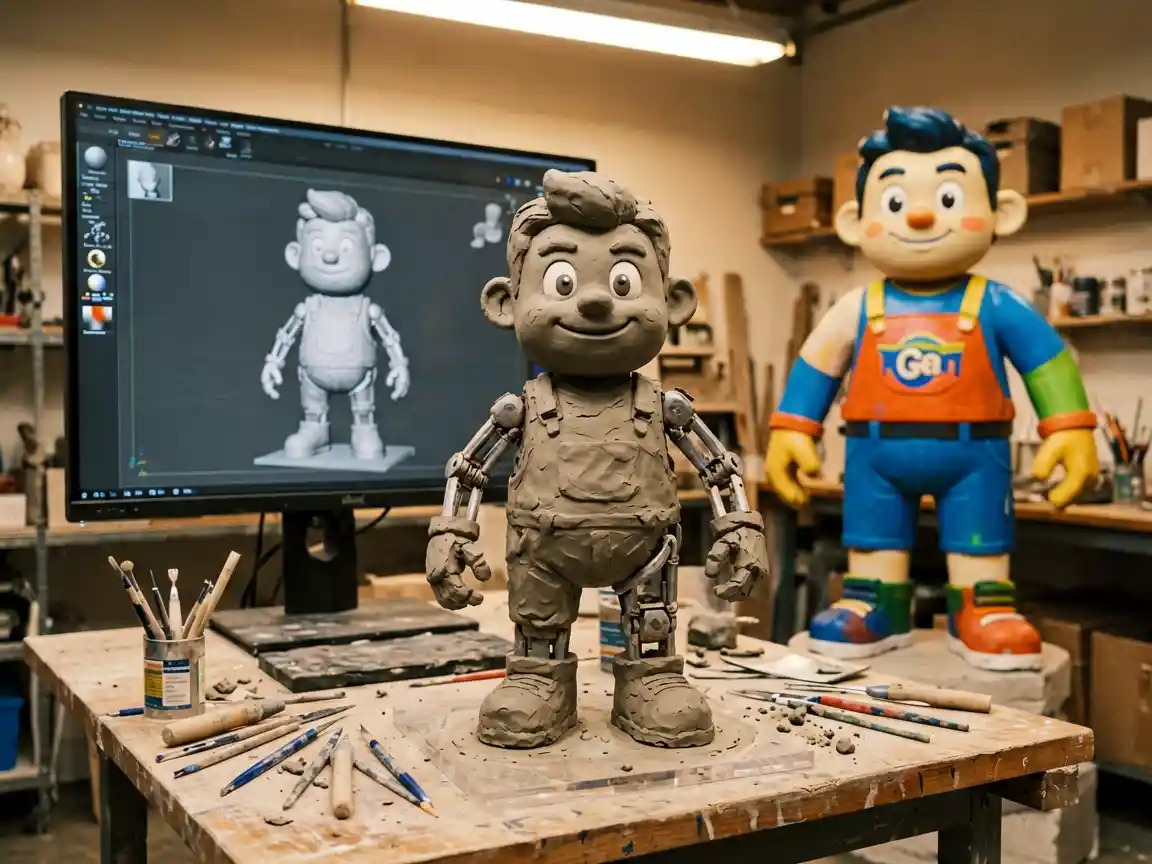
You’ve done the hard part — selected the design, found a manufacturer, waited through fabrication and shipping, and watched the crate get craned into place. The sculpture looks incredible. Your clients or guests are taking photos. Life is good.
Then a thought creeps in: “How do I keep this thing looking this good for the next 10 years?”
Good question. Outdoor sculptures face UV radiation, temperature swings, rain, salt spray (if you’re near the coast), bird droppings (that are surprisingly acidic), and the occasional selfie-taker who decides to climb it. Different materials handle these challenges very differently — and the maintenance schedule changes accordingly.
Here’s your complete, material-by-material maintenance guide, built from our factory’s experience maintaining thousands of installed sculptures worldwide.
| Material | Quarterly | Bi-Annual | Annual | Every 3-5 Years |
|---|---|---|---|---|
| FRP / Fiberglass | Rinse with water, check for surface dirt | Wash with mild soap, inspect gel coat | Apply UV protectant wax, check structural joints | Reapply gel coat or marine-grade urethane |
| Stainless Steel (304/316) | Wipe with water + microfiber | Polish with stainless cleaner, inspect welds | Deep clean — remove embedded grime, check passive layer | Re-passivate if signs of oxidation appear |
| Bronze | Rinse, look for uneven patina | Clean with distilled water + soft cloth | Apply microcrystalline wax (Renaissance Wax recommended) | Re-wax, consider professional conservation clean |
| Corten Steel (Weathering Steel) | Check for water pooling, remove debris | Inspect rust layer thickness | Pressure wash (low) to remove loose rust, check drainage | Apply rust stabilizer treatment if rust is flaking unevenly |
| Stone / Marble | Rinse, check for biological growth | Clean with stone-safe cleaner, inspect cracks | Seal (reapply sealant), check base stability | Re-seal, professional restoration if chipped |
| Painted Steel | Rinse, look for chips or scratches | Touch up paint, check for rust breakthrough | Full inspection of paint integrity | Repaint if more than 10% of surface is compromised |
FRP is the low-maintenance champion. The gel coat surface is UV-resistant, non-porous, and naturally hydrophobic — water beads and runs off. But it’s not indestructible.
Common issues:
When to call a professional: Any crack that exposes the fiberglass layer (you’ll see white fibers), structural damage near mounting points, or delamination (gelly bubbling away from the fiberglass).
Stainless steel gets its corrosion resistance from a chromium oxide passive layer. As long as that layer is intact, it’s nearly immune to rust. The enemy is contamination — carbon steel particles (from nearby construction), chlorine (pool areas), and salt (coastal environments).
Common issues:
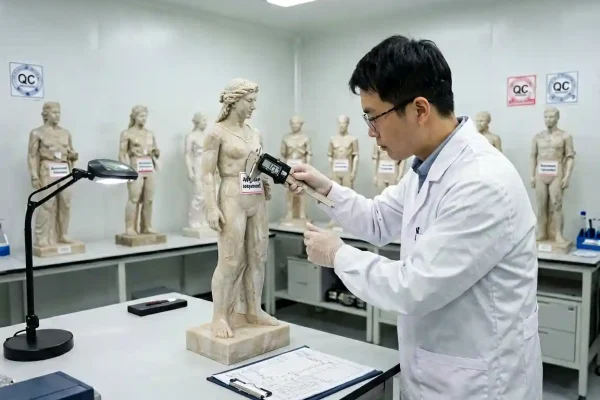
Maintenance schedule for coastal installations: Monthly wipe-down with fresh water. Quarterly application of a marine-grade stainless protectant. Annual professional inspection of all welds. Our quality control guide — Chinese Sculpture Factory QC: Inside the 7-Stage Inspection Process — details every inspection stage from raw material to pre-shipment. our bluestone water moon guanyin project
Bronze is the aristocrat of sculpture materials—it develops a beautiful patina over time that actually adds value. But the patina is also the weakest part. Bronze disease (a chemical reaction called “bronze cancer”) can destroy the surface if not caught early.
What’s normal vs. what’s not:
Bronze disease treatment:
Waxing frequency: Twice a year for outdoor bronze. More importantly — wax in the fall (before winter moisture) and spring (before summer heat). Each application takes 2-4 hours for a 2m figure.
Corten steel is paradoxical: it’s supposed to rust — that’s the whole point. But a “good” rust layer is stable, even, and forms a protective barrier. Bad rust is flaky, uneven, and lets moisture penetrate. our the timeless flow project
Key maintenance difference: Corten needs less cleaning than inspection. The critical phase is the first 6-12 months while the patina forms. During this “wetting-and-drying” cycle, you want the surface to go through regular rain-dry cycles. For a complete list of quality checks and inspection standards we follow, see Quality Control Checklist for Large Sculpture Manufacturing.
When to intervene: If after 2 years, the rust layer is flaking off in sheets (3mm+ thick), you need a professional rust stabilizer treatment. Cost: $800-2,000 for a 3m sculpture.
Reputable manufacturers offer structured warranties. Here’s what typical coverage looks like (Y Sculptures’ standard terms as reference): our aetheria forging a digital avatar in fiberglass project
| Component | Warranty Period | Covers | Doesn’t Cover |
|---|---|---|---|
| Structural integrity (steel frame, FRP laminate) | 5-10 years | Delamination, structural failure, weld breakage | Impact damage, natural disasters |
| Surface finish (gel coat, paint, patina) | 2-5 years | Excessive fading, peeling, discoloration | Normal patina development (bronze), scratching, wear from cleaning |
| Installation | 1-2 years | Foundation or mounting system defects | Damage from ground shift, flooding, earthquake |
Pro tip: Register your warranty within 30 days of installation. Most manufacturers require photo documentation of the installation process for warranty claims. Keep your owner’s manual — yes, your sculpture comes with one.
Print this out and stick it near your maintenance closet:
Not directly — high-pressure water forces moisture into micro-cracks and can strip patina. Use a garden hose with a spray nozzle at low pressure. If you must pressure wash (corten with stubborn debris), use a wide fan tip (40°+) at under 1,000 PSI and keep the nozzle at least 45cm from the surface.
Twice a year — spring and fall. Use microcrystalline wax (Renaissance Wax or equivalent, $25-40 per tin). One tin does 2-3 applications on a 2m sculpture. Never use car wax (contains abrasives) or furniture polish (contains silicone that’s near-impossible to remove).
Ignoring small issues. A 2cm gel coat crack that costs $150 to fix today can become moisture ingress that delaminates a $1,200 panel section within 18 months. A loose bolt that costs $20 to tighten can let a sculpture shift on its base, causing stress cracks worth $3,000-8,000 to repair. Fix small things promptly.
Not for FRP, stainless, or corten — they’re designed for outdoor conditions. For bronze, heavy wet snow creates two risks: (1) the weight of snow on horizontal surfaces can exceed 50kg/m² — brush it off gently if accumulation exceeds 15cm; (2) freeze-thaw cycles can crack porous areas. Ceramic or terracotta sculptures MUST be brought indoors or covered during freezing weather — they absorb moisture and crack when it freezes.
The American Institute for Conservation (AIC) has a Find a Conservator tool at culturalheritage.org. In Europe, search the European Confederation of Conservator-Restorer’s Associations (ECCO) directory. Expect to pay $100-250/hour for conservation work. An annual inspection visit (30-60 minutes) typically costs $150-400.
David Chen is Design Director at Y Sculptures with 18+ years in large-scale sculpture design and fabrication. He specializes in FRP, stainless steel, and bronze sculpture engineering, overseeing design-to-production workflows for theme park attractions, public art installations, and brand IP mascots. David has personally directed over 300 custom sculpture projects for clients across 20+ countries.
Browse real projects matching this topic


Continue reading related articles

Explore our full range of custom sculpture services

Learn More →

Learn More →

Learn More →

Learn More →

Learn More →

Custom FRP and fiberglass sculpture manufacturer - design, fabrication, and finishing.
Learn More →
Custom stainless steel, bronze, corten, and aluminum sculpture manufacturer.
Learn More →
Custom Theme Park Sculptures – Bringing Imagination to Life Theme parks, amusement parks, zoos, and entertainment destinations thrive on immersive...
Learn More →
Custom Commercial Sculptures – Elevate Your Brand & Space In today's competitive retail and commercial environment, first impressions matter. Commercial...
Learn More →