Inflatable Sculpture

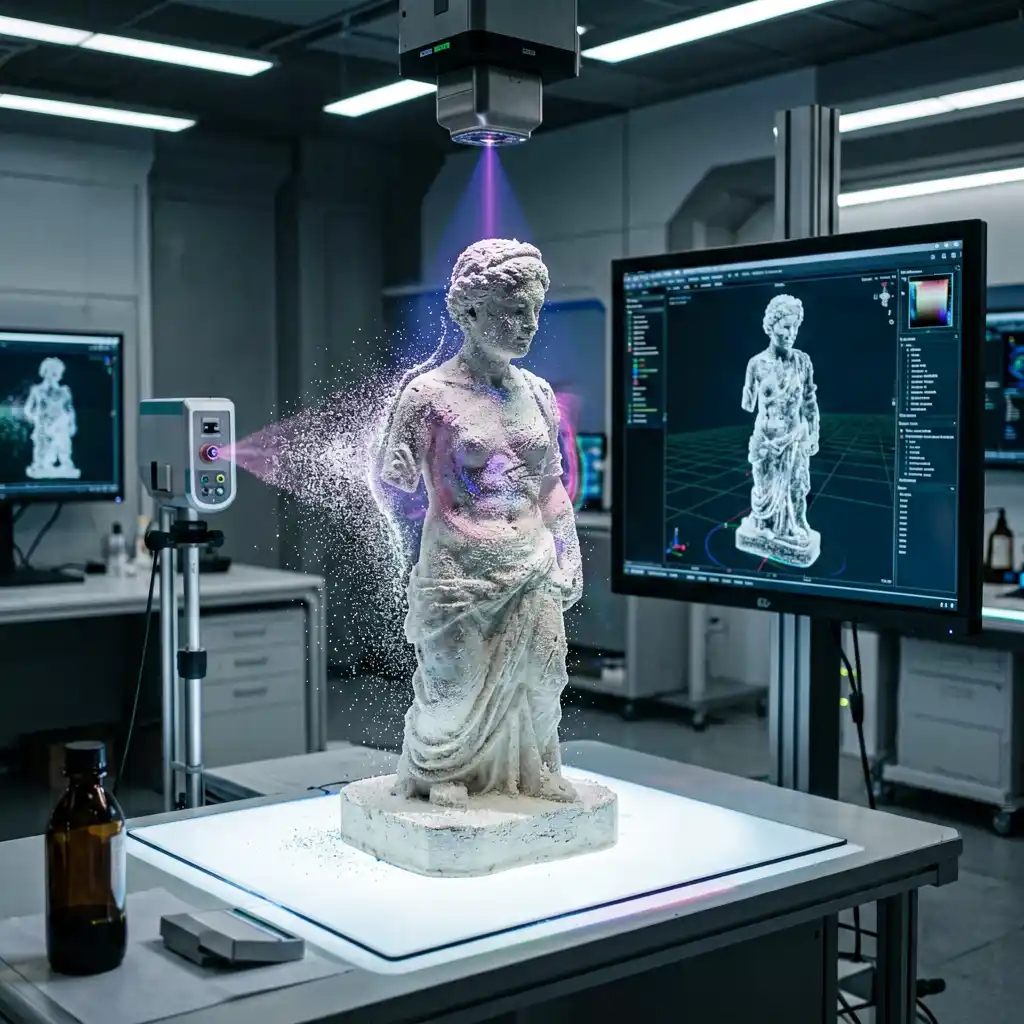
Ten years ago, commissioning a custom sculpture meant weeks of hand-built clay maquettes, guesswork about proportions, and expensive rework every time the client asked for a change. Today, that same idea can be captured with a 3D scanner, shaped on screen with digital sculpting tools, and validated as a photorealistic preview before any material is poured. The technology has rewritten how custom art is designed, approved, and manufactured.
At Y Sculptures, we combine traditional craft with a full digital pipeline. This guide explains how 3D scanning for sculpture and digital sculpting actually work, how a digital model becomes a physical artwork, and why this workflow delivers faster, more accurate results for our clients.
The first step in many projects is capturing an existing object in three dimensions. 3D scanning turns a physical sculpture into a precise digital point cloud and mesh, opening up possibilities that manual measurement never could.
Every physical sculpture is vulnerable to weather, wear, and structural aging. A high-resolution scan creates a permanent digital backup of the artwork’s exact geometry. Should the original be damaged, relocated, or need a replica, the scan preserves every surface detail, undercut, and subtle form change that a tape measure would miss.
For damaged or aging pieces, scanning captures the current state so restoration teams can model the missing or degraded sections digitally before touching the original. For replication — whether a museum needs an identical copy or a brand wants to reproduce a beloved mascot across multiple sites — the scan becomes the master reference, guaranteeing every copy matches the first.
Museums, cultural heritage organizations, and municipal bodies increasingly scan historic statues for conservation records. The resulting models can be 3D-printed for study, animated for exhibitions, or archived as a hedge against future loss. This is the same technology preserving fragile relics for generations.
For a deeper look at how we choose between these methods and move from scan to finished replica, see our 3D scanning for sculpture replication technology and process guide. And if you are weighing scanning against the traditional molding approach, our comparison of 3D scanning vs traditional molding for IP character replicatio
breaks down the trade-offs in accuracy, cost, and turnaround.
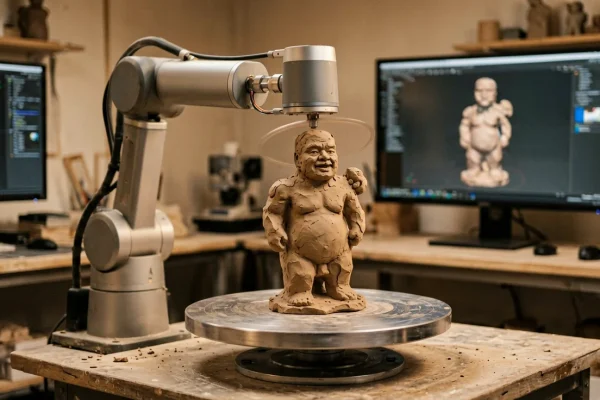
Once a scan or a client sketch exists, digital sculpting takes over. Where clay modeling is physical and laborious to revise, digital sculpting lets the designer push, pull, and refine form on screen with near-instant feedback.
A client’s concept sketch — even a simple napkin drawing — becomes the brief. The designer imports reference images, builds the base geometry, and uses digital sculpting brushes to develop mass, proportion, and surface detail. The result is a fully resolved sculpture 3D model ready for review.
ZBrush is the industry standard for organic, high-detail sculpting — ideal for characters, animals, and flowing forms. Maya and Blender handle hard-surface modeling, retopology, and animation-ready geometry. The choice depends on the piece: a cartoon mascot and a geometric public art installation demand very different toolkits.
Because everything is digital, revisions happen in hours, not weeks. The client reviews rendered views, requests changes to the expression, scale, or surface finish, and the designer updates the model — all before fabrication begins. This eliminates the expensive “scrap the maquette” cycle of traditional workflows. To understand how a design moves from a rough concept through the entire factory process, our designer’s full process from sketch to fabricatio
walks through every stage.
The digital model is only half the story. Translating that geometry into a durable physical sculpture requires the right manufacturing route.
Before committing to expensive molds, we often 3D-print a scaled prototype or a section of the full piece. This physical sample lets the client touch, handle, and inspect the design in real space, catching proportion and ergonomics issues no render can reveal.
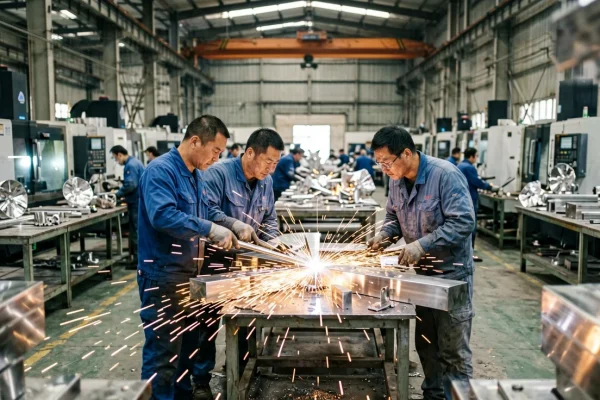
For large or high-volume production, the digital model drives CNC machining to cut precise molds. This is dramatically more accurate and repeatable than hand-carving mold masters, and it scales perfectly when a client needs multiple identical pieces.
For select components, direct metal laser sintering (DMLS) or selective laser melting (SLM) builds metal parts layer by layer directly from the model. This suits intricate, load-bearing details that would be impractical or impossible to cast conventionally.
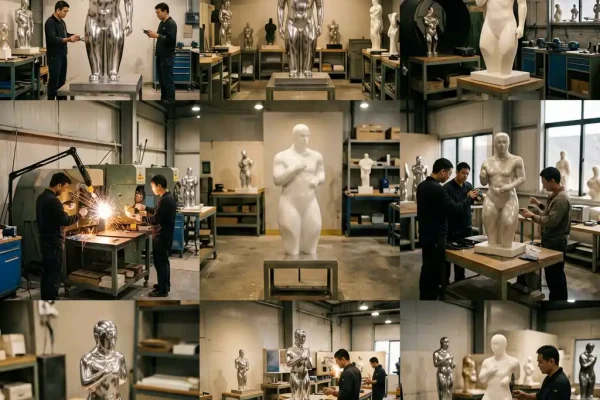
Digital design does not replace the artisan — it enhances them. Our sculptors take the verified digital model and finish the piece by hand: refining the patina, painting the details, and adding the final surface character that makes each sculpture unmistakably handcrafted.
The shift from clay-only to a digital-first pipeline delivers measurable advantages for clients commissioning custom art.
Iterations that once took days of physical rework now take hours on screen. With fewer hand-built revisions, projects move from approval to fabrication significantly faster, which is why digital-first pieces consistently reach installation sooner.
A digital model is mathematically exact. When a sculpture must fit a specific site, match a brand proportion, or align with existing architectural elements, the model guarantees millimeter-level accuracy before anything is manufactured.
Clients see photorealistic renders of their sculpture in context before a single kilogram of material is poured. This de-risks the entire project and virtually eliminates the surprise of “that’s not what I imagined.”
Because changes happen in software rather than in clay, steel, or resin, the cost of each revision drops dramatically. Clients can explore more design options within the same budget, confident that exploring an idea will not multiply fabrication costs.
A cultural client needed an exact replica of a weathered public statue. We scanned the original on site with laser scanning, cleaned the mesh, and CNC-machined a precise mold from the digital model. The result was a flawless copy that preserved every original detail while correcting decades of wear.
A client wanted a flowing, double-curved form that would have been nearly impossible to build reliably by hand. We sculpted the design digitally, validated the geometry, and CNC-cut the mold. The finished piece matched the render so closely that the client could not tell the difference.
For a brand mascot heading to multiple mall locations, we printed a full-size 3D prototype in days. The client approved the pose and scale on the spot, and the validated model then drove production of identical copies — guaranteeing every location got a perfectly matched mascot.
Modern structured-light and laser scanners capture sub-millimeter detail on most sculptures. Accuracy depends on surface finish, reflectivity, and size, but for replication purposes the scan is typically more precise than any manual measurement — usually within a fraction of a millimeter on well-prepared surfaces.
Yes. A concept sketch — even a simple drawing — is enough to start. Our designers build the geometry digitally, refine it into a full 3D model, and present rendered views for approval before any fabrication begins.
It varies with complexity. A simple stylized character can be modeled in a few days, while a complex figurative or monumental piece may take several weeks. Because revisions happen digitally, the modeling phase is typically shorter and less error-prone than equivalent physical clay work.
We provide standard fabrication files such as STL or OBJ for 3D printing, along with STEP or IGES where CNC machining is involved. For printing, we also confirm the wall thickness, scale, and orientation with you before export so the file prints correctly the first time.
Not in the long run. The initial 3D modeling and scanning carry a setup cost, but because revisions are far cheaper and fewer prototypes are wasted, digital workflows typically cost less overall — especially for projects with multiple revisions or repeat production.
Ready to bring your vision to life with a digital-first approach? Contact Y Sculptures with your sketches, reference images, or the sculpture you want replicated, and we will show you exactly how 3D scanning and digital sculpting can transform your next custom art project.
Modern 3D scanners achieve sub-millimeter accuracy (0.1-0.5mm). This is sufficient for most sculpture replication and restoration projects.
Yes. Our digital sculptors can interpret sketches and concept art into detailed 3D models. Multiple revision rounds are included to ensure accuracy.
Simple geometric forms: 1-2 days. Complex figurative work: 1-2 weeks. Highly detailed pieces: 2-4 weeks depending on complexity.
We provide STL, OBJ, or STEP files depending on your printer compatibility. File optimization for print resolution is included.
Digital workflows often reduce overall cost by minimizing physical prototypes and rework. The initial investment pays off in accuracy and speed.
David Chen is Design Director at Y Sculptures with 18+ years in large-scale sculpture design and fabrication. He specializes in FRP, stainless steel, and bronze sculpture engineering, overseeing design-to-production workflows for theme park attractions, public art installations, and brand IP mascots. David has personally directed over 300 custom sculpture projects for clients across 20+ countries.
Browse real projects matching this topic
Continue reading related articles
Explore our full range of custom sculpture services

Learn More →

Learn More →

Learn More →

Learn More →

Learn More →

Custom FRP and fiberglass sculpture manufacturer - design, fabrication, and finishing.
Learn More →
Custom stainless steel, bronze, corten, and aluminum sculpture manufacturer.
Learn More →
Custom Theme Park Sculptures – Bringing Imagination to Life Theme parks, amusement parks, zoos, and entertainment destinations thrive on immersive...
Learn More →
Custom Commercial Sculptures – Elevate Your Brand & Space In today's competitive retail and commercial environment, first impressions matter. Commercial...
Learn More →