
Custom Sculpture Insights & Guides
3D Printed Sculpture from a Photo: Process, Limits & Cost
What Is a 3D Printed Sculpture from a Photo?
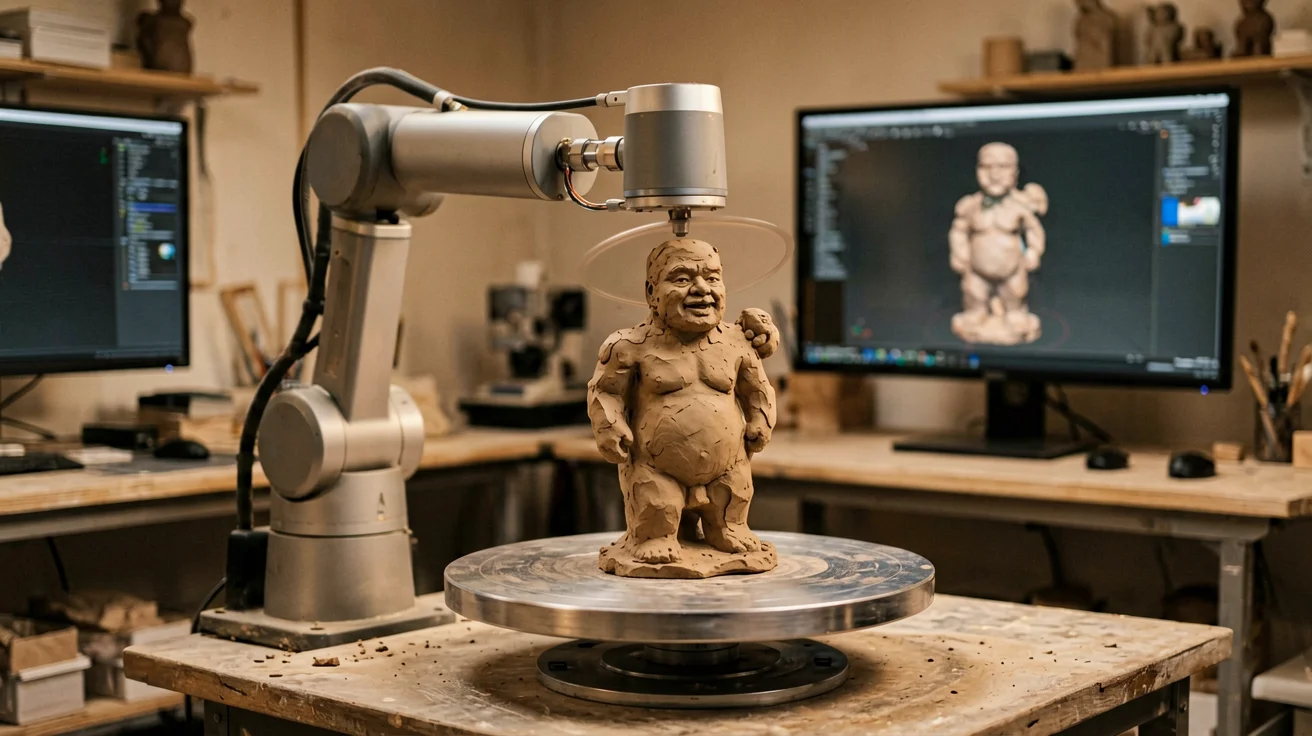
A 3D printed sculpture from a photo is a physical statue produced by first capturing a subject through photography, converting those images into a digital 3D model, and then reproducing that model via additive manufacturing or traditional casting. The result is a tangible representation of a person, pet, logo, or object that was originally documented in two dimensions.
This approach differs fundamentally from hand sculpting a maquette from scratch. To understand the full spectrum, see our comparison of 3D scanning vs traditional sculpting. In traditional sculpture, an artist builds form by hand using clay, wax, or plaster, relying on imagination and skill to translate reference photos into three dimensions. In the 3D photo-to-sculpture workflow, the geometry originates from actual captured data. The digital model preserves the proportions, posture, and distinctive features of the original subject with a level of accuracy that would take a sculptor many hours to replicate by eye alone.
The method has gained popularity for custom garden statues, memorial figures, mascot replicas, and personalized gifts. If you need a detailed walkthrough of the from-photo workflow, our custom sculpture from a photo guide covers the entire process step by step. It is not a single process but rather a pipeline of photography, scanning, modeling, printing, and finishing. Understanding each stage helps you set realistic expectations for detail, scale, durability, and cost.
The From-Photo 3D Process
Turning a photo into a physical sculpture involves several sequential steps. Each stage adds resolution, accuracy, or structural integrity to the final piece.
Photo Capture (20-50 Angles, Turntable)
The foundation of any 3D photo sculpture is a controlled photo set. The subject is positioned on a rotating turntable, and a camera captures images from multiple angles around it. Ideally, the setup includes 20 to 50 photographs that cover the front, sides, back, and sometimes top and bottom perspectives.
Consistent lighting is critical. Harsh shadows or uneven highlights create gaps in the digital reconstruction, so diffuse, even illumination is preferred. A plain background makes it easier for the software to isolate the subject. For human portraits, the person remains still while the turntable rotates; for larger objects or architectural elements, the camera may move around the stationary subject instead.
Photogrammetry / Scan to Mesh
Photogrammetry software analyzes the photo set and computes a dense point cloud representing the subject surface. Algorithms identify corresponding features across images and triangulate their positions in 3D space. The output is a mesh: a network of connected polygons that approximates the subject shape.
The quality of the mesh depends on photo quality, overlap percentage, and subject texture. Smooth, uniform surfaces like a white wall or polished metal can be challenging because there are few distinctive features for the software to match. Textured surfaces such as clothing, foliage, or weathered stone reconstruct more reliably.
Raw meshes often contain noise, holes, or excessive polygons. Cleanup involves smoothing, filling gaps, and decimating the mesh to a manageable polygon count. This is where digital sculpting tools like ZBrush or Blender become useful.
Clean-up & Sculpt Approval
After the initial mesh is generated, a 3D artist reviews the model for accuracy and makes manual corrections. Common adjustments include repairing incomplete regions, refining facial features, restoring small details like fingers or ears, and ensuring the model is watertight (no non-manifold geometry).
At this stage, the client typically reviews a rendered preview of the digital model. Feedback may request minor pose adjustments, proportion tweaks, or surface refinements. Once approved, the model is prepared for fabrication.
Printing (SLA / FDM / Sand Printing)
The approved 3D model is sent to a printer. The choice of printing technology depends on the desired resolution, part size, and material.
SLA (Stereolithography) uses a laser to cure liquid resin layer by layer. It produces the highest detail resolution and is ideal for small to medium figurines, intricate logos, and miniature sculptures. Typical layer thickness ranges from 25 to 100 microns.
FDM (Fused Deposition Modeling) extrudes thermoplastic filament through a heated nozzle. It is slower and less detailed than SLA but more cost-effective for larger parts and prototype validation. Resolution is measured in layer height, usually 100 to 200 microns.
Sand printing deposits binding agent into powder layers to create a full-color sand mold directly. This is commonly used in foundry workflows where the print serves as the pattern for lost-foam or investment casting.
Finishing: Mold, Cast in FRP/Bronze/Stainless
Raw 3D prints are rarely the final product for outdoor or commercial installations. The printed material alone — whether resin, PLA, or nylon — lacks the weather resistance, structural strength, and surface finish required for permanent display. Instead, the print serves as a master pattern for mold making and casting.
The most common finishing pathway is silicone mold making followed by FRP (fiberglass-reinforced plastic) casting. The printed master is encased in silicone, the mold is stripped, and liquid resin mixed with chopped glass fiber is poured or sprayed into the cavity. After curing, the FRP shell is removed, trimmed, and painted with primers, topcoats, and protective clear finishes.
For premium applications, the same pattern may be used for bronze casting via the lost-wax process or for stainless steel fabrication using the lost-pattern technique. The choice of final material depends on the sculpture location, budget, and aesthetic intent. See our guide on FRP casting process for details on this production route.
What 3D Printing Does Well
Photogrammetry and 3D printing offer distinct advantages over purely manual sculpting workflows, particularly for certain subject types and production goals.
Geometric accuracy and repeatability. Because the digital model derives from measured data rather than artistic interpretation, dimensions are faithful to the original subject. This is essential for architectural replicas, corporate logos, and branded mascots where brand consistency matters. The same digital file can also be printed or cast multiple times, enabling limited editions or series production without manual re-measuring.
Complex geometry. Intricate forms such as organic character designs, lace-like patterns, or highly detailed facial features can be captured and reproduced with less manual effort than carving or modeling by hand. The software handles fine topology that would be time-consuming to achieve through traditional clay building.
Speed of first iteration. A photogrammetry scan can generate a usable 3D model within hours, compared to days or weeks for a full-scale hand-sculpted maquette. This accelerates client review cycles and reduces upfront cost for prototyping.
Ideal subjects. 3D photo-to-sculpture workflows excel with human and animal portraits, pet memorials, small-scale mascot figures, corporate logos, and personal keepsakes. They are less suited for large abstract installations where the artist intentionally departs from photographic realism.
Limits & When Hand Sculpting Wins
3D printing from photos is powerful but not universally superior. Certain qualities are better served by manual sculpting techniques, and understanding these boundaries prevents misaligned expectations.
Surface Detail & Life-likeness
Photogrammetry captures surface geometry but not fine subsurface characteristics such as skin translucency, micro-texture, or the subtle asymmetries that make a portrait feel alive. Highly detailed skin pores, individual hairs, and fabric weave patterns often require manual digital sculpting to achieve a lifelike result. A pure scan may look accurate but can appear slightly rigid or artificial without artistic enhancement.
Scale
Large outdoor sculptures — public art installations, garden monuments, or architectural features over two meters — are generally impractical to produce as direct 3D prints. Printer build volume is limited, and printing a single massive piece requires specialized industrial equipment that few studios own. The standard approach is to scan at a manageable scale, then produce a full-size mold and cast the final sculpture in FRP, bronze, or stainless steel. For large-scale projects, see our overview of large-scale sculpture manufacturing.
Material
Raw 3D printed materials are not outdoor rated. Resin yellows and becomes brittle under UV exposure. PLA deforms at modest temperatures. Even industrial nylon and ABS require protective coatings for exterior use. A sculpture intended for a garden, plaza, or rooftop must be cast or fabricated in a durable material such as FRP, bronze, or stainless steel. The 3D print is the pattern, not the final product. This distinction is critical for projects expecting decades of outdoor exposure.
Cost of a 3D Printed Sculpture
Pricing a 3D printed sculpture from a photo depends on several variables: scan complexity, print size, finishing level, and chosen casting material. Below is a general framework to help you estimate budget ranges.
Photogrammetry scan: Simple subjects with clean backgrounds typically cost less than complex scenes with multiple props or reflective surfaces. A basic scan may range from $100 to $400 depending on detail requirements and whether manual retouching is included.
3D printing: SLA resin prints for small figurines (up to 30 cm) often fall between $200 and $800. Larger prints or sand prints for foundry patterns can run $500 to $2,000 or more, depending on volume and resolution.
Mold making and casting: Silicone mold fabrication adds $300 to $1,500 depending on geometry complexity. FRP casting is the most economical final material, typically $500 to $3,000 for small to medium pieces. Bronze casting is significantly more expensive due to foundry costs and material weight, commonly $2,000 to $10,000+
Finishing and painting: Priming, color matching, and protective clear coating add labor cost proportional to surface area and paint complexity. A simple two-tone finish may add $200 to $600; a highly detailed painted portrait with skin tones and realistic color blending can add $800 to $2,000 or more.
For a comprehensive breakdown of factors that influence sculpture pricing, including material comparisons and size tiers, see our custom sculpture pricing guide. This provides updated 2026 ranges and helps you plan realistically before committing to a project.
FAQ
Can you 3D print a sculpture from a single photo?
Generally no. A single photograph captures only one viewpoint, leaving the other sides of the subject unknown. Photogrammetry requires multiple overlapping images from different angles to reconstruct full 3D geometry. One photo can serve as a reference for artistic interpretation, but the resulting sculpture would be a sculptor interpretation rather than a data-accurate reproduction.
How many photos do you need to create a 3D printed sculpture?
A typical setup requires between 20 and 50 photographs spaced evenly around the subject on a turntable. More complex geometries with overhangs, deep recesses, or fine details benefit from additional angles. The goal is sufficient overlap so that every surface region appears in at least two or three images.
Is a 3D printed statue weatherproof for outdoor use?
No. Raw 3D printed materials — resin, PLA, nylon, and similar filaments — degrade under UV light, temperature cycling, and moisture. For outdoor installations, the print must be used as a pattern for casting into a durable material such as FRP, bronze, or stainless steel. These materials are specifically formulated or chosen for exterior durability and can last decades with proper maintenance.
What material is the final piece made from?
The final material depends on your project requirements. FRP is the most common choice for commercial and garden sculptures due to its lightweight strength, weather resistance, and cost efficiency. Bronze offers a premium patina finish and exceptional longevity for monuments. Stainless steel provides a modern aesthetic and excellent corrosion resistance. We recommend discussing your intended location and exposure conditions with our team to select the optimal material.
How much does a 3D printed sculpture from a photo cost?
Pricing varies widely based on size, complexity, and finishing. A small indoor resin figurine (up to 30 cm) might cost between $500 and $1,500 all-in. A medium outdoor FRP sculpture (60-120 cm) typically ranges from $2,000 to $6,000. Large bronze or stainless steel installations start around $5,000 and scale upward with size and detail. Request a quote from us with your dimensions and intended material for an accurate estimate.
J
Written by James Liu
James Liu is Project Manager at Y Sculptures, specializing in end-to-end custom sculpture project delivery for commercial, hospitality, and public art sectors. With 12 years in the industry, James coordinates design approvals, material sourcing, fabrication timelines, international shipping logistics, and on-site installation. He has successfully delivered 500+ projects to 30+ countries.
Related Projects
Browse real projects matching this topic
Gardens & Resorts
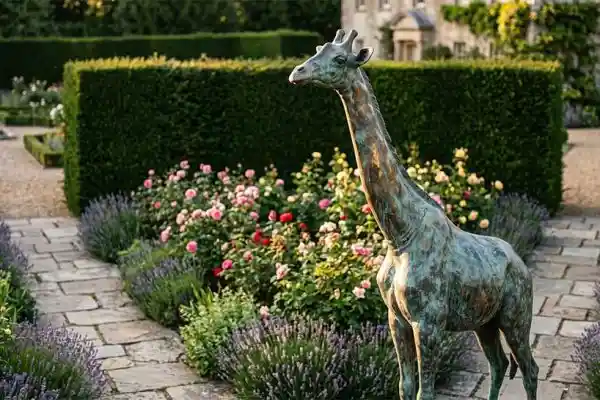
“Majestic Giraffe” — Hand-Cast Bronze Giraffe Garden Sculpture
Commercial
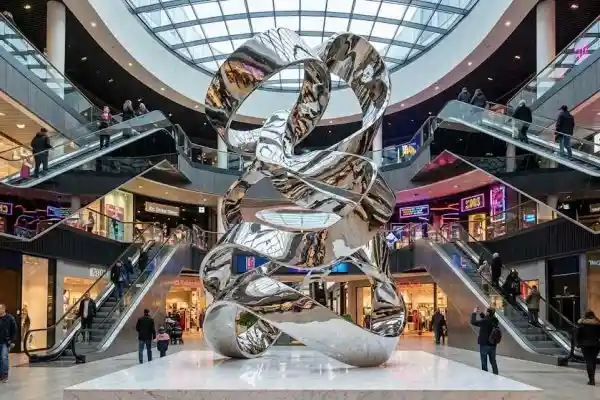
The Celestial Flow – Public Art Sculpture
Inflatable Sculpture
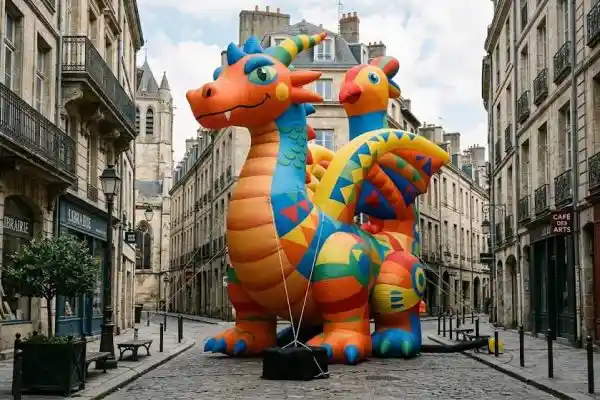
“The Urban Guardian” Inflatable Street Art Installation
IP Sculpture
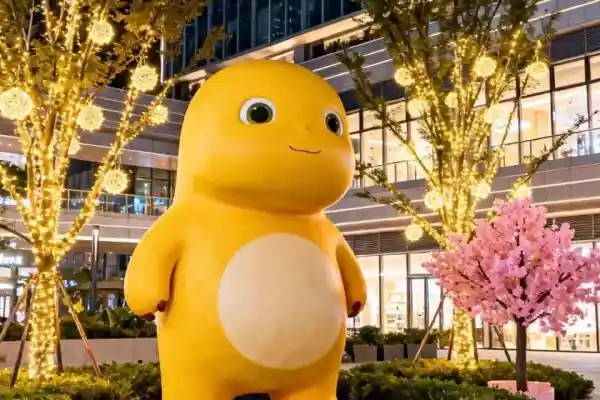
“Nailong” Urban Healing Landmark
Related Insights
Continue reading related articles
Brand Mascot & IP
Oct 13, 2026
Esports Arena & Gaming Venue Sculpture: Landmarks, Trophies & Mascot Statues
Commercial & Hospitality
Oct 13, 2026
Corporate Lobby & Office Sculpture: Commissioning Guide for Developers
Custom Sculpture Insights & Guides
Oct 13, 2026
How Long Do Outdoor Sculptures Last? Material-by-Material Lifespan Guide
Our Sculpture Solutions
Explore our full range of custom sculpture services

IP Character Replication
Beyond 2D: Why IP Replication Drives Brand Engagement A character that lives only on a screen is easy to scroll...
Learn More →
Large Sculpture Custom
Engineering Monumental Scale A sculpture that stands 15 metres tall is not simply a 1.5-metre maquette scaled up ten times....
Learn More →
Original IP Development
From Concept to Icon Most sculpture enquiries begin with a reference: a licensed character, a film hero, an existing artwork...
Learn More →
Solutions Services
One Factory, Every Sculpture Material A sculpture brief rarely arrives pre-sorted by material. A client sends a reference image, a...
Learn More →
Custom Inflatables
Inflatable Sculptures as Brand Media Most sculptural commissions are permanent assets: they are built once, installed once, and admired for...
Learn More →
FRP & Fiberglass Sculpture Manufacturing
Custom FRP and fiberglass sculpture manufacturer - design, fabrication, and finishing.
Learn More →
Stainless Steel & Metal Sculpture Manufacturing
Custom stainless steel, bronze, corten, and aluminum sculpture manufacturer.
Learn More →
Theme Park Sculpture Services – Custom Amusement Park Statues
Custom Theme Park Sculptures – Bringing Imagination to Life Theme parks, amusement parks, zoos, and entertainment destinations thrive on immersive...
Learn More →
Commercial Sculpture Services – Custom Brand Mascots & Mall Art
Custom Commercial Sculptures – Elevate Your Brand & Space In today's competitive retail and commercial environment, first impressions matter. Commercial...
Learn More →