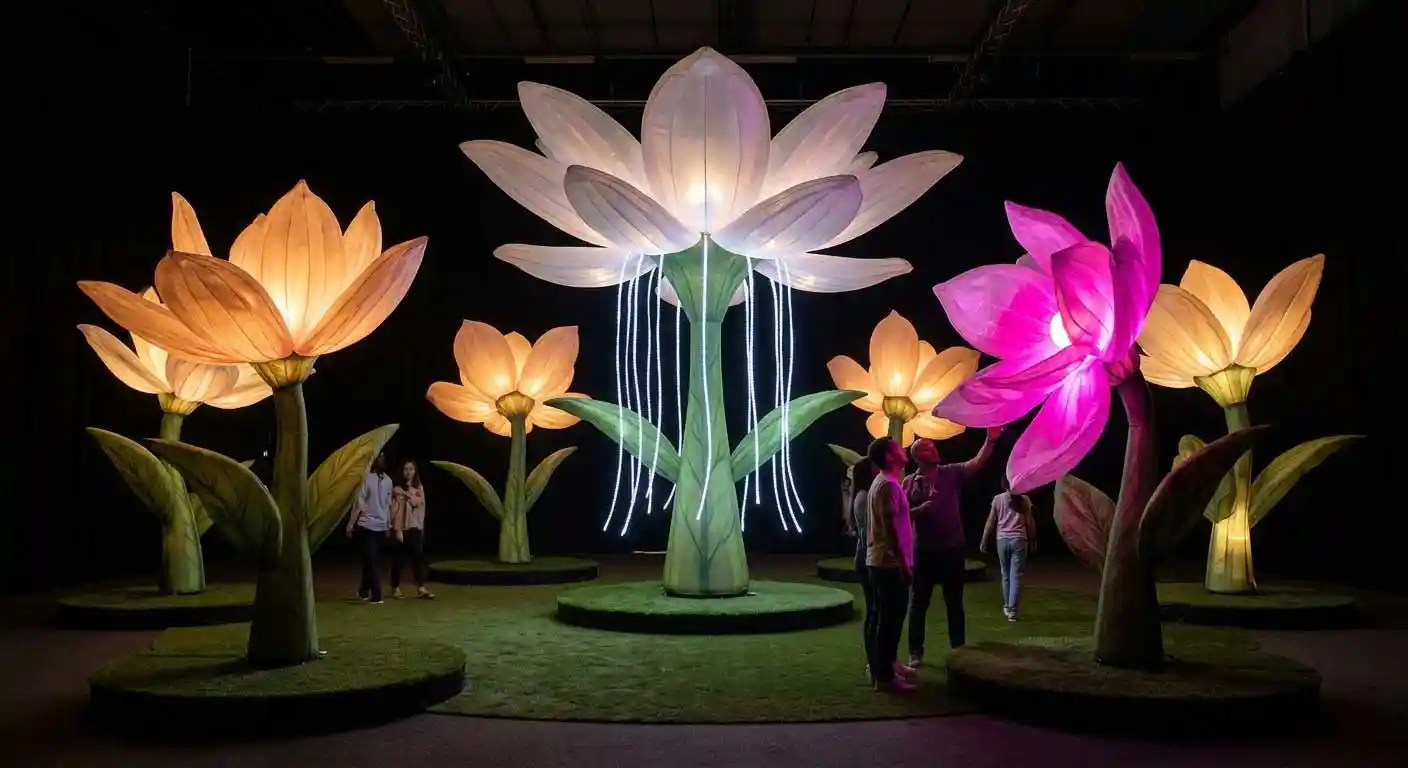
“Garden of Light” — Interactive Inflatable Flower Sculpture
Inflatable Sculpture
Project Overview
- Project Name: “Garden of Light” (Interactive Inflatable Flower Sculpture)
- Location: Night Garden Exhibition Hall, International Horticultural Expo Park
- Exhibition: Global Garden & Light Festival 2026
- Project Type: Interactive Inflatable Botanical Sculpture Installation
Design Concept
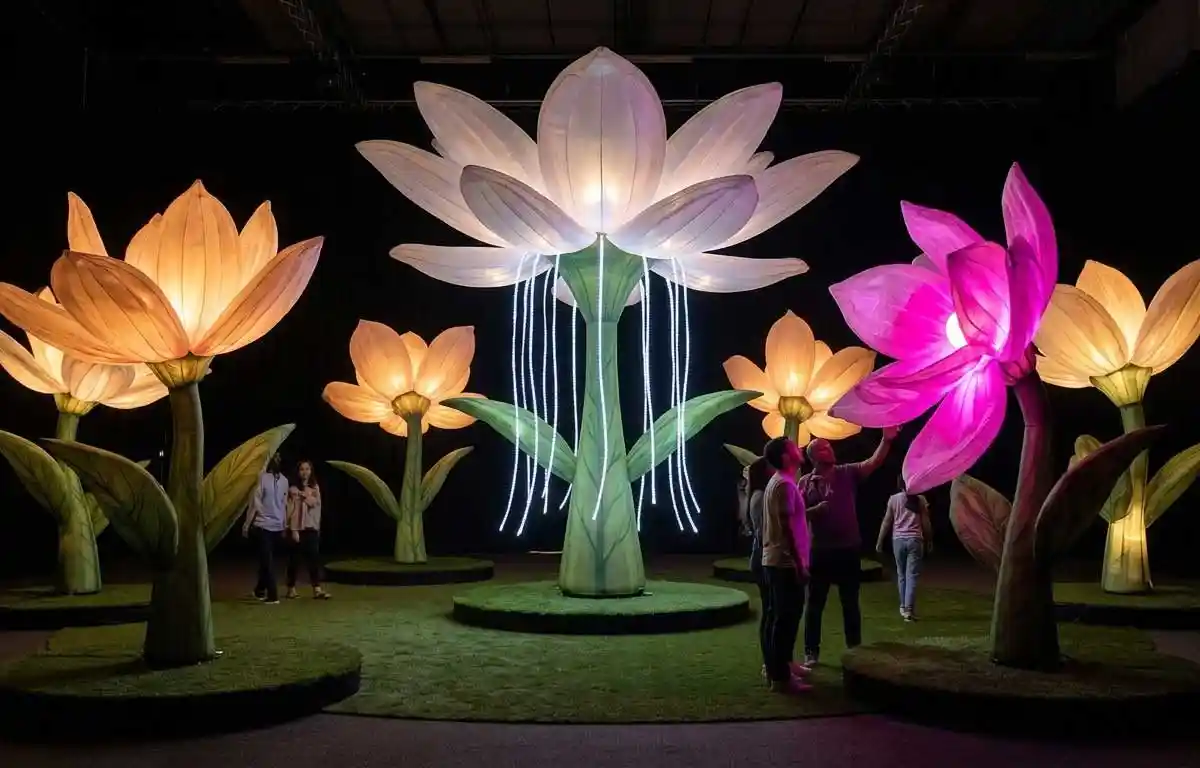
“Garden of Light” reimagines the beauty of a blooming garden as a large-scale interactive inflatable experience. The installation features five larger-than-life inflatable flowers, each measuring 6-8 meters in height, arranged in a circular meadow layout. Each flower responds to visitor proximity through embedded motion sensors — when someone approaches, the petals gently animate through internal pneumatic actuators and the LED color shifts from warm amber to vibrant magenta.
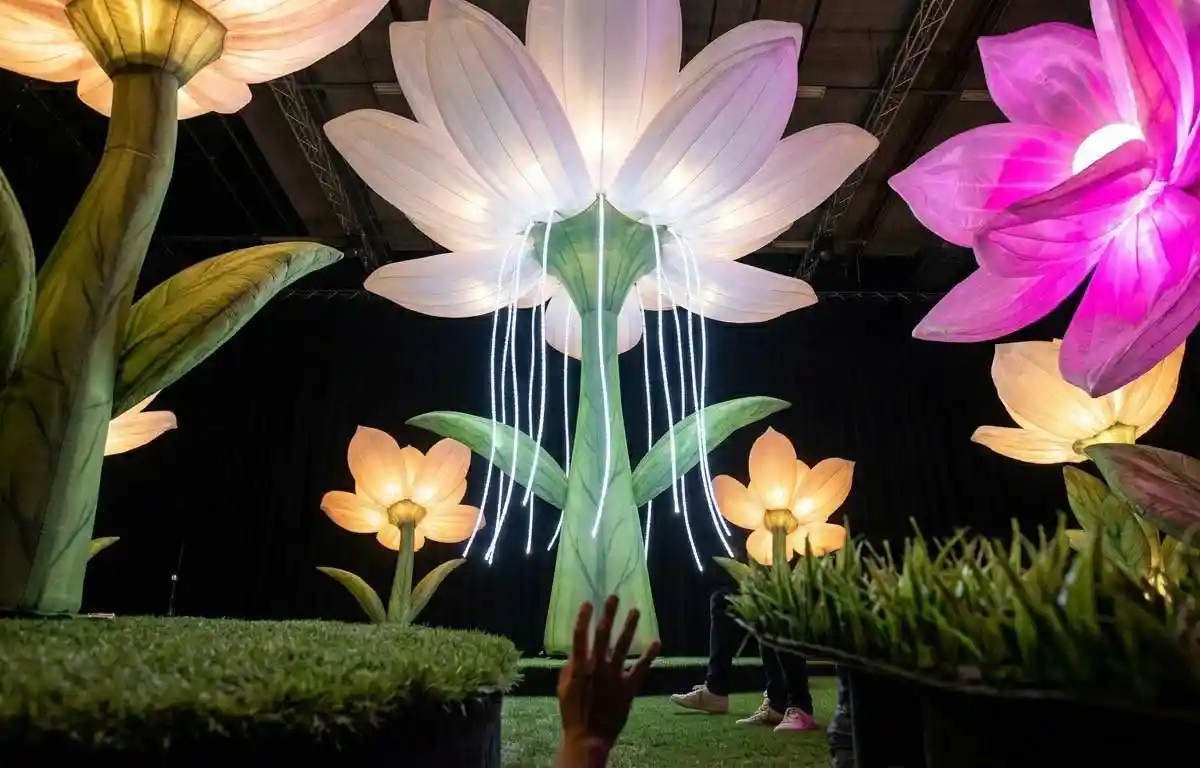
The design draws inspiration from night-blooming flora such as the moonflower and evening primrose. The translucent PVC petals diffuse internal light softly, creating a dreamlike atmosphere that transforms the exhibition hall into an immersive botanical wonderland. The centerpiece is a 9-meter “Queen Bloom” with cascading LED-lit tendrils that sway gently, guiding visitors through the installation path.
Technical Specifications
- Dimensions:
- Centerpiece “Queen Bloom”: Height 9 meters, Petal Span 7 meters
- Secondary Blooms (4 units): Height 6-7 meters each, Petal Span 4-5 meters
- Total Installation Area: 25 meters x 20 meters
- Material:
- Petals: Semi-translucent flame-retardant PVC-coated fabric (0.55mm thickness) for optimal light diffusion
- Stems & Leaves: UV-stabilized 420D Oxford fabric with printed vein textures
- Internal Frame: Flexible fiberglass rods for structural support within stems
- Inflation System: Five independent 1200W low-noise blowers with individual pressure regulation, one per flower unit
- Interactive Technology: Infrared motion sensors integrated into each flower base, connected to a central PLC controller for synchronized petal movement and lighting response
- Illumination: 150W RGBW LED modules per flower, programmed with 8 interactive color sequences triggered by visitor proximity
- Anchoring: Weighted base plates (200kg each) concealed beneath artificial turf platforms
Project Logistics & Timeline
- Design & Engineering: 4 Weeks
- Fabrication: 8 Weeks
- On-Site Installation & Programming: 10 Days
- Total Project Lifecycle: 14 Weeks
- Total Budget: $68,500 USD (Includes all 5 flower units, interactive sensor system, LED programming, on-site installation, 3-month exhibition warranty, and dedicated technician training)
Interactive Experience
The installation operates in two modes: “Daylight Resting” where flowers remain partially inflated with subtle color breathing, and “Night Interactive” with full petal animation and proximity-triggered light shows. The system can accommodate up to 30 simultaneous visitors triggering different response zones, creating a dynamic, ever-changing environment that encourages repeat visits.
The Fibreglass Rod Structure
The reason this installation is not purely pneumatic is that a nine-metre centrepiece plus a planted field of smaller flowers needs arms, stems and canopies to hold a defined shape rather than a pressurised one. Fibreglass rods do that job: they are light enough not to load the base, stiff enough to hold a stem upright, and they do not corrode in the damp conditions that a garden exhibition hall produces.
The rods are used as an internal skeleton inside printed fabric, with the fabric acting as the skin rather than the structure. That gives two advantages over a pure inflatable at this scale — the silhouette is stable in still air, and a loss of pressure affects only the chamber it belongs to rather than deflating the whole field. The rod sections are colour-matched to the fabric so they are invisible through the printed skin even when the installation is backlit.
Lighting and Control Across a Large Field
Lighting a 25 by 20 metre field is a distributed problem rather than a single fixture decision. The centrepiece is lit from within its own chambers, while the surrounding flowers are lit either individually or as grouped runs, and the whole field is controlled as one show so that the visitor experiences a composition rather than several unrelated lit objects.
Because the exhibition runs in a night-garden hall, the ambient level is low and the installation does most of the light work in the space, which raises the practical questions of power distribution across the field, control signal distribution, and cable routing that does not cross visitor paths. All of it is planned as site infrastructure, with protection rated for a public exhibition and the whole assembly on earth-leakage protection.
Visitor Interaction and Safety
An interactive night installation is judged partly on how visitors move through it, and that makes the layout a safety document as much as a design. Paths through the field have to be wide enough for a wheelchair or a pushchair, with no cable or anchor in the walking line, and the interactive elements need to trigger without the visitor having to step off the route.
The physical interfaces — buttons, sensor zones, pressure pads — should be rated for continuous public use and positioned at accessible heights. Anything a visitor touches is also the part most likely to fail, so those components should be reachable for maintenance without dismantling the surrounding installation. A field of this size is normally run with an attendant, and the operating procedure should state what that attendant does if a section loses power or pressure.
Long-Run Exhibition Maintenance
A 14-week build followed by a long exhibition run makes maintenance a scheduled activity rather than a response to failures. The realistic routine is a daily pressure and lighting check across the field, a weekly visual inspection of the rod structure and fabric skins, and a monthly check of the electrical enclosures and control cabinets.
Fabric in a damp exhibition environment is the item to watch. Printed skins should be checked for coating integrity around the base, where moisture and visitor contact concentrate, and any section that is holding water should be dried and re-tensioned rather than left to drain. Spare printed panels and rod sections retained from production are what allow a mid-exhibition repair to be invisible, which matters when the installation is the centrepiece of a ticketed event.
Project Gallery