
Factory & Quality
3 Weeks Visiting Chinese Sculpture Factories: What Separates the Best
Three weeks. Twelve factories across Guangdong, Zhejiang, and Hebei. Some were world-class operations running five-axis CNC robots. Others were dusty workshops where the “quality control” was a guy squinting at a weld seam.
I run a custom sculpture company, so this wasn’t a vacation — it was reconnaissance. We commission sculpture manufacturers across China, and I wanted to see for myself which factories actually deserve your business. Here’s what I learned.
Why Visiting Chinese Sculpture Factories in Person Changed Everything
Before this trip, I made the same mistake most people make: I judged factories by their websites and Alibaba listings. Turns out, a slick website can hide some very mediocre work.
One factory we visited had beautiful product photos — crisp stainless steel sculptures glowing against white backgrounds. On the ground? The weld seams were ground down so aggressively that the metal was paper-thin in spots. The polishing was done before welding, a classic rookie move that leaves visible discoloration around joints.
The best factories? They’re not even on Alibaba. They work through agents, referrals, and long-term partnerships. Here’s what to look for.
The 4 Red Flags I Saw at Mediocre Sculpture Manufacturers
1. No Separate QC Department
At a medium-sized factory in Foshan, I asked to see their quality control process. The foreman looked confused. “The welder checks his own work,” he said. That’s like letting students grade their own exams.
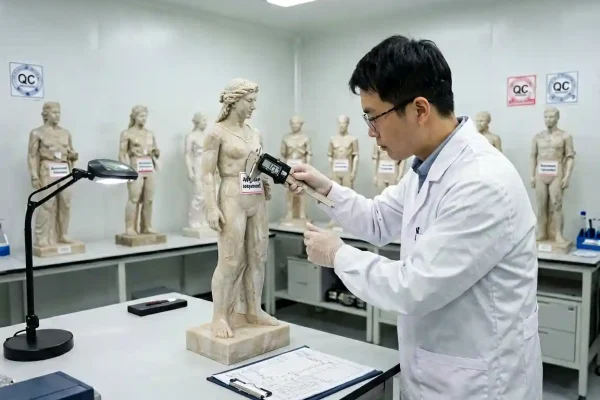
A proper China sculpture manufacturer has a dedicated QC team that reports to management, not production. They measure wall thickness with ultrasonic gauges. They check weld penetration on test coupons. And they keep written records — not mental notes. Our manufacturing guide — How Custom Sculptures Are Made: From Concept to Installation in 10 Steps — covers everything from mold-making to final finishing.
2. Cheap Resin Instead of Structural Gelcoat
This is the dirty secret of budget FRP factories. They use orthophthalic resin (the cheap stuff) instead of isophthalic or vinyl ester resin for the structural gelcoat. The sculpture looks fine for the first year. Then micro-cracks appear. Then water gets in. Then you have a $20,000 sculpture that’s delaminating.
The good shops use vinyl ester resin for marine-grade structures and charge an extra 15-20% for the privilege. Worth every penny if the sculpture lives outdoors.
3. Polished Surface Photos — No In-Process Shots
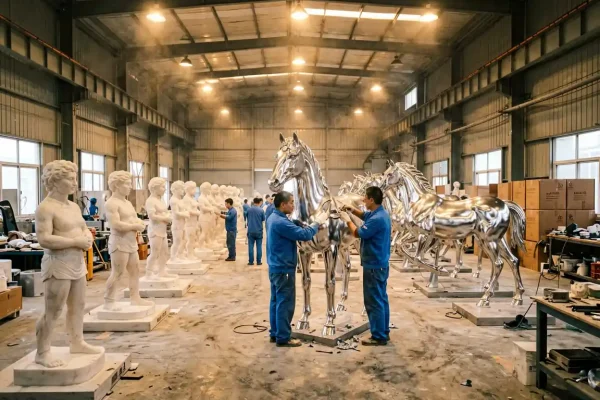
A sculpture fabrication facility that can’t show you photos of their work in progress — raw metal plates, scaffolding, welders in action — is probably hiding something. The best factories have a transparent workshop policy. One shop in Zhongshan let me walk through unannounced. Their welders had certifications posted on the wall. Each work station had a checklist. For more detail on the production and engineering stages, read Custom Sculpture Manufacturing: 7-Step Process Guide.
4. They Won’t Talk About Their Rejection Rate
Ask any sculpture manufacturing company: “What percentage of your pieces need rework?” If the answer is zero, they’re lying. Industry average for complex custom sculptures is 8-12% rework rate. The best shops run 3-5%. The honest ones will tell you exactly what goes wrong and how they fix it. our oceans whimsy little girl whale sculpture project
What the Top-Tier Chinese Sculpture Factories Do Differently
Investment in Digital Fabrication
The gap between a good and great sculpture contract manufacturer comes down to one thing: CNC capability. A 3-axis CNC alone is table stakes. The real players have:
- 5-axis CNC routers for complex organic shapes
- Waterjet cutters for precise metal plate profiling
- Laser scanning for reverse engineering existing pieces
- 3D printing for master pattern creation (SLA, not FDM filament)
One factory we visited had a robotic welding arm for repetitive joints. Their weld consistency was visibly better than human-only shops. The owner told me they spent $180,000 on the robot. It paid for itself in 14 months through reduced rework and faster turnaround.
Surface Finish Standards
Ask a custom sculpture OEM what their surface finish specification is. If they don’t have one written down, run. The best factories follow defined standards:
| Material | Standard Finish | Premium Finish |
|---|---|---|
| Stainless Steel 304 | 240 grit brushed + passivation | Mirror #8 (600 grit + buffing compound) |
| Corten Steel | Accelerated patina with wax seal | Patina + marine-grade clear coat |
| FRP/Fiberglass | Gelcoat + ISO resin, 2mm min | Vinyl ester tooling gelcoat + UV inhibitors |
| Bronze | Lost wax, hot patina | Lost wax + ceramic shell + complex patina layering |
Logistics and Crating
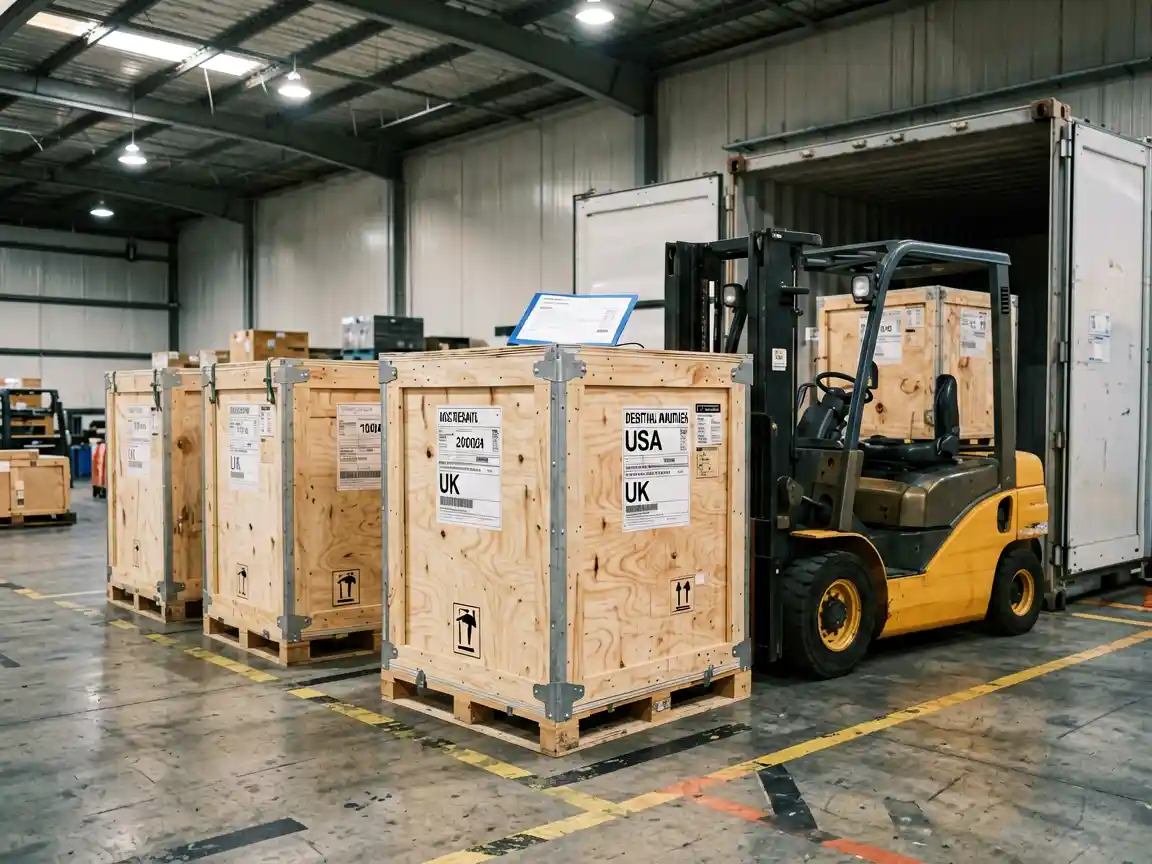
I was genuinely surprised by how much variation there is in crating. A cheap factory wraps your sculpture in bubble wrap and thin plywood. The sculpture arrives with corners bent and finish scratched. The pros build custom steel-framed crates with foam cutouts. They’ll ship a test crate photo before the actual piece goes in. our stellar arbor led illuminated tree sculpture project
One factory in Hebei had a dedicated crating team that only does export packaging. They use VCI (Vapor Corrosion Inhibitor) film for metal sculptures, desiccant packs, and shock indicators on the crate. The difference in arrival condition is night and day.
How to Choose a Sculpture Manufacturing Company: Step by Step
Step 1: Make Them Prove Their References
Don’t just ask for references — ask for projects similar to yours in size, material, and complexity. A factory that makes 30cm desktop sculptures has very different capabilities from one that assembles 8m monumental works. Check if the references include international clients (customs clearance experience matters).
Step 2: Request a Mockup (and Pay for It)
The best sculpture fabrication facilities will offer to make a small-scale model or 3D render. If they push back or want to start production immediately, that’s a red flag. A proper shop wants to resolve design issues in the mockup phase, not after cutting metal.
Budget $200-$800 for a 3D printed maquette depending on complexity. It’s the cheapest insurance you’ll ever buy for a large sculpture project. our the flowing dimension project
Step 3: Ask About Their Steel Source
Stainless steel prices vary wildly in China. A quality China sculpture manufacturer sources from reputable mills (Baosteel, TISCO) or imports from POSCO/Outokumpu. Cheap shops buy off-spec coils from secondary mills. The difference in corrosion resistance is real — especially for 316L in coastal environments.
Step 4: Understand Their Payment Structure
Standard terms for a sculpture contract manufacturer: 30% deposit, 30% at approval of mockup, 30% before crating, 10% on loading. If a factory demands 50%+ upfront with no milestone breakdown, that’s a liquidity red flag. They may be using your deposit to finish someone else’s project.
Real Numbers: What It Actually Costs at Different Quality Tiers
| Tier | 3m Stainless Steel Sculpture | Lead Time | Rework Rate |
|---|---|---|---|
| Budget workshop | $8,000 – $14,000 | 4-6 weeks | 20-30% |
| Mid-tier factory | $15,000 – $25,000 | 6-8 weeks | 8-12% |
| Premium manufacturer | $26,000 – $45,000 | 10-14 weeks | 3-5% |
Notice the premium tier takes longer and costs more. Why? Because they’re not cutting corners on cure times, weld inspections, and surface finishing. A budget shop can slap a sculpture together in 4 weeks. It’ll look okay in photos. In 3 years, it’ll look terrible.
FAQ
Is it safe to visit Chinese sculpture factories?
Yes. Major industrial cities like Foshan, Zhongshan, and Shijiazhuang have well-established industrial zones. Basic safety: wear steel-toe boots, safety glasses, and long sleeves. Most reputable factories will provide PPE.
Do I need a translator?
For tier-1 factories that export regularly, the sales team speaks English. For smaller shops, you’ll want a translator — especially for technical discussions about materials and finishes. Budget $200-$400/day for a technical translator.
Can I negotiate pricing at a Chinese factory?
Yes, within reason. 5-10% discount is normal for bulk orders. 15%+ usually means they overpriced initially or they’ll cut corners to make the margin work. Focus negotiation on value adds (better crating, extended warranty) instead of pure price reduction.
How do I know if the factory is using the grade of steel I paid for?
Buy a PMI (Positive Material Identification) test kit. They cost about $2,000 handheld. Or hire a third-party inspection company like SGS or Bureau Veritas to do random sampling during production. We include this as a standard step for all stainless steel projects over $20,000.
What’s the minimum order quantity for custom sculpture?
Most Chinese factories have no MOQ for small sculptures under 2m. For large monumental works (6m+), they may want at least two pieces or a deposit that covers material costs. At Y Sculptures, we handle single-piece custom orders starting from the design phase — no batch requirement.
The Bottom Line
Not every Chinese sculpture factory is a gamble. The good ones are genuinely world-class — they have the equipment, the process discipline, and the export experience to deliver museum-quality work at 40-60% of Western shop rates. But you have to do the homework.
The big insight from my trip: price is a terrible proxy for quality. I saw a $12,000 sculpture that looked better than a $38,000 one from another shop. The difference was process — not materials, not skill level, but how the work was organized. QC checkpoints, documented procedures, dedicated finishing bays. That’s what you’re paying for.
We run our own factory in Hebei. If you’re sourcing a custom sculpture and want to skip the factory tour ordeal, reach out directly. We’ll show you our QC documentation, weld certifications, and references before you commit a dollar.
D
Written by David Chen
David Chen is Design Director at Y Sculptures with 18+ years in large-scale sculpture design and fabrication. He specializes in FRP, stainless steel, and bronze sculpture engineering, overseeing design-to-production workflows for theme park attractions, public art installations, and brand IP mascots. David has personally directed over 300 custom sculpture projects for clients across 20+ countries.
Related Projects
Browse real projects matching this topic
IP Sculpture
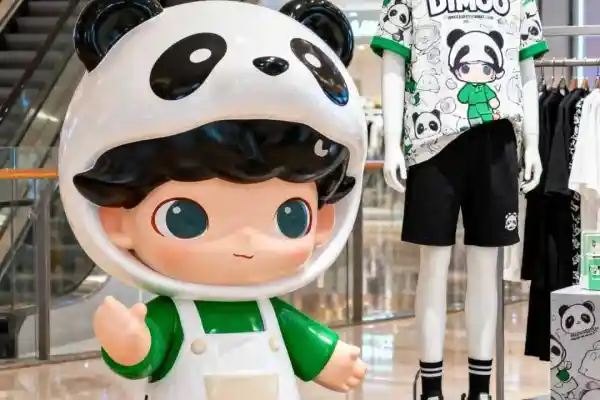
Panda Mascot – Trendy Art IP Sculptural Realization
Inflatable Sculpture
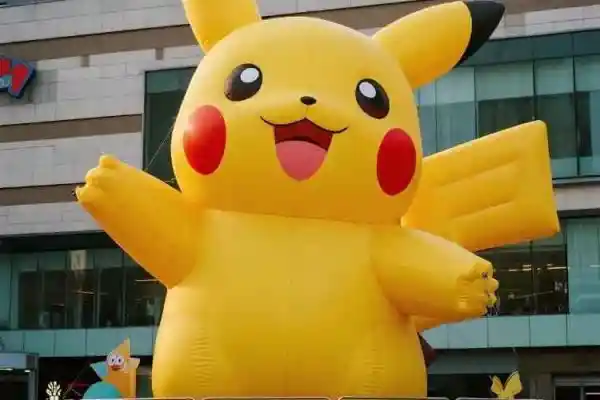
Giant Inflatable Pikachu Mascot Display
Related Insights
Continue reading related articles
Our Sculpture Solutions
Explore our full range of custom sculpture services

IP Character Replication
Learn More →

Large Sculpture Custom
Learn More →

Original IP Development
Learn More →

Solutions Services
Learn More →

Custom Inflatables
Learn More →

FRP & Fiberglass Sculpture Manufacturing
Custom FRP and fiberglass sculpture manufacturer - design, fabrication, and finishing.
Learn More →
Stainless Steel & Metal Sculpture Manufacturing
Custom stainless steel, bronze, corten, and aluminum sculpture manufacturer.
Learn More →
Theme Park Sculpture Services – Custom Amusement Park Statues
Custom Theme Park Sculptures – Bringing Imagination to Life Theme parks, amusement parks, zoos, and entertainment destinations thrive on immersive...
Learn More →
Commercial Sculpture Services – Custom Brand Mascots & Mall Art
Custom Commercial Sculptures – Elevate Your Brand & Space In today's competitive retail and commercial environment, first impressions matter. Commercial...
Learn More →