
Factory & Quality
Sculpture Quality Control & Inspection: What We Check Before Every Shipment
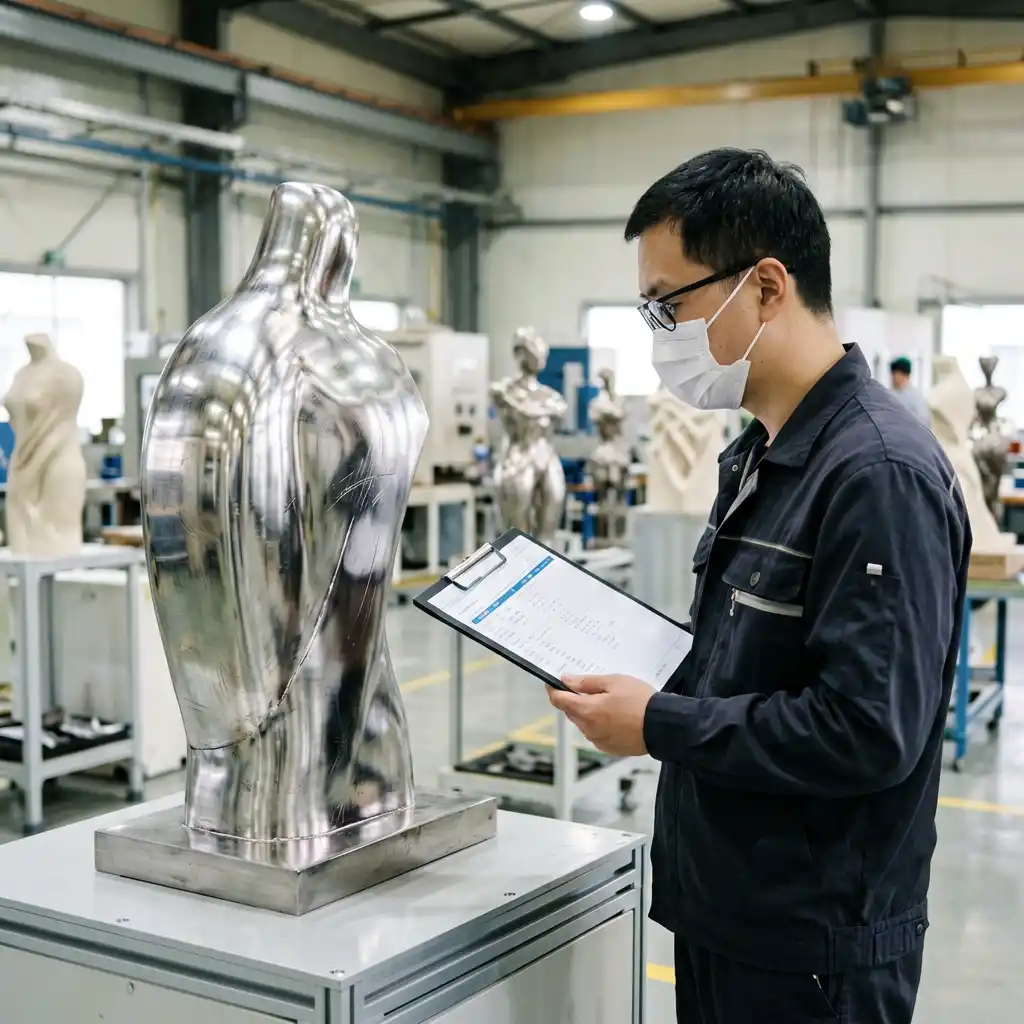
I’m Lisa Wang, Production Manager at Y Sculptures. In eleven years of overseeing custom sculpture fabrication, I’ve learned that the best feedback we ever receive is rarely “the sculpture looks beautiful.” It’s: “It arrived completely intact, and the quality exceeded our expectations.” That comment is the result of a disciplined quality control and inspection process — one that runs through every stage of production and again before the crate is sealed. In this guide, I’ll walk you through exactly what we check before every shipment, the standards we follow, and how you can verify quality on your own order.
Our 7-Stage Quality Control Process
Quality control at our factory is not a single final inspection — it’s seven checkpoints built into the workflow, each catching issues early before they compound. Here is the sequence every piece moves through:
1. Raw Material Inspectio
Nothing that ships is better than the materials it started with. Every fiberglass roll, stainless steel sheet, bronze ingot, and resin batch is checked on arrival: resin gel time and viscosity, fiberglass weight and weave consistency, and steel chemical composition certificates from the mill. We reject substandard lots before a single tool touches them.
2. Welding & Forming Quality Check
For metal sculptures, welds are inspected for porosity, undercut, and proper penetration — a weak weld is a future structural failure. For FRP, we check the lamination: no air pockets, proper resin-to-glass ratio, and uniform thickness across the shell. This is where the internal skeleton and structural ribs are also verified.
3. Surface Treatment Inspectio
After sanding, priming, and coating, each surface is examined under strong, angled light. We look for pinholes, fisheyes, orange peel, and color uniformity across panels. Metal pieces are checked for polish grade, and bronze for patina evenness. Imperfections are sanded and recoated before moving forward.
4. Dimensional Precision Verificatio
Every sculpture is measured against the approved 3D model and shop drawings. We verify overall height, width, depth, and the critical mounting points — anchor bolt locations, base flatness, and flange alignment. For pieces that must fit an existing plinth or pedestal, tolerance is typically ±3mm; for freestanding art, ±5mm.
5. Structural Strength Testing
Load-bearing and wind-load resistance are validated for outdoor installations. We test the steel skeleton, check weld integrity on critical joints, and for larger pieces run finite element analysis before fabrication even begins. Every load point is proven before shipment, not after installation.
6. Final Cosmetic Examinatio
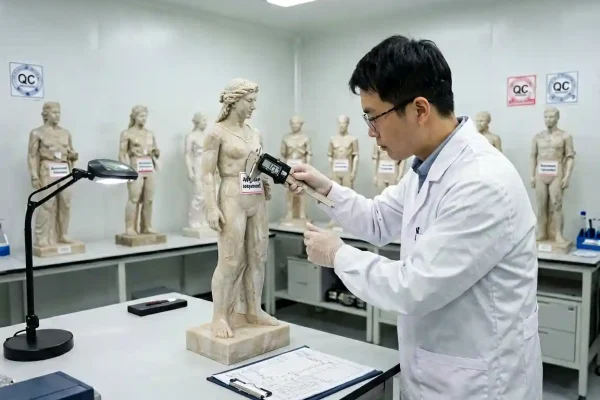
In final inspection, the piece is reviewed under full lighting from every angle, mirroring how a curator or client would see it. We check for scratches, fingerprints, dust specks in the clear coat, and any touch-up marks. The artist who sculpted the piece reviews the final surface to confirm the character and detail are true to the concept.
7. Pre-Packing Recheck
Immediately before crating, we re-verify every check once more — especially surface condition, since a lot can happen during handling and final polish. Only a piece that passes all seven stages gets wrapped, braced, and crated. For a deeper look at how this plays out inside a Chinese sculpture factory, read our 7-stage inspection breakdown.
Inspection Checklist for Different Materials
Each material has its own failure modes, so our inspection criteria are material-specific. Here’s what we look for on the four materials we work with most:
FRP (Fiberglass)
Thickness uniformity across the shell (thin spots crack and telegraph), surface pinholes or bubbles in the gel coat, and color consistency between panels, especially for large pieces made in multiple sections. We also check the seam between joined sections — it should be invisible after finishing.
Stainless Steel
Weld quality (no porosity, complete fusion, clean bead), the specified polish grade (mirror 2B, satin, or brushed), and corrosion resistance — verifying the correct grade was used for the environment. On mirror finishes we check for distortion in reflections, the surest sign of a bad polish.
Bronze
Cast integrity — no cracks, cold shuts, or porosity that weakens the piece — patina evenness across the surface, and faithful detail reproduction of the original model. Because bronze casting shrinks during cooling, we verify final dimensions match the approved model, not just the mold.
Corten / Weathering Steel
Uniform rust development (the protective patina should develop evenly, not in blotches), structural stability of the steel plate and welds, and confirmation that the correct weathering grade was used. Premature or uneven corrosion signals a steel quality problem that will only get worse outdoors.
International Standards We Follow
Beyond our internal checks, we hold production to recognized international standards so you get a predictable, verifiable quality bar:
- ISO 9001 — Our quality management system follows ISO 9001 principles: documented processes, traceability, and continuous improvement. This is the backbone of how QC is managed, not just a certificate on the wall.
- ASTM Material Standards — For stainless steel and structural steel, we reference ASTM specifications for grade, mechanical properties, and weld quality, ensuring materials perform as specified.
- Client-Specific Requirements — Many of our projects add their own standards, from marine-grade fasteners for coastal installations to fire-retardant resins for indoor public spaces. Client requirements always take precedence and are documented in the contract.
We also keep full traceability: every batch of material, every inspection record, and every correction is logged against the production file for that specific sculpture. Our guide to quality assurance standards in custom sculpture manufacturing explains how these requirements are documented and verified.
Third-Party Inspection Options
Many clients, especially on museum, municipal, and developer projects, want independent verification that the piece meets spec. This is completely normal and welcomed at our factory:
- SGS, Bureau Veritas (BV), and TUV — Internationally recognized inspection companies with offices in Guangzhou, Shenzhen, and Shanghai, minutes from our production site. They can inspect materials, monitor production stages, and perform pre-shipment checks.
- Pre-Shipment Joint Inspectio
— A scheduled walkthrough where you, your inspector, and our QC team review the finished piece together against the approved model and checklist. This is the most thorough way to sign off before crating. - Inspection Reports — We provide documentation for every stage: material certificates, dimensional verification sheets, weld inspection records, and a final inspection report you can share with your stakeholders or bank.
Common Quality Issues & How We Prevent Them
Most quality problems we see in the industry are preventable. Here are the three most common — and how we stop them before they reach you:
Transport Damage
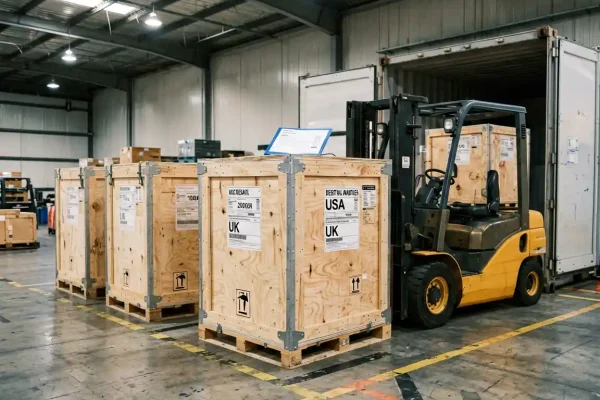
The #1 cause of “quality issues” isn’t fabrication — it’s the journey. We engineer every crate around the sculpture’s fragility: reinforced bases, internal bracing at load points, and broad foam contact surfaces that spread pressure instead of concentrating it. Fragile protrusions are packed separately or protected with sacrificial supports. Our pre-shipment QC and packing guide explains the crating choices that keep pieces intact in transit.
Surface Scratches & Scuffs
Damage during handling is avoided with soft-touch protocols: padded lifting straps, protective film on delicate finishes, and dedicated moving paths. Touch-up kits are included with every shipment so minor handling marks can be fixed on site if they occur during installation.
Dimensional Deviatio
Measure-twice-cut-once applies to sculpture too. We lock dimensions against the 3D model at multiple checkpoints, not just once, so the piece fits its intended space and mounting system exactly as designed.
FAQ
Do you provide quality inspection reports?
Yes. Every sculpture ships with a complete inspection file: material certificates, dimensional verification records, weld and surface inspection results, and a final pre-shipment report. This documentation is useful for your records and for any third-party or customs inspection.
Can I hire a third-party inspector?
Absolutely. SGS, Bureau Veritas, and TUV all operate near our production site and can inspect materials, monitor production, or perform final pre-shipment checks. Many clients also bring their own freelance inspectors who specialize in art and sculpture. We cooperate fully with any inspector you appoint.
What standards do you follow?
Our quality management follows ISO 9001 principles, and we reference ASTM material and weld standards for stainless and structural steel. Client-specific requirements always take precedence and are documented in the contract and QC checklist.
How do you prevent damage during shipping?
Every crate is engineered around the sculpture’s specific fragility — reinforced base, internal bracing at load points, broad foam contact surfaces, and protective film on delicate finishes. Fragile parts are packed separately, and each shipment includes a touch-up kit for minor on-site marks.
What if the sculpture doesn’t meet quality expectations?
Every issue is documented and a correction plan with a timeline is agreed before anything ships. A reputable manufacturer never ships a piece that failed QC. For large commissions, our large sculpture custom process builds these QC and sign-off steps directly into the contract, so expectations are clear from day one.
Frequently Asked Questions
Do you provide quality inspection reports?
Yes. We provide detailed inspection reports with photos and measurements for every shipment. Reports include material certificates, dimension verification, and surface finish documentation.
Can I hire a third-party inspector?
Absolutely. We welcome third-party inspections from SGS, BV, or your preferred agency. We coordinate all logistics and provide full access to our facility.
What quality standards do you follow?
Our facility is ISO 9001 certified. We follow ASTM standards for materials and industry best practices for fabrication and finishing.
How do you prevent damage during shipping?
We use industrial crating with foam padding, moisture barriers, and reinforced packaging. Heavy pieces are secured on custom wooden crates with steel strapping.
What if the sculpture doesn’t meet quality expectations?
We offer unlimited revisions during the sampling stage. For final production, we conduct thorough QC before shipment. Any defects found are repaired at our cost.
L
Written by Lisa Wang
Lisa Wang is Production & Quality Manager at Y Sculptures, bringing 14 years of hands-on experience in sculpture manufacturing, material science, and quality control. She leads the factory's ISO-compliant QC process, from raw material inspection to pre-shipment verification. Lisa has managed production for 2,800+ sculptures, ensuring precision in color matching, structural integrity, and surface finishing.
Related Projects
Browse real projects matching this topic
Related Insights
Continue reading related articles
Factory & Quality
Jul 13, 2026
3 Weeks Visiting Chinese Sculpture Factories: What Separates the Best
Our Sculpture Solutions
Explore our full range of custom sculpture services

IP Character Replication
Learn More →

Large Sculpture Custom
Learn More →

Original IP Development
Learn More →

Solutions Services
Learn More →

Custom Inflatables
Learn More →

FRP & Fiberglass Sculpture Manufacturing
Custom FRP and fiberglass sculpture manufacturer - design, fabrication, and finishing.
Learn More →
Stainless Steel & Metal Sculpture Manufacturing
Custom stainless steel, bronze, corten, and aluminum sculpture manufacturer.
Learn More →
Theme Park Sculpture Services – Custom Amusement Park Statues
Custom Theme Park Sculptures – Bringing Imagination to Life Theme parks, amusement parks, zoos, and entertainment destinations thrive on immersive...
Learn More →
Commercial Sculpture Services – Custom Brand Mascots & Mall Art
Custom Commercial Sculptures – Elevate Your Brand & Space In today's competitive retail and commercial environment, first impressions matter. Commercial...
Learn More →