
Cost & Budget
How Much Does a Custom Large Sculpture Cost? 2026 Guide
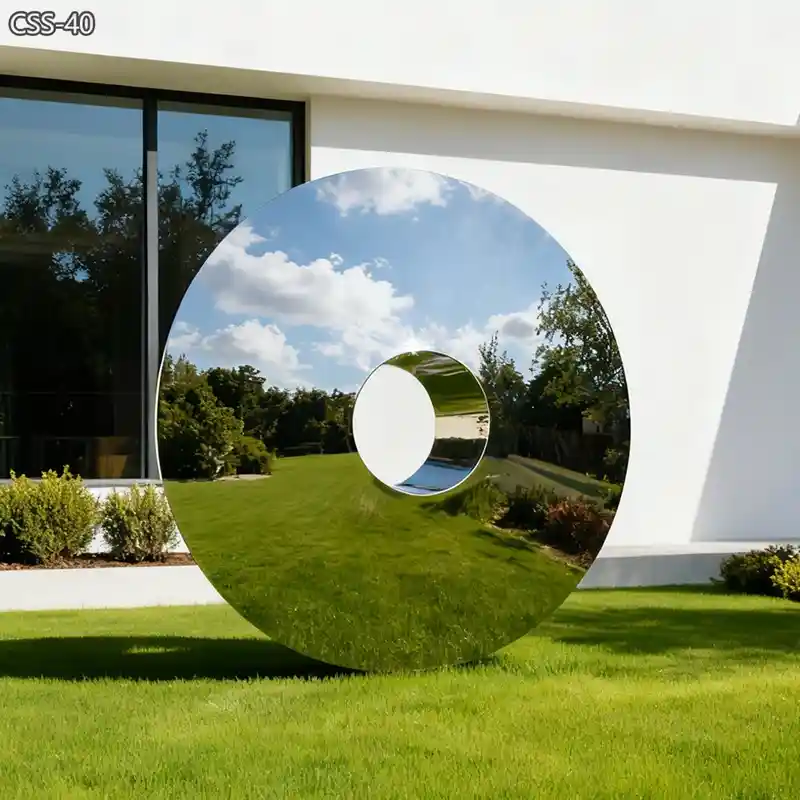
Whether you are a real estate developer looking to elevate a commercial plaza, a public art committee planning a municipal landmark, or a private collector commissioning a statement piece for an estate, one critical question always leads the conversation: How much does a custom large sculpture cost?
In 2026, the custom sculpture market has experienced notable shifts. Advances in 3D digital modeling and robotic carving have optimized certain workflows, yet volatile raw material prices and complex global logistics keep the entry point for custom public art relatively high. As a general benchmark, a custom large sculpture (defined as 7 feet or taller, up to monumental scales) typically ranges from $8,000 to well over $100,000.
Understanding why this pricing window is so massive requires looking beyond the physical artwork. You are not just purchasing raw metal or stone; you are financing custom engineering, intensive specialized labor, structural safety certifications, and logistical execution.
2026 Custom Large Sculpture Cost Overview
To give you an immediate framework for project budgeting, the table below outlines the average cost structures for large sculptures (7 feet and above) based on the most widely commissioned archival materials in 2026.
| Material Type | Typical Height Range | Estimated Price Range (USD) | Best Suited For | Expected Lifespan |
| Fiberglass / Resin | 7 to 15 feet | $3,000 to $25,000 | Temporary exhibits, indoor retail, lightweight pop-art | 10 to 20 years (indoors) |
| Stainless Steel (304/316) | 7 to 30+ feet | $5,000 to $85,000+ | Modern urban landscapes, coastal environments, corporate plazas | 100+ years |
| Corten Steel (Weathering) | 7 to 25 feet | $6,000 to $70,000 | Public parks, industrial designs, rustic landscape architecture | 100+ years |
| Cast Bronze | 7 to 12 feet | $10,000 to $90,000+ | Historical monuments, lifelike figurative memorials, classic fine art | 100+ years |
| Natural Marble / Granite | 7 to 10 feet | $15,000 to $120,000+ | High-end private estates, classical institutional architecture | 100+ years |
Note: The estimates above reflect direct-from-foundry fabrication costs. Commissioning a world-renowned, blue-chip gallery artist introduces a significant brand premium, easily pushing these numbers into the mid-six or seven-figure range.
The 5 Core Pillars Driving Custom Sculpture Costs
When a foundry or artist builds a line-item quote for a custom large-scale sculptures such as our Giant Climbing Panda installation commission, the final figure is dictated by five primary variables. Understanding these pillars will help you navigate your design phase without accidentally triggering exponential cost increases.
1. Material Choice and Raw Commodity Pricing
For a detailed breakdown of how different materials compare in cost, durability, and maintenance, see our Fiberglass vs Bronze vs Stone comparison guide.
The choice of medium impacts not only the raw material invoice but also the entire fabrication process:
-
Bronze: Requires the multi-step lost-wax casting process (or sand casting for massive geometric planes). This involves creating a clay model, a rubber mold, a wax replica, a ceramic shell, pouring molten metal at 2,000°F, welding panels together, and applying chemical patinas. The labor hours alone make bronze highly premium.
-
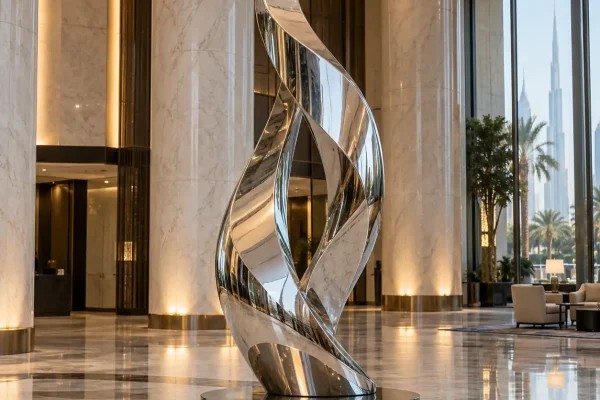
Stainless Steel: Demands precise sheet-metal cutting, manual or robotic forging, internal structural reinforcing, and hundreds of hours of grinding and polishing. Mirror-polished finishes require far more labor than brushed or matte textures.
-
Fiberglass: The most cost-effective alternative. It relies on a hollow mold layered with glass fibers and liquid resin. While affordable, it lacks the weight, prestige, and generational durability of metal or stone.
2. The Law of Cubic Scaling (Volume vs. Height)
A common mistake buyers make is assuming that an 12-foot sculpture will cost double what a 6-foot sculpture costs. It will actually cost significantly more.
When you double the height of a three-dimensional object, you increase its surface area by a factor of four, and its volume and weight by a factor of eight. An 8-foot bronze statue might weigh 600 pounds, but a 14-foot version of the exact same design could easily exceed 4,000 pounds. This dramatic scale increase requires exponentially more raw material, massive internal support systems, and heavier industrial cranes during production.
3. Design Complexity: Realistic vs. Abstract
The style of your sculpture directly correlates to artisan labor hours:
-
-
Realistic/Figurative Art: Sculpting realistic human anatomy, historically accurate clothing folds, and nuanced facial expressions requires weeks of meticulous hand-modeling by master artists.
-
Abstract/Geometric Art: Sleek, contemporary designs can often be mapped directly via CAD software. Foundries can utilize CNC laser cutters and automated rolling machines to shape metal sheets quickly, reducing the initial modeling hours.
-
4. Structural Engineering and Internal Armatures
Large sculptures placed in public or commercial zones face intense environmental forces. They must withstand high wind loads, seismic activity, and potential vandalism.
To ensure safety, large hollow sculptures (like stainless steel or bronze) require a complex, hidden internal skeleton called an armature. Typically constructed from heavy-duty, hot-dip galvanized steel or structural grade 304 stainless steel, this internal framework must be engineered precisely to anchor the sculpture securely to its concrete foundation.
5. Logistics, Crating, and Site Installation
The fabrication cost is only part of the equation. Moving a multi-ton piece of art across states or oceans requires specialist handling:
-
Crating: Large sculptures require custom-built wooden crates or internal steel travel-frames to prevent deformation during transit.
-
Permits & Cranes: Delivering a monumental sculpture to its final site frequently involves flatbed freight shipping, wide-load highway permits, police escorts, and hiring local crane operators and rigging crews for the actual lift.
The Step-by-Step Commissioning Process
Understanding the cost structure is just one part of the puzzle. For a complete walkthrough of the entire process, read our Step-by-Step Guide to Commissioning a Custom Outdoor Sculpture.
Commissioning a custom large sculpture is a structured, collaborative journey that typically takes anywhere from 3 to 9 months depending on scale.
Hidden Fees to Account For in Your Budget
For park and garden projects specifically, check our 7 Essential Questions Before Commissioning a Park or Garden Sculpture.
When reviewing a sculpture proposal, look closely at what is not included. To avoid unexpected out-of-pocket expenses, ensure your budget accounts for these secondary costs:
-
Civil Engineering Fees ($1,500 to $5,000): Municipalities typically require a stamped drawing from a licensed structural engineer certifying that the sculpture will not pose a public hazard during storms or seismic events. The full fabrication workflow, including quality checks at each stage, is detailed in How Custom Sculptures Are Made: From Concept to Installation in 10 Steps.
-
Foundation Construction ($2,000 to $10,000+): The client is almost always responsible for hiring a local concrete contractor to pour the reinforced concrete pad and set the anchor bolts according to the foundry’s specifications.
-
Import Duties and Customs Clearance ($1,000 to $4,000): If you are working with an overseas foundry to optimize fabrication costs, factor in ocean freight, port handling fees, customs brokerage, and local import tariffs.
Insider Strategies to Optimize Your Budget
If your dream concept is out-pacing your available funding, you can implement several clever design adjustments to pull the project back within financial parameters without sacrificing structural scale.
1. Inquire About Existing 1:1 Clay Models
A significant portion of a custom statue’s cost lies in the initial modeling phase. Many large art foundries possess an archive of existing 1:1 clay or digital models for popular themes (such as wildlife, historical motifs, or abstract concepts). If you can adapt your vision to leverage an existing model base, you can instantly save anywhere from $2,000 to $5,000 in model-making labor fees.
2. Optimize the Material Thickness
For large sheet-metal designs (like Stainless or Corten Steel), work with the foundry to optimize the plate thickness. While the outer skin needs to be structurally sound, dropping the sheet gauge slightly while strengthening the internal framework can noticeably reduce raw material commodity costs without changing the exterior appearance.
3. Work Directly with the Fabrication Foundry
Whenever possible, cut out unnecessary intermediaries. Design agencies and art consultancies provide exceptional curation, but they add substantial markup management fees. Working directly with an established, asset-heavy sculpture foundry gives you direct access to the source pricing and clear lines of communication regarding physical construction.
L
Written by Lisa Wang
Lisa Wang is Production & Quality Manager at Y Sculptures, bringing 14 years of hands-on experience in sculpture manufacturing, material science, and quality control. She leads the factory's ISO-compliant QC process, from raw material inspection to pre-shipment verification. Lisa has managed production for 2,800+ sculptures, ensuring precision in color matching, structural integrity, and surface finishing.
Related Projects
Browse real projects matching this topic

IP Sculpture
“Nailong” Urban Healing Landmark
IP Sculpture
The Pinnacle – Iconic IP Sculpture Commission
IP Sculpture
Nebula Neko — Urban Plaza IP Sculpture
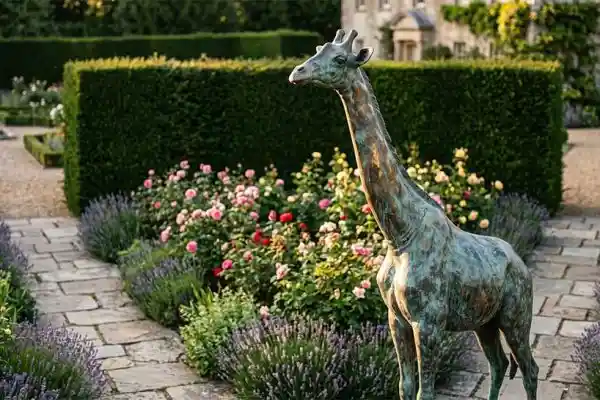
Gardens & Resorts
“Majestic Giraffe” — Hand-Cast Bronze Giraffe Garden Sculpture
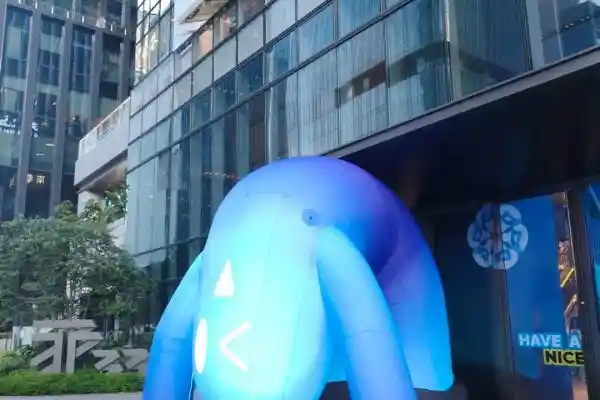
Inflatable Sculpture
The Urban Dreamer – Giant Luminescent IP Inflatable Sculpture
Related Insights
Continue reading related articles
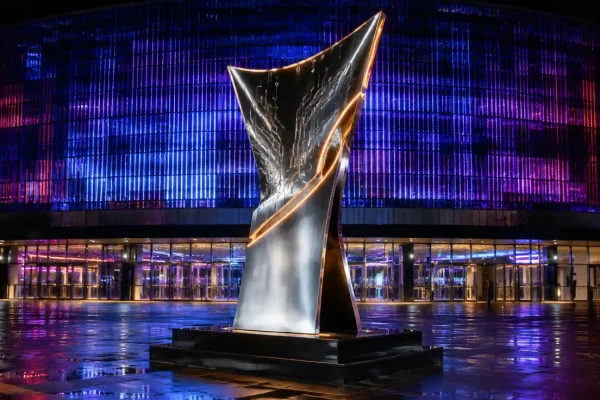
Brand Mascot & IP
Oct 13, 2026
Esports Arena & Gaming Venue Sculpture: Landmarks, Trophies & Mascot Statues
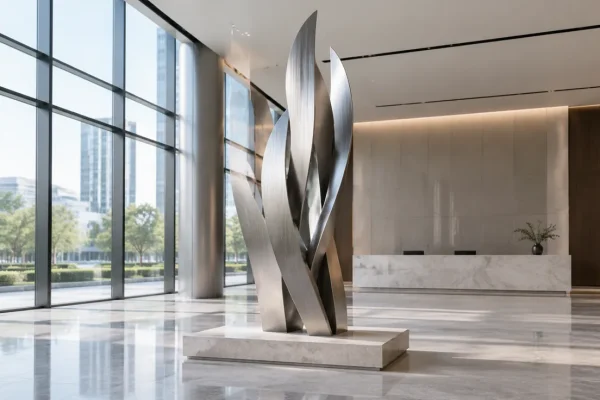
Commercial & Hospitality
Oct 13, 2026
Corporate Lobby & Office Sculpture: Commissioning Guide for Developers
Custom Sculpture Insights & Guides
Oct 13, 2026
How Long Do Outdoor Sculptures Last? Material-by-Material Lifespan Guide
Our Sculpture Solutions
Explore our full range of custom sculpture services

IP Character Replication
Beyond 2D: Why IP Replication Drives Brand Engagement A character that lives only on a screen is easy to scroll...
Learn More →
Large Sculpture Custom
Engineering Monumental Scale A sculpture that stands 15 metres tall is not simply a 1.5-metre maquette scaled up ten times....
Learn More →
Original IP Development
From Concept to Icon Most sculpture enquiries begin with a reference: a licensed character, a film hero, an existing artwork...
Learn More →
Solutions Services
One Factory, Every Sculpture Material A sculpture brief rarely arrives pre-sorted by material. A client sends a reference image, a...
Learn More →
Custom Inflatables
Inflatable Sculptures as Brand Media Most sculptural commissions are permanent assets: they are built once, installed once, and admired for...
Learn More →
FRP & Fiberglass Sculpture Manufacturing
Custom FRP and fiberglass sculpture manufacturer - design, fabrication, and finishing.
Learn More →
Stainless Steel & Metal Sculpture Manufacturing
Custom stainless steel, bronze, corten, and aluminum sculpture manufacturer.
Learn More →
Theme Park Sculpture Services – Custom Amusement Park Statues
Custom Theme Park Sculptures – Bringing Imagination to Life Theme parks, amusement parks, zoos, and entertainment destinations thrive on immersive...
Learn More →
Commercial Sculpture Services – Custom Brand Mascots & Mall Art
Custom Commercial Sculptures – Elevate Your Brand & Space In today's competitive retail and commercial environment, first impressions matter. Commercial...
Learn More →