
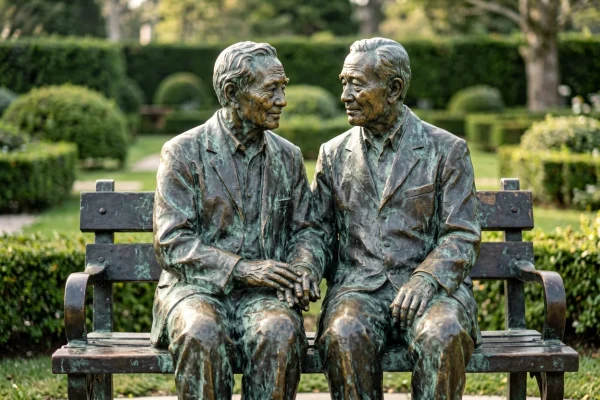
Custom Sculpture Insights & Guides
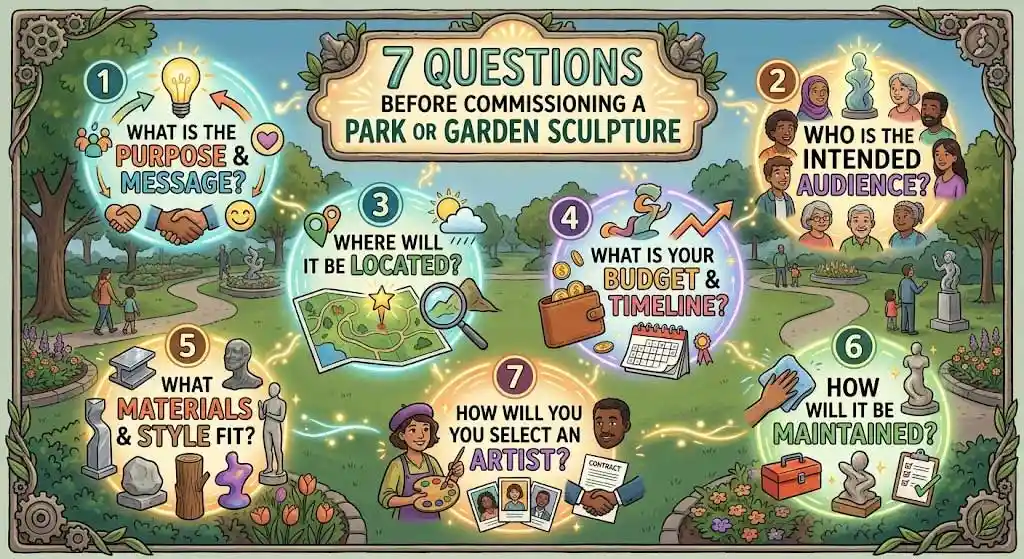
7 Questions Before Commissioning a Park or Garden Sculpture
Commissioning a custom sculpture for a public park, corporate estate, or private botanical garden is a transformative investment. A well-executed piece of public or landscape art acts as a visual anchor, evokes emotional responses, and can even redefine the identity of a geographic location.
However, commissioning outdoor art is vastly different from purchasing a gallery piece. It requires balancing artistic vision with environmental durability, engineering compliance, and long-term maintenance. Failing to plan for these realities can lead to soaring costs, legal roadblocks, or an installation that degrades prematurely under the elements.
To ensure your project is structurally sound, visually impactful, and financially viable, answer these seven critical questions before signing a contract with a sculptor.
1. What is the Core Purpose and Narrative of the Space?
For brand-focused park installations, our Brand Mascot Sculpture guide explores how physical branding assets transform public spaces.
Every successful sculpture tells a story or serves a distinct spatial function. Before speaking to an artist, you must define the emotional and structural goal of the artwork.
-
Is it a Focal Point or a Discovery? A massive centerpiece at a park entrance demands a different scale and aesthetic than an intimate, hidden figurine discovered along a winding garden path.
-
What is the Narrative? For public parks, sculptures often honor local history, cultural heritage, or ecological themes. For private gardens, the narrative might be more abstract, focusing on peace, motion, or the interplay of light.
-
Who is the Audience? A community park requires highly accessible, engaging, and safe art. A private corporate courtyard may lean toward avant-garde, minimalist geometries.
Aligning the sculpture’s purpose with the location’s existing identity ensures the piece feels organically integrated rather than forced.
2. How Will the Artwork Interact with the Changing Environment?
An outdoor sculpture is a dynamic object that changes throughout the day and across seasons. You must analyze the environmental factors of your specific site:
-
Sunlight and Shadow: Note where the sun rises and sets relative to the installation site. Direct sunlight can create harsh glare on polished metals, while dramatic backlighting can turn a figurative sculpture into a silhouette.
-
Seasonal Context: How will the piece look when surrounding deciduous trees lose their leaves? Will a bright white stone sculpture vanish against winter snow, or will a vivid corten steel piece provide a warm contrast?
-
Wind and Drainage: High-wind areas require aerodynamic assessments. Low-lying garden sectors prone to standing water will demand specialized base engineering to prevent waterlogging and foundational shifting.
3. Which Materials Can Best Withstand the Local Microclimate?
Compare material options in our Fiberglass vs Bronze vs Stone guide, and learn about FRP outdoor durability for park settings.
Material selection dictates both the lifespan and the aging process of outdoor art. Selecting the wrong material for your specific climate zone can result in corrosion, fading, or structural fracturing.
Outdoor Material Performance Matrix
| Material | Expected Lifespan | Best Suited For | Vulnerabilities / Cons |
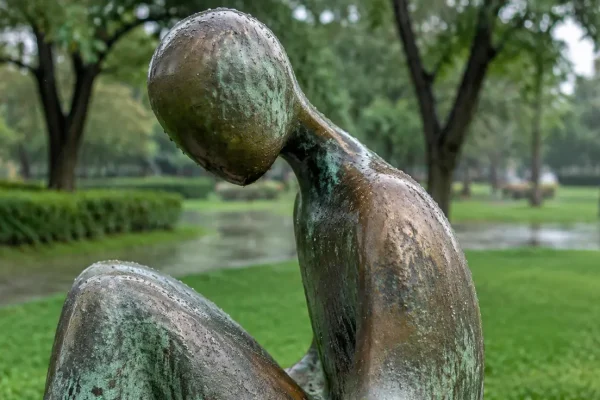
| Bronze | Centuries | Traditional & figurative art, all climates | Develops a natural green patina over time unless regularly waxed. |
| Stainless Steel | 50+ Years | Modern, abstract, urban settings | Highly reflective; prone to showing fingerprints and scratches. |
| Corten Steel | Decades | Rustic, architectural landscapes | Bleeds iron oxide runoff during initial weathering, staining concrete bases. |
| Granite / Marble | Centuries | Classic, enduring monuments | Susceptible to acid rain, frost shattering, and organic moss growth. |
| Fiberglass / Resin | 10–20 Years | Vibrant colors, complex geometries | Degrades under prolonged UV exposure; lightweight and prone to wind damage. |
4. What Are the Long-Term Maintenance and Conservation Costs?
Our Outdoor Fiberglass Maintenance Guide covers cleaning schedules, waxing, and repair procedures that apply to most park and garden sculptures.
There is no such thing as a zero-maintenance outdoor sculpture. Nature always interacts with the artwork, whether through bird droppings, acid rain, pollen, or graffiti.
Before commissioning, demand a detailed conservation plan from the artist or fabricator. Ask yourself:
-
Does the budget account for annual power-washing, structural checkups, or protective re-waxing?
-
If the material is porous (like limestone), are you prepared to treat organic growth like mold, algae, or moss?
-
For public installations, what is the protocol for removing graffiti without stripping away the artist’s intended patina or finish?
Factoring maintenance into your initial financial forecast ensures the artwork remains a community asset rather than an eyesore down the road.
5. What Safety, Zoning, and Engineering Codes Must Be Fulfilled?
When art enters the public sphere, it becomes subject to civil engineering standards and legal compliance. This is especially vital for public parks where children and families gather.
The Public Art Safety Checklist:
Anti-Climbing Design: If a sculpture is installed in a public park, people will try to climb it. Ensure the design lacks dangerous handholds, sharp edges, or high fall risks.
-
Wind and Seismic Load Engineering: Large-scale sculptures must be structurally vetted by a licensed civil engineer to guarantee they can withstand local wind storms or earthquake hazards. For more detail on the production and engineering stages, read Custom Sculpture Manufacturing: 7-Step Process Guide.
-
Foundation Engineering: Sculptures cannot simply rest on dirt. They require reinforced concrete pads, deep pilings, or subterranean anchors to prevent tilting due to soil erosion or frost heaving.
-
ADA Compliance: Ensure the footprint of the sculpture and its viewing platform do not obstruct pedestrian pathways or violate accessibility standards.
6. Who Owns the Intellectual Property and Copyright?
Navigating the legalities of art commissions is a critical step that should be codified in a formal contract before fabrication begins. Under most international copyright laws, the artist retains the intellectual property rights to the design, even if you purchase the physical object.
Clarify the following points in writing:
-
Reproduction Rights: Can you use images of the sculpture for commercial merchandise, promotional brochures, or digital media? We walk through the complete fabrication process in our manufacturing guide: How Custom Sculptures Are Made: From Concept to Installation in 10 Steps.
-
Alteration and Relocation: What happens if the park needs to be redeveloped in 10 years? Do you have the legal right to relocate or alter the surrounding landscape, or does the contract require the artist’s prior consent?
-
Decommissioning Clauses: If the sculpture damages beyond repair or becomes a safety hazard, what is the approved protocol for removing and disposing of the artwork?
7. What is the Realistic Timeline and Milestone Payment Structure?
For detailed budget planning and cost breakdowns, see our Custom Sculpture Cost Guide 2026 and Step-by-Step Commission Guide.
Large-scale commissions are multi-stage engineering projects that can span anywhere from six months to over two years. A clear timeline protects both the commissioning client and the artist from scope creep and financial disputes.
A standard, secure procurement sequence typically follows this breakdown:
Commissioning a park or garden sculpture is a deeply rewarding endeavor that fuses human creativity with the natural world. By addressing these seven questions early in the planning phase—focusing on narrative, environmental harmony, structural safety, and clear contractual legalities—you will protect your financial investment and ensure the resulting artwork inspires visitors for generations to come.
J
Written by James Liu
James Liu is Project Manager at Y Sculptures, specializing in end-to-end custom sculpture project delivery for commercial, hospitality, and public art sectors. With 12 years in the industry, James coordinates design approvals, material sourcing, fabrication timelines, international shipping logistics, and on-site installation. He has successfully delivered 500+ projects to 30+ countries.
Related Projects
Browse real projects matching this topic
Related Insights
Continue reading related articles
Brand Mascot & IP
Oct 13, 2026
Esports Arena & Gaming Venue Sculpture: Landmarks, Trophies & Mascot Statues
Commercial & Hospitality
Oct 13, 2026
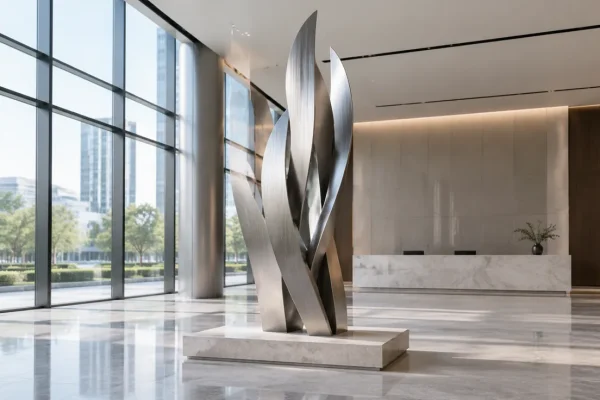
Corporate Lobby & Office Sculpture: Commissioning Guide for Developers
Custom Sculpture Insights & Guides
Oct 13, 2026
How Long Do Outdoor Sculptures Last? Material-by-Material Lifespan Guide
Our Sculpture Solutions
Explore our full range of custom sculpture services

IP Character Replication
Beyond 2D: Why IP Replication Drives Brand Engagement A character that lives only on a screen is easy to scroll...
Learn More →
Large Sculpture Custom
Engineering Monumental Scale A sculpture that stands 15 metres tall is not simply a 1.5-metre maquette scaled up ten times....
Learn More →
Original IP Development
From Concept to Icon Most sculpture enquiries begin with a reference: a licensed character, a film hero, an existing artwork...
Learn More →
Solutions Services
One Factory, Every Sculpture Material A sculpture brief rarely arrives pre-sorted by material. A client sends a reference image, a...
Learn More →
Custom Inflatables
Inflatable Sculptures as Brand Media Most sculptural commissions are permanent assets: they are built once, installed once, and admired for...
Learn More →
FRP & Fiberglass Sculpture Manufacturing
Custom FRP and fiberglass sculpture manufacturer - design, fabrication, and finishing.
Learn More →
Stainless Steel & Metal Sculpture Manufacturing
Custom stainless steel, bronze, corten, and aluminum sculpture manufacturer.
Learn More →
Theme Park Sculpture Services – Custom Amusement Park Statues
Custom Theme Park Sculptures – Bringing Imagination to Life Theme parks, amusement parks, zoos, and entertainment destinations thrive on immersive...
Learn More →
Commercial Sculpture Services – Custom Brand Mascots & Mall Art
Custom Commercial Sculptures – Elevate Your Brand & Space In today's competitive retail and commercial environment, first impressions matter. Commercial...
Learn More →