
Custom Sculpture Insights & Guides
Weather Resistant Outdoor Sculpture Materials: FRP vs Stainless Steel vs Bronze
UV Resistance Comparison: Which Material Survives Sunlight Best?
Ultraviolet radiation is the primary environmental threat to outdoor sculptures. UV rays break molecular bonds in polymers and fade pigments, causing surface degradation that progresses from cosmetic damage to structural failure over time.
Stainless steel is naturally UV-inert. The metal does not degrade, fade, or discolor under direct sunlight exposure. The only UV concern is the degradation of protective clear coatings applied to mirror-polished surfaces — once the coating fails, the polished surface may oxidize and lose its reflective finish. However, brushed or matte-finish stainless steel requires no UV protection whatsoever and will appear unchanged after decades of sun exposure.
FRP (fiber-reinforced plastic) is naturally UV-susceptible in its raw form. The polyester or vinyl ester resin matrix will yellow, chalk, and embrittle if left unprotected. All outdoor FRP sculptures require a UV-stable polyurethane or acrylic urethane paint system with built-in UV absorbers and hindered amine light stabilizers (HALS). With proper coating, FRP achieves 15–25 years of outdoor service life before refinishing is needed. Without UV protection, FRP surface degradation begins within 6–12 months.
Bronze behaves differently. Rather than UV degradation, bronze develops a natural patina — a protective layer of copper carbonate and other oxidation compounds that forms over months to years. This patina is self-limiting and self-healing: once formed, it protects the underlying metal from further corrosion. UV light does not damage bronze, though it can accelerate the initial patination process. Many architects and designers specifically seek bronze for its evolving surface character.
Corrosion and Rust Resistance
For outdoor sculptures, corrosion resistance can determine whether a piece lasts 10 years or 100 years.
Stainless steel resists corrosion through its chromium oxide passive layer. The most common grades for outdoor sculpture — 304 and 316 — offer excellent general corrosion resistance. Grade 316 contains molybdenum, providing superior resistance to chloride pitting, making it the standard choice for coastal or marine environments. A well-maintained stainless steel sculpture in an inland environment will show essentially zero corrosion over its lifetime. In coastal settings, Grade 316 is required, and even then, regular rinsing (to remove salt deposits) is recommended.
FRP is inherently corrosion-proof. Resin does not rust, oxidize, or electrochemically degrade. This makes FRP the only truly corrosion-proof material option for outdoor sculpture. In environments with high acidity (industrial pollution) or salinity (coastal/shipboard), FRP outperforms both stainless steel and bronze. The only corrosion risk is galvanic — if stainless steel armature or mounting hardware is embedded in FRP without proper isolation, bimetallic corrosion can affect the metal components.
Bronze develops a protective patina but is not immune to corrosion. “Bronze disease” — a cyclic corrosion process involving copper chlorides — can occur in high-humidity, chloride-rich environments. Regular maintenance (washing and waxing) prevents this condition. Bronze is also susceptible to acid rain damage in heavily industrialized areas, where sulfur compounds can create unsightly black copper sulfide deposits.
Wind Load Resistance: Structural Performance Under Stress
Large outdoor sculptures act as sails, subjecting their structure and mounting system to significant wind forces. Material selection directly affects how a sculpture performs under wind load.
FRP offers the best strength-to-weight ratio for wind resistance. A lightweight FRP sculpture imposes lower base loads on foundations and mounting hardware, reducing civil engineering costs. The material’s flexural modulus (typically 7–14 GPa) allows FRP to absorb energy through deflection without permanent deformation — a key advantage in gust-prone environments. FRP does not suffer from fatigue cracking under cyclic wind loading the way metals can, provided the laminate design accounts for stress concentrations at mounting points.
Stainless steel is rigid and heavy (density ~7.9 g/cm³ vs ~1.5 g/cm³ for FRP). A stainless steel sculpture of equivalent size to an FRP piece will weigh 4–5 times more, requiring larger foundations, heavier-duty mounting brackets, and more substantial structural support within the sculpture. This increases both fabrication and installation costs. However, stainless steel’s high Young’s modulus (200 GPa) means minimal deflection under load — important for sculptures with tight clearance tolerances. We take an honest look at stainless steel vs other metals in Sculpture Material Comparison: Stainless Steel vs Bronze vs Corten vs FRP.
Bronze is similarly heavy and rigid. Its density (8.7–8.9 g/cm³) makes it the heaviest of the three materials. Bronze sculptures are structurally self-supporting at typical sizes (up to 5–6 meters), but larger installations require internal armature — typically stainless steel — adding cost and complexity. Wind loading is a primary design consideration for bronze public art, with wall thickness and structural gussets engineered to prevent resonant vibration.
Temperature Extremes: Thermal Expansion and Contraction
Outdoor sculptures in climates ranging from desert heat to subarctic cold must withstand thermal cycling without cracking, warping, or delaminating.
FRP has a coefficient of thermal expansion (CTE) of 12–30 × 10⁻⁶ /°C — significantly higher than metals. Large FRP sculptures (10m+) require expansion joints or flexible mounting systems to accommodate length changes of several millimeters across seasonal temperature swings. The resin glass transition temperature (Tg) is typically 60–100°C for polyester, well above ambient conditions, so the material maintains stiffness in all climates. At subzero temperatures, FRP becomes slightly more brittle, but this is rarely an issue for well-designed laminates.
Stainless steel has a CTE of 16–18 × 10⁻⁶ /°C, and its mechanical properties remain stable from –200°C to 800°C. Thermal expansion must be accommodated in the mounting design, but stainless steel experiences no brittle transition or embrittlement at cold temperatures. It is the most thermally stable material of the three for extreme environments. We take an honest look at stainless steel vs other metals in Sculpture Factory Insider: Fabricating Stainless Steel, Bronze, Corten & FRP.
Bronze has a CTE of 18–19 × 10⁻⁶ /°C, similar to stainless steel. However, bronze castings can contain internal residual stresses from the solidification process. In extreme temperature cycling, these stresses can cause distortion or, in rare cases, cracking. Stress-relief annealing after casting mitigates this risk. Bronze maintains its mechanical properties across all common outdoor temperature ranges.
Maintenance Requirements
| Material | UV Resistance | Corrosion Resistance | Wind Load Performance | Maintenance | Lifespan | Cost Level |
|---|---|---|---|---|---|---|
| FRP (coated) | Good (with UV paint) | Excellent (inherently corrosion-proof) | Excellent (lightweight, deflects under load) | Moderate — repaint every 5–10 years; inspect coating annually | 15–25 years before refinishing needed; indefinite with maintenance | $$ (Low–Moderate) |
| Stainless Steel 304 | Excellent (UV-inert) | Good (inland); Moderate (coastal) | Good (heavy, rigid; requires strong foundations) | Low — occasional wash; wax polished surfaces annually | 50+ years with minimal maintenance | $$$ (Moderate–High) |
| Stainless Steel 316 | Excellent (UV-inert) | Excellent (coastal/marine) Excellent | Good (same as 304) | Low — rinse in coastal areas | 75+ years | $$$$ (High) |
| Bronze | Excellent (patina protects) | Good (requires maintenance in aggressive environments) | Fair (heaviest material; high foundation costs) | Moderate — wash and wax annually; monitor for bronze disease in humid climates | 100+ years with proper maintenance | $$$$$ (Very High) |
Cost vs Lifespan Analysis for Decision-Makers
When evaluating outdoor sculpture materials, the total cost of ownership over a 25-year horizon tells a different story than initial fabrication price alone.
FRP offers the lowest initial cost and the lowest total weight, translating to savings in fabrication, shipping, and installation. Over 25 years, a well-maintained FRP sculpture requires 2–3 repaint cycles, each costing approximately 15–25% of the original fabrication cost. Total 25-year cost of ownership is typically 1.3–1.5× the initial investment. FRP is the logical choice for budget-sensitive public art, corporate campus installations, and commercial theme park projects where periodic refinishing is part of the operational budget.
Stainless steel (Grade 304/316) has a higher initial cost (2–4× FRP for equivalent size), but near-zero maintenance cost. The 25-year total cost of ownership is essentially the initial cost plus occasional cleaning. For projects where zero-maintenance requirements are specified — such as transportation hubs, government buildings, or remote installations — stainless steel is the superior value despite the higher upfront expense.
Bronze carries the highest initial cost (4–8× FRP) and moderate ongoing maintenance. However, bronze’s 100+ year lifespan means it can be viewed as a multi-generational investment. Bronze remains the material of choice for civic monuments, memorials, and institutional collections where permanent value and artistic tradition outweigh short-term budget optimization.
For specific guidance on selecting the right material for your outdoor sculpture project, Y Sculptures offers material consultation as part of its public art sculpture services. Explore the stainless steel metal sculpture manufacturing capabilities for more details on metal fabrication, and the FRP fiberglass sculpture manufacturing hub for composite options.
D
Written by David Chen
David Chen is Design Director at Y Sculptures with 18+ years in large-scale sculpture design and fabrication. He specializes in FRP, stainless steel, and bronze sculpture engineering, overseeing design-to-production workflows for theme park attractions, public art installations, and brand IP mascots. David has personally directed over 300 custom sculpture projects for clients across 20+ countries.
Related Projects
Browse real projects matching this topic
Related Insights
Continue reading related articles
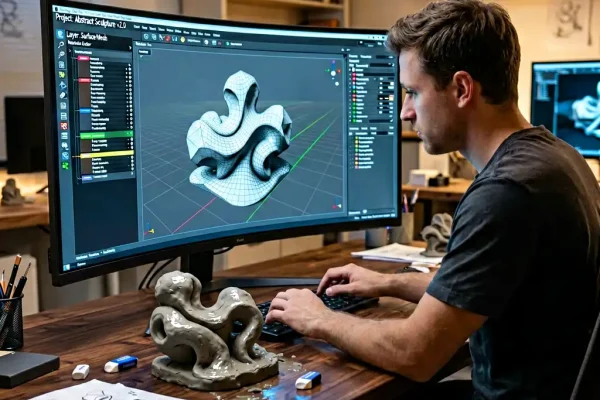
Custom Sculpture Insights & Guides
Jul 20, 2026
From Napkin Sketch to Finished Sculpture: A Factory Designer’s Full Process
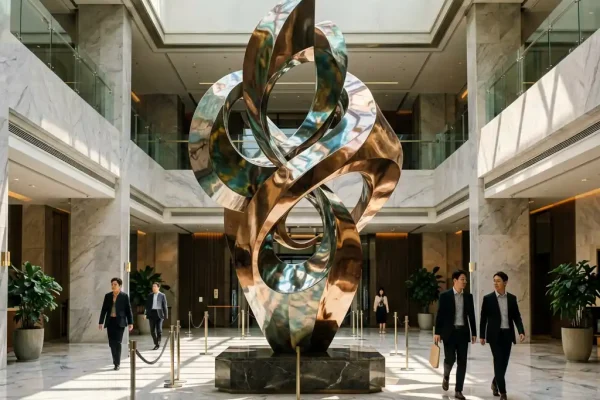
Custom Sculpture Insights & Guides
Jul 20, 2026
Custom Sculpture Cost: Real Budget Breakdown From a Factory Insider
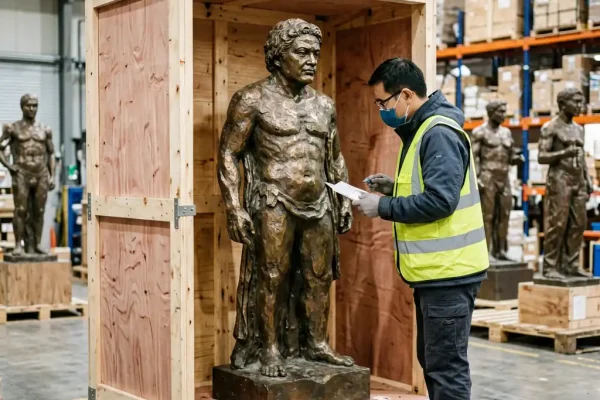
Custom Sculpture Insights & Guides
Jul 20, 2026
Sculpture Pre-Shipment QC: What We Actually Check Before It Ships
Our Sculpture Solutions
Explore our full range of custom sculpture services

IP Character Replication
Learn More →

Large Sculpture Custom
Learn More →

Original IP Development
Learn More →

Solutions Services
Learn More →

Custom Inflatables
Learn More →

FRP & Fiberglass Sculpture Manufacturing
Custom FRP and fiberglass sculpture manufacturer - design, fabrication, and finishing.
Learn More →
Stainless Steel & Metal Sculpture Manufacturing
Custom stainless steel, bronze, corten, and aluminum sculpture manufacturer.
Learn More →
Theme Park Sculpture Services – Custom Amusement Park Statues
Custom Theme Park Sculptures – Bringing Imagination to Life Theme parks, amusement parks, zoos, and entertainment destinations thrive on immersive...
Learn More →
Commercial Sculpture Services – Custom Brand Mascots & Mall Art
Custom Commercial Sculptures – Elevate Your Brand & Space In today's competitive retail and commercial environment, first impressions matter. Commercial...
Learn More →