
Custom Sculpture Insights & Guides
Sculpture Factory Insider: Fabricating Stainless Steel, Bronze, Corten & FRP
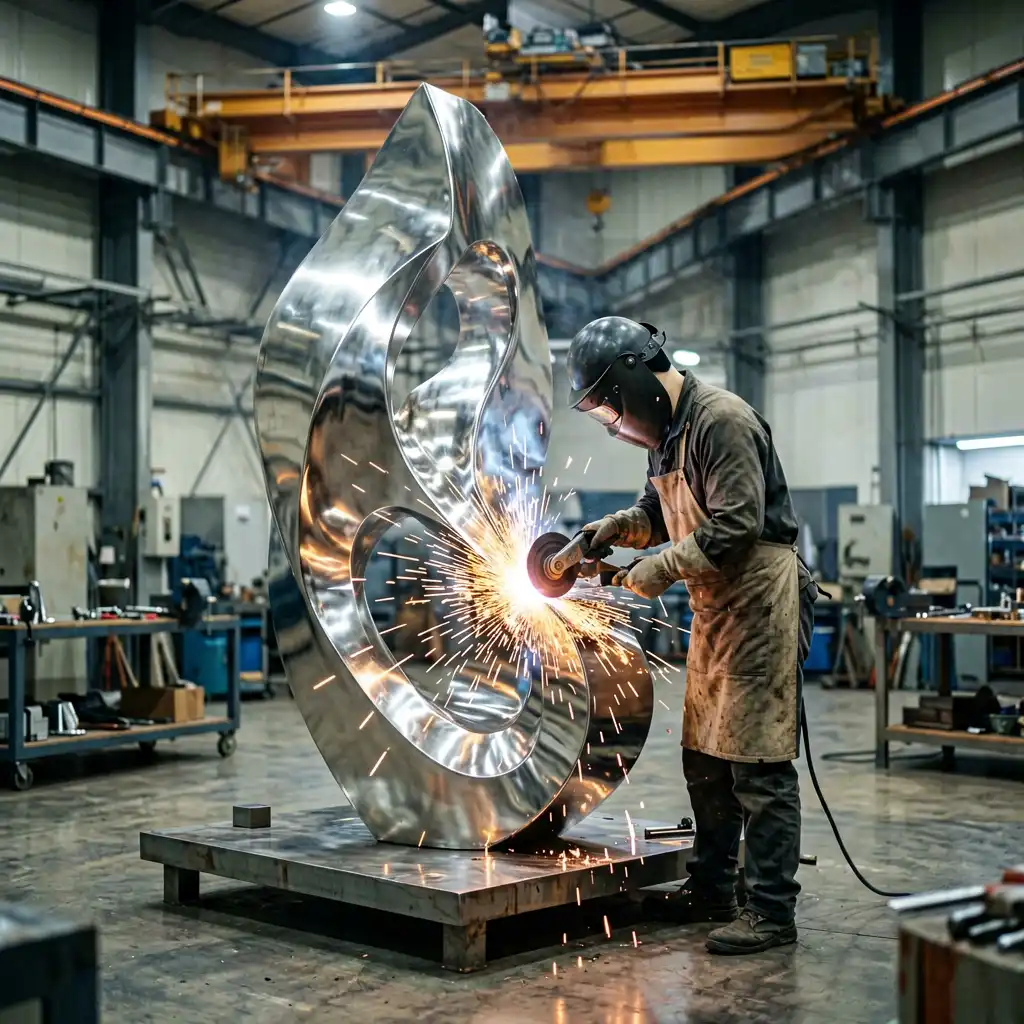
Steel dust, grinding sparks, and a lot of honest truth
I work at a sculpture fabrication facility that builds pieces for hotels, city plazas, museums, and private collectors. We handle stainless steel, bronze, corten, and FRP every single day. Over the past several years, I’ve seen what goes right — and what goes catastrophically wrong — when architects and designers spec a material without understanding how it actually behaves under the torch, the TIG welder, or the release agent.
This isn’t a polished marketing brochure. It’s the real talk I wish every client heard before signing a contract for custom sculpture fabrication.
1. Stainless Steel — The Show-Off That Shows Everything
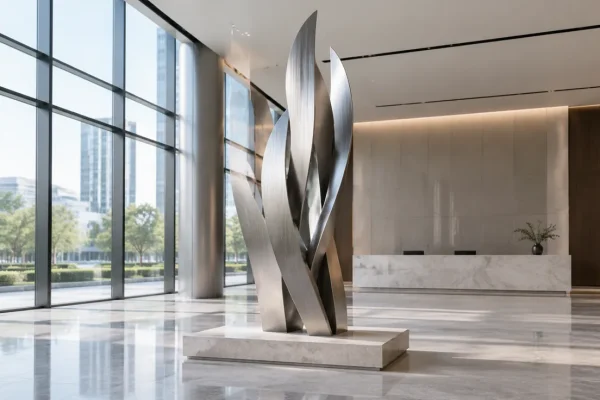
Stainless steel sculpture is the most requested material in our shop. It looks clean, modern, and high-end. Everyone wants that mirror finish. Nobody prepares for what it takes to get there.
The Alloy Matters More Than You Think
Not all stainless is the same. We fabricate almost exclusively in 304L and 316L grades. Here’s the difference:
| Grade | Best For | Why |
|---|---|---|
| 304L | Indoor / sheltered installations | Good corrosion resistance, easier to weld and polish |
| 316L | Coastal / marine environments | Molybdenum content resists salt corrosion — essential near ocean air |
I’ve seen projects fail because a procurement team saved 12% by going with 304 for a waterfront installation. Within two years, micro-pitting appeared. The client ended up paying three times the savings for on-site remediation.
Weld Distortion Is Your Enemy
When you weld stainless, heat builds up and the metal pulls. A 3-meter sculpture can shrink by several millimeters along each weld seam. If your custom metal sculpture design calls for precise tolerances—say, a seamless sphere or flush panel joints—the fabricator must plan weld sequence and heat management from the first tack. We pre-bend and use chill bars to control distortion. Without that, your “seamless” piece arrives with visible ripples. We walk through the complete fabrication process in our manufacturing guide: Custom Sculpture Manufacturing: 7-Step Process Guide.
The Mirror Finish Lie
High-polish stainless steel art looks incredible in a portfolio photo. In real life, it shows every fingerprint, water spot, and dust particle within hours of installation. For exterior installations, we always recommend a brushed or satin finish—or at least a clear protective coating. Several clients have asked us to repolish a sculpture six months after install because they couldn’t keep up with the maintenance. We told them upfront. They didn’t listen.
2. Bronze — Timeless but Temperamental
Bronze sculpture carries centuries of artistic credibility. A custom bronze statue feels substantial, prestigious, and permanent. And it is — if you cast it right.
Lost-Wax vs Sand Casting
We use both methods depending on the project:
- Lost-wax casting — Best for intricate details, fine surface texture, and small to medium runs. Every piece comes from a unique mold that’s destroyed in the process. This is what creates those museum-quality figures.
- Sand casting — Better for large, simple forms and budgets under six figures. You lose fine detail but gain cost efficiency. For a monumental civic figure, sand casting is often the practical choice.
The Patina Gamble
Every bronze client wants “that green statue look” or a deep brown patina. But patina application is chemistry, not decoration. The copper in bronze reacts with specific acids to create color. Temperature, humidity, and application method all affect the final result. We’ve had the same formula produce two completely different shades on consecutive days because the shop humidity changed.
Worse: if the patina isn’t properly sealed with a hot wax or lacquer, it will continue evolving in the field. That rich chocolate brown you signed off on may turn mottled green within a year. Public art sculpture clients particularly need to budget for annual wax reapplication.
Weight Is Real
Bronze is heavy. A life-size human figure weighs roughly 300-500 kg depending on wall thickness. That means foundation engineering, crane costs, and transport logistics that don’t exist with lighter materials. We’ve had projects where the shipping cost exceeded the fabrication cost. Always calculate total installed cost, not just foundry price.
3. Corten Steel — Weathering Steel Is Not “Set and Forget”
Corten steel sculpture has exploded in popularity over the last decade. Architects love the rustic, industrial look. The promise of a self-protecting rust layer that requires no maintenance is seductive. The reality? More complicated.
The Stabilization Phase
When corten is first exposed to the elements, it undergoes an active rusting period lasting 6-18 months. During this time, orange-brown runoff stains everything below it—concrete, paving stones, landscaping. We’ve seen hotel plazas where the corten sculpture created a permanent rust stain on the limestone entrance. The owner spent more on restoration than the sculpture cost.
Proper weather resistant sculpture planning includes a drip edge or gravel trap at the base. We also recommend accelerating the stabilization with a chemical pre-treatment in the shop before shipping. It’s not expensive, and it saves your client’s hardscape.
Welding Corten Is a Skill
You need specifically formulated filler rods designed to match the weathering rate of the base metal. Use standard MIG wire and the weld seam will corrode at a different rate than the parent material—leaving a visible line for the life of the piece. Our welders use Lincoln ER80S-B2 filler, and we still test coupons on every new welded steel sculpture design to confirm color match after accelerated weathering.
Not All Environments Work
This is the one nobody talks about: corten does not perform well in arid climates or heavily polluted urban environments. In the desert, it never builds the protective patina—it just sits orange and continues oxidizing thin. In a city with heavy sulfur dioxide pollution (think: diesel traffic), the corrosion chemistry changes and you get accelerated section loss. We’ve refused corten projects for sites in Phoenix and downtown Los Angeles. The client was annoyed. The alternative was a warranty claim two years later.
4. FRP Fiberglass — The Underrated Workhorse
FRP fiberglass statue work doesn’t get the respect it deserves in fine art circles. But in the custom sculpture fabricatio
world, it solves problems that metal can’t touch.
Why FRP Wins
- Weight: A 4-meter figure in FRP weighs roughly one-tenth of the same form in bronze. That means cheaper shipping, smaller foundations, and installation without heavy machinery.
- Complex geometry: FRP can reproduce organic shapes, undercuts, and surface textures that would require CNC machining or extensive hand fabrication in metal.
- Color integration: We can gel-coat the final color directly into the mold. No painting required. The color goes all the way through the surface layer, so scratches don’t reveal a different color underneath.
- Corrosion-proof: FRP doesn’t rust. Period. For water features, poolside installations, or humid environments, it outlasts any metal.
The FRP Trap: UV Degradatio
Standard polyester resin breaks down in direct sunlight. After 3-5 years, the surface starts chalking, fading, and eventually cracking. We use a UV-stable gel coat and a marine-grade topcoat on every exterior piece. If your fabricator doesn’t specify UV-resistant materials, your FRP piece won’t last a decade. We’ve seen this happen with theme park mascots that turned chalky within two seasons.
Gel Coat vs Paint
Some shops spray paint FRP instead of using gel coat. Paint looks fine on day one. By year two, thermal expansion causes micro-crazing and the paint peels. Gel coat is applied during molding—it’s chemically bonded to the laminate. For any outdoor FRP fiberglass statue, insist on gel coat. If the quote seems cheap, that’s probably why.
5. Surface Finishes & Coatings — The True Cost of Pretty
Every custom metal sculpture needs protection. Here’s what we actually apply and what it costs in real terms:
| Finish Type | Durability | Cost Impact | Best For |
|---|---|---|---|
| Powder coated sculpture | Excellent — 10-15 years | High (requires oven) | Steel, indoor/outdoor |
| Liquid paint (2-part urethane) | Good — 5-8 years | Medium | FRP, large sculptures |
| Hot wax (bronze) | 1-2 years | Low | Indoor bronze only |
| Clear lacquer (bronze) | 3-5 years | Medium | Outdoor bronze |
| Electropolish (stainless) | Permanent | High | Interior stainless steel art |
Powder coated sculpture is our default recommendation for painted steel projects. It’s more expensive upfront than wet paint but the durability difference is dramatic. We’ve pulled 15-year-old powder-coated pieces from coastal sites that still look factory-fresh.
6. The Fabrication Process — What Actually Happens Inside the Shop
Here’s the step-by-step that most clients never see:
- Engineering review: We model the sculpture in 3D and run FEA on structural loads. Wind load matters more than sculpture weight for anything over 3 meters.
- Material selection & procurement: We order mill-certified material with traceable heat numbers. No offcuts from unknown sources.
- CNC cutting (when applicable): For stainless and corten, we use waterjet or plasma cutting. Tolerances of ±0.5mm.
- Forming & shaping: English wheel, hammer forming, or press brake depending on geometry.
- Welding: TIG for stainless (pulsed when thin), MIG for corten. Every weld is ground, blended, and inspected.
- Surface prep: Grinding, sanding through progressive grits (80 → 120 → 220 → 400). For mirror finishes: 600 → 800 → 1000 → buffing compound.
- Finishing: Patina, powder coat, or protective coating applied in controlled conditions.
- Quality check: Dimensional verification, finish inspection under multiple lighting conditions, packing for shipment.
Each stage has its own quality gate. If one step gets rushed, the next step suffers. That’s why rushed timelines produce bad metal sculpture fabricatio
.
7. Common Mistakes We See From First-Time Buyers
- Underestimating installation complexity. A 5-meter stainless steel sculpture needs a foundation engineered for wind load, not just weight. We’ve seen sculptures topple in moderate storms because the base plate was undersized.
- Skipping the finish sample. Always request a 300×300mm sample panel with your exact finish before production begins. What you imagine and what the fabricator delivers are often different. We’ve had clients reject finishes that matched their approved sample. That’s an expensive change order.
- Not planning for access. A sculpture destined for a rooftop terrace needs to fit in the service elevator or be craned in. We’ve had to cut a piece in half on site because nobody checked the elevator dimensions.
- Ignoring thermal expansion. Metal expands and contracts. A stainless steel sculpture in direct summer sun can reach surface temperatures of 70°C. In winter, it contracts. Mounting systems must accommodate this movement or the fixings will fatigue and fail.
The Bottom Line
Every material we fabricate with has strengths and weaknesses. Custom sculpture fabricatio
isn’t about which material is “best” — it’s about which material is best for your specific site, budget, and maintenance capacity. A honest fabricator will tell you when you’re making a mistake before you make it. If your quote comes with zero warnings, zero alternatives, and zero discussion of long-term maintenance, that’s a red flag. For more detail on the production and engineering stages, read How Custom Sculptures Are Made: From Concept to Installation in 10 Steps.
We’ve built pieces in all four materials at our sculpture fabrication facility, and we genuinely enjoy the challenge each one presents. The right choice depends on where it’s going, what it needs to withstand, and how much care it will receive.
Got questions? Drop them below — happy to help.
8. Choosing the Right Fabricator — What to Ask Before You Sig
After working at a sculpture fabrication facility and seeing projects from both sides of the table, here are the questions I would ask before hiring any fabricator for custom sculpture fabricatio
:
- “Can I see your shop floor right now?” A live video call showing the actual workspace reveals more than any portfolio ever will.
- “What materials do you fabricate in-house?” If they subcontract stainless or bronze work, the QC chain gets longer and the risk of miscommunication increases significantly.
- “Show me a failed project.” Any fabricator with real experience has made mistakes. How they talk about those mistakes tells you whether they learn from them.
- “What is your lead time for change orders?” Mid-project changes are inevitable. The response time matters more than the initial build time in many cases.
- “Do you have a licensed structural engineer on staff or retainer?” For anything over 3 meters or in a public space, the answer must be yes without hesitation.
A good fabricator will answer all of these directly and honestly. A bad one will deflect, embellish, or change the subject entirely. The difference between the two is the difference between a sculpture that arrives on time and looks incredible, and one that arrives late with problems you will be fixing for years to come. Take the time to ask these questions before signing — it is the most important step in the entire process. For real-world examples, browse our commercial sculpture portfolio.
D
Written by David Chen
David Chen is Design Director at Y Sculptures with 18+ years in large-scale sculpture design and fabrication. He specializes in FRP, stainless steel, and bronze sculpture engineering, overseeing design-to-production workflows for theme park attractions, public art installations, and brand IP mascots. David has personally directed over 300 custom sculpture projects for clients across 20+ countries.
Related Projects
Browse real projects matching this topic
Gardens & Resorts
The Ethereal Oasis – Sculpture Installation
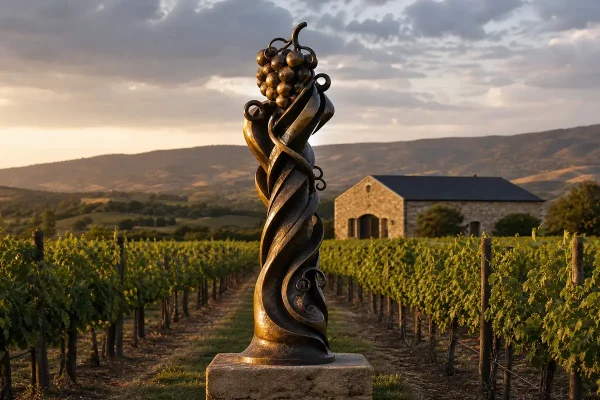
Gardens & Resorts
“Vintner’s Crown” — Bronze Sculpture for a Winery Estate
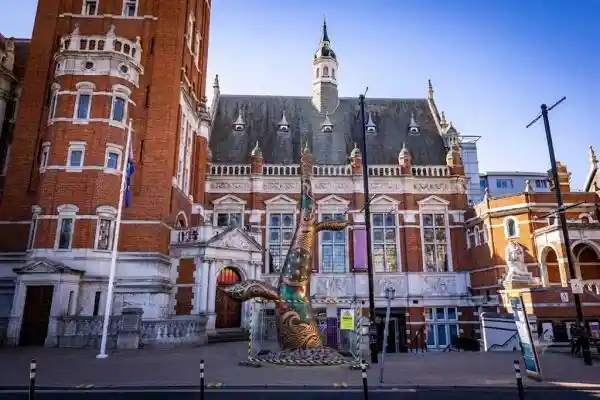
Inflatable Sculpture
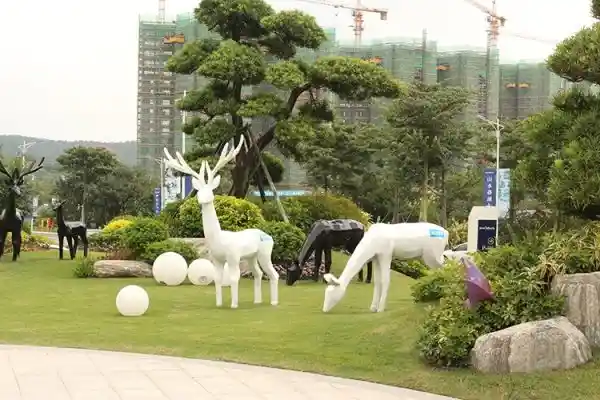
“The Sprout of Knowledge” Public Art Installation
Related Insights
Continue reading related articles
Brand Mascot & IP
Oct 13, 2026
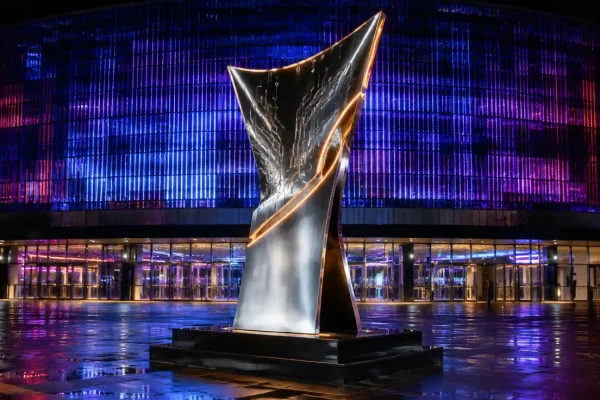
Esports Arena & Gaming Venue Sculpture: Landmarks, Trophies & Mascot Statues
Commercial & Hospitality
Oct 13, 2026
Corporate Lobby & Office Sculpture: Commissioning Guide for Developers

Custom Sculpture Insights & Guides
Oct 13, 2026
How Long Do Outdoor Sculptures Last? Material-by-Material Lifespan Guide
Our Sculpture Solutions
Explore our full range of custom sculpture services

IP Character Replication
Beyond 2D: Why IP Replication Drives Brand Engagement A character that lives only on a screen is easy to scroll...
Learn More →
Large Sculpture Custom
Engineering Monumental Scale A sculpture that stands 15 metres tall is not simply a 1.5-metre maquette scaled up ten times....
Learn More →
Original IP Development
From Concept to Icon Most sculpture enquiries begin with a reference: a licensed character, a film hero, an existing artwork...
Learn More →
Solutions Services
One Factory, Every Sculpture Material A sculpture brief rarely arrives pre-sorted by material. A client sends a reference image, a...
Learn More →
Custom Inflatables
Inflatable Sculptures as Brand Media Most sculptural commissions are permanent assets: they are built once, installed once, and admired for...
Learn More →
FRP & Fiberglass Sculpture Manufacturing
Custom FRP and fiberglass sculpture manufacturer - design, fabrication, and finishing.
Learn More →
Stainless Steel & Metal Sculpture Manufacturing
Custom stainless steel, bronze, corten, and aluminum sculpture manufacturer.
Learn More →
Theme Park Sculpture Services – Custom Amusement Park Statues
Custom Theme Park Sculptures – Bringing Imagination to Life Theme parks, amusement parks, zoos, and entertainment destinations thrive on immersive...
Learn More →
Commercial Sculpture Services – Custom Brand Mascots & Mall Art
Custom Commercial Sculptures – Elevate Your Brand & Space In today's competitive retail and commercial environment, first impressions matter. Commercial...
Learn More →