
Custom Sculpture Insights & Guides
Stainless Steel Sculpture Guide: Types, Finishes & Applications
Stainless Steel or Bronze? Start With the Right Questio
For over 18 years I have built sculptures for malls, corporate lobbies, parks and coastal resorts, and the question I hear most often from clients is simple: “Is stainless steel better than bronze?” My honest answer is that it depends on where the sculpture will live, what look you want, and how much you want to spend. Stainless steel is my recommendation for most modern outdoor projects because it stays bright for decades, resists corrosion, and never needs the patina care that bronze demands. This guide walks through the steel grades, finishes, fabrication methods and costs so you can brief a manufacturer with confidence.
Types of Stainless Steel for Sculptures
Not all stainless steel is the same. The grade you choose controls corrosion resistance, strength, and price, and the wrong grade can fail within a few years near the ocean.
304 Stainless Steel
304 is the workhorse grade for indoor and low-corrosion outdoor environments. It contains 18% chromium and 8% nickel, giving it good resistance to rust and tarnish. It is the most affordable grade and perfect for lobby art, retail installations, and covered courtyards. If the piece will sit under a roof or in a dry climate, 304 keeps costs down without sacrificing looks.
316L Stainless Steel
316L adds molybdenum, which dramatically improves resistance to chlorides — the salt in sea air, de-icing chemicals, and pool water. This is the grade I always specify for beachfront hotels, coastal parks, and any sculpture within a few kilometres of the ocean. The “L” means low carbon, which makes welding cleaner and reduces the risk of corrosion at the weld seams. Expect to pay roughly 20-30% more than 304, but it is the difference between a sculpture that lasts 10 years and one that lasts 50.
Duplex Stainless Steel
Duplex grades combine the strength of ferritic steel with the corrosion resistance of austenitic steel, roughly double the yield strength of 316L. It is the right choice for large structural sculptures, heavy load-bearing art, or pieces exposed to extreme environments. It is a premium material used mostly for monumental commissions where strength is non-negotiable.
Surface Finish Options
The finish does more than define the look — it also affects how the surface behaves outdoors. Here are the finishes we offer most often.
Mirror Polish
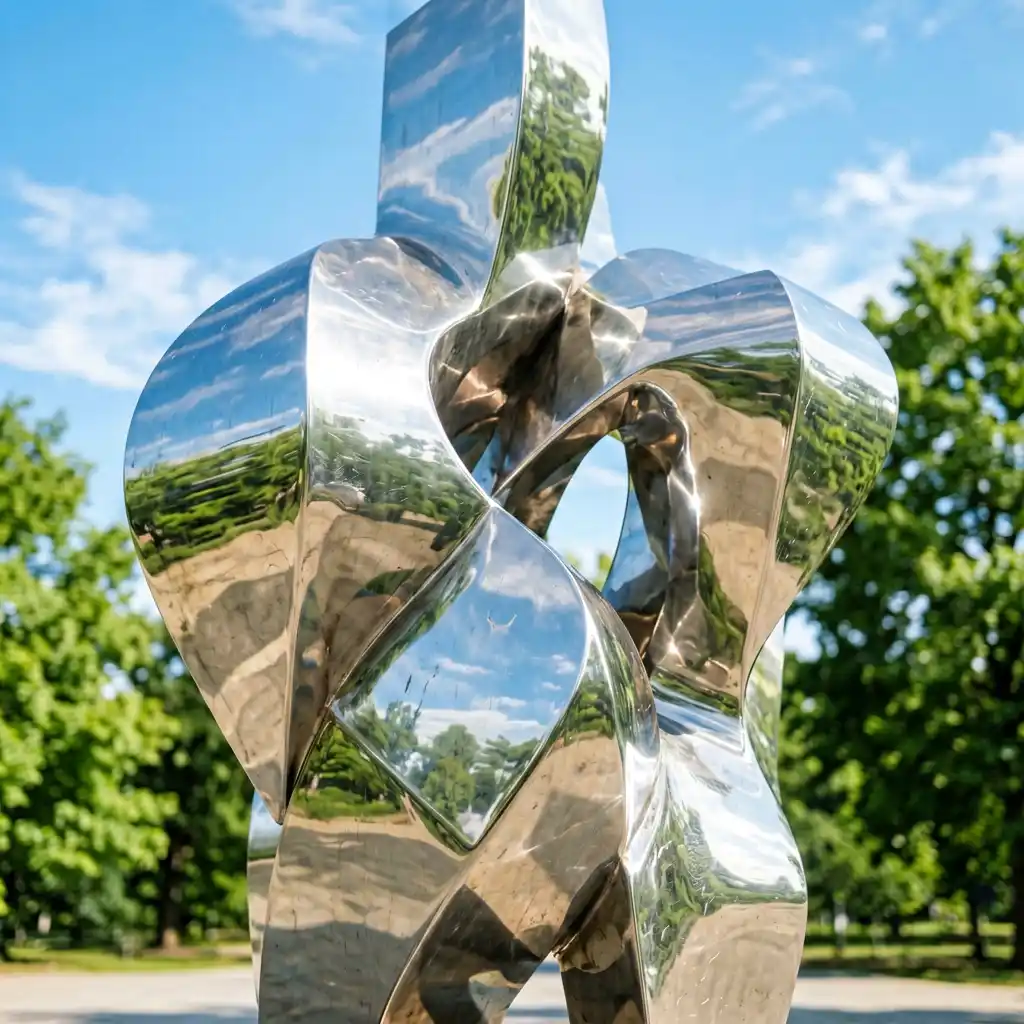
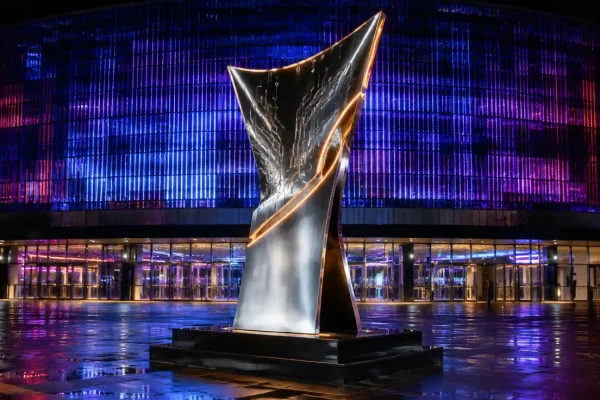
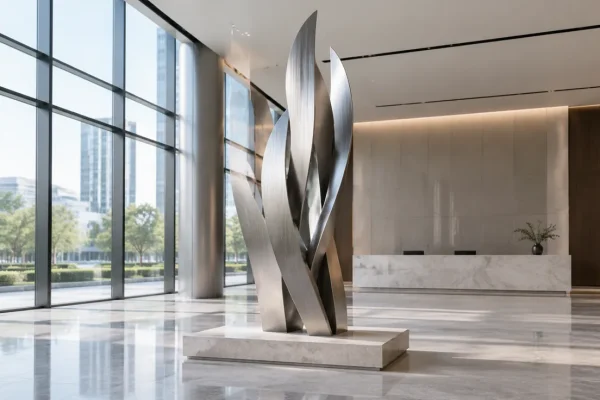
A mirror finish is polished to a reflective, chrome-like shine. It is the show-stopper finish for corporate and public art because it reflects the sky, the architecture, and passers-by, making the sculpture change with the light. On the Helix Ascent stainless steel sculpture, the mirror surface lets the lobby architecture wrap around the artwork, which is exactly why the client chose it.
Brushed Finish
A brushed or satin finish has fine directional lines that diffuse light instead of reflecting it. It feels softer and more understated, making it ideal for modern offices and interiors where a loud mirror would clash. It also hides fingerprints better than a mirror finish.
Sandblasted Finish
Sandblasting creates a matte, textured surface with a soft grey tone. It reads as contemporary and industrial, and it is excellent for large exterior pieces where glare could be a problem or where a uniform non-reflective look is wanted.
Coloured PVD Finishes
Physical Vapour Deposition (PVD) bonds a thin, hard ceramic layer to the steel, producing gold, rose gold, champagne, black, or even rainbow colours. PVD colours are extremely durable and do not chip or fade like paint. A black or gold PVD finish turns a simple geometric form into a luxury landmark. For outdoor work I always pair PVD with a 316L base so the coating and the substrate both resist corrosion.
Fabrication Methods
How a stainless steel sculpture is made affects its structural strength, detail level, and budget. The most common methods in a modern factory are listed below.
Plasma and Laser Cutting
Large sheets are cut into precise shapes with CNC plasma or laser cutters. Laser cutting delivers the tightest tolerance and cleanest edge, which matters for intricate geometric patterns and letterforms in corporate identity pieces.
TIG Welding
Tungsten Inert Gas (TIG) welding is the backbone of welded steel sculpture. A skilled welder joins panels with clean, uniform beads that are then ground and polished so the seams disappear. For mirror finishes, this hand-finishing step is what separates a premium piece from an average one.
Stainless Steel Casting
For highly detailed or organic forms — faces, hands, animals, flowing fabric — stainless steel can be investment cast rather than fabricated from sheet. Casting captures fine texture that is difficult or impossible to achieve by welding, and the finished surface is indistinguishable from a hand-finished piece.
3D-Printed Metal
Metal additive manufacturing builds up complex internal lattices and geometries that no other method can produce. It is still expensive, so it is reserved for small, high-detail components or one-off experimental forms, not full-size public sculptures.
Advantages of Stainless Steel
- Corrosion resistance: With the right grade, a stainless sculpture survives decades of rain, salt, and UV without rusting.
- Modern aesthetic: The bright, reflective surface suits contemporary architecture, glass facades, and minimalist spaces.
- Low maintenance: Unlike bronze or Corten, stainless needs no protective coatings or patina care — just occasional cleaning.
- Recyclable and sustainable: Stainless steel is fully recyclable, and modern mills use large recycled content, supporting green building goals.
- Strength: Steel carries its own weight over long spans, so tall, slender, and cantilevered forms are possible.
Common Applications
Stainless steel sculptural art appears across almost every sector. Public art projects use mirror and coloured finishes to anchor plazas and parks. Corporate identity programs commission large abstract pieces for lobbies and entrances — like the lobby sculpture above — to express innovation and permanence. Landscape designers choose sandblasted and brushed finishes for gardens and water features because the muted surface blends with plants and stone. Memorials rely on stainless steel’s permanence to preserve names and dates outdoors for generations. For a moving example, see our Aqua Ribbon kinetic water feature sculpture, where a flowing stainless form turns a courtyard fountain into living art.
Maintenance Tips
Stainless steel is low-maintenance, but it is not no-maintenance. A few simple habits keep it looking factory-new.
Regular Cleaning
Wash the surface with mild soap and warm water, then rinse and dry with a soft cloth. For outdoor pieces, clean once or twice a year to remove dust, bird droppings, and airborne grime before they bake on in the sun.
Removing Fingerprints
On mirror and brushed indoor finishes, fingerprints and smudges are the main annoyance. Wipe with a microfibre cloth and a few drops of mild detergent. Avoid abrasive pads, which scratch the finish.
Damage and Rust Repair
If a stainless sculpture is scratched or develops rust spots from contaminated water, a light abrasive pad and stainless steel polish will restore the surface. For deeper damage, a professional can re-polish the affected area to blend it into the surrounding finish. Never use steel wool, whose particles can become embedded and cause new rust.
Budget & Timeline
Costs vary widely with size, grade, and finish. As a planning guide from our factory:
- Small pieces (0.5-1m): $4,000 – $10,000
- Medium pieces (1-3m): $12,000 – $35,000
- Large pieces (3m+): $40,000 – $150,000+
A mirror-finish 316L piece costs more than a brushed 304 piece of the same size. Timeline is typically 6-12 weeks from design approval to delivery, depending on complexity. For a full cost and material comparison across steel, bronze, Corten, and FRP, read our FRP vs stainless steel vs bronze material guide.
FAQ
What is the difference between 304 and 316L stainless steel?
304 is the standard grade for indoor and dry environments, while 316L adds molybdenum for superior resistance to salt and chlorides. Choose 316L for coastal, poolside, or chemically exposed installations.
Which finish is best for outdoor use?
Any standard finish works outdoors if the steel grade is right, but mirror and sandblasted finishes are most common. For maximum corrosion protection near the sea, pair a 316L base with a durable coating such as PVD.
How much does a stainless steel sculpture cost?
Small indoor pieces start around $4,000, medium installations range from $12,000 to $35,000, and large monumental commissions can exceed $150,000. Size, grade, and finish are the main cost drivers.
Can stainless steel sculptures be painted?
Yes, but painting usually defeats the purpose of choosing steel. For colour, a PVD finish bonds permanently to the metal and resists chipping and fading far better than paint.
How long do stainless steel sculptures last outdoors?
With the correct grade (316L near the coast) and basic annual cleaning, a stainless steel sculpture can last 50 years or more, making it one of the most durable materials for outdoor art.
Frequently Asked Questions
What’s the difference between 304 and 316L stainless steel?
304 is suitable for indoor or mild environments. 316L contains molybdenum for superior corrosion resistance, essential for coastal or high-humidity outdoor installations.
Which finish is best for outdoor use?
Mirror polish shows fingerprints but reflects beautifully. Brushed/satin finish hides minor scratches better. Both are equally durable outdoors with proper grade steel.
How much does a stainless steel sculpture cost?
Small tabletop pieces: $2,000-8,000. Medium lobby sculptures: $10,000-35,000. Large monuments: $40,000-100,000+ depending on complexity.
Can stainless steel sculptures be painted?
Yes, but it’s unusual. Most clients prefer the natural metallic finish. If painting is desired, powder coating or specialized metal paints can be applied.
How long do stainless steel sculptures last outdoors?
With proper material selection (316L for harsh environments), stainless steel sculptures can last 50+ years with minimal maintenance.
D
Written by David Chen
David Chen is Design Director at Y Sculptures with 18+ years in large-scale sculpture design and fabrication. He specializes in FRP, stainless steel, and bronze sculpture engineering, overseeing design-to-production workflows for theme park attractions, public art installations, and brand IP mascots. David has personally directed over 300 custom sculpture projects for clients across 20+ countries.
Related Projects
Browse real projects matching this topic
Gardens & Resorts
“Lotus Whisper” — FRP Lotus Fountain Water Sculpture
Gardens & Resorts
The “Regal Sentinel” Bronze Lion
Related Insights
Continue reading related articles
Brand Mascot & IP
Oct 13, 2026
Esports Arena & Gaming Venue Sculpture: Landmarks, Trophies & Mascot Statues
Commercial & Hospitality
Oct 13, 2026
Corporate Lobby & Office Sculpture: Commissioning Guide for Developers
Custom Sculpture Insights & Guides
Oct 13, 2026
How Long Do Outdoor Sculptures Last? Material-by-Material Lifespan Guide
Our Sculpture Solutions
Explore our full range of custom sculpture services

IP Character Replication
Beyond 2D: Why IP Replication Drives Brand Engagement A character that lives only on a screen is easy to scroll...
Learn More →
Large Sculpture Custom
Engineering Monumental Scale A sculpture that stands 15 metres tall is not simply a 1.5-metre maquette scaled up ten times....
Learn More →
Original IP Development
From Concept to Icon Most sculpture enquiries begin with a reference: a licensed character, a film hero, an existing artwork...
Learn More →
Solutions Services
One Factory, Every Sculpture Material A sculpture brief rarely arrives pre-sorted by material. A client sends a reference image, a...
Learn More →
Custom Inflatables
Inflatable Sculptures as Brand Media Most sculptural commissions are permanent assets: they are built once, installed once, and admired for...
Learn More →
FRP & Fiberglass Sculpture Manufacturing
Custom FRP and fiberglass sculpture manufacturer - design, fabrication, and finishing.
Learn More →
Stainless Steel & Metal Sculpture Manufacturing
Custom stainless steel, bronze, corten, and aluminum sculpture manufacturer.
Learn More →
Theme Park Sculpture Services – Custom Amusement Park Statues
Custom Theme Park Sculptures – Bringing Imagination to Life Theme parks, amusement parks, zoos, and entertainment destinations thrive on immersive...
Learn More →
Commercial Sculpture Services – Custom Brand Mascots & Mall Art
Custom Commercial Sculptures – Elevate Your Brand & Space In today's competitive retail and commercial environment, first impressions matter. Commercial...
Learn More →