
Custom Sculpture Insights & Guides
Sculpture & Art Trends 2026: What Buyers Want in Custom Pieces
The 2026 Custom Sculpture Landscape
The custom sculpture market is evolving rapidly in 2026. Buyers are moving beyond mere decoration toward pieces that carry meaning, withstand the elements, and reinforce brand identity. Whether commissioning a large-scale public installation or a boutique garden feature, today’s clients expect longevity, emotional resonance, and a design story they can share.
From kinetic stainless steel mobiles that catch the wind to biophilic forms that blur the line between art and nature, the trends shaping 2026 reflect a deeper cultural shift: art is no longer static. It moves, it tells stories, and it connects people to places.
Trend 1 — Kinetic & Light-Catching Metal
Moving sculptures are having a major moment. Kinetic metal art — whether suspended wind spinners, rotational installations, or weather-driven mobiles — captures attention in ways static pieces cannot. Buyers are drawn to the unpredictable choreography of motion: a stainless steel form that shifts with the breeze, a corten steel spiral that rotates slowly under solar power.
The appeal is multifaceted. Motion creates a living centerpiece that changes throughout the day, rewarding repeated visits. Reflective surfaces — polished stainless, mirror-finish bronze, anodized aluminum — amplify this effect by scattering light across surrounding landscapes. For hospitality venues, corporate campuses, and public plazas, kinetic sculptures become Instagram-worthy landmarks that generate organic social media exposure.
If you’re exploring kinetic metal garden art for a residential or commercial space, consider wind patterns, mounting stability, and maintenance access. Our fabrication team specializes in weather-rated kinetic mechanisms that endure coastal salt air and extreme temperature swings without compromising smooth motion.
Trend 2 — Biophilic & Nature Forms
Biophilic design — the practice of connecting built environments to natural systems — is driving demand for sculpture that echoes wildlife, botanical forms, and organic geometry. Animal sculptures, flowering plant motifs, and abstracted landscape forms are appearing in hotel lobbies, retail facades, hospital healing gardens, and urban plazas.
The aesthetic leans toward “whisper of nature”: subtle curves, textured surfaces that mimic bark or feathers, and scales that suggest movement without literal realism. Buyers appreciate how these pieces soften architectural hardness and create moments of calm in high-traffic environments.
For garden installations, garden animal sculptures — particularly herons, hares, owls, and deer — remain perennial favorites. In 2026, clients are pushing for larger-scale interpretations: life-size bronze birds spanning 3 meters wingspread, FRP hare installations that weave through garden pathways, and predatory feline forms that anchor courtyard focal points.
The biophilic trend also intersects with sustainability messaging. Clients in the hospitality and education sectors commission nature-inspired pieces to signal environmental commitment, making these sculptures both aesthetic objects and brand statements.
Trend 3 — Memorial & Emotional Art
Memorial sculpture is experiencing a renaissance. Buyers are commissioning personalized tributes for pets, loved ones, and significant life events — moving beyond traditional headstones toward sculptural expressions that capture personality and spirit.
Pet memorials are particularly strong. A life-size bronze dog sitting at the garden gate, a custom FRP horse figure marking a riding trail, or an abstract form representing a cherished companion — these pieces provide tangible focal points for grief and celebration. The emotional investment is high, and clients expect meticulous attention to detail: accurate breed proportions, lifelike poses, and finishes that honor the memory.
Human memorials follow similar personalization patterns. Survivors commission sculptural representations of the departed — sometimes realistic portraits, sometimes symbolic forms like outstretched hands, soaring birds, or intertwined figures. These commissions often involve family input, reference photographs, and multiple consultation rounds to ensure the result feels authentic rather than generic.
For those exploring memorial sculpture ideas, our design team recommends starting with a narrative brief: what did this person or pet love? What moments defined the relationship? What emotions should visitors feel when encountering the piece?
Trend 4 — Brand Mascots & Logo Statues
Businesses are increasingly treating logo translation as a strategic investment. Converting a 2D brand mark into a three-dimensional sculpture creates instantly recognizable landmarks, strengthens wayfinding, and generates shareable social media moments. Hospitality groups, retail chains, theme parks, and corporate campuses lead this trend.
The process involves more than extruding a logo. Our design team works with brand guidelines to adapt proportions for 3D viewing angles, select materials that align with brand personality (polished stainless for modern tech, warm bronze for heritage hospitality, vibrant FRP for playful retail), and engineer structural solutions for outdoor exposure.
IP character development has become a subcategory of its own. Designer toy aesthetics, anime-inspired figures, and custom mascot creation require a different skill set — one that blends sculpture, animation reference, and collectible design principles. Clients in the theme park and entertainment sectors increasingly commission full character lineups rather than single logos.
Trend 5 — Weatherproof & Low-Maintenance Materials
Material selection in 2026 is driven as much by maintenance economics as by aesthetics. Buyers want sculptures that look exceptional for decades without annual refinishing, repainting, or structural intervention. This demand is accelerating adoption of three material families:
- Fiberglass (FRP): Lightweight, cost-effective, capable of complex curves and vibrant color integration. Modern marine-grade resins and UV-stabilized gel coats ensure 15+ year outdoor lifespans with minimal upkeep.
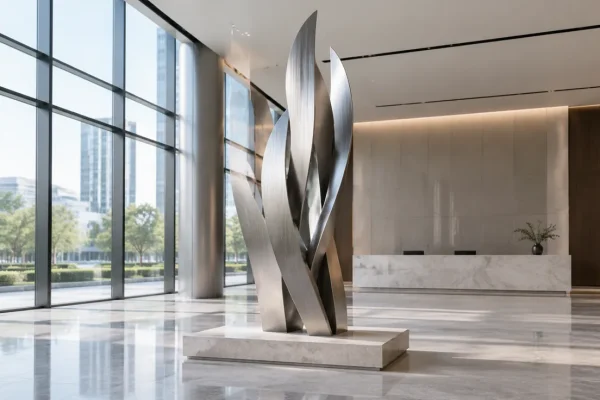
- Stainless steel: 316-grade marine stainless resists corrosion in coastal and industrial environments. Brushed or mirror finishes require only periodic washing. Welded constructions eliminate fastener maintenance.
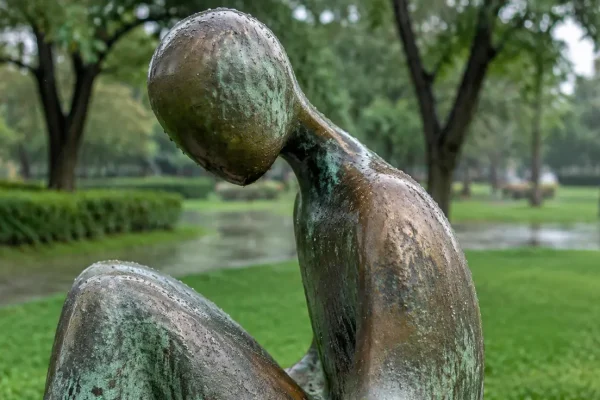
- Bronze: Traditional patinas (verdigris, dark brown, black) are chemically stable and self-protecting. Clients seeking heritage aesthetics accept the premium price for a material that literally ages gracefully.
The trend away from painted mild steel and untreated iron reflects lessons learned from early-2020s installations that required costly refinishing. Buyers now prioritize lifecycle cost over upfront price — a shift that benefits reputable manufacturers who invest in proper surface engineering.
What This Means for Buyers
Commissioning a 2026-ready sculpture requires briefing clarity across three dimensions: scale, material, and placement.
Scale determines structural engineering requirements, shipping logistics, and visual impact. Large-scale outdoor installations (3m+) need foundation design, crane access plans, and wind-load calculations. Smaller indoor or garden pieces (0.5–1.5m) offer more flexibility but still require accurate spatial planning.
Material should match the exposure environment and maintenance capacity. Coastal installations demand 316 stainless or marine FRP. Indoor climate-controlled spaces allow bronze patinas or painted finishes without urgency. Budget-conscious clients can achieve premium aesthetics through FRP with metallic film applications.
Placement influences both design and engineering. Wind-exposed sites require kinetic mechanisms with low torque thresholds and robust pivot points. High-traffic plazas need anti-vandal finishes and secure anchoring. Garden settings allow delicate forms but require ground-level visibility consideration.
Understanding custom sculpture pricing early in the process helps align ambition with budget. Our team provides transparent cost breakdowns covering design, tooling, fabrication, finishing, and installation — so there are no surprises when the piece arrives on site.
FAQ
What are the top sculpture trends in 2026?
The leading trends are kinetic and moving metal sculptures, biophilic nature-inspired forms, personalized memorial art, brand mascot translation into 3D, and weatherproof low-maintenance material selection. Together these reflect buyer demand for sculpture that is engaging, meaningful, and durable.
Is kinetic sculpture popular?
Yes. Kinetic metal sculptures are one of the fastest-growing segments for public and commercial installations. Motion creates dynamic visual interest, encourages social media sharing, and transforms static spaces into living environments. Stainless steel wind spinners and solar-driven rotational pieces are particularly sought after.
What materials are trending for outdoor sculpture?
Marine-grade stainless steel (316), UV-stabilized FRP with premium gel coats, and chemically patinated bronze dominate outdoor specification. These materials offer 15–30+ year lifespans with minimal maintenance. Painted mild steel is declining due to refinishing costs.
How do I commission a trend-aware piece?
Start with a clear brief covering purpose (public art, brand landmark, memorial, garden feature), location conditions (indoor/outdoor, climate, wind exposure), scale expectations, and budget range. Our design team then translates these parameters into concepts that align with current aesthetic trends while meeting structural and maintenance requirements.
How much does a custom 2026-style sculpture cost?
Cost varies significantly by scale, material, and complexity. Small garden FRP pieces start around $3,000–$8,000. Life-size bronze memorials typically range $15,000–$40,000. Large-scale public art installations (3m+) with kinetic elements can exceed $75,000. Our detailed cost guide breaks down every phase from design through installation.
y
Related Projects
Browse real projects matching this topic
Related Insights
Continue reading related articles
Brand Mascot & IP
Oct 13, 2026
Esports Arena & Gaming Venue Sculpture: Landmarks, Trophies & Mascot Statues
Commercial & Hospitality
Oct 13, 2026
Corporate Lobby & Office Sculpture: Commissioning Guide for Developers
Custom Sculpture Insights & Guides
Oct 13, 2026
How Long Do Outdoor Sculptures Last? Material-by-Material Lifespan Guide
Our Sculpture Solutions
Explore our full range of custom sculpture services

IP Character Replication
Beyond 2D: Why IP Replication Drives Brand Engagement A character that lives only on a screen is easy to scroll...
Learn More →
Large Sculpture Custom
Engineering Monumental Scale A sculpture that stands 15 metres tall is not simply a 1.5-metre maquette scaled up ten times....
Learn More →
Original IP Development
From Concept to Icon Most sculpture enquiries begin with a reference: a licensed character, a film hero, an existing artwork...
Learn More →
Solutions Services
One Factory, Every Sculpture Material A sculpture brief rarely arrives pre-sorted by material. A client sends a reference image, a...
Learn More →
Custom Inflatables
Inflatable Sculptures as Brand Media Most sculptural commissions are permanent assets: they are built once, installed once, and admired for...
Learn More →
FRP & Fiberglass Sculpture Manufacturing
Custom FRP and fiberglass sculpture manufacturer - design, fabrication, and finishing.
Learn More →
Stainless Steel & Metal Sculpture Manufacturing
Custom stainless steel, bronze, corten, and aluminum sculpture manufacturer.
Learn More →
Theme Park Sculpture Services – Custom Amusement Park Statues
Custom Theme Park Sculptures – Bringing Imagination to Life Theme parks, amusement parks, zoos, and entertainment destinations thrive on immersive...
Learn More →
Commercial Sculpture Services – Custom Brand Mascots & Mall Art
Custom Commercial Sculptures – Elevate Your Brand & Space In today's competitive retail and commercial environment, first impressions matter. Commercial...
Learn More →