
Public Art
Waterfront & Harbor Sculpture: Coastal Art Installation Guide
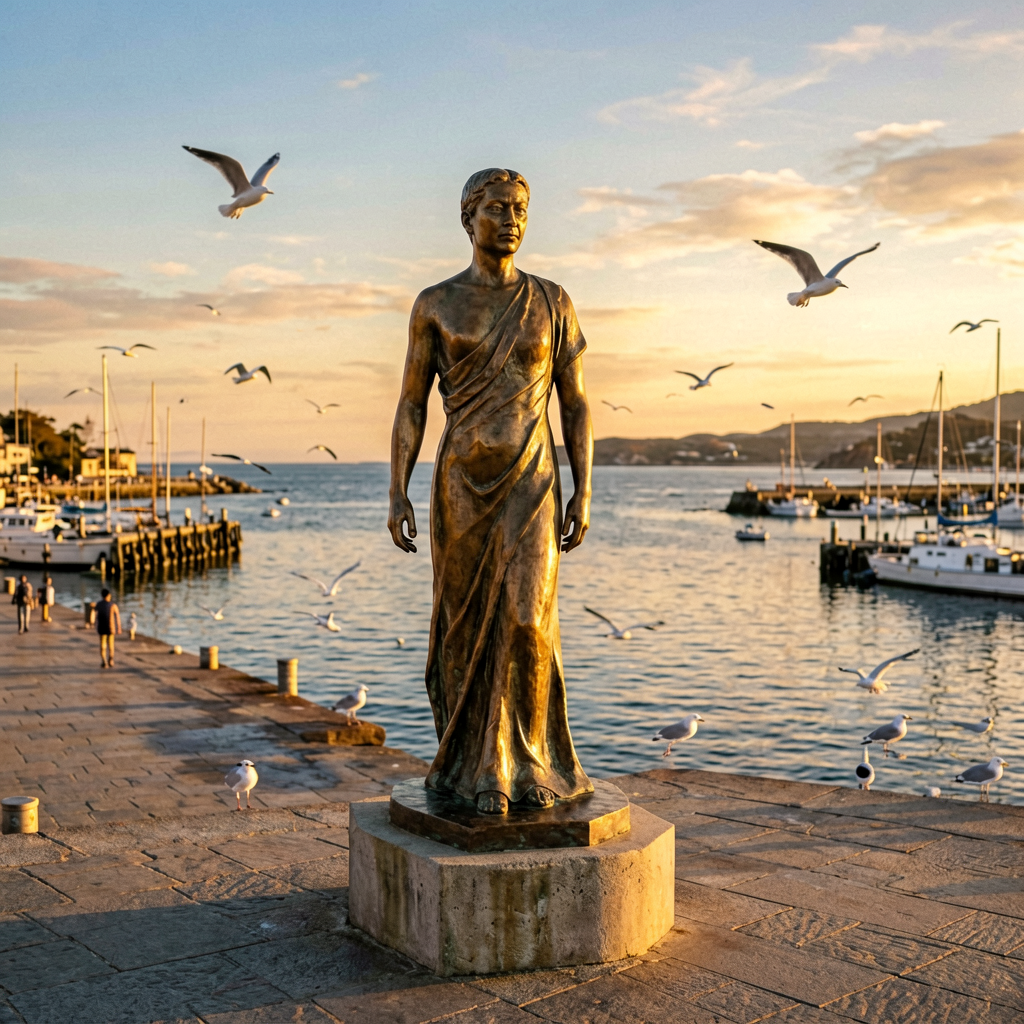
Our city is redeveloping the waterfront, and the committee keeps asking the same question: what type of sculpture would work best along the harbor? It is a fair question, because a coastal site is not like a park or a plaza. Salt spray, tide, wind, and dense visitor traffic all conspire against art in ways an inland installation never faces. This guide walks through the materials, engineering, and maintenance decisions behind waterfront sculpture that survives and thrives for decades.
Why Waterfront Sites Demand a Different Approach
Waterfront public art is exposed to a uniquely aggressive combination of forces. Salt-laden air accelerates corrosion on metals that would last a century inland. High humidity, intense UV, and frequent fog attack coatings and finishes. Open promenades channel strong wind loads that can fatigue structural joints over time.
These are not hypothetical risks. Municipal clients and coastal developers routinely find that standard outdoor materials fail within a few seasons when specified for a harbor setting. The design brief must start from the marine environment, not treat it as an afterthought.
That is why a harbor sculpture is a coastal art installation in the truest sense — engineered for salt, sun, and sea before aesthetics are finalized.
Coastal Environment Challenges Every Designer Must Solve
Before choosing a material, understand the four pressures your sculpture will face daily at the waterfront.
Salt spray corrosion. Windborne salt deposits on metal surfaces create electrochemical cells that drive pitting and crevice corrosion. The closer to the waterline, the higher the salt concentration in the air.
High humidity and UV exposure. Constant moisture cycles trap water in seams and pores, while direct sun degrades paint, gelcoat, and polymer surfaces. The combination accelerates failure faster than either factor alone.
Wind loads at the waterfront. Open promenades have little shelter, so gusts hit unbroken. Tall, slender, or cantilevered forms need structural verification for real local wind speeds, not generic defaults.
Visitor traffic patterns. Waterfronts draw heavy footfall, bicycles, and event crowds. Sculptures near railings, benches, and photo points receive constant touching, leaning, and abrasion that must be planned for.
Material Selection for Marine Environments
Choosing the right material is the single most important decision for waterfront sculpture longevity. Each candidate has a distinct profile for corrosion resistance, maintenance burden, and cost.
| Material | Corrosion Resistance | Maintenance Need | Relative Cost |
|---|---|---|---|
| Marine-grade stainless steel (316L) | Excellent in salt air | Low — periodic wash | High |
| Bronze with marine coatings | Very good with patina | Medium — recoating | Medium-High |
| FRP with UV-resistant gelcoat | No corrosio | Low-Medium — gelcoat refresh | Medium |
| Corten steel | Fair — needs drainage desig | High in marine zones | Medium |
Marine-grade stainless steel (316L) is the workhorse for contemporary waterfront landmarks because molybdenum in the alloy resists chloride attack far better than 304. Bronze carries centuries of harbor heritage and develops a stable patina, though it benefits from a protective coating in the most corrosive zones.
FRP with a UV-resistant gelcoat offers a lightweight, non-corroding alternative that is especially practical for organic or sculpted forms and for budgets that cannot absorb metal costs. Corten steel deserves caution on the coast: its protective rust layer needs consistent wet-dry cycling and proper drainage, which open-air harbor sites rarely provide reliably.
Corrosion Resistance by Material
Corrosion resistance is the defining property for marine environment sculpture, so it deserves a dedicated comparison. The table below ranks how each material behaves under sustained salt-spray exposure.
| Material | Salt-Spray Rating | Primary Risk | Recommended Use |
|---|---|---|---|
| 316L stainless steel | ★★★★★ | Weld-zone pitting if not passivated | Coastal landmarks, modern forms |
| FRP (fiberglass) | ★★★★★ | UV fade if gelcoat degrades | Sculpted, organic, lightweight pieces |
| Bronze | ★★★★ | Chloride pitting under coating defects | Classic, figurative harbor art |
| Corten steel | ★★★ | Incomplete patina → active rust | Sheltered, well-drained spots only |
| Carbon steel (painted) | ★★ | Coating failure → rapid corrosio | Avoid in direct salt exposure |
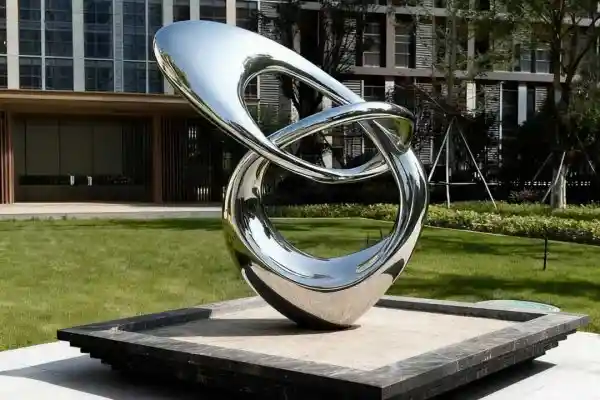
Our Tidal Crest coastal installatio
demonstrates 316L stainless in action — a large-scale public artwork engineered to withstand years of salt spray while retaining its mirror finish. It is one example of how material choice directly determines whether a waterfront sculpture becomes a lasting landmark or a maintenance liability.
Design Considerations for the Waterfront
Material is only half the equation. Structural and siting engineering make or break a harbor sculpture, and no seaside sculpture should be specified without it. The same coastal forces that shape the shoreline will shape your piece.
Wind resilience engineering. Confirm the design against local wind speed data, including gust factors. Secure every joint, brace tall forms, and model the wind sail area so the foundation can resist overturning.
Foundation in sandy or soft soil. Waterfront ground is often loose fill or sand. Pile or deep concrete footings distribute the load and resist scour and shifting rather than a simple surface pad.
Tide and flood zone positioning. Know the high-water mark and storm-surge envelope before siting. Keep bases above flood levels, use sealed connections, and design for periodic immersion where unavoidable.
Nighttime illumination. A waterfront promenade sculpture earns its place as a waterfront landmark when lit after dark. Specify marine-rated fixtures that resist salt corrosion and integrate lighting into the design rather than bolting it on later.
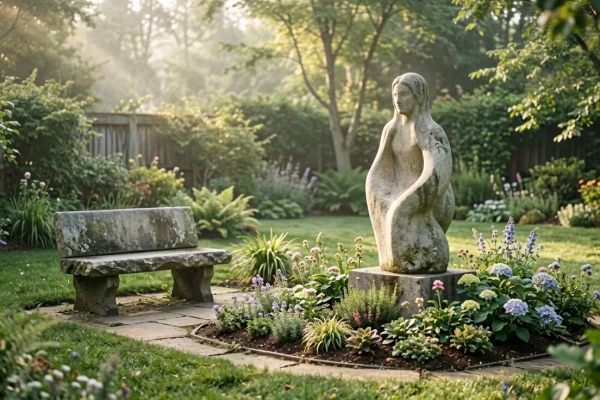
These considerations shaped the Synthesis of Growth installation for a city waterfront redevelopment district, where foundation engineering and flood positioning were as important as the sculptural form. Sited along the promenade rather than on the pier, it still demanded marine-grade detailing throughout.
Case Studies: Waterfront Sculptures That Work
The best evidence comes from completed installations that have weathered real coastal conditions. Successful harbor art tends to share three traits: marine-grade materials, engineered foundations, and a maintenance plan agreed before installation.
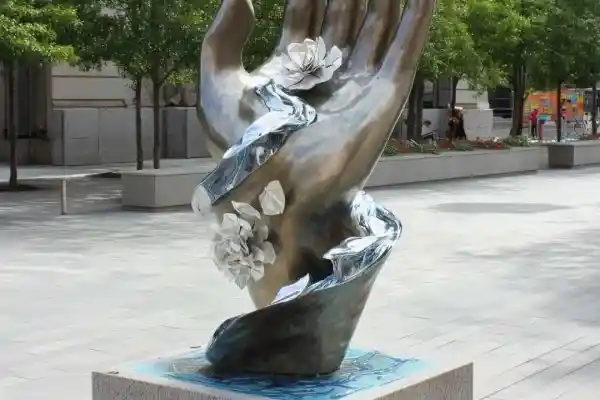
One example is our playful Ocean’s Whimsy piece, which pairs a marine theme with materials suited to a children’s museum setting near the water. Another is Tidal Crest, whose large stainless form reads as a dramatic coastal landmark while meeting full marine engineering standards.
What these projects share is a design process that began with the environment. The client selected the right material early, budgeted for the foundation and lighting, and committed to the maintenance rhythm before the piece ever shipped. Whether it is a pier sculpture anchoring the boardwalk or a larger landmark set back on the lawn, the same marine-first discipline applies.
Maintenance in the Marine Environment
Even the best material needs a disciplined care schedule on the coast. Salt spray never stops, so cleaning and inspection must be scheduled rather than reactive.
| Task | Frequency | Marine-Specific Note |
|---|---|---|
| Fresh-water rinse | Monthly or after storms | Removes salt deposits before they etch surfaces |
| Cleaning & wax | Quarterly | Use marine-grade cleaners; reapply protective wax |
| Coating / gelcoat inspectio | Biannual | Repair chips early to stop salt ingress |
| Full structural inspectio | Annual | Check welds, joints, and foundation for corrosion or movement |
A monthly fresh-water rinse is the cheapest and most effective defense, washing salt off before it attacks the finish. Biannual coating checks catch small failures before they become deep corrosion. Annual structural inspection verifies that welds, anchor bolts, and foundations remain sound after a year of wind and tide.
For a deeper look at keeping finishes intact across all materials, see our guide to weather-resistant outdoor sculpture materials. It covers the same durability questions in more technical detail.
Key Takeaways: A Waterfront Sculpture Selection Guide
Choosing a waterfront sculpture comes down to matching the environment to the right material, engineering, and maintenance plan.
Start with 316L stainless steel or FRP with a marine gelcoat for the best corrosion resistance-to-cost balance. Reserve bronze for figurative pieces where its heritage and patina justify the care. Avoid bare corten and painted carbon steel in direct salt exposure.
Then engineer for the site: verify wind loads, sink proper foundations into soft coastal soil, position above flood levels, and light the piece with marine-rated fixtures so it shines as a nighttime waterfront landmark.
Finally, commit to the maintenance schedule before installation. A monthly rinse, biannual coating checks, and an annual inspection will protect your investment for decades.
If you are planning waterfront public art for a harbor, promenade, or coastal redevelopment, our public art sculpture services cover the full process from material selection to engineering and installation. Contact our team to discuss your coastal project.
J
Written by James Liu
James Liu is Project Manager at Y Sculptures, specializing in end-to-end custom sculpture project delivery for commercial, hospitality, and public art sectors. With 12 years in the industry, James coordinates design approvals, material sourcing, fabrication timelines, international shipping logistics, and on-site installation. He has successfully delivered 500+ projects to 30+ countries.
Related Projects
Browse real projects matching this topic
Related Insights
Continue reading related articles

Custom Sculpture Insights & Guides
Aug 24, 2026
Public Art Sculpture: Types, Commissioning & Placement Guide

Custom Sculpture Insights & Guides
Aug 20, 2026
Sculpture & Art Trends 2026: What Buyers Want in Custom Pieces
Custom Sculpture Insights & Guides
Aug 20, 2026
Memorial Sculpture Ideas: Honoring Loved Ones & Pets Outdoors
Our Sculpture Solutions
Explore our full range of custom sculpture services

IP Character Replication
Learn More →

Large Sculpture Custom
Learn More →

Original IP Development
Learn More →

Solutions Services
Learn More →

Custom Inflatables
Learn More →

FRP & Fiberglass Sculpture Manufacturing
Custom FRP and fiberglass sculpture manufacturer - design, fabrication, and finishing.
Learn More →
Stainless Steel & Metal Sculpture Manufacturing
Custom stainless steel, bronze, corten, and aluminum sculpture manufacturer.
Learn More →
Theme Park Sculpture Services – Custom Amusement Park Statues
Custom Theme Park Sculptures – Bringing Imagination to Life Theme parks, amusement parks, zoos, and entertainment destinations thrive on immersive...
Learn More →
Commercial Sculpture Services – Custom Brand Mascots & Mall Art
Custom Commercial Sculptures – Elevate Your Brand & Space In today's competitive retail and commercial environment, first impressions matter. Commercial...
Learn More →