Public Art

Public art sculpture is a form of visual art created specifically for outdoor or civic spaces that are accessible to everyone. Unlike gallery art, which lives behind glass or in private collections, public sculptures exist in town squares, parks, plazas, and along public walkways—where they become part of the everyday experience of city life. They can be figurative representations of historical figures, abstract forms that challenge perception, kinetic pieces that move with the wind, or site-specific installations designed for one particular location.
What makes public art sculpture especially valuable is its role in shaping civic identity. A well-designed public sculpture becomes a landmark—a place where people meet, take photos, and gather for celebrations. It tells stories about a community’s history, values, or aspirations. Cities like Chicago, Singapore, and Copenhagen have built reputations around their public art programs, drawing tourists and strengthening local pride. For municipalities and developers, a commissioned sculpture signals that a space is cared for and culturally invested in.
The creation of public art involves collaboration between artists, engineers, city planners, and community stakeholders. It is not simply a matter of placing an object outdoors; it requires careful consideration of scale, material durability, safety, maintenance access, and how the piece interacts with its surrounding environment. Understanding this process helps clients—from city councils to private developers—make informed decisions when commissioning public art.
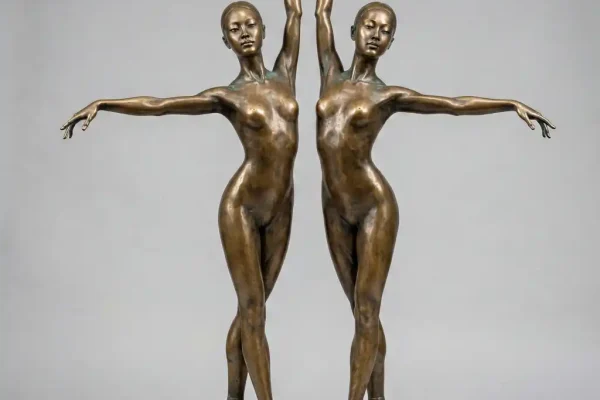
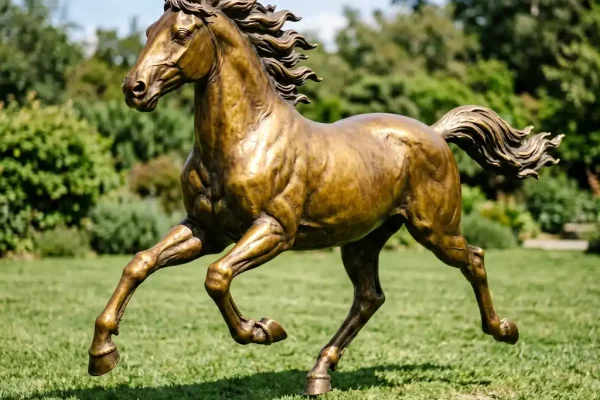
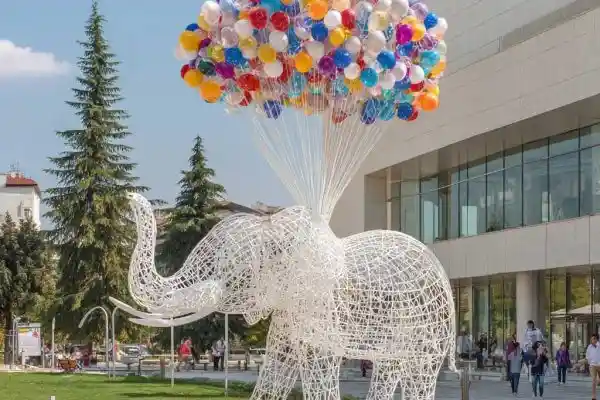
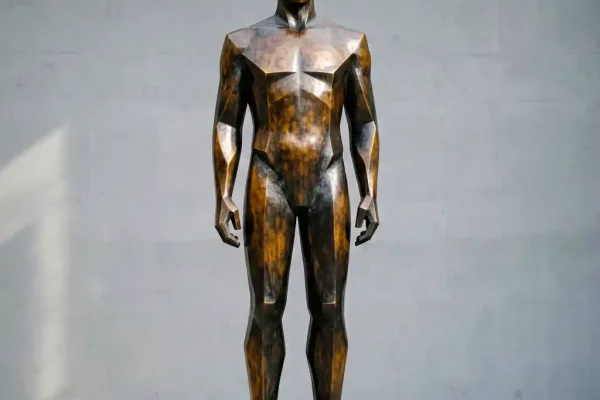
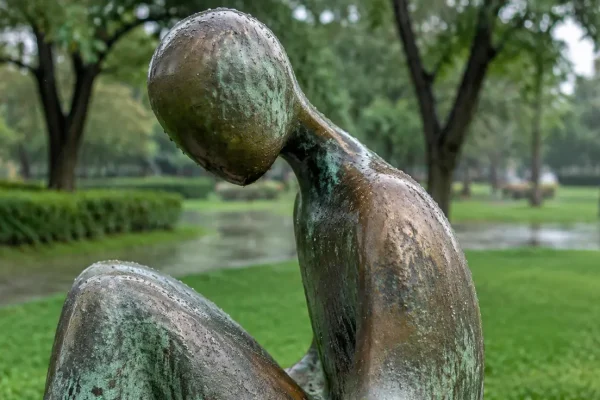
Figurative sculptures represent recognizable human or animal forms. They are the most traditional type of public art and remain popular for memorials, monuments, and tribute pieces. A bronze statue of a historical figure in a city square, a life-size group sculpting soldiers in a war memorial, or a playful animal figure in a children’s park all fall into this category. Figurative work requires strong anatomical understanding from the sculptor and often involves close consultation with the commissioning body to ensure accuracy and appropriate representation.
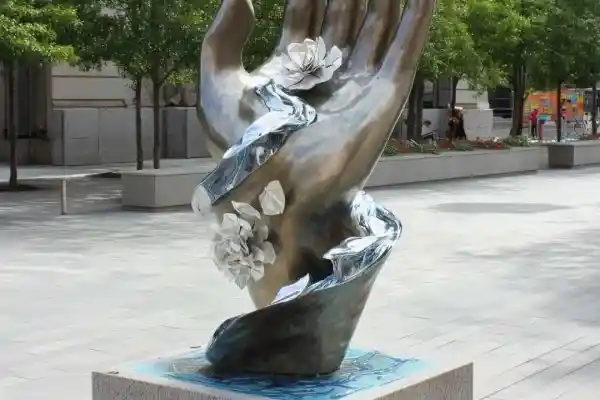
Memorial sculptures carry additional emotional weight. They commemorate events, individuals, or communities, and must balance artistic expression with respect and dignity. Materials like bronze and granite are traditionally chosen for their permanence and gravitas. However, modern memorial commissions also experiment with FRP (fiberglass-reinforced plastic) and stainless steel for more contemporary aesthetic approaches.
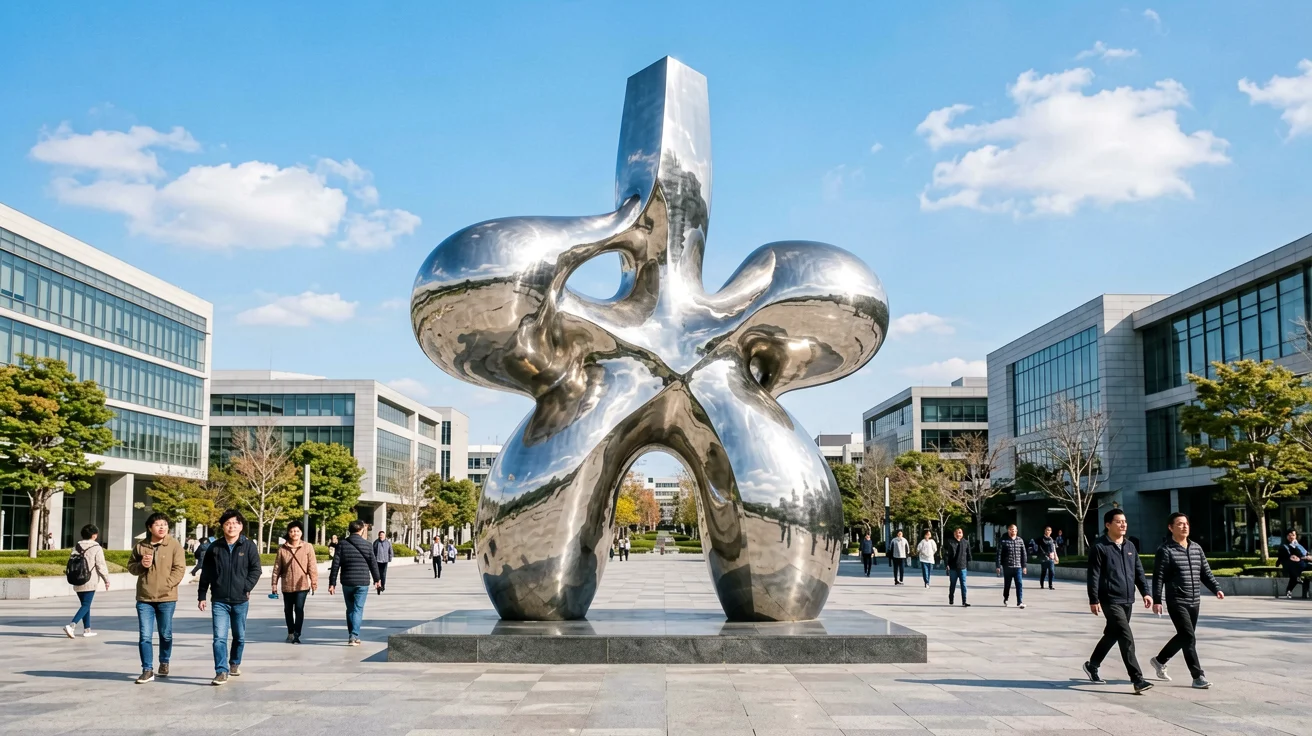
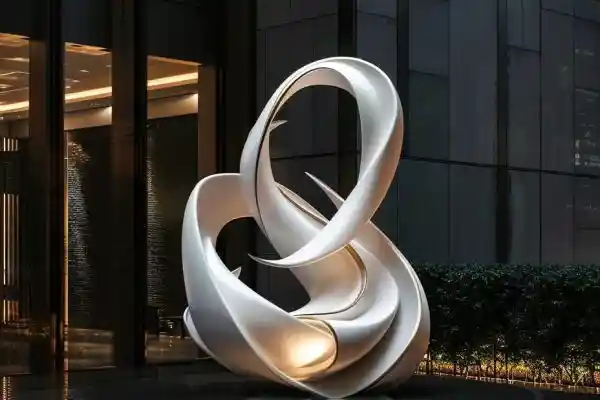
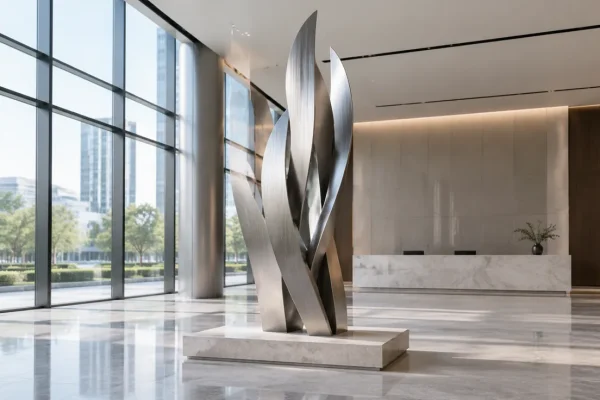
Abstract sculptures move away from representational forms, focusing instead on shape, line, volume, and spatial relationships. Geometric sculptures use clean lines, repeating patterns, and modular components to create visually striking pieces. These works thrive in modern urban environments—corporate plazas, transit hubs, and contemporary park designs—where their clean aesthetics complement architectural lines. Abstract and geometric public art invites viewers to find their own meaning, making it accessible across cultural and linguistic boundaries.
Kinetic sculptures incorporate movement, either through wind, water, mechanical power, or human interaction. Wind-driven kinetic pieces with rotating elements or suspended parts create ever-changing visual experiences. Interactive sculptures encourage physical engagement—spinning wheels, climbing frames, or sound-generating installations. These types are particularly popular in family-oriented spaces, playgrounds, and educational campuses because they transform passive viewing into active participation. Safety standards are critical for kinetic and interactive work: all moving parts must be guarded, edges rounded, and materials selected for high-traffic durability.
Site-specific sculptures are designed for one particular location and cannot be relocated without losing meaning. They respond to the landscape, history, or architecture of their setting. Land art takes this further, using natural materials like stone, soil, and vegetation to create large-scale interventions in outdoor environments. While true land art often exists in remote settings, urban site-specific work might incorporate existing infrastructure, water features, or building facades into the sculptural concept. Site-specific commissions require the artist to spend significant time on location during the design phase.
The most common pathway for public art commissions is the Request for Proposal (RFP), also called an open call. A municipality, arts council, or development authority publishes a brief outlining the project scope, budget, timeline, and selection criteria. Artists and firms submit proposals including artistic vision, resume, past work, and cost estimates. A review panel—often including artists, planners, and community representatives—evaluates submissions and recommends a winner. This transparent process ensures fair competition and community representation in the selection.
Direct commissions bypass the open call process and involve selecting an artist based on their established reputation, portfolio, or prior collaboration. This approach is common when a client already has a specific artist in mind or needs to move quickly. Direct commissions work well for developers commissioning art for private-public spaces, corporate collections, or repeat clients with established relationships to artists. While faster, this method offers less community input and may not satisfy public funding requirements that mandate open competition.
Design competitions are a formalized version of the RFP process, often offering honoraria to shortlisted artists. Multiple designers create preliminary concepts or full proposals, and the winning design is selected after public presentation or jury review. Design competitions generate higher-quality submissions because artists invest more effort when compensated, but they also cost more to administer. Large-scale civic projects—transportation terminals, major plazas, memorial parks—frequently use this approach.
Public art funding comes from diverse sources. Many cities dedicate a percentage of capital project budgets to art through Percent-for-Art programs, which require a portion of public construction costs to fund artwork. Federal and state arts grants, private foundations, and corporate sponsorships supplement municipal funding. Private developers often commission public art as part of entitlement processes or community benefit agreements. Understanding these funding streams helps artists and clients structure realistic budgets. A typical public sculpture commission ranges from $20,000 to $200,000+, depending on scale, material, and complexity.
Public art must withstand not only weather but also human interaction. Engineering requirements for outdoor sculpture are rigorous. Anchoring systems must resist wind loads, which increase dramatically with sculpture height and surface area. Tall, thin pieces require deep foundational footings and sometimes internal steel armatures. Engineers calculate wind pressure based on the sculpture’s shape, height, and local wind zone data, then design embed plates, anchor bolts, and foundation pours accordingly.
Safety features include rounded edges and corners to prevent injury, secure mounting that prevents tipping or theft, and finishes resistant to vandalism. Spray paint, graffiti, and deliberate damage are reality in public settings, so surface treatments like powder coating, protective wax, or self-cleaning coatings are often specified. Accessibility also matters: sculptures should maintain clear sightlines for pedestrians and not create tripping hazards. ADA-compliant approaches require smooth, level pathways around the artwork with appropriate clearance.
For large-scale installations, structural engineering reports are typically required by permitting authorities. These documents certify that the sculpture meets local building codes for wind, seismic, and dead loads. This is especially important for cantilevered forms, suspended elements, or sculptures mounted on buildings rather than at ground level.
A sculpture’s location determines how it is experienced. Placement considerations include scale—the piece must be proportionate to its surroundings, neither lost in a vast plaza nor overwhelming a modest garden. Sightlines matter: viewers should encounter the sculpture from multiple angles as they move through the space. Key viewpoints from approach routes, seating areas, and building entrances should be mapped during the design phase.
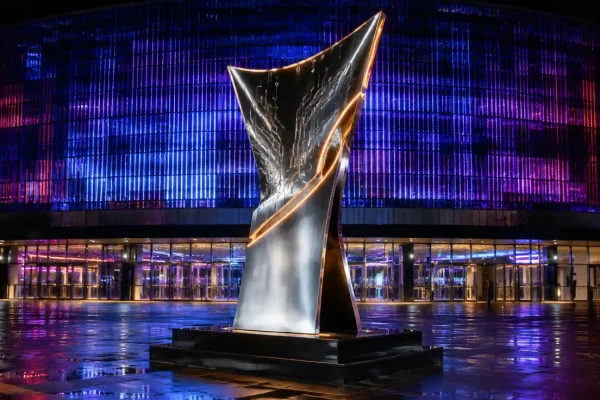
Lighting transforms a sculpture at night. Integrated LED uplighting, fiber optic elements, or surrounding landscape lighting can highlight form and texture after dark. Maintenance access is often overlooked: the crew responsible for cleaning, inspecting anchors, and repairing damage needs safe, unobstructed access to all sides. Underground utilities, drainage patterns, and soil conditions also affect placement decisions.
Material selection balances aesthetics, durability, and budget. Bronze remains the traditional choice for public sculpture, valued for its patina development, casting detail, and centuries-long lifespan. It is expensive and heavy but iconic. Stainless steel, particularly Grade 316 marine-grade, offers superior corrosion resistance and a modern aesthetic. It can be polished to mirror finish or left with a brushed texture. Steel is lighter than bronze, allowing larger spans with less structural support.
Corten steel (weathering steel) develops a stable rust patina that protects the underlying metal, creating a distinctive warm orange-brown appearance that blends with natural settings. It requires no painting and is popular for landscape-integrated works. FRP (fiberglass-reinforced plastic) has become increasingly popular for public art because it is lightweight, cost-effective, and can replicate the appearance of bronze, stone, or other materials through finishing techniques. FRP allows complex curvilinear forms that would be prohibitively expensive in metal casting. For high-traffic public spaces, FRP with appropriate gelcoat and UV-stabilized coatings can last 15-20 years with minimal maintenance.
When evaluating materials, consider the material cost comparison across bronze, stainless steel, and FRP to understand the trade-offs between upfront investment and long-term durability for your public art project.
Public sculpture commissions typically range from $20,000 for small pieces under 2 meters to $200,000+ for large monumental works. A 3-meter abstract stainless steel sculpture might cost $40,000-$80,000, while a bronze figurative piece of similar size could reach $100,000+. Costs include artist fees, engineering, foundation work, installation, and permitting. Percent-for-Art programs often allocate 1-2% of construction budgets for public art.
The timeline from RFP to installation typically runs 12-24 months. The design and approval phase alone takes 6-12 months, including community feedback, engineering review, and city council approval. Fabrication adds another 4-8 months depending on material and complexity. Site preparation, foundation pouring, and installation require 2-4 weeks. Rushed timelines compromise quality; allow adequate time for each phase.
Ownership depends on the funding source and agreement. Municipally commissioned works are owned by the city or relevant public authority. Privately funded public art may remain the artist’s property under a display agreement, or transfer to the commissioning entity. Maintenance responsibility follows ownership: the owning entity covers conservation, insurance, and repairs. Clarify ownership and maintenance terms before commissioning begins.
Public sculpture installation typically requires building permits for the foundation, zoning approval for size and placement, and sometimes environmental review for larger installations. Electrical permits are needed if the piece includes lighting. Historic district locations may require additional review. Your sculpture manufacturer or installer should coordinate permitting, but budget time and costs for these approvals in your project plan.
Bronze and stainless steel are the most durable options for outdoor public art, with lifespans of 50-100+ years with minimal maintenance. Corten steel lasts 30-50 years once the patina stabilizes. FRP with quality gelcoat and UV protection typically lasts 15-20 years before requiring refinishing. In coastal or high-pollution environments, stainless steel Grade 316 outperforms bronze, which can suffer from chloride corrosion.
Understanding the structural considerations behind monumental public art is essential for successful installation. For detailed guidance on wind load calculations, foundation design, and safety standards, explore our comprehensive guide on large-scale sculpture engineering.
Navigating public art funding and the commissioning process can be complex. Our guide to public art funding and commissioning covers grant opportunities, percent-for-art programs, and what to expect when working with municipal arts councils.
Browse real projects matching this topic
Continue reading related articles
Explore our full range of custom sculpture services

Beyond 2D: Why IP Replication Drives Brand Engagement A character that lives only on a screen is easy to scroll...
Learn More →
Engineering Monumental Scale A sculpture that stands 15 metres tall is not simply a 1.5-metre maquette scaled up ten times....
Learn More →
From Concept to Icon Most sculpture enquiries begin with a reference: a licensed character, a film hero, an existing artwork...
Learn More →
One Factory, Every Sculpture Material A sculpture brief rarely arrives pre-sorted by material. A client sends a reference image, a...
Learn More →
Inflatable Sculptures as Brand Media Most sculptural commissions are permanent assets: they are built once, installed once, and admired for...
Learn More →
Custom FRP and fiberglass sculpture manufacturer - design, fabrication, and finishing.
Learn More →
Custom stainless steel, bronze, corten, and aluminum sculpture manufacturer.
Learn More →
Custom Theme Park Sculptures – Bringing Imagination to Life Theme parks, amusement parks, zoos, and entertainment destinations thrive on immersive...
Learn More →
Custom Commercial Sculptures – Elevate Your Brand & Space In today's competitive retail and commercial environment, first impressions matter. Commercial...
Learn More →