
Custom Sculpture Insights & Guides
Public Art Commissioning: From RFP to Ribbon-Cutting Guide
How a Stone Mason Who’d Never Touched Public Art Won a $175K City Commissio
In 2019, a Reddit post on r/smallbusiness went mildly viral. A third-generation stone mason from Ohio described his journey responding to a city RFP for a veterans memorial sculpture. He’d spent 22 years cutting headstones, fireplace surrounds, and the occasional garden bench. He had zero public art experience, no portfolio of monumental work, and no idea what “Percent for Art” even meant. But he read the RFP carefully, submitted the lowest qualified bid with a compelling maquette, and won. Three years later, his 14-foot granite and bronze installation anchors the town square of a city of 40,000. His secret? He treated the RFP like a construction contract — not an art contest.
That stone mason’s story isn’t rare. It’s instructive. Public art commissioning is fundamentally a procurement and project management process dressed in creative clothing. Cities, developers, and art committees who understand this — and the real timeline, budget, and stakeholder dynamics involved — get projects delivered on time and on budget. Those who don’t end up with stalled RFPs, blown deadlines, and sculptures that never leave the artist’s studio.
At Y Sculptures, we’ve navigated this process from every angle: as artists, as fabrication partners, and as consultants helping municipalities and developers bridge the gap between artistic vision and municipal reality. This guide is the process manual we wish every client had before reaching out.
Stage 1: RFP Response — The Art of the Proposal
The Request for Proposals (RFP) is where 80% of artists self-eliminate. Municipal RFPs are dense documents — often 40–80 pages — loaded with legal boilerplate, insurance requirements, prevailing wage mandates, and submission formatting rules that feel deliberately hostile to creative professionals. Read every word. Miss a single required form or formatting rule and your proposal is disqualified before anyone sees your artwork.
What a strong RFP response includes:
- Concept narrative (2–3 pages): Explain the artistic vision in language accessible to a selection panel that may include no art professionals. Connect your concept to the site’s history, community identity, and the RFP’s stated goals. Avoid jargon.
- Visuals: High-quality renderings, at minimum one maquette photo, context shots showing the work in situ. If you can produce a 3D digital model with scale reference, do it — selection committees increasingly expect this.
- Budget (detailed): Break down design, materials, fabrication, shipping, installation, contingency. Show you understand real costs. A lump-sum number signals inexperience.
- Timeline (Gantt or milestone chart): Visual timeline from contract signing to dedication. Include community engagement sessions, engineering review, fabrication phases, and installation window.
- Qualifications: Your CV, portfolio of relevant work, and — critically — evidence you can deliver at scale. If you’ve never done public art, demonstrate transferable skills (large-scale fabrication, project management, working with engineers).
- Insurance and bonding capacity: Many RFPs require proof of general liability ($2M minimum is common), workers’ comp, and sometimes a performance bond. Line this up before you submit.
Pro tip: Attend the pre-bid conference. Always. You’ll learn which questions other respondents ask, see who your competition is, and often pick up unstated priorities from the selection committee’s body language and offhand comments.
Stage 2: Community Engagement — Buy-In Before Bronze
This is the stage that separates successful public art projects from the ones that generate angry letters to the editor. Public art is public. The community that will live with your sculpture for 30 years deserves a voice, and failing to provide one is the single most reliable way to generate opposition — regardless of artistic merit.
Effective community engagement models:
- Open studio sessions: Invite community members into your process. Show concept sketches, material samples, fabrication techniques. People support what they help create.
- Public presentations (2–3): At concept phase, at design development, and pre-installation. Present to the city council, arts commission, and general public. Record sessions for those who can’t attend.
- Online surveys with visual options: Give stakeholders a choice between 2–3 concept directions. This isn’t about design-by-committee — it’s about identifying deal-breakers early. If 70% of respondents hate Corten steel for a waterfront installation because they associate it with rust, that’s worth knowing before you fabricate.
- Stakeholder interviews: Meet separately with adjacent property owners, the parks department, the maintenance team, and any historically significant community groups. Their operational concerns (sight lines, maintenance access, drainage) will surface issues the selection committee never considered.
Document everything. Meeting minutes, attendee lists, survey results, and design revisions made in response to feedback. When a city council member asks “what did the community say about this?” six months later, you need an answer with receipts.
Stage 3: Design & Engineering — Making Art Stand Up
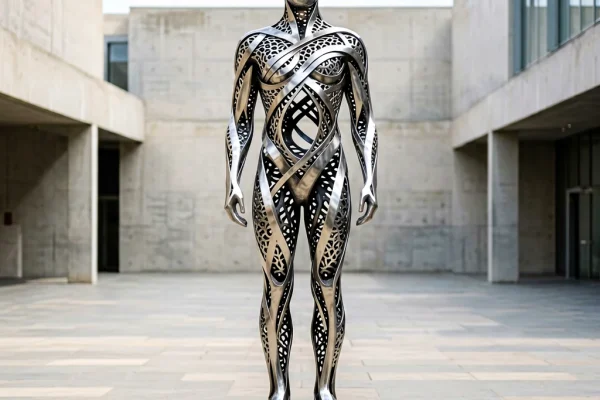
Artistic vision meets physics. A 12-foot sculpture must withstand 90mph wind loads, freeze-thaw cycles, seismic forces, and — in many jurisdictions — a structural engineer’s stamp certifying it won’t fall on anyone. This stage typically requires collaboration with a licensed structural engineer, and for some materials (especially tensioned cables, cantilevered elements, or thin-shell concrete), a specialized engineering firm with art-installation experience. our the liquid galaxy project
Key engineering deliverables:
- Structural calculations and stamped drawings: Required by virtually every municipality for permanent installations. Budget $5,000–$15,000 for engineering depending on complexity.
- Foundation design: Footing depth (below frost line in cold climates), reinforcement schedule, anchor bolt pattern, and embedment depth. The foundation is typically poured by the general contractor, not the artist — but the artist or their engineer must provide the spec.
- Material specifications: Grade of stainless steel (316 marine-grade for coastal or de-icing salt exposure), concrete PSI, coating system (specify surface prep standard, primer, topcoat, DFT/mil thickness), and fastener grade.
- Lighting plan (if applicable): Electrical load, conduit layout, fixture specs, and photometric plan showing illumination levels. Coordinate with the site’s electrical contractor early.
- Maintenance manual: Increasingly required by public art programs. Document cleaning procedures, coating reapplication schedules, and any moving-part lubrication requirements.
Stage 4: Budgeting & Funding — Where the Money Actually Goes
Many US cities operate “Percent for Art” ordinances that allocate 1% of eligible municipal construction project budgets to public art. For a $20M library renovation, that’s a $200,000 art budget. Other funding sources include state arts council grants, private developer contributions (often required as a condition of zoning approvals for large projects), community fundraising, and corporate sponsorships.
Real budget allocation template:
- Design (15%): Concept development, renderings, community engagement sessions, engineering, permit fees.
- Fabrication (50%): Materials, shop labor, equipment rental, shop consumables, waste/scrap factor. This is where most cost overruns happen — build in a 10% buffer within this line.
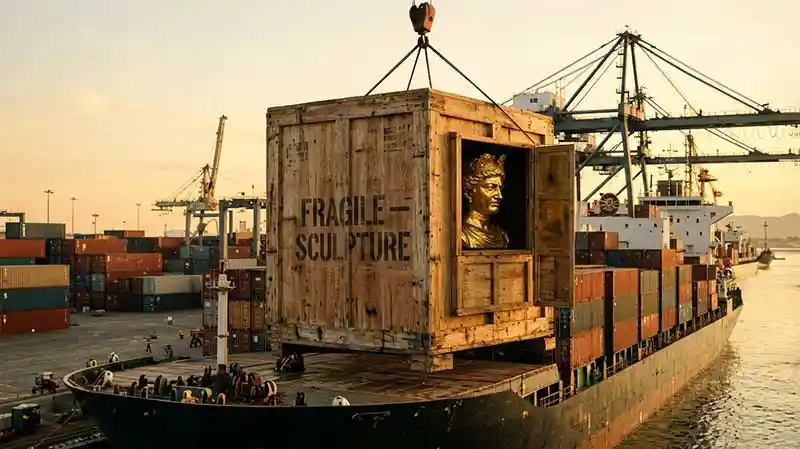
- Shipping (10%): Crating, freight (specialized art shippers or flatbed with escort vehicles for oversize loads), insurance in transit, rigging at both ends.
- Installation (15%): Crane rental, rigging crew, site prep (excavation, concrete pour for foundation if not by GC), site restoration (sod, pavers, landscaping repair), travel and per diem for artist/team.
- Contingency (10%): Never skip this. Material price fluctuations, unexpected site conditions, permit delays, weather windows, and the universal truth that everything takes longer than planned.
Hidden costs most artists miss: Sales tax on materials (varies by state, 0–10%), performance bond premium (1–3% of contract value), builders risk insurance, prevailing wage requirements (federally funded projects require paying Davis-Bacon wage rates, often 30–50% higher than shop rates), and the artist’s own travel for 3–5 site visits. A $50,000 commission can easily consume $8,000–$12,000 in these hidden costs before any art gets made.
Stage 5: Fabrication & Quality Control
This is the longest stage — typically 4–12 months for medium-to-large installations. The goal is to build exactly what was approved, with zero surprises at delivery. Quality control isn’t a final step; it’s embedded throughout. our spirit of water buffalo painted frp buffalo sculpture project
Fabrication QC milestones:
- Material receipt inspection: Verify mill certs for structural steel, confirm stainless grade with a handheld analyzer if specified, check concrete batch tickets against spec.
- In-process inspections: Weld testing (visual inspection minimum; ultrasonic or dye penetrant for critical structural welds), dimensional verification against approved shop drawings, surface prep inspection before coating.
- Pre-finish review: Invite the client, arts commission representative, or owner’s rep to inspect the work in the shop before final finish is applied. Fix issues now, not on site.
- Final assembly and fit-check: Fully assemble the sculpture in the shop if possible. If too large, assemble in the largest sub-assemblies practical. Discover that two components don’t align in your shop parking lot, not at the installation site with a crane on the clock at $300/hour.
- Photographic documentation: Shoot every stage. These photos prove due diligence, support warranty claims on materials, and provide content for the dedication ceremony presentation.
Stage 6: Shipping & Site Preparatio
Moving a large sculpture isn’t like shipping a painting. Oversize loads require permits, route surveys (checking bridge clearances and weight limits), escort vehicles, and sometimes nighttime transport windows. International shipments add customs brokers, ISPM-15 compliant wood crating, and import duties.
Site preparation checklist:
- Foundation: Poured and cured per engineer’s spec (typically 28-day cure for structural concrete). Verify anchor bolt placement against the sculpture’s base plate template before the concrete sets — fixing this after the pour is expensive.
- Utilities located and marked: 811 call-before-you-dig, done at least 48 hours before any excavation.
- Access path: Can a crane (typically 30–80 ton for medium installations) get to the site? Check for overhead power lines, tree canopies, soft ground, and weight restrictions on access roads.
- Crane pad: Stable, level ground for outriggers. In soft soil conditions, crane mats (timber or composite) may be required.
- Power for installation: Generator or temporary power for welding, grinding, or lighting if the install runs into evening.
- Security: Overnight security for the sculpture and equipment if installation spans multiple days.
- Weather window: Have a rain date. Wind speeds above 20–25 mph typically shut down crane operations.
Stage 7: Installation & Dedicatio
Installation day is the culmination of 6–18 months of work. A well-planned install runs smoothly. A poorly planned one runs up crane overtime at $500/hour and creates a spectacle no city wants.
Installation day essentials:
- Pre-install meeting (day before or morning of): All parties present — artist, rigging crew, crane operator, site superintendent, city rep. Review the lift plan, signal protocol, weather forecast, and emergency procedures. Everyone signs off.
- Rigging plan: Engineered lift points on the sculpture (designed in during fabrication, not improvised on site), sling angles and capacity verified, tag lines for control, and a clear communication chain (one person directs the crane operator, period).
- Leveling and anchoring: Base plate set on leveling nuts atop anchor bolts, grouted after leveling is verified. Laser level, not a carpenter’s level.
- Site restoration: Clean up immediately. Remove all construction debris, regrade disturbed soil, replace damaged sod or pavers. The sculpture should look like it grew there, not like a construction site that recently got a sculpture.
- Final inspection and sign-off: Walk the installation with the owner’s rep. Photograph everything. Get a signed acceptance.
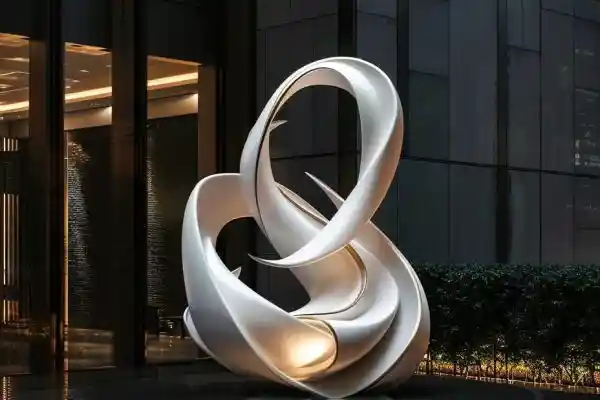
Ribbon-cutting: Schedule the dedication ceremony 2–4 weeks after installation. This allows time for any punch-list items, landscaping to settle, and publicity to build. Invite local press, the selection committee, community stakeholders, and the artist. A well-produced dedication builds political goodwill and generates the kind of coverage that leads to the next commission. our the ethereal node luxury hospitality entrance sculpture project
Timeline by Project Scale
The total timeline from RFP release to ribbon-cutting depends heavily on project scale and complexity. Below are realistic estimates based on our experience across dozens of municipal and developer projects:
| Stage | Small (<$50K) | Medium ($50K–$200K) | Large ($200K+) |
|---|---|---|---|
| RFP Response | 1–2 months | 2–3 months | 3–4 months |
| Community Engagement | 1–2 months | 2–4 months | 3–6 months |
| Design & Engineering | 1–2 months | 2–4 months | 3–6 months |
| Budgeting & Funding | 1–2 months | 2–3 months | 3–6 months |
| Fabrication & QC | 2–4 months | 4–8 months | 6–12 months |
| Shipping & Site Prep | 1–2 months | 1–3 months | 2–4 months |
| Installation & Dedicatio | 1 month | 1–2 months | 2–3 months |
| Total (Estimated) | 6–12 months | 12–18 months | 18–24 months |
Note: These timelines assume a well-managed process with no major scope changes. Add 3–6 months for projects requiring environmental review, historic preservation approvals, or federal funding compliance.
5 Common Pitfalls That Kill Public Art Projects
- Underestimating engineering costs. A $2,000 “favor” structural review from an engineer who doesn’t specialize in sculpture won’t satisfy a city building department. Budget $5,000–$15,000 for proper stamped drawings from an engineer with art-installation experience. This isn’t negotiable — the building department will reject insufficient documentation, and you’ll lose months.
- Ignoring maintenance in the design phase. That beautiful polished stainless steel surface? It needs quarterly cleaning in a coastal environment, annual cleaning inland. The kinetic element with exposed bearings? It needs lubrication every 6 months. If the city’s maintenance team can’t or won’t perform this work, the sculpture degrades, and your name is attached to the rusting result. Design for the maintenance reality, not the maintenance fantasy.
- Treating community engagement as a checkbox. Running one sparsely attended public meeting and calling it “community input” is the fastest way to generate opposition. Meaningful engagement takes time and produces better art. Skip it at your peril — community opposition has killed fully funded, approved projects.
- No contingency budget. Steel prices spike 40% (as they did in 2021). The site has undocumented fill that requires a deeper foundation. The crane company discovers overhead lines that weren’t on the survey. Without a 10% contingency, any one of these turns your profitable commission into a loss. With it, you absorb the hit and deliver.
- Rushing the contract stage. Verbal agreements and handshake deals don’t survive a change in city administration. Your contract must specify: exact scope of work, payment schedule (never accept “net 90” from a municipality without factoring the float cost), change order process, ownership of intellectual property (you typically retain copyright while granting a perpetual public display license), insurance requirements, and dispute resolution. Have an attorney who understands public art contracts review it. This $1,500–$3,000 investment pays for itself the first time it prevents a dispute.
Frequently Asked Questions
What is “Percent for Art”?
A policy adopted by many US cities (and some states and federal agencies) that allocates approximately 1% of eligible capital construction project budgets to the commissioning of public art. For example, if a city builds a $15M community center, roughly $150,000 is set aside for public artwork integrated into the project. As of 2024, over 350 public art programs exist in the US, with the majority using this model. The percentage and eligibility rules vary by jurisdiction — some apply only to vertical construction, others include infrastructure — but the principle is consistent: public buildings should include public art. If you are navigating the public art commissioning process, Commissioning Monumental Public Art: From RFP to Installation is a great starting point.
How long does the entire process take?
From RFP release to ribbon-cutting, expect 6–12 months for small projects (under $50,000), 12–18 months for medium projects ($50,000–$200,000), and 18–24+ months for large-scale installations. Projects requiring federal funding compliance, environmental review, or historic district approval can extend by an additional 3–6 months.
Do I need a structural engineer?
Yes. Nearly every municipality requires stamped structural calculations and drawings for permanent outdoor sculpture. This applies to the sculpture’s internal structure, anchor system, and foundation design. Budget $5,000–$15,000 depending on complexity. Temporary installations may have lower requirements, but still require an engineer’s assessment of stability and safety.
What insurance do I need?
At minimum: General liability ($2M per occurrence / $4M aggregate is the most commonly required level), workers’ compensation (statutory limits for your state), and auto liability if transporting materials. Some contracts also require professional liability (errors & omissions), builders risk during fabrication, and inland marine for shipping. A performance bond may be required for larger contracts — budget 1–3% of the contract value for the bond premium.
Can I submit to an RFP without public art experience?
Yes, but you must demonstrate transferable capability. Have you fabricated at scale? Managed complex projects with multiple stakeholders and hard deadlines? Worked with engineers and municipal permitting processes? Frame your experience in terms that address the selection committee’s core concern: “Can this person deliver what they’re proposing, on time and on budget?”
How do I find public art RFPs?
Key resources include: Public Art Archive (publicartarchive.org), Americans for the Arts public art network job board, CaFÉ (callforentry.org) — the most widely used application platform for public art calls, state arts council websites, and individual city public art program pages. Set up Google Alerts for “[your medium] + public art RFP” and monitor the major listing sites weekly. Most mid-to-large cities post RFPs on their procurement portal, not their arts page — check both. Our public art commissioning guide — Public Art Installation: The Complete Process from Commission to Unveiling — walks through the entire process from RFP to unveiling.
What payment terms should I expect?
Public art contracts typically use milestone-based payments: 20–30% on contract signing, 20–30% on design approval, 20–30% on fabrication completion (or shipment), and the balance upon installation acceptance. Avoid contracts that pay only upon completion — you’ll be financing the entire fabrication out of pocket. Net-30 payment terms are standard; net-60 or net-90 are common with larger municipalities but increase your carrying costs. Factor this float into your budget.
Working with Y Sculptures
Whether you’re an artist looking for fabrication support, a developer needing a turnkey sculpture commission managed from concept to installation, or a municipality seeking guidance on your public art program, contact Y Sculptures to discuss your project. We bring decades of combined experience in sculpture fabrication, public art process management, and municipal commissioning to every engagement.
J
Written by James Liu
James Liu is Project Manager at Y Sculptures, specializing in end-to-end custom sculpture project delivery for commercial, hospitality, and public art sectors. With 12 years in the industry, James coordinates design approvals, material sourcing, fabrication timelines, international shipping logistics, and on-site installation. He has successfully delivered 500+ projects to 30+ countries.
Related Projects
Browse real projects matching this topic
Related Insights
Continue reading related articles
Brand Mascot & IP
Oct 13, 2026
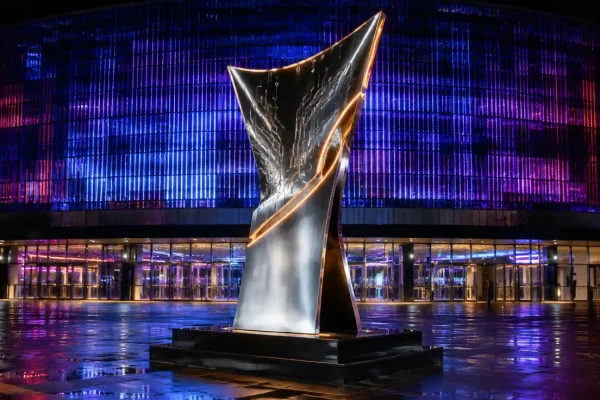
Esports Arena & Gaming Venue Sculpture: Landmarks, Trophies & Mascot Statues
Commercial & Hospitality
Oct 13, 2026
Corporate Lobby & Office Sculpture: Commissioning Guide for Developers
Custom Sculpture Insights & Guides
Oct 13, 2026
How Long Do Outdoor Sculptures Last? Material-by-Material Lifespan Guide
Our Sculpture Solutions
Explore our full range of custom sculpture services

IP Character Replication
Beyond 2D: Why IP Replication Drives Brand Engagement A character that lives only on a screen is easy to scroll...
Learn More →
Large Sculpture Custom
Engineering Monumental Scale A sculpture that stands 15 metres tall is not simply a 1.5-metre maquette scaled up ten times....
Learn More →
Original IP Development
From Concept to Icon Most sculpture enquiries begin with a reference: a licensed character, a film hero, an existing artwork...
Learn More →
Solutions Services
One Factory, Every Sculpture Material A sculpture brief rarely arrives pre-sorted by material. A client sends a reference image, a...
Learn More →
Custom Inflatables
Inflatable Sculptures as Brand Media Most sculptural commissions are permanent assets: they are built once, installed once, and admired for...
Learn More →
FRP & Fiberglass Sculpture Manufacturing
Custom FRP and fiberglass sculpture manufacturer - design, fabrication, and finishing.
Learn More →
Stainless Steel & Metal Sculpture Manufacturing
Custom stainless steel, bronze, corten, and aluminum sculpture manufacturer.
Learn More →
Theme Park Sculpture Services – Custom Amusement Park Statues
Custom Theme Park Sculptures – Bringing Imagination to Life Theme parks, amusement parks, zoos, and entertainment destinations thrive on immersive...
Learn More →
Commercial Sculpture Services – Custom Brand Mascots & Mall Art
Custom Commercial Sculptures – Elevate Your Brand & Space In today's competitive retail and commercial environment, first impressions matter. Commercial...
Learn More →