
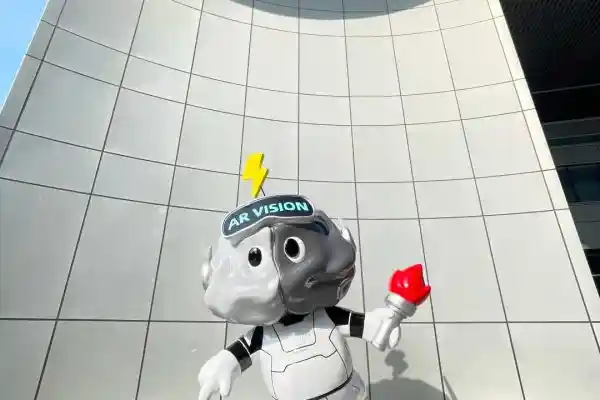
Brand Mascot & IP
Esports Arena & Gaming Venue Sculpture: Landmarks, Trophies & Mascot Statues
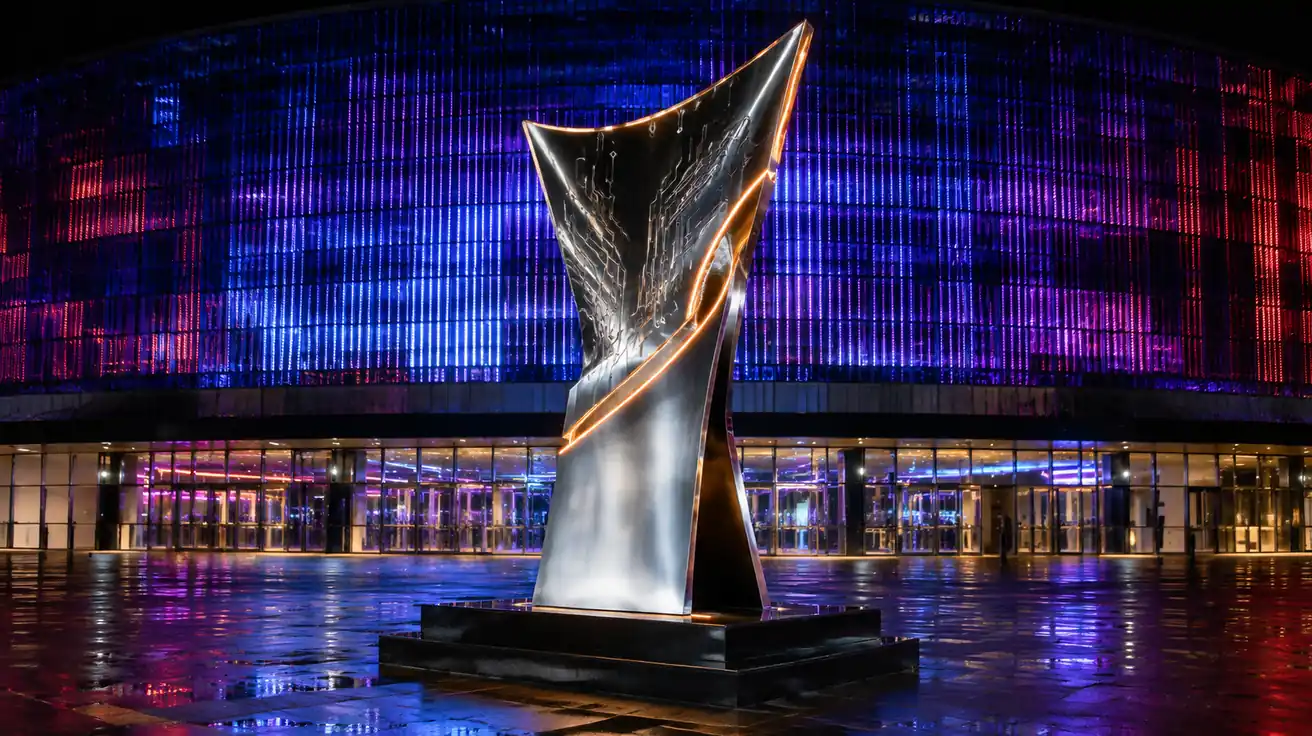
Esports venues compete for the same attention as stadium sport, but most of them still look like converted warehouses from the outside. A commissioned sculpture fixes that in a way signage cannot: it gives the building a silhouette, gives broadcast a backdrop, and gives fans something to photograph before the doors open.
This guide covers the two briefs gaming clients actually commission, what each one has to survive, and the decision points that determine whether the piece still looks sharp after three seasons.
1. Why Gaming Venues Commission Sculpture
Gaming and esports operators commission physical sculpture for three commercial reasons, not for decoration:
- Instant identification. A landmark silhouette at the entrance does the job a logo sign cannot — it works from 60 metres, at night, and on camera.
- Sponsor and broadcast value. Interview shots and pre-match segments need a clean, branded backdrop. A sculpture gives the broadcast team a fixed, repeatable frame.
- Social proof on site. Fan photography is free marketing. A piece people photograph on arrival gets posted every event night.
If none of those three apply, the venue probably needs wayfinding and lighting, not sculpture.
2. Two Different Briefs: Landmark vs Mascot
| Venue Landmark | Mascot / Character Statue | |
|---|---|---|
| What it is | Abstract trophy, gate or crest form | Figurative character, team or game IP |
| Where | Forecourt, entrance, atrium | Fan zone, concourse, stage side |
| Material | Stainless steel, often with LED | FRP with gloss or matte paint |
| Main risk | Wind loading, public climbing | IP fidelity — fans notice wrong details |
| Lifespan | 20–50 yr | 8–15 yr (brand may change first) |
Most venues end up wanting both. Fund them as separate projects with separate budgets, because the engineering and the review process are completely different.
3. The Venue Landmark Brief
Three requirements shape almost every arena landmark we build:
- Legible silhouette from the queue line. Fans queue 30–60 m out. The form has to read as a trophy, a gate or a crest from that distance — which means simple massing and no fine detail.
- Clean broadcast face. Cameras want one uncluttered side. Applied graphics and small protruding parts both ruin the frame and break off in public handling.
- Climb-resistant geometry. No horizontal ledge wide enough to stand on, no sharp overhangs, and a base that survives scraping and skateboard contact.
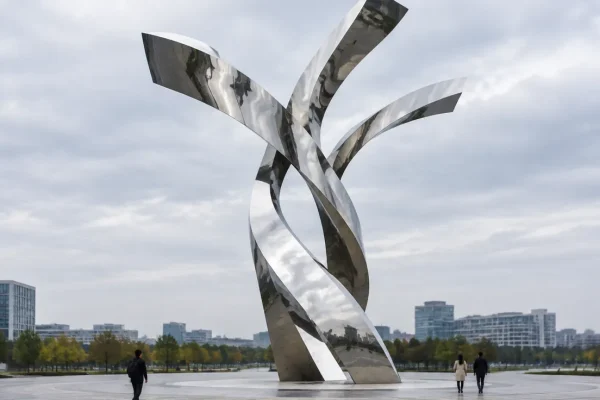
Structurally, an arena forecourt piece behaves like a cantilevered column. Get the wind load right at design stage — an exposed forecourt between a canopy and a car park funnels gusts, and the same piece in a sheltered courtyard needs far less steel. The full engineering approach is in our large-scale sculpture guide.
4. The Mascot Brief — IP Fidelity Is Everything
Character work for a gaming brand is judged by the fans, and they will spot a wrong horn, an off-colour panel or a mis-shaped weapon instantly. The practical rules:
- Get source assets, not screenshots. Publisher-provided 3D models or orthographic turnaround art remove 90% of the ambiguity. If only screenshots exist, agree a written spec of every disputed detail before sculpting.
- Simplify below 8 mm, keep everything above. Fine surface noise reads as manufacturing error at 3 m scale. Structural features fans recognise must stay exact.
- Decide the paint system early. Gloss lacquer photographs best under arena lighting; matte survives handling scuffs better. Our process for IP character and esports mascot sculpture covers the sign-off stages.
For the broader context on turning game IP into physical objects, see bringing virtual characters to life.
5. Materials and Finishes for Gaming Venues
- 316 stainless steel — the default for any coastal or high-humidity arena. 304 tea-stains badly in chloride air and no amount of cleaning removes it.
- 304 stainless steel — fine for inland venues; use brushed rather than mirror if the public can reach it.
- FRP (fiberglass) — the only sensible choice for character work: light, mouldable, repairable on site, and any colour. Material comparison here.
- Integrated LED — 24 V IP67 strip behind a frosted diffuser gives a continuous line rather than visible diodes. Put the drivers and control gear in a lockable enclosure and decide who owns them at handover.
Whatever the material, check the lifespan expectation against how often the venue rebrands. There is no point specifying a 50-year bronze for a team identity that may change in six. Our material lifespan guide has the numbers by material.
6. Real Esports and Gaming Projects
- Victory Circuit — 4.5 m illuminated stainless trophy landmark for an esports arena forecourt. Brushed lower section for durability, mirror upper section to catch stadium lighting, DMX-controlled zones for match nights, broadcast and event openings.
- Neon Racer — FRP gaming and esports mascot character built from publisher art, gloss automotive-grade paint, designed for close fan contact inside the venue.
For venues that are part of a wider entertainment complex, the same landmark logic applies to theme park entrances and transit arrival plazas.
7. Timeline and Budget Bands
| Scope | Lead Time | Indicative Budget |
|---|---|---|
| FRP mascot, 2–3 m, painted | 10–14 weeks | $9,000–$28,000 |
| Stainless landmark, 3–5 m, lit | 16–20 weeks | $35,000–$85,000 |
| Arena-scale landmark, 5 m+, engineered | 20–30 weeks | $85,000–$200,000+ |
Budget the foundation, lighting control and the install window separately — on arena sites the crane and access arrangements are often the largest single line item after the sculpture itself. Full breakdown by material and size: Custom Sculpture Pricing 2026.
8. Next Steps
Tell us the venue type, the clear height at the intended position, and whether the brief is landmark, mascot or both. We will come back with a scale recommendation, a material direction and a budget band. Submit your brief here.
y
Related Projects
Browse real projects matching this topic

Related Insights
Continue reading related articles
Commercial & Hospitality
Oct 13, 2026
Corporate Lobby & Office Sculpture: Commissioning Guide for Developers
Custom Sculpture Insights & Guides
Oct 13, 2026
How Long Do Outdoor Sculptures Last? Material-by-Material Lifespan Guide
Custom Sculpture Insights & Guides
Oct 13, 2026
What Is a Large-Scale Sculpture? Definition, Size Thresholds & Project Types
Our Sculpture Solutions
Explore our full range of custom sculpture services

IP Character Replication
Beyond 2D: Why IP Replication Drives Brand Engagement A character that lives only on a screen is easy to scroll...
Learn More →
Large Sculpture Custom
Engineering Monumental Scale A sculpture that stands 15 metres tall is not simply a 1.5-metre maquette scaled up ten times....
Learn More →
Original IP Development
From Concept to Icon Most sculpture enquiries begin with a reference: a licensed character, a film hero, an existing artwork...
Learn More →
Solutions Services
One Factory, Every Sculpture Material A sculpture brief rarely arrives pre-sorted by material. A client sends a reference image, a...
Learn More →
Custom Inflatables
Inflatable Sculptures as Brand Media Most sculptural commissions are permanent assets: they are built once, installed once, and admired for...
Learn More →
FRP & Fiberglass Sculpture Manufacturing
Custom FRP and fiberglass sculpture manufacturer - design, fabrication, and finishing.
Learn More →
Stainless Steel & Metal Sculpture Manufacturing
Custom stainless steel, bronze, corten, and aluminum sculpture manufacturer.
Learn More →
Theme Park Sculpture Services – Custom Amusement Park Statues
Custom Theme Park Sculptures – Bringing Imagination to Life Theme parks, amusement parks, zoos, and entertainment destinations thrive on immersive...
Learn More →
Commercial Sculpture Services – Custom Brand Mascots & Mall Art
Custom Commercial Sculptures – Elevate Your Brand & Space In today's competitive retail and commercial environment, first impressions matter. Commercial...
Learn More →