
Gardens & Resorts

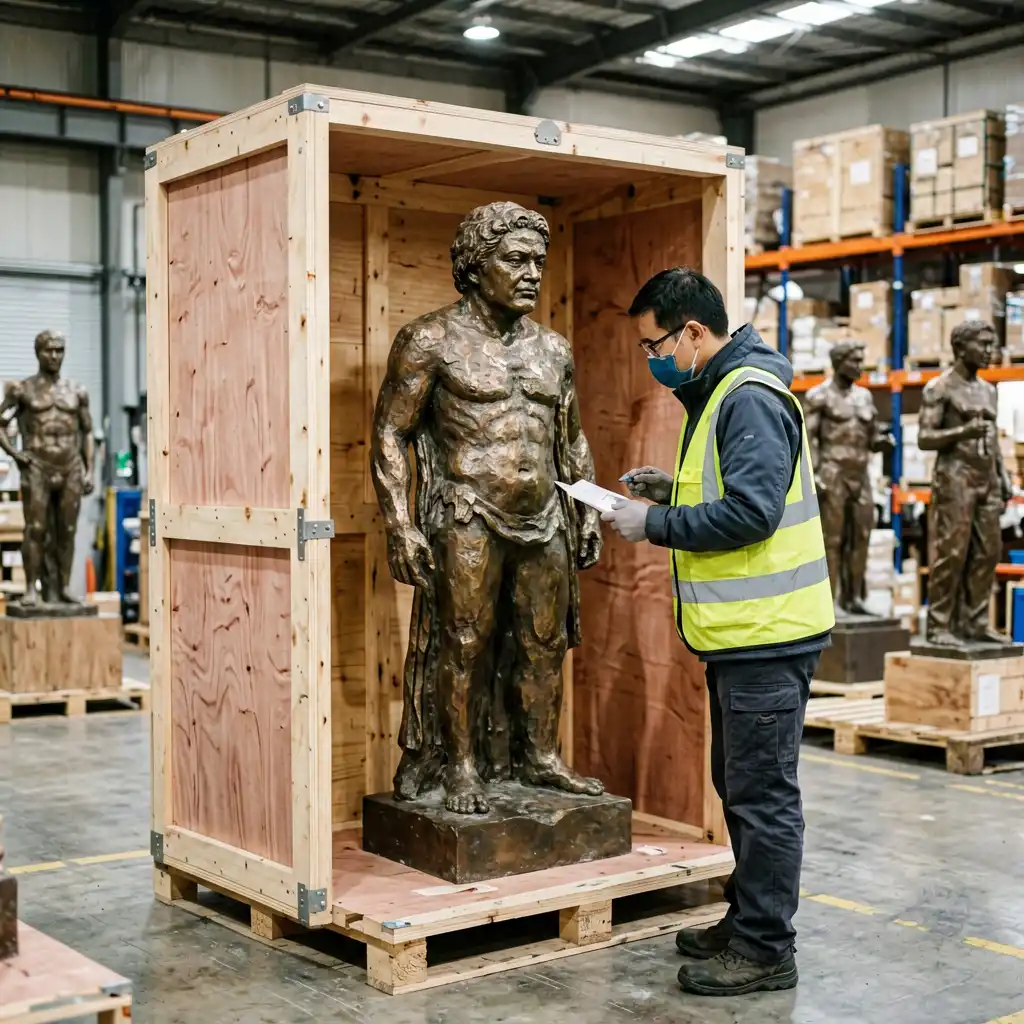
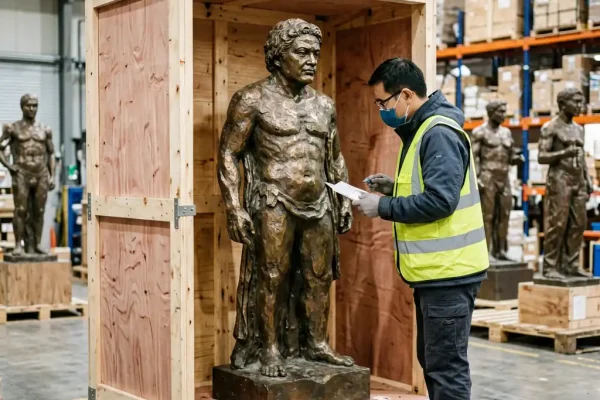
I’ve written over 200 pre-shipment inspection reports for sculptures heading to hotels, museums, corporate plazas, and private collectors across 30+ countries. Some of these pieces cost more than a luxury car. And I’ve seen it all — the good, the bad, and the “how did this even pass QA?” I’m the guy who signs off (or doesn’t) before your sculpture gets crated and loaded onto a ship or plane. Here’s exactly what I check, why it matters, and what you should be demanding from your manufacturer before anything leaves the factory floor.
The common assumption most buyers make is: “I paid for the sculpture, and they sent me photos during production, so it must be fine.” Wrong. The production photos you get are usually taken in controlled lighting with the piece at its best angle. A pre-shipment inspection is completely different — it’s a systematic, documented check under real-world conditions, looking for the defects that photos conveniently miss.
At our factory, every outgoing piece goes through what we call a Pre-Shipment Inspection (PSI) — a formal sculpture inspection process documented in a written report with photographs. If your manufacturer doesn’t offer this as standard procedure, that’s a red flag. Here’s what our PSI covers.
This is what I personally go through on every export shipment. If you’re working with any sculpture quality control process, these are the baseline checks.
I don’t trust the CAD file alone. I measure. Every. Single. Piece.
I’ve caught pieces that were 15cm shorter than specified because someone scaled the model wrong in production. That kind of mistake gets caught at inspection — or it becomes your problem at installation.
Under natural daylight (not factory fluorescent lights), I check:
We take color readings with a spectrophotometer on painted pieces and compare against the approved sample. If the Delta E (color difference) exceeds 1.5, it gets reworked. Period.
Surface might look perfect while the internal structure is compromised. I check:
This is where sculpture ISO standards really separate serious factories from cheap shops. ISO 9001 certification doesn’t guarantee perfection, but it guarantees the factory has documented procedures for these checks.
For outdoor sculptures, this is non-negotiable:
If your sculpture comes in multiple pieces (and most monumental ones do):
Before I sign off, I verify the paperwork is complete:
Missing documentation is one of the most common reasons a sculpture gets held at customs. If your manufacturer can’t produce these, expect delays.
Every piece gets photographed from 12 angles minimum, plus close-ups of all critical details, weld joints, surface finishes, and condition before crating. These photos become part of the inspection report and serve as evidence of pre-shipment condition — essential if you need to file a shipping damage claim later.
This is where the handover happens. Your sculpture warranty should be signed and dated at this point, covering:
I make sure the warranty document is in the crate, next to the packing list. Yes, physically inside the crate — not emailed separately (it gets lost that way).
I’ve seen a $120,000 bronze sculpture shipped in a cardboard-and-wood pallet held together with stretch wrap. It arrived looking like a crushed soda can. Good sculpture crating is an engineering discipline, not an afterthought. For more detail on the production and engineering stages, read Custom Sculpture Manufacturing: 7-Step Process Guide.
| Sculpture Size | Crate Type | Typical Cost (Ex-factory) | Protection Level |
|---|---|---|---|
| Small (under 1m) | Plywood box with foam insert | $150 – $400 | Standard — adequate for most surface transport |
| Medium (1m – 3m) | Plywood crate with internal bracing + foam cradle | $400 – $1,200 | High — recommended for ocean freight and any air freight |
| Large (3m – 6m) | Custom timber crate with steel frame + shock indicators | $1,200 – $3,500 | Very High — required for international shipments |
| Monumental (6m+) | Steel-framed modular crate with climate control option | $3,500 – $8,000+ | Maximum — for high-value, complex, or fragile pieces |
Once the crate is sealed, the logistics chain begins. Here’s what you need to know about international art shipping for sculptures.
| Method | Transit Time | Cost (Relative) | Best For |
|---|---|---|---|
| Ocean (LCL — Less than Container Load) | 25-40 days | Baseline (1x) | Large/heavy pieces, budget-conscious projects, non-urgent deliveries |
| Ocean (FCL — Full Container Load) | 25-40 days | 1.5-2x LCL for full container | Multiple sculptures in one shipment, better handling control |
| Air Freight | 3-7 days | 4-8x ocean | High-value pieces, time-sensitive installations, fragile complex works |
| Express (DHL/FedEx) | 2-5 days | 8-12x ocean | Small sculptures under 100kg, samples, replacement parts |
The single biggest delay in international art shipping isn’t transit — it’s customs clearance. Here’s what causes holdups and how to avoid them:
We include a customs documentation package with every export shipment — commercial invoice, packing list, bill of lading, certificate of origin, and material declarations — all in both English and the destination country language where required.
Many buyers don’t realize that delivery-to-site is only half the story. Professional sculpture installation services cover:
Our turnkey model includes factory-to-foundation handling — we coordinate the entire chain from sculpture quality control at the factory through to final placement at your site. This is especially valuable for first-time sculpture buyers who don’t have existing installation contractors. Our manufacturing guide — How Custom Sculptures Are Made: From Concept to Installation in 10 Steps — covers everything from mold-making to final finishing.
This is one of the most common questions I get. Here’s my honest take:
| Factor | Factory-Arranged (Turnkey) | Self-Managed |
|---|---|---|
| Cost | Typically 10-20% higher for freight | Lower — you can shop rates |
| Liability | Single point of responsibility — one phone call solves problems | Split liability — finger-pointing between factory, freight forwarder, and installer |
| Coordination | Factory handles all logistics from door to door | You manage 3-5 separate vendors |
| Risk | Factory has incentive to protect their work (they built it) | Forwarder may not treat art-grade cargo with appropriate care |
| Best for | First-time buyers, complex installations, multi-piece projects | Experienced buyers with existing logistics relationships |
If you go self-managed, at minimum require your factory to provide a detailed lifting and handling procedure. I’ve watched installers try to lift a top-heavy stainless steel sculpture by a point that wasn’t designed for lifting. It tipped. It was not repairable.
We currently export to 30+ countries across North America, Europe, Southeast Asia, and the Middle East. Our sculpture quality control process has a 99.3% first-pass acceptance rate — meaning only 7 out of every 1,000 pieces require rework after our internal PSI. And we ship with full insurance coverage on every international order.
For clients who want peace of mind, we offer third-party inspection by SGS, Bureau Veritas, or a buyer-nominated representative at cost. We’ve had buyers fly in from Dubai, Singapore, and Germany to witness the PSI in person. Every single one signed off on delivery.
Check out our public art projects and commercial sculpture installations to see examples of pieces that went through this exact process.
Whether you’re planning your first sculpture import or you’re a veteran buyer looking for a new factory partner, I’m happy to share specifics. Ask about inspection criteria, crate specs for your particular piece, customs documentation for your country, or anything else that’s keeping you up at night before your sculpture ships. Drop your questions below and I’ll answer them straight.
Lisa Wang is Production & Quality Manager at Y Sculptures, bringing 14 years of hands-on experience in sculpture manufacturing, material science, and quality control. She leads the factory's ISO-compliant QC process, from raw material inspection to pre-shipment verification. Lisa has managed production for 2,800+ sculptures, ensuring precision in color matching, structural integrity, and surface finishing.
Browse real projects matching this topic

Continue reading related articles
Explore our full range of custom sculpture services

Learn More →

Learn More →

Learn More →

Learn More →

Learn More →

Custom FRP and fiberglass sculpture manufacturer - design, fabrication, and finishing.
Learn More →
Custom stainless steel, bronze, corten, and aluminum sculpture manufacturer.
Learn More →
Custom Theme Park Sculptures – Bringing Imagination to Life Theme parks, amusement parks, zoos, and entertainment destinations thrive on immersive...
Learn More →
Custom Commercial Sculptures – Elevate Your Brand & Space In today's competitive retail and commercial environment, first impressions matter. Commercial...
Learn More →