Why Airports & Stadiums Commission Public Art
Airport sculpture and stadium sculpture are among the most visible forms of public art in the world. Every day, millions of travelers pass through terminals, while sporting events draw tens of thousands of spectators into arenas. These high-traffic public venues share a common challenge: how to create spaces that feel distinctive, memorable, and culturally rich rather than generic and institutional.
When municipal transit authorities, sports developers, and architectural firms commission large-scale artwork, they are investing in something far beyond decoration. Public art shapes the identity of a city, establishes a sense of place, and can transform a functional space into an experience that visitors remember long after they leave.
The scale of these venues demands a different approach to sculpture. Works installed in airports and stadiums must withstand constant exposure, heavy physical impact, and rigorous cleaning schedules — all while maintaining visual impact at enormous size. This is why material selection, structural engineering, and installation planning are critically important from the earliest design stages. Large-scale sculpture engineering must account for wind loads, seismic activity, and structural integrity.
Terminal & Concourse Placement
Airport terminals and concourses present unique opportunities for large-scale sculpture. Suspended installations hanging above check-in halls create dramatic focal points visible from multiple levels. Floor-mounted pieces placed near gates or baggage claim areas serve as gathering landmarks that help orient travelers in sprawling environments.
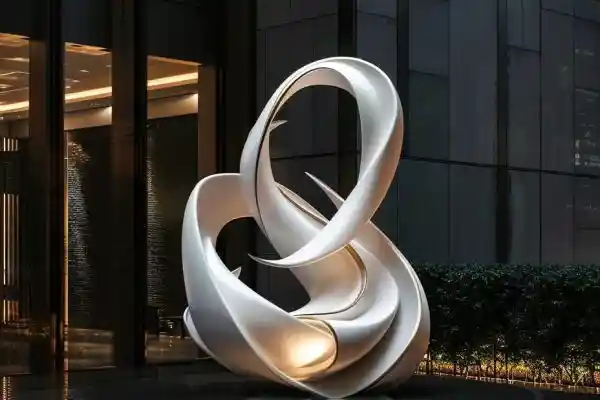
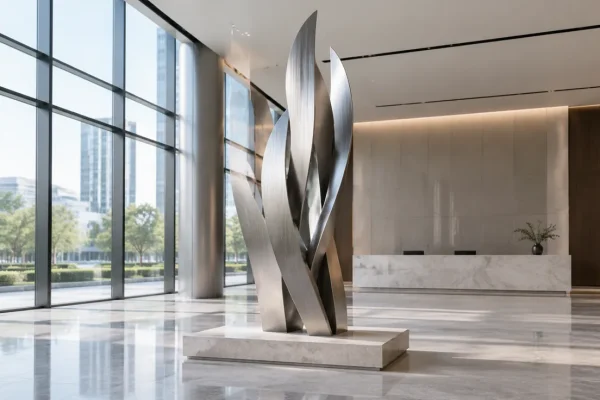
The best terminal sculptures combine artistic vision with practical wayfinding function. A striking kinetic installation in stainless steel can become a natural meeting point — passengers tell each other to meet “under the silver ribbon sculpture” rather than at Gate B12, which means nothing to visitors. This wayfinding function is one of the most valuable but overlooked benefits of airport sculpture.
Concourse placement also requires careful attention to clearance and airflow. Suspended artworks must not interfere with HVAC systems, lighting rigs, or fire suppression infrastructure. Y Sculptures works closely with MEP engineers during the design phase to ensure every installation integrates seamlessly with building systems.
Stadium & Arena Entrances
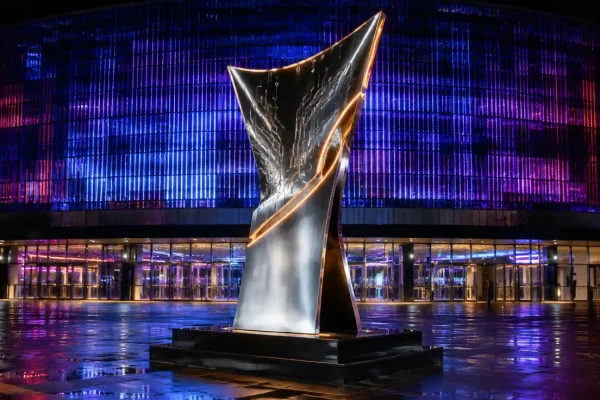
Stadium entrances and arena plazas are where the public first encounters a venue’s artistic identity. A large-scale sculpture at the main entrance creates an immediate impression before spectators even step inside. These pieces often become synonymous with the venue itself — think of the giant basketball sculpture outside a famous arena or the abstract metal form at a city stadium’s primary gate.
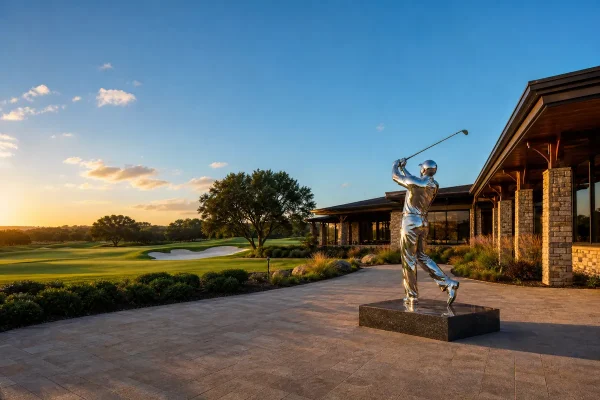
Sports venues also benefit from sculptures that celebrate local culture or history. A city’s first professional team, a legendary player, or regional industrial heritage can all inspire commission themes that resonate with fans and residents. Stadium sculpture that tells a local story strengthens community connection and gives visitors a reason to linger in the plaza before and after events.
Arena installations face particular challenges around crowd management. During peak events, thousands of people flow through entrance plazas within short time windows. Sculptures must be positioned to enhance the pedestrian experience without creating bottlenecks or safety hazards.
Durability Under Huge Foot Traffic
The durability requirements for airport and stadium sculpture far exceed those for gallery or park installations. These venues experience foot traffic volumes that would overwhelm most artistic structures. Children touch every surface, luggage bumps into plinths, and cleaning crews use industrial-grade chemicals on a daily schedule.
FRP (fiberglass-reinforced plastic) has become a leading material for high-traffic venue sculpture because it combines exceptional strength with lightweight construction. A large FRP piece can be 80% lighter than an equivalent bronze sculpture, reducing structural load on floors and rooftops while still resisting impact damage from accidental contact.
Stainless steel offers another durable option, particularly for outdoor plaza installations. Marine-grade 316 stainless steel resists corrosion from rain, de-icing salts, and cleaning chemicals. When finished with a protective clear coat, it maintains its appearance for decades with minimal maintenance — a critical factor for facilities operating on tight budgets.
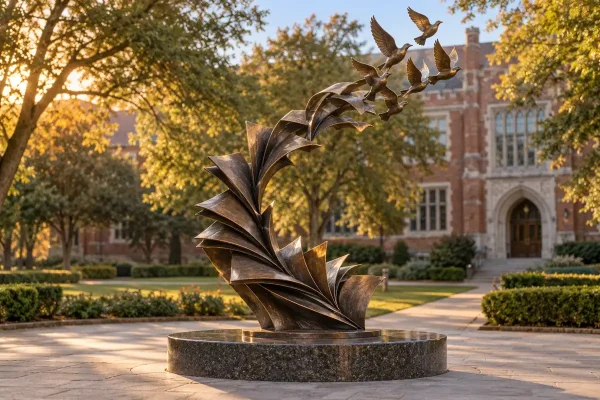
For bronze sculptures in these environments, a durable patina finish and regular sealing can extend service life, though the higher cost and weight often make FRP or steel more practical for high-traffic applications. The choice of materials for high-traffic venues should balance longevity, maintenance requirements, and budget constraints. Learn more about materials for high-traffic venues and how FRP compares to bronze and stainless steel for outdoor sculpture.
Wayfinding & Identity through Art
One of the most powerful functions of large-scale public art is wayfinding. Airports and stadiums are enormous complexes where even regular visitors can feel lost. A distinctive sculpture becomes an anchor point — a visual reference that people use to orient themselves and direct others.
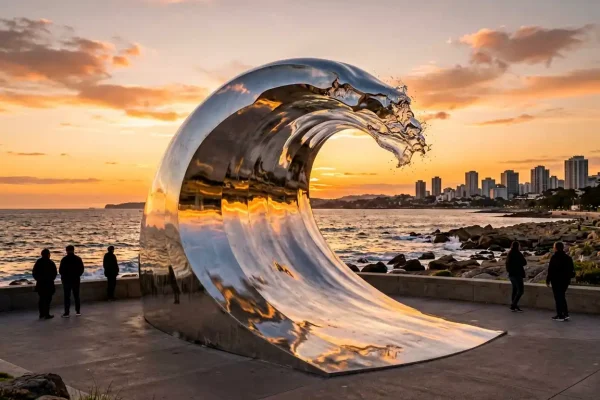
Wayfinding through art goes beyond simple signage. A thoughtfully designed sculpture can encode cultural meaning, local geography, or historical narrative into the spatial experience. An airport in a coastal city might feature wave-inspired forms in blue-tinted glass and steel; a stadium in a mining town might incorporate geometric shapes referencing industrial heritage.
This identity-building function is increasingly important as cities compete to attract events, tourism, and business investment. A venue with a memorable artistic identity generates social media exposure, press coverage, and positive associations that no marketing campaign can replicate. The雕塑 itself becomes a brand asset.
Percent-for-Art & Funding Programs
Many airports and stadiums receive public funding for art installations through percent-for-art programs. These policies require or encourage that a percentage — typically one percent — of capital construction budgets be allocated to public art. In the United States and United Kingdom, dozens of cities have active percent-for-art ordinances that fund installations in transit hubs, municipal buildings, and sports facilities.
For example, the Port Authority of New York and New Jersey has funded numerous public art installations across its airport terminals through dedicated art programs. London’s Crossrail project allocated significant resources to art commissioning, resulting in permanent installations at stations throughout the network. Similar programs exist in cities like Seattle, Chicago, and Boston.
Understanding these funding mechanisms is essential for artists and fabricators seeking commission opportunities. Applications typically require portfolio submissions, design proposals, and detailed budget breakdowns. Y Sculptures has extensive experience preparing commission proposals that meet the technical and aesthetic standards of municipal art panels and transit authority review committees.
Commissioning Large Venue Art with Y Sculptures
Commissioning sculpture for airports, stadiums, and arenas requires a partner who understands both the artistic and technical dimensions of large-scale public art. The process typically begins with a design brief from the venue owner or managing authority, followed by artist selection, conceptual design, engineering review, fabrication, and finally installation. Our public art installation process covers every step from concept to completion.
Y Sculptures supports every stage of this process. Our team includes structural engineers who perform load calculations and seismic analysis for suspended and freestanding installations. Our fabrication facility produces pieces up to 20 meters in height, with finishes ranging from polished metal to textured FRP reproductions of stone, bronze, or other materials.
For municipal transit authorities and sports developers, we provide comprehensive project management. Commercial sculpture installation requires careful planning and experienced partners. — from initial concept through final installation and ongoing maintenance support. Whether the project involves a single monumental entrance piece or a series of wayfinding sculptures distributed throughout a terminal complex, we deliver works that meet the demanding standards of high-traffic public venues.
If you are planning a public art commission for an airport, stadium, or arena, we would welcome the opportunity to discuss your project. Contact us to learn more about our large-scale sculpture capabilities and see how we can help bring your vision to life.