
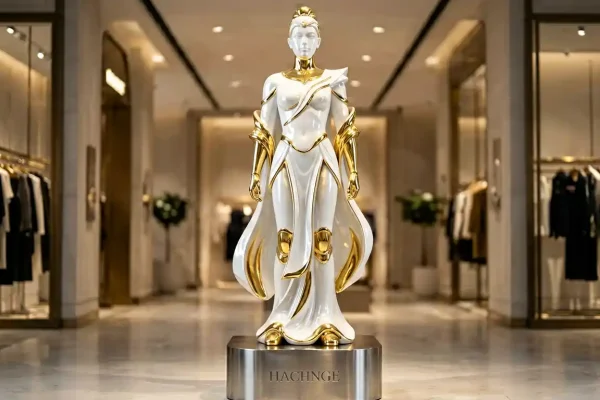
Brand Mascot & IP
From 2D Character to 3-Meter Mascot Sculpture: Full Process & Cost
So you’ve got a 2D character — a mascot sketch, a brand logo, an animated IP — and you want to turn it into a real, physical sculpture. Maybe it’s for a mall grand opening, a trade show booth, or that hotel lobby that’s been begging for something Instagrammable.
I’ve been on the manufacturing side of this for over a decade. Here’s exactly how that happens, step by step, and what it costs.
Why Brands Go 3D With Their IP
Before we dive into the process, let’s talk about why physical mascots work. Digital characters live on screens. A physical sculpture lives in a space. People walk up to it, touch it, take selfies with it, post it on social media. A well-placed brand mascot sculpture generates organic impressions that paid ads can’t buy — thousands of Instagram and TikTok posts from visitors who’d never heard of your brand before.
One mall in Shenzhen installed a 3-meter custom mascot in their central atrium. Foot traffic to that zone increased 34% in the first month. The sculpture cost about $18,000. The additional foot traffic, over a 12-month period, translated to roughly $280K in incremental tenant sales. That’s not hypothetical — those are real numbers from a project we worked on.
The 7-Step Process: From Sketch to 3-Meter Statue
Step 1: Concept Review & Technical Assessment (Days 1–3)
We start with your artwork. This can be anything: a vector file, a hand sketch, a reference photo, a 3D model, even a napkin drawing. Our team reviews it for structural feasibility:
- Can the pose support its own weight in fiberglass?
- Do thin elements (swords, tails, tentacles) need internal armature?
- Will the sculpture be indoors or outdoors? (This determines coating and material choices)
- What’s the target height? (The ratio of height to complexity has a nonlinear effect on cost)
Deliverable: Feasibility report + initial quote. Free for most projects.
Step 2: 3D Modeling & Digital Sculpting (Days 4–14)
Once signed off, our digital sculptor converts your 2D artwork into a full 3D model. This is where the character truly comes to life. We work in ZBrush and Blender to create a high-resolution digital sculpture with full surface detail:
- Proportions are checked from every angle (front, back, top, 3/4 view)
- Surface details — scales, fur texture, fabric folds — are sculpted digitally
- Undercuts and draft angles are analyzed for mold feasibility
- Client reviews the model via video walkthrough and approves before we proceed
Deliverable: High-res STL/OBJ file + rendered turntable video for client approval.
Cost: $800–$3,000 depending on complexity. A simple cartoon bear with smooth surfaces is on the low end. A dragon with scales, wings, and a textured base is on the high end.
Step 3: 3D Scanning (Optional, Days 3–5)
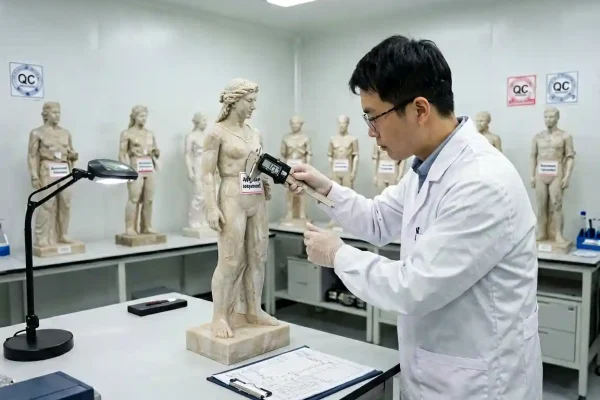
This step only applies if you’re replicating an existing physical sculpture or human performer. We use a handheld Artec Eva structured-light scanner with 0.1mm accuracy: our trendy cartoon chicken sculpture project
- Painted or unpainted surfaces — no problem
- Texture capture included for reference
- Resulting mesh is cleaned and decimated for CNC toolpath generation
We’ve scanned everything from actors in costume (for theme park animatronics) to 200-year-old bronze statues (for museum replicas). If you’re bringing us an existing sculpture and asking for a replica in fiberglass at half the weight and a third of the cost, this is the step that makes it possible.
Step 4: CNC Milling & Clay Refinement (Days 15–25)
Two parallel paths here, depending on budget and timeline:
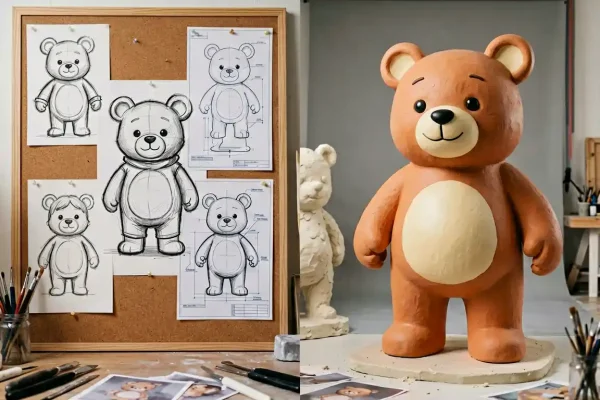
Path A — CNC Milled Foam (Fast, $2,000–$5,000): The 3D model is converted to toolpaths and milled from high-density polyurethane foam blocks on a 5-axis CNC router. The result is a rough positive — think of it as a foam statue that captures every major surface. Our sculptors then hand-finish the foam: adding fine details the CNC couldn’t reach, sanding smooth curves, and sealing the surface for molding.
Path B — Clay Sculpture (Traditional, $3,000–$8,000): For highly organic shapes, stylized characters, or projects where the client wants maximum artist input, we skip CNC and go straight to oil-based clay over an internal armature. This is the same technique used for movie props and museum exhibits. A master sculptor works the clay by hand over 10–14 days, refining every detail. The client can visit the studio and request real-time changes.
Which path? Path A is 80% of our projects. It’s faster (by about a week), more precise for symmetrical geometry, and typically $1,000–$3,000 cheaper. Path B is used when the character has an intentionally “organic” or “imperfect” feel that algorithms struggle to replicate. our the digital muse medium scale bronze ip sculpture project
Step 5: Mold Making (Days 26–32)
Now we have a finished positive (the sculpture in foam or clay). We need a negative to reproduce it in fiberglass. This is mold making — and it’s the step that determines whether your second, third, and tenth copies look as good as the first.
- Silicone molds for complex organic shapes — flexible, captures every microscopic detail, expensive but reusable for 20–50 castings
- Fiberglass mother molds as a rigid backup shell over the silicone — keeps the silicone from distorting during casting
- Mold seams are planned at natural boundaries (behind ears, under arms, along clothing seams) so seam lines don’t ruin the surface finish
Deliverable: Completed mold ready for production.
Cost: $1,500–$4,000 depending on size and part count. A 3-meter mascot in two pieces (body + base) with moderate detail: ~$2,800.
Step 6: FRP (Fiber-Reinforced Plastic) Layup & Casting (Days 33–40)
This is where the sculpture becomes physical. Layers of fiberglass matting and polyester or epoxy resin are hand-laid inside the mold:
- Gel coat first: A pigmented surface layer that becomes the sculpture’s visible exterior — color-matched to your brand’s Pantone
- Fiberglass layers: 3–6 layers depending on structural requirements. A 3-meter mascot body typically has 4 layers of 450g/m² mat + 2 layers of 800g woven roving at stress points
- Internal armature: Stainless steel or galvanized pipe skeleton cast into the fiberglass at load-bearing points. For a 3-meter sculpture standing upright, the armature is a welded frame with baseplate that distributes ~80kg of finished weight across a 1.2m footprint
- Cure time: 24–48 hours at 25°C before demolding. Higher temperatures speed cure but increase brittleness — we don’t rush this step
Cost: $2,000–$5,000 for materials + labor for a 3-meter piece.
Step 7: Finishing, Painting & Shipping (Days 41–50)
The raw fiberglass casting is rough on the back side and smooth (but not finished) on the front. Finishing is where it becomes a display-ready sculpture: our the asparagus pixie project
- Seam line removal: Flash and mold seams are ground down
- Primer: 2 coats of automotive-grade urethane primer, sanded between coats
- Paint: 3–4 layers including base color, shading, highlights, and clear coat. For outdoor sculptures, UV-resistant automotive paint with a final clear coat that blocks UV degradation for 5–7 years
- Weatherproofing: Outdoor sculptures get an additional hydrophobic nano-coating and UV stabilizer mixed into the final clear coat
- Packing & shipping: Foam-wrapped, plywood crated, shipped via dedicated freight — $500–$2,000 depending on distance and customs requirements
Total timeline: 45–60 days from artwork approval to delivery. Rush orders (30 days) are possible with a 25–30% expedite fee.
Real Budget Breakdown: 3-Meter Brand Mascot (Anonymous Case Study)
Here’s an actual project budget from a themed restaurant chain in Chengdu. They wanted a 3-meter cartoon panda mascot holding a menu board, installed at their flagship location entrance. Name and specific location withheld per NDA.
| Step | Description | Cost (USD) |
|---|---|---|
| 2D Concept Review | Free feasibility assessment | $0 |
| 3D Modeling | Full ZBrush model, 3 revisions | $1,800 |
| CNC Foam Milling | 5-axis mill + hand finish | $3,200 |
| Silicone Mold | 2-part mold + fiberglass mother | $2,600 |
| FRP Casting | 4 layers + stainless armature | $3,800 |
| Painting & Finish | Automotive paint, brand-matched colors | $2,400 |
| Packing & Shipping | Custom crate, Chengdu express | $1,100 |
| Total | $14,900 |
The restaurant reported a 28% increase in foot traffic within the first two weeks of installation. The sculpture appeared in over 3,500 social media posts within the first month. Their marketing team estimated the organic social media value at roughly $85,000 in equivalent ad spend. The sculpture paid for itself in brand exposure within the first quarter. The full fabrication workflow, including quality checks at each stage, is detailed in How Custom Sculptures Are Made: From Concept to Installation in 10 Steps.
FAQ
How long does the whole process take?
Typically 45–60 days from artwork approval. Rush orders with a 30-day timeline are possible with a 25–30% premium. The bottleneck is almost always mold making (silicone cure can’t be rushed) and painting (each coat needs proper drying time between layers). CNC milling and FRP layup can be parallelized with additional crew.
Can you match my brand’s exact Pantone colors?
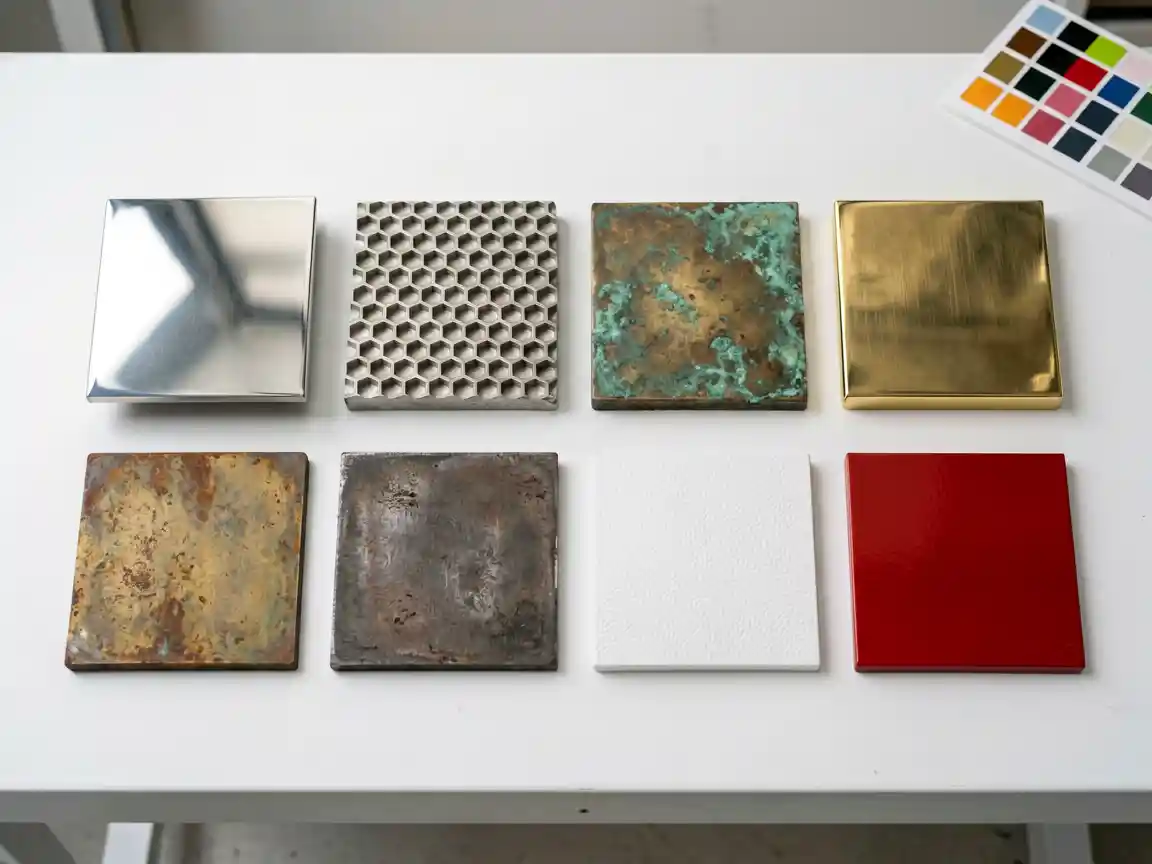
Yes. We use automotive-grade paint systems that support custom color matching. Send us your Pantone codes or a physical color sample. We’ll produce a test panel for approval before painting the actual sculpture. Metallic and pearlescent finishes are also available.
What’s the weight of a 3-meter FRP sculpture?
Approximately 60–90 kg (130–200 lbs) depending on wall thickness, armature weight, and whether the sculpture is solid or hollow. Hollow FRP with stainless steel armature is standard — it’s strong enough to bear weight but light enough for one person to move with a hand truck. A 3-meter bronze statue of equivalent size would weigh 400–600 kg and cost 4x more.
Can you make multiple copies from the same mold?
Yes, and this is where the economics really improve. Once the mold is paid for (Step 5), each additional copy costs about 40–50% of the first unit because you’re only paying for steps 6–7 (FRP layup, finishing, and shipping). A chain restaurant with 10 locations can produce the first mascot for ~$15K and each additional one for ~$7K. Multiple-copy orders typically get a volume discount on mold amortization as well.
Can the sculpture withstand outdoor weather?
Yes, with the right coating system. Indoor sculptures use standard automotive clear coat. Outdoor sculptures get UV-stabilized resin, marine-grade gel coat, and a hydrophobic nano-coating that prevents water staining and UV yellowing for 5–7 years. We also add drainage holes at low points to prevent water accumulation inside hollow sculptures. The Chicago winter test — our outdoor sculptures have survived -20°C with no cracking or delamination. We walk through the complete fabrication process in our manufacturing guide: Custom Sculpture Manufacturing: 7-Step Process Guide.
Have a character you want to bring to life? Drop us a note with your reference artwork and target height. We’ll send back a feasibility assessment and a ballpark quote within 48 hours — no obligations.
D
Written by David Chen
David Chen is Design Director at Y Sculptures with 18+ years in large-scale sculpture design and fabrication. He specializes in FRP, stainless steel, and bronze sculpture engineering, overseeing design-to-production workflows for theme park attractions, public art installations, and brand IP mascots. David has personally directed over 300 custom sculpture projects for clients across 20+ countries.
Related Projects
Browse real projects matching this topic
Commercial
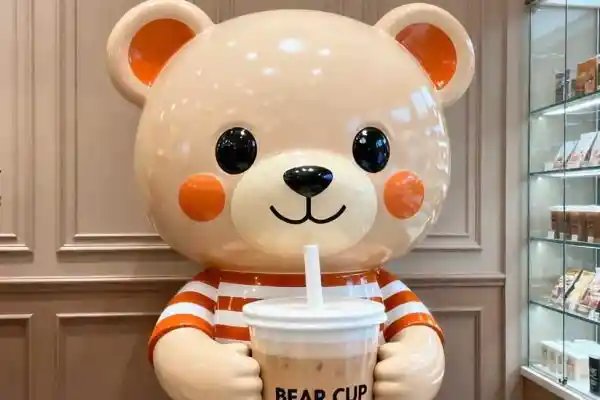
Milk Tea Shop Bear Mascot Sculpture
Inflatable Sculpture
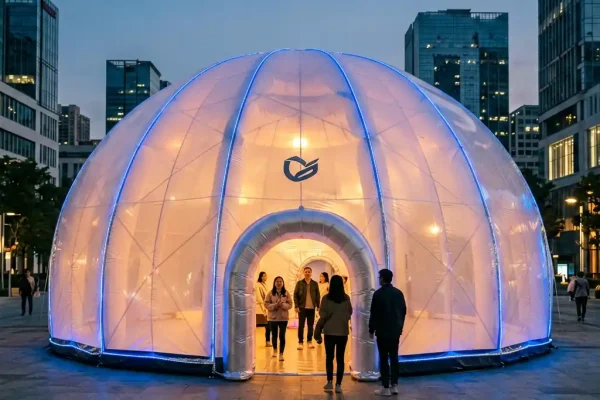
Custom Inflatable Event Pavilion Structure
Related Insights
Continue reading related articles
Our Sculpture Solutions
Explore our full range of custom sculpture services

IP Character Replication
Learn More →

Large Sculpture Custom
Learn More →

Original IP Development
Learn More →

Solutions Services
Learn More →

Custom Inflatables
Learn More →

FRP & Fiberglass Sculpture Manufacturing
Custom FRP and fiberglass sculpture manufacturer - design, fabrication, and finishing.
Learn More →
Stainless Steel & Metal Sculpture Manufacturing
Custom stainless steel, bronze, corten, and aluminum sculpture manufacturer.
Learn More →
Theme Park Sculpture Services – Custom Amusement Park Statues
Custom Theme Park Sculptures – Bringing Imagination to Life Theme parks, amusement parks, zoos, and entertainment destinations thrive on immersive...
Learn More →
Commercial Sculpture Services – Custom Brand Mascots & Mall Art
Custom Commercial Sculptures – Elevate Your Brand & Space In today's competitive retail and commercial environment, first impressions matter. Commercial...
Learn More →