
Custom Sculpture Insights & Guides
Water Park Sculpture Guide: Materials, Safety, and Care
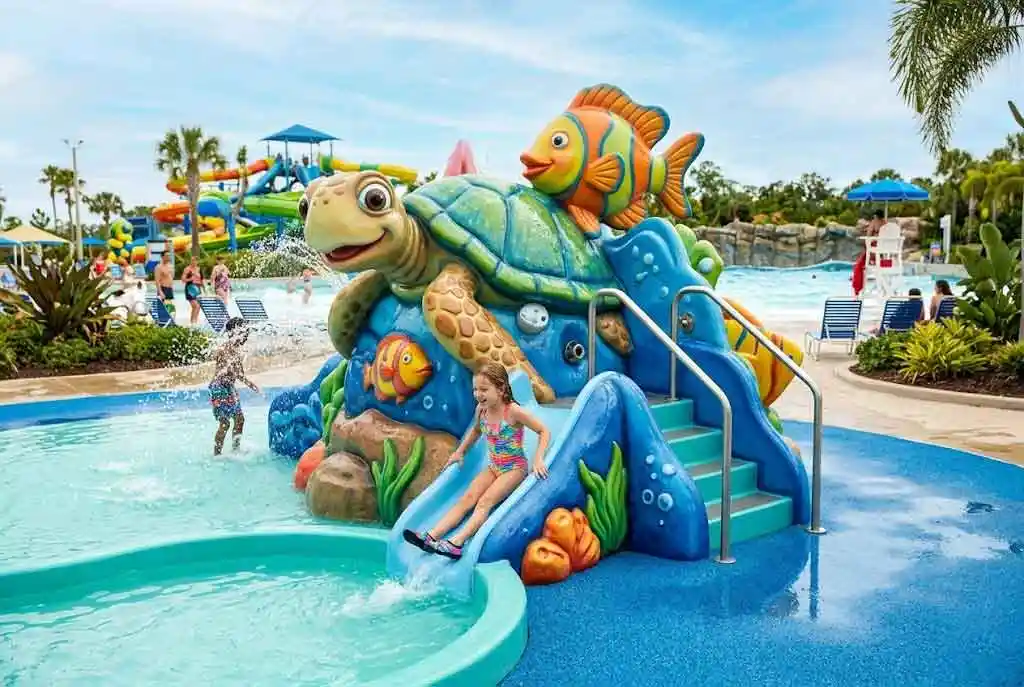
Building for the Water’s Edge
Water parks present one of the most demanding environments for sculpture installation. Chlorine vapours, saltwater spray, constant humidity, intense UV exposure, and physical contact from bathers all conspire to degrade most materials in months rather than years. Choosing the wrong sculpture for a water park is not just a maintenance headache — it can become a safety liability. This guide provides B2B buyers — water park operators, designers, and procurement managers — with the technical knowledge needed to specify sculptures that are safe, durable, and beautiful in aquatic settings.
Material Compatibility: What Works in Aquatic Environments
The single most important decision in a water park sculpture project is material selection. Standard outdoor sculptures intended for dry parks will often fail rapidly in a water park environment. Below is a compatibility table based on real-world performance data from Y Sculptures’ aquatic installations.
| Material | Chlorine Resistance | Saltwater Resistance | UV Stability | Slip Resistance | Typical Lifespan (Years) |
|---|---|---|---|---|---|
| FRP with ISO/NPG Gel Coat | Excellent | Excellent | Excellent (10+ yr warranty) | Good (textured options available) | 10–15 |
| Stainless Steel 316L | Good | Excellent | Excellent | Poor (smooth surface) | 15–20+ |
| Polyethylene (Rotomoulded) | Excellent | Excellent | Fair (requires UV additive) | Good | 5–8 |
| GRC (Glassfibre Reinforced Concrete) | Fair | Poor | Good | Excellent | 8–12 |
| Bronze | Poor (patina affected) | Poor | Good | Moderate | 10–15 (with maintenance) |
For most water park applications — splash pad characters, poolside decorative pieces, lazy river theming — FRP with an isophthalic (ISO) or neopentyl glycol (NPG) gel coat provides the best balance of chemical resistance, design flexibility, and lifecycle value. The FRP manufacturing process for large sculptures details how marine-grade gel coats are applied to achieve this level of chemical durability. Y Sculptures’ marine-grade FRP formulations are specifically engineered for continuous water contact.
Safety Standards for Water Park Sculptures
Safety compliance in water park sculptures is non-negotiable and is governed by multiple international and regional standards. Key requirements include:
Surface Finish & Edge Treatment
All surfaces that may come into contact with guests must be smooth, free of sharp edges, burrs, or pinch points. ASTM F2376 (Standard Practice for Classification, Design, Manufacture, and Installation of Water Park Structures) specifies maximum allowable radii for all guest-contact edges. Y Sculptures applies a minimum 3 mm radius on all exterior corners and uses hand-finishing to achieve a surface roughness below Ra 3.2 µm on contact zones.
Slip Resistance
Walkable surfaces on or around sculptures must meet a wet coefficient of friction of 0.5 or higher (per ASTM D2047 or equivalent national standards). For FRP sculptures, this is achieved by incorporating a textured gel coat or by applying a slip-resistant aggregate layer to horizontal surfaces.
Structural Integrity & Anchoring
Water park sculptures must be engineered to withstand buoyancy forces in addition to wind and seismic loads. Our quality control checklist for custom sculpture manufacturing covers these structural verification steps. Hollow FRP pieces must include drainage holes to prevent water accumulation and flotation. All sculptures must be bolted or chemically anchored to concrete substrates with stainless steel 316L hardware, with a minimum safety factor of 4:1 on all load-bearing connections. We walk through the complete fabrication process in our manufacturing guide: Custom Sculpture Manufacturing: 7-Step Process Guide.
Chemical Resistance Certificatio
Sculptures installed within splash zones or pool decks must be tested for resistance to chlorine concentrations of up to 10 ppm and pH ranges of 6.5–8.0, per ASTM C581 (Standard Practice for Determining Chemical Resistance of Thermosetting Resins). Y Sculptures provides material compliance certificates for all aquatic-grade installations.
UV Stability
Continuous outdoor exposure combined with water reflection intensifies UV degradation. All exterior gel coats should carry an ASTM D2565 rating for accelerated weathering resistance. Y Sculptures uses UV inhibitors and stabilizers in all aquatic-grade gel coats, backed by a 10-year colour-fastness warranty.
Installation Tips for Wet Environments
Proper installation is as critical as material selection. Even the most durable sculpture will fail prematurely if installed incorrectly in a water park environment.
Foundation Desig
Sculptures in wet areas require reinforced concrete footings extending below the frost line. For poolside and splash pad installations, the footing must be independent of the pool shell to prevent differential settlement. Use 316L stainless steel anchor bolts embedded at least 200 mm into the concrete.
Drainage & Water Management
All hollow sculptures must have a minimum of two drainage ports (25 mm diameter minimum) at the lowest points, screened to prevent insect ingress. This prevents water accumulation that leads to freeze damage, mould growth, and structural fatigue. Consider integrating a small weep system if the sculpture sits in a planter or turf area.
Sealing & Joint Treatment
Every seam, bolt hole, and material transition must be sealed with a marine-grade silicone or polyurethane sealant approved for potable water contact (NSF/ANSI 61 certified). Bolts should be capped with smooth dome nuts to prevent snagging.
Access for Maintenance
Design access hatches or removable panels into large sculptures to allow periodic internal inspection of the armature and anchor points. Chlorine vapour can accelerate corrosion of internal steel frames even when the exterior surface appears intact.
Regular Inspection Protocol
Establish a quarterly inspection checklist: check for gel coat crazing, anchor bolt torque, sealant integrity, and surface slip resistance. When sourcing a fabrication partner for these demanding environments, the custom sculpture procurement guide helps evaluate suppliers on material certifications and after-sales support. Y Sculptures offers maintenance service agreements for all installed aquatic sculptures, ensuring your investment retains its appearance and safety performance for the full design life. Our manufacturing guide — How Custom Sculptures Are Made: From Concept to Installation in 10 Steps — covers everything from mold-making to final finishing.
Proven Projects in Aquatic & Outdoor Environments
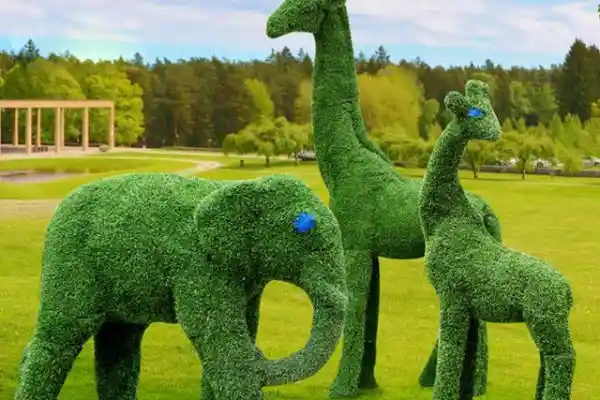
Y Sculptures has delivered multiple successful aquatic-compatible installations. The Whimsical Wildlife FRP Flocking Elephant & Giraffe installation demonstrates our flocked-finish FRP in high-humidity zoo environments, while the Giant Climbing Panda Sculpture showcases large-scale outdoor FRP engineering with a UV-stable gel coat suited to intense sun and rain exposure. These projects follow the same rigorous large-scale sculpture manufacturing protocols that ensure durability in extreme conditions.
For a complete consultation on your water park sculpture requirements — from material specification to installation supervision — contact the Y Sculptures team. We provide engineering reports, material certifications, and site-specific installation plans as part of our Solutions & Services offering.
J
Written by James Liu
James Liu is Project Manager at Y Sculptures, specializing in end-to-end custom sculpture project delivery for commercial, hospitality, and public art sectors. With 12 years in the industry, James coordinates design approvals, material sourcing, fabrication timelines, international shipping logistics, and on-site installation. He has successfully delivered 500+ projects to 30+ countries.
Related Projects
Browse real projects matching this topic
Related Insights
Continue reading related articles
Brand Mascot & IP
Oct 13, 2026
Esports Arena & Gaming Venue Sculpture: Landmarks, Trophies & Mascot Statues
Commercial & Hospitality
Oct 13, 2026
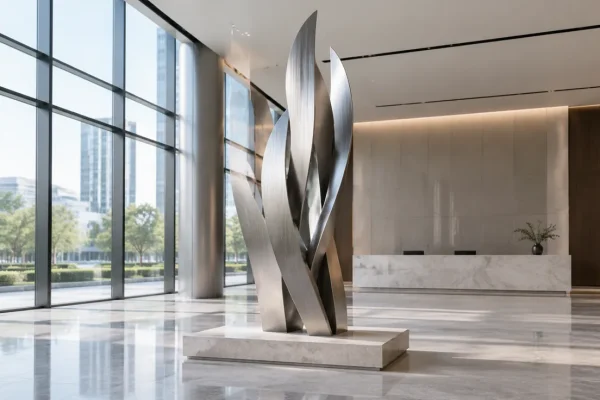
Corporate Lobby & Office Sculpture: Commissioning Guide for Developers
Custom Sculpture Insights & Guides
Oct 13, 2026
How Long Do Outdoor Sculptures Last? Material-by-Material Lifespan Guide
Our Sculpture Solutions
Explore our full range of custom sculpture services

IP Character Replication
Beyond 2D: Why IP Replication Drives Brand Engagement A character that lives only on a screen is easy to scroll...
Learn More →
Large Sculpture Custom
Engineering Monumental Scale A sculpture that stands 15 metres tall is not simply a 1.5-metre maquette scaled up ten times....
Learn More →
Original IP Development
From Concept to Icon Most sculpture enquiries begin with a reference: a licensed character, a film hero, an existing artwork...
Learn More →
Solutions Services
One Factory, Every Sculpture Material A sculpture brief rarely arrives pre-sorted by material. A client sends a reference image, a...
Learn More →
Custom Inflatables
Inflatable Sculptures as Brand Media Most sculptural commissions are permanent assets: they are built once, installed once, and admired for...
Learn More →
FRP & Fiberglass Sculpture Manufacturing
Custom FRP and fiberglass sculpture manufacturer - design, fabrication, and finishing.
Learn More →
Stainless Steel & Metal Sculpture Manufacturing
Custom stainless steel, bronze, corten, and aluminum sculpture manufacturer.
Learn More →
Theme Park Sculpture Services – Custom Amusement Park Statues
Custom Theme Park Sculptures – Bringing Imagination to Life Theme parks, amusement parks, zoos, and entertainment destinations thrive on immersive...
Learn More →
Commercial Sculpture Services – Custom Brand Mascots & Mall Art
Custom Commercial Sculptures – Elevate Your Brand & Space In today's competitive retail and commercial environment, first impressions matter. Commercial...
Learn More →