

Custom Sculpture Insights & Guides
Large-Scale Sculpture Manufacturing: Engineering & QC Guide
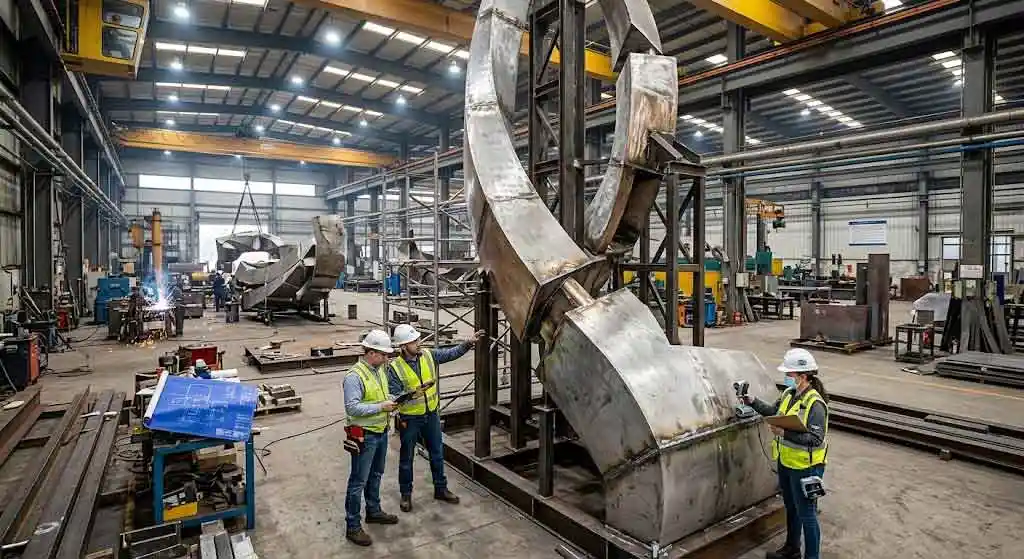
Large-scale sculpture manufacturing sits at the intersection of artistic vision and structural engineering. Whether the project is a monumental stainless steel landmark for a city plaza, a fiberglass character for a theme park, or a bronze memorial destined for a museum forecourt, the process demands rigorous planning, specialized material science, and uncompromising quality control. This guide walks through the entire lifecycle of large-scale sculpture production — from concept to installation — with actionable insights for architects, developers, municipal planners, and brand experience teams.
Overview of the Manufacturing Process
The fabrication of a large-scale sculpture follows a structured, multi-stage workflow. Each phase builds on the previous one, and skipping steps in pursuit of speed almost always compromises the final result.
- Concept & Design Development — The artist or client brief is translated into 3D models (Rhino, ZBrush, SolidWorks), structural load calculations begin, and preliminary material selection is made.
- Engineering & Structural Analysis — Finite element analysis (FEA) simulates wind loads, seismic forces, and thermal expansion. Reinforcement schemes — internal armatures, ribbing, wall thickness specifications — are finalized.
- Armature & Substructure Fabricatio
— A steel or aluminum internal skeleton is welded, bolted, or cast. This armature carries the sculpture’s weight and transfers loads to the foundation. - Skin & Surface Constructio
— The exterior form is built over the armature. Methods vary by material: hand-layup for FRP, TIG-welded sheet metal for stainless steel, lost-wax casting for bronze, and pour-forming for GFRC (glass-fiber-reinforced concrete). - Finishing & Patinatio
— Surface texture, color, coatings, and protective sealants are applied. For metals this may include chemical patinas or powder coating; for FRP it involves gel coat, paint, and UV-resistant clear coats. - Transportation & On-Site Assembly — Large sculptures are shipped in sections, then crane-lifted and reassembled on the prepared foundation. Final touch-up welding, painting, and sealing occur after assembly.
This entire workflow typically spans 12 to 32 weeks depending on scale, complexity, and material choice. For a deeper look at the custom design and fabrication pipeline, visit our large-scale sculpture custom solution page.
Material Comparison: FRP vs. Stainless Steel vs. Bronze vs. Concrete
Selecting the right material is the single most consequential decision in any large sculpture project. Below is a head-to-head comparison of the four most common materials used in monumental and architectural sculpture manufacturing.
| Property | FRP (Fiberglass) | Stainless Steel (304/316) | Bronze | GFRC / Concrete |
|---|---|---|---|---|
| Weight | Lightest — approx. 1/5 the weight of steel | Heavy — ~7,900 kg/m³ | Very heavy — ~8,800 kg/m³ | Heavy — ~2,400 kg/m³ (reduced with GFRC) |
| Max Practical Height | 20+ meters (single piece feasible) | 15+ meters (sectional assembly) | 6–8 meters (casting limits) | 10–12 meters (GFRC, with armature) |
| Cost Rank | $$ (most affordable) | $$$ | $$$$ (most expensive) | $$ |
| Lead Time | 6–12 weeks | 10–20 weeks | 16–32 weeks | 8–16 weeks |
| Corrosion Resistance | Excellent (inherently non-corrosive) | Excellent (passive oxide layer) | Good (forms protective patina) | Moderate (needs sealant) |
| UV / Weather Resistance | Good with UV-stable gel coat | Excellent | Excellent | Good (can craze over time) |
| Surface Finish Options | Any color, gloss/matte, textured | Mirror polish, brushed, bead-blasted, painted | Patina (green, brown, black), polished | Integral color, exposed aggregate, etched |
| Repairability | Easy — patch and re-gelcoat | Requires skilled TIG welding & re-polish | Difficult — requires foundry rework | Moderate — patching visible |
| Best For | Large forms, complex curves, interior/exterior, budget-conscious projects | Permanent landmarks, premium public art, reflective or mirror-finish designs | Commemorative works, high-value commissions, traditional aesthetics | Modern architectural integration, textured large forms, cost-sensitive monumental work |
FRP (fiber-reinforced polymer) is especially popular for large-scale character sculptures, branded IP installations, and architectural cladding because it combines enormous design freedom with relatively low cost and weight. For temporary installations and brand activations, custom inflatable sculptures offer an alternative lightweight solution with rapid production timelines. Stainless steel remains the gold standard for permanent landmarks where longevity and prestige are paramount.
Engineering Considerations
Wind Load Analysis
Large outdoor sculptures act as sail-like structures. Wind load calculations must account for local wind speed data (typically derived from ASCE 7 or equivalent regional codes), exposure category, topographic effects, and the sculpture’s drag coefficient. For complex organic shapes, computational fluid dynamics (CFD) modeling is recommended. Safety factors of 1.6 or higher are standard. Internal armatures must be designed to withstand both positive (push) and negative (suction) wind forces.
Structural Reinforcement & Internal Armatures
The internal skeleton is the backbone of any large sculpture. Hot-rolled structural steel (Q235B or equivalent) is the most common armature material, welded into a truss-like frame that distributes loads to a baseplate or embedded anchor bolts. For FRP sculptures, the armature is typically encased within the fiberglass laminate; bond strength between the two materials must be verified through peel tests on coupons. Stainless steel sculptures may use a matching stainless armature to avoid galvanic corrosion — or a carbon steel armature with isolation coatings. We walk through the complete fabrication process in our manufacturing guide: How Custom Sculptures Are Made: From Concept to Installation in 10 Steps.
Foundations & Anchoring
A sculpture’s foundation must be designed by a licensed structural engineer. Typical approaches include a reinforced concrete pad with cast-in anchor bolts (for smaller works) or a deep pile foundation (for very large or soft-soil installations). The foundation design must consider not only the sculpture’s dead weight and wind loading but also seismic acceleration where applicable. For temporary installations, a ballasted steel base plate may suffice, but permanent works demand a poured-in-place foundation that complies with local building codes. We walk through the complete fabrication process in our manufacturing guide: Custom Sculpture Manufacturing: 7-Step Process Guide.
Quality Control Checklist
A disciplined QC program prevents defects from propagating through the production pipeline. Every large-scale sculpture manufacturer should verify the following at each stage:
- Design Review — 3D model checked against client-approved renderings; scale, proportion, and all sightlines confirmed.
- Material Certificatio
— Mill certificates for steel; resin batch numbers for FRP; foundry ingot composition reports for bronze. - Armature Weld Inspectio
— 100% visual inspection of all welds; dye-penetrant or magnetic-particle testing on critical load-bearing joints. - Laminate or Weld Thickness — Ultrasonic thickness gauging to verify that FRP laminates or metal sheets meet minimum specified thickness.
- Surface Finish Verificatio
— Color spectrophotometer readings against approved color chips; gloss meter readings; orange peel / texture checks. - Weathering & UV Testing — QUV accelerated weathering testing on coating samples (1,000+ hours for outdoor-rated finishes).
- Dry Fit & Pre-Assembly — All sections trial-fitted in the workshop before crating. Joint gaps, bolt alignment, and color continuity verified.
- Shipping & Crating Inspectio
— Export-grade crating with interior bracing, desiccant packs, and shock/vibration loggers for long-distance transit. - On-Site Installation Verificatio
— Level, plumb, and torque checks on all connections; final sealant applied; lighting alignment (if illuminated). - Final Documentatio
— As-built drawings, maintenance manual, patina/care instructions, warranty certificate.
At Y Sculptures, these QC gates are enforced by a dedicated team of 50+ engineers and artists who review every project from initial model to final sign-off.
Factory Selection Criteria
Choosing the right manufacturing partner is as important as choosing the right material. For a comprehensive framework on vendor evaluation, see our custom sculpture procurement guide. Here are the critical factors to evaluate when vetting a large-scale sculpture factory:
- Material Expertise — Does the factory have demonstrated experience with your chosen material? A shop that excels in FRP may not have the foundry capabilities for bronze, and vice versa.
- Engineering & In-House Structural Capability — The best manufacturers employ in-house structural engineers who can perform FEA wind load analysis and design the armature alongside the form, rather than subcontracting this critical step.
- Maximum Build Envelope — Verify the factory’s largest kiln, autoclave, or curing room. For steel sculptures, check CNC plasma table capacity and press brake tonnage.
- Portfolio of Completed Large Works — Request case studies of sculptures over 6 meters tall or 5 metric tons. Look for projects in environments similar to your installation site.
- Logistics & Global Shipping Experience — Ask about crating standards, container loading procedures, customs documentation, and on-site installation support teams.
- Quality Certifications — ISO 9001, CE marking, or equivalent third-party certifications indicate an organized quality management system.
- Project Management & Communicatio
— A single point of contact, regular progress photos, milestone invoicing, and a clear change-order process are hallmarks of a professional partner.
For a real-world example of how these criteria play out, see the Chromium Sentinel project, which involved a 9-meter stainless steel sculpture for a municipal plaza — engineered for wind loads of 150 km/h and installed on a reinforced concrete foundation with seismic-rated anchors.
Cost & Timeline Breakdow
The table below provides representative budget ranges and timeframes for a typical 6–10 meter sculpture. Exact pricing varies with complexity, surface finish requirements, site conditions, and shipping distance.
| Phase | Estimated Cost (% of Total) | Estimated Duratio |
|---|---|---|
| Design & 3D Modeling | 5–10% | 1–3 weeks |
| Structural Engineering & FEA | 5–8% | 1–2 weeks |
| Armature Fabricatio | 10–15% | 2–4 weeks |
| Skin / Surface Constructio | 25–35% | 4–12 weeks |
| Sanding, Finishing & Coating | 8–12% | 2–4 weeks |
| Pre-Assembly & QC | 5–8% | 1–2 weeks |
| Crating & Logistics | 8–15% | 1–2 weeks |
| On-Site Installatio | 10–20% | 1–3 weeks |
Total budget range: approximately $50,000 to $500,000+ for mid-to-large custom sculptures. Total timeline: 12 to 32 weeks from design approval to installation.
Cost-saving opportunities include: designing for modular fabrication (reducing custom mold costs), selecting FRP over metal for large forms, consolidating shipping into fewer containers, and preparing the foundation in parallel with fabrication. For a detailed budget planning framework, consult our complete guide to custom sculpture budgeting.
Case Studies in Large-Scale Sculpture Manufacturing
The best way to understand what’s possible is to examine completed projects. The Cyber Vanguard IP Character Sculpture demonstrates a complex FRP character build with integrated LED lighting — a 7-meter tall branded installation for an entertainment district. Meanwhile, the Pinnacle Iconic IP Sculpture Commissio
showcases a stainless steel and FRP hybrid approach, combining reflective polished surfaces with lightweight structural panels to achieve a towering 12-meter form on a constrained budget.
Conclusio
Large-scale sculpture manufacturing is a discipline that demands equal parts artistry and engineering rigor. Success depends on selecting the right material for the environment, investing in proper structural analysis and foundation design, enforcing a thorough quality control program, and partnering with a factory that has the expertise, capacity, and track record to deliver. By understanding each phase — from first concept to final installation — project stakeholders can make informed decisions that produce lasting, impactful public art.
Ready to discuss your next large-scale sculpture project? Contact the Y Sculptures engineering team for a free consultation and preliminary budget estimate.
D
Written by David Chen
David Chen is Design Director at Y Sculptures with 18+ years in large-scale sculpture design and fabrication. He specializes in FRP, stainless steel, and bronze sculpture engineering, overseeing design-to-production workflows for theme park attractions, public art installations, and brand IP mascots. David has personally directed over 300 custom sculpture projects for clients across 20+ countries.
Related Projects
Browse real projects matching this topic
Related Insights
Continue reading related articles
Brand Mascot & IP
Oct 13, 2026
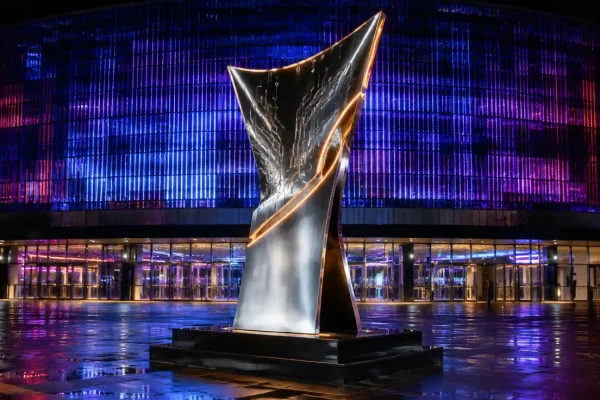
Esports Arena & Gaming Venue Sculpture: Landmarks, Trophies & Mascot Statues
Commercial & Hospitality
Oct 13, 2026
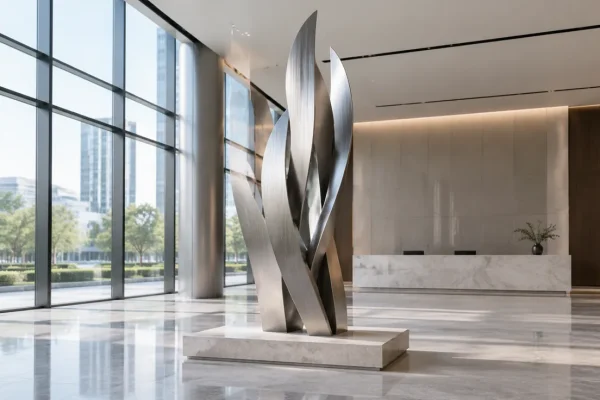
Corporate Lobby & Office Sculpture: Commissioning Guide for Developers
Custom Sculpture Insights & Guides
Oct 13, 2026
How Long Do Outdoor Sculptures Last? Material-by-Material Lifespan Guide
Our Sculpture Solutions
Explore our full range of custom sculpture services

IP Character Replication
Beyond 2D: Why IP Replication Drives Brand Engagement A character that lives only on a screen is easy to scroll...
Learn More →
Large Sculpture Custom
Engineering Monumental Scale A sculpture that stands 15 metres tall is not simply a 1.5-metre maquette scaled up ten times....
Learn More →
Original IP Development
From Concept to Icon Most sculpture enquiries begin with a reference: a licensed character, a film hero, an existing artwork...
Learn More →
Solutions Services
One Factory, Every Sculpture Material A sculpture brief rarely arrives pre-sorted by material. A client sends a reference image, a...
Learn More →
Custom Inflatables
Inflatable Sculptures as Brand Media Most sculptural commissions are permanent assets: they are built once, installed once, and admired for...
Learn More →
FRP & Fiberglass Sculpture Manufacturing
Custom FRP and fiberglass sculpture manufacturer - design, fabrication, and finishing.
Learn More →
Stainless Steel & Metal Sculpture Manufacturing
Custom stainless steel, bronze, corten, and aluminum sculpture manufacturer.
Learn More →
Theme Park Sculpture Services – Custom Amusement Park Statues
Custom Theme Park Sculptures – Bringing Imagination to Life Theme parks, amusement parks, zoos, and entertainment destinations thrive on immersive...
Learn More →
Commercial Sculpture Services – Custom Brand Mascots & Mall Art
Custom Commercial Sculptures – Elevate Your Brand & Space In today's competitive retail and commercial environment, first impressions matter. Commercial...
Learn More →