Inflatable Sculpture

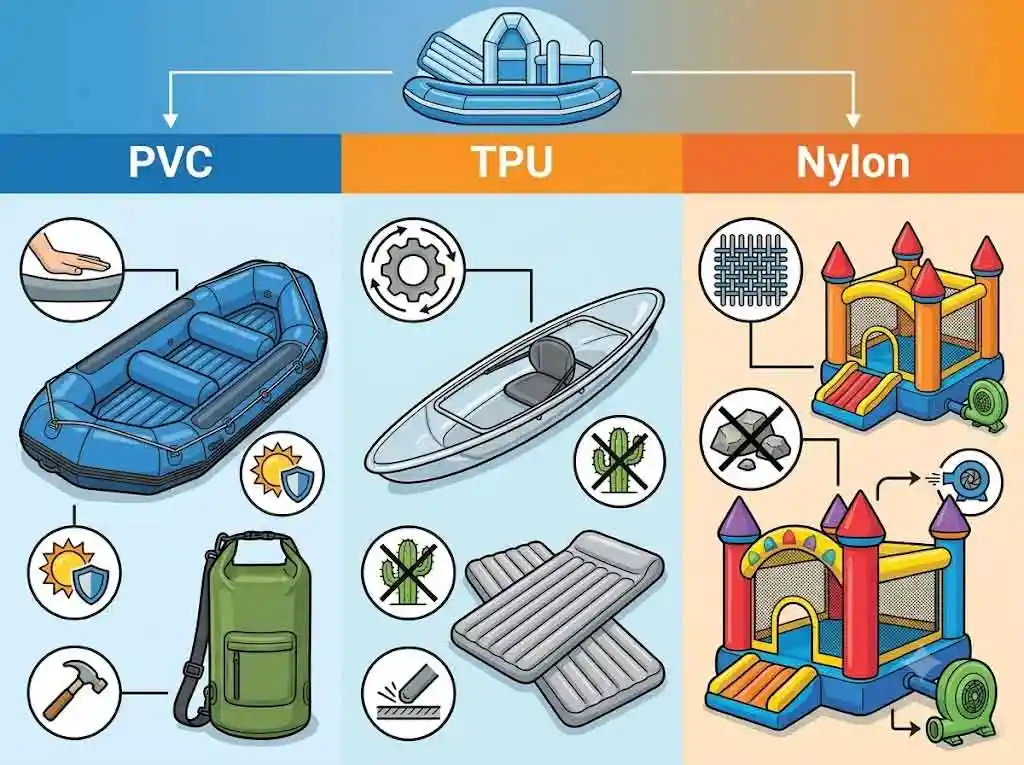
Choosing the right material for a custom inflatable sculpture is the most consequential decision in any project. The fabric you select directly impacts the sculpture’s durability, weight, cost, weather resistance, visual appearance, and lifespan — and getting it wrong can mean the difference between an installation that performs for years and one that fails after a single season.
At Y Sculptures, we fabricate inflatable sculptures from three primary materials: PVC (vinyl), TPU (thermoplastic polyurethane), and nylon fabric. Each has a distinct performance profile, and each is optimal for specific applications — from a PVC-based giant Pikachu mascot designed for repeated outdoor touring to a transparent TPU Dream Flight aircraft crafted for interior art display. This article breaks down each material in detail, compares them head-to-head, and provides clear recommendations to help you choose the right material for your next project.
PVC-coated polyester fabric — commonly referred to simply as \”inflatable vinyl\” — is by far the most widely used material in the custom inflatable industry. It accounts for roughly 80% of all commercial inflatable sculpture production globally.
PVC inflatable fabric consists of a woven polyester scrim sandwiched between two layers of polyvinyl chloride coating. This composite structure gives it exceptional tensile strength, puncture resistance, and dimensional stability. Standard gauges range from 0.5mm (light-duty indoor) to 0.9mm (heavy-duty outdoor), with custom options up to 1.2mm for extreme applications.
PVC is the go-to choice for large outdoor brand mascots, trade show displays, event branding, theme park installations, and any application where maximum durability at minimum cost is the priority. For more on how inflatables are used in amusement environments, see our theme park sculpture guide. See our Giant Inflatable Pikachu Mascot Display for a real-world example of PVC in action on a touring outdoor installation. For everything you need to know about inflatable sculptures, read our guide: Custom Inflatable Sculptures: Design, Manufacturing & Branding.
TPU is the premium material in the inflatable sculpture world. It offers superior performance across nearly every metric — but at a significantly higher price point. TPU inflatables are increasingly specified by architects, museum curators, and luxury brand marketers who demand optical clarity, cold-weather flexibility, and extended lifespan.
TPU is a thermoplastic elastomer that can be formulated in various hardness grades. For inflatable applications, TPU film (typically 0.3-0.8mm) bonded to a lightweight polyester scrim offers extraordinary tear strength, abrasion resistance, and low-temperature flexibility down to -30°C.
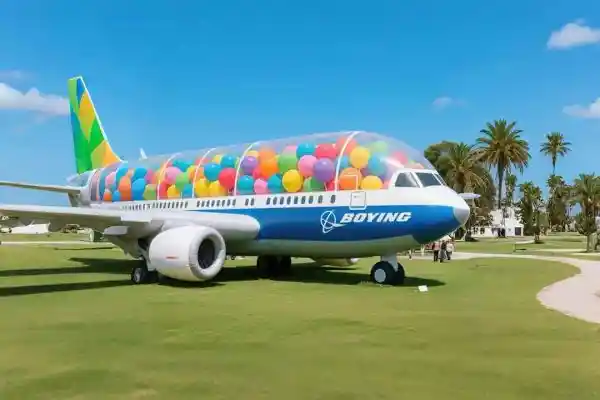
TPU is preferred for transparent art installations, museum-grade sculptures, cold-climate outdoor events, long-term architectural installations, and any project where illuminated or projected visuals are integral to the design. These qualities make TPU ideal for commercial and hospitality sculpture installations where visual impact is paramount. The Dream Flight transparent TPU multi-balloon aircraft is a showcase example of how TPU enables floating, light-filled sculptures that would be impossible in an opaque material. Our inflatable sculpture guide — How to Choose an Inflatable Sculpture Manufacturer (2026) — helps you choose the right approach for your campaign.
Nylon inflatable fabric is the lightest and most compact option, making it ideal for applications where portability is paramount and weather exposure is minimal. It is commonly used for small mascots, indoor promotional inflatables, and rental fleet inventory. When sourcing nylon or any inflatable material, refer to our custom sculpture procurement guide for supplier evaluation criteria.
Nylon inflatable material consists of woven nylon fabric coated with a thin polyurethane or silicone layer to provide air retention. At 200-400 g/m², it is roughly half the weight of PVC and packs into a fraction of the volume.
Nylon is a solid choice for indoor trade show mascots, short-term promotional events, rental inventory, and small-scale decorative inflatables where weight and packed size are the primary concerns. For any application requiring long-term outdoor exposure, PVC or TPU is strongly preferred.
| Criterio | PVC (Vinyl) | TPU (Thermoplastic Polyurethane) | Nylon Fabric |
|---|---|---|---|
| Durability | High — excellent tear/puncture resistance; UV-stable grades available for 12+ months outdoor | Very high — superior abrasion and fatigue resistance; maintains integrity for 5-10+ years | Moderate — prone to UV degradation and seam fatigue over time; best for indoor/short-term |
| Cost (per m²) | $8-15 | $30-70 | $10-20 |
| Weight (g/m²) | 650-900 | 400-600 | 200-400 |
| Weather Resistance | Excellent — UV-stabilized grades withstand sun, rain, and wind for extended periods | Excellent — performs well in extreme cold (-30°C) and hot conditions; UV-resistant grades available | Limited — requires UV coating; degrades under prolonged sun/rain exposure |
| Transparency | Opaque (translucent available by special order) | Excellent optical clarity — best for illuminated/light-transmitting designs | Opaque |
| Repairability | Easy — solvent adhesive or RF weld patch; widely available repair materials | Moderate — requires TPU-compatible adhesive or hot-air welding; specialist materials needed | Moderate — requires sewing or fabric adhesive patch; visible seam repair |
| Temperature Range | -10°C to +70°C | -30°C to +80°C | -5°C to +50°C (with coating) |
| Lifespan (typical) | 2-5 years | 5-10+ years | 1-3 years |
| Fire Retardancy | Excellent — meets ASTM E84, BS 476, GB 8410 | Good — fire-retardant grades available | Variable — requires FR treatment/coating |
Based on the properties above, here are our material recommendations for common inflatable sculpture scenarios:
To see how these material choices play out in actual commissions, explore these Y Sculptures projects:
If you are planning a custom inflatable sculpture project and need guidance on material selection, contact our engineering team. We will help you match the right fabric to your specific performance requirements, budget, and site conditions.
Lisa Wang is Production & Quality Manager at Y Sculptures, bringing 14 years of hands-on experience in sculpture manufacturing, material science, and quality control. She leads the factory's ISO-compliant QC process, from raw material inspection to pre-shipment verification. Lisa has managed production for 2,800+ sculptures, ensuring precision in color matching, structural integrity, and surface finishing.
Browse real projects matching this topic
Continue reading related articles
Explore our full range of custom sculpture services

Beyond 2D: Why IP Replication Drives Brand Engagement A character that lives only on a screen is easy to scroll...
Learn More →
Engineering Monumental Scale A sculpture that stands 15 metres tall is not simply a 1.5-metre maquette scaled up ten times....
Learn More →
From Concept to Icon Most sculpture enquiries begin with a reference: a licensed character, a film hero, an existing artwork...
Learn More →
One Factory, Every Sculpture Material A sculpture brief rarely arrives pre-sorted by material. A client sends a reference image, a...
Learn More →
Inflatable Sculptures as Brand Media Most sculptural commissions are permanent assets: they are built once, installed once, and admired for...
Learn More →
Custom FRP and fiberglass sculpture manufacturer - design, fabrication, and finishing.
Learn More →
Custom stainless steel, bronze, corten, and aluminum sculpture manufacturer.
Learn More →
Custom Theme Park Sculptures – Bringing Imagination to Life Theme parks, amusement parks, zoos, and entertainment destinations thrive on immersive...
Learn More →
Custom Commercial Sculptures – Elevate Your Brand & Space In today's competitive retail and commercial environment, first impressions matter. Commercial...
Learn More →