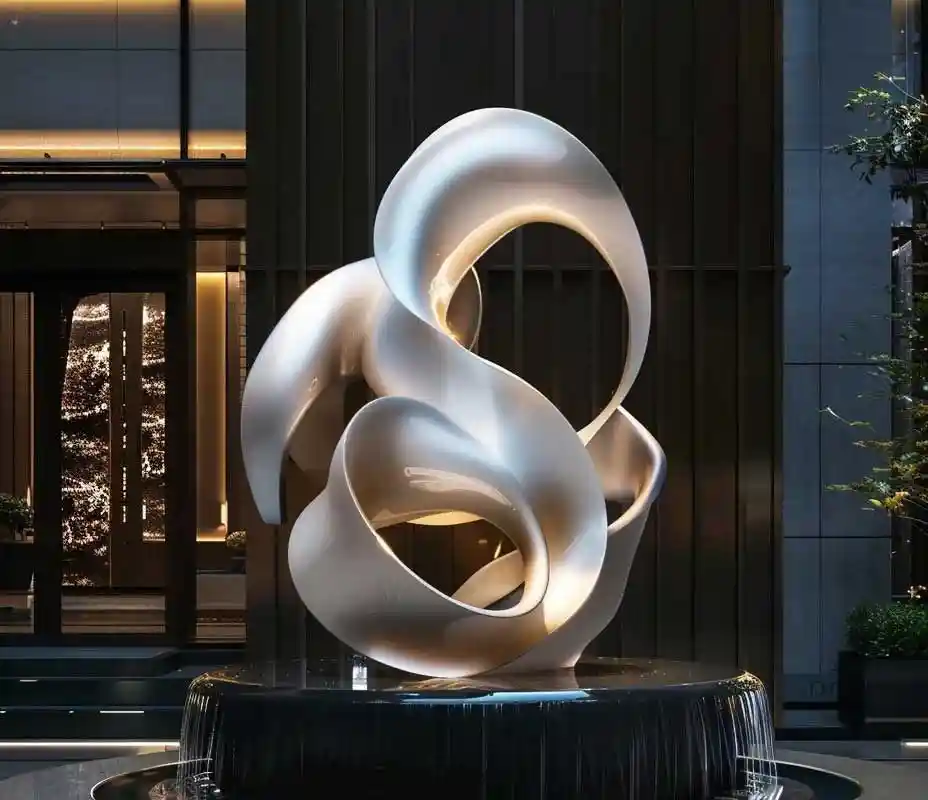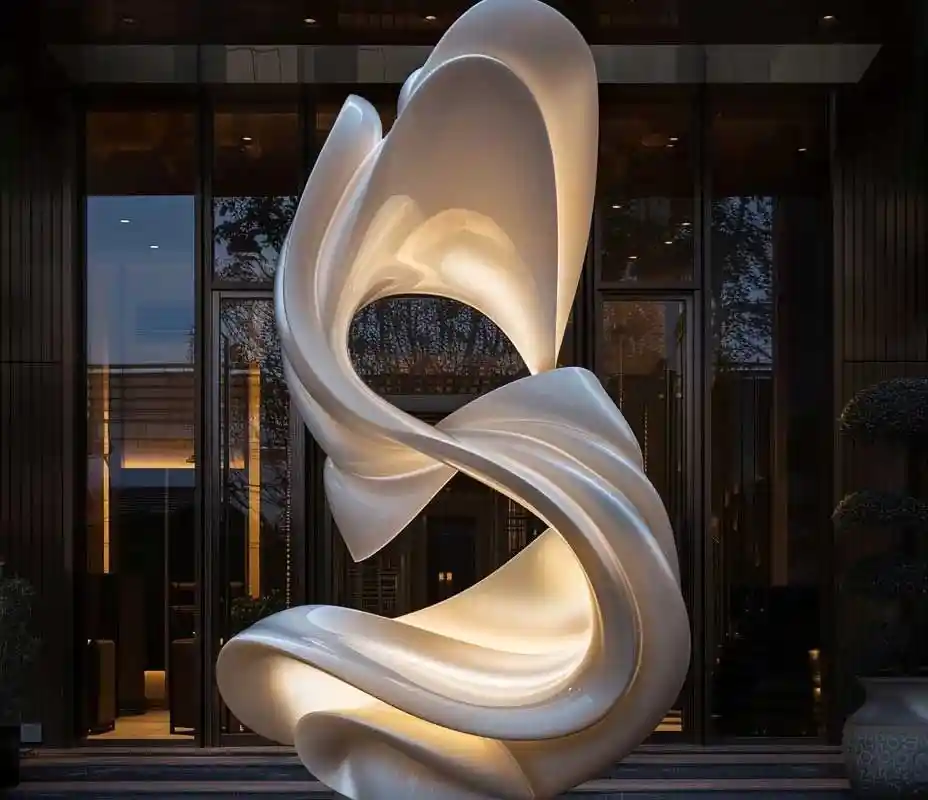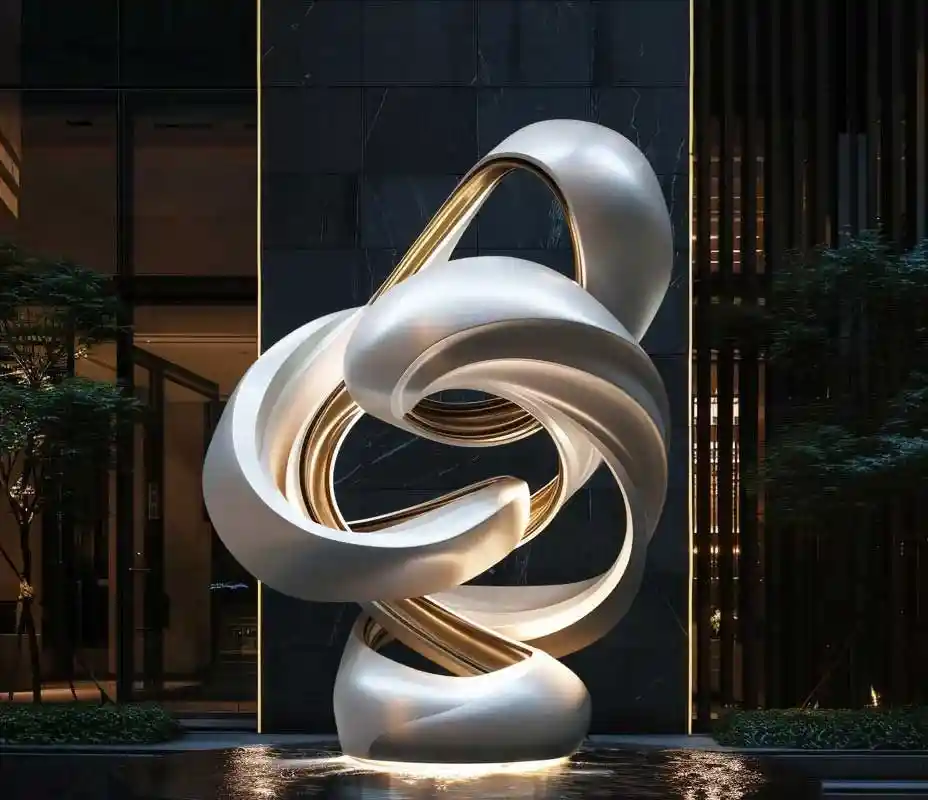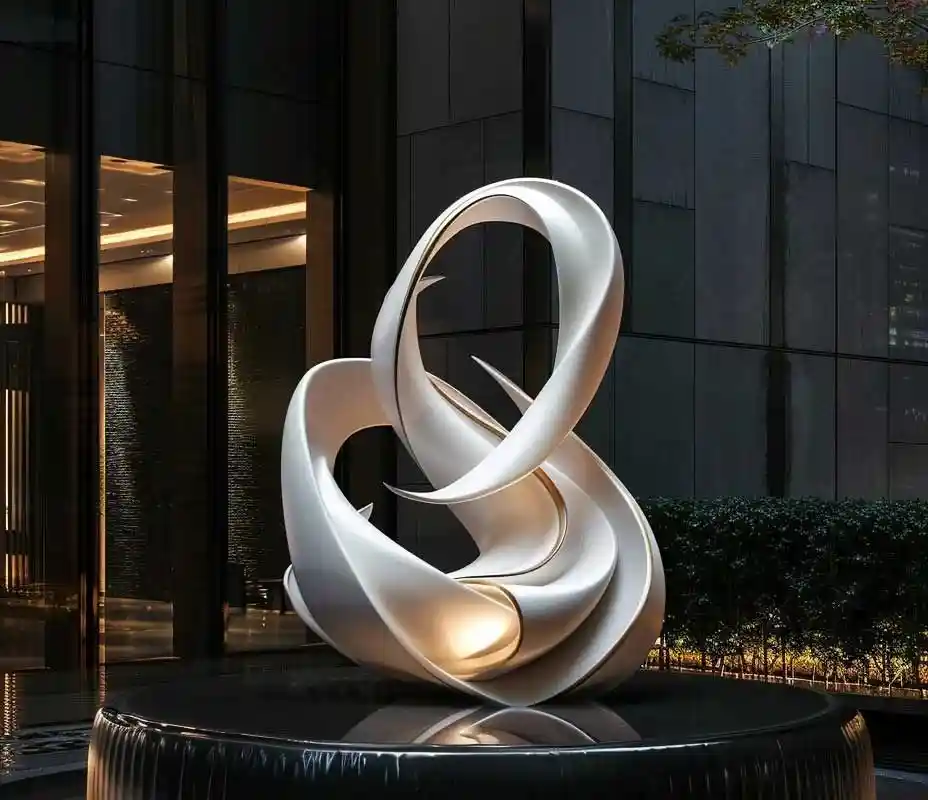
The Ethereal Node – Luxury Hospitality Entrance Sculpture
Public Art
Project Profile: Entryway Water Feature Sculpture
-
Project Timeline:
-
Concept & Schematic Design: 3 weeks
-
Technical Design & Engineering: 2 weeks
-
Fabrication & Finishing: 6 weeks
-
Transportation & On-site Installation: 1 week
-
Total Duration: 12 weeks
-
-
Estimated Budget: $85,000 – $120,000 USD (Depends on material selection: marine-grade stainless steel with automotive-grade pearl white lacquer and PVD titanium gold plating)
-
Sculpture Dimensions:
-
Height: 138 inches (approx. 3.5 meters)
-
Width: 98 inches (approx. 2.5 meters)
-
Depth: 59 inches (approx. 1.5 meters)
-
(Sized to establish a strong visual anchor within the water feature without overwhelming the architectural entrance)
-
Design Narrative & Concept Background
Design Philosophy: From “Form” to “Spirit” Moving away from traditional narrative-driven and literal figurative sculptures, this piece embraces a restrained, abstract, and distinctly Eastern contemporary aesthetic. It does not replicate the literal shape of a traditional Chinese knot, but rather captures its “spirit”—the fluid lines, the sense of connection, and the harmonious flow of energy.
Visual Impact & Materiality Featuring a pearl-white main body contrasted with sleek gold-trimmed edges, the sculpture is designed to stand out boldly against dark architectural backgrounds, accentuating its volume and capturing the light. It achieves a dual identity: a commanding, high-end presence from afar, and an intricate showcase of craftsmanship up close.
Nightscape Integration While striking by day, the sculpture truly comes alive at night. Seamlessly integrated with the entryway’s water feature and custom lighting design, it transforms the hotel entrance into a captivating, gallery-like experience, blurring the line between luxury hospitality and fine art.
Material & Finish Engineering
At 138 inches in a hotel entrance, the piece is seen at close range and in changing light, which sets a higher bar for finish quality than a garden installation would. The specified FRP build carries a refined surface and integrated colour, chosen over a brushed metal treatment because the entrance lighting is warm and directional, and a softer surface reads better under it.
The multi-week fabrication and finishing allocation in the schedule reflects where the time actually goes on a piece at this scale. Forming, curing, and finishing a 138-inch shell are sequential steps that cannot be compressed without risking the surface, and hospitality installations generally have a fixed opening date that does not move.
Placing a Water Feature at an Entrance
Entryway water features carry a specific risk: they combine a large sculptural form with a wet surface in a space where guests walk and vehicles approach. The basin specification and the drainage around it are as much a part of the design as the sculpture itself, and both are normally resolved with the hotel’s operations team rather than the design team alone.
For a hospitality setting, noise is the constraint most often missed. A water feature at an entrance competes with arrival conversation and valet instructions, so the flow rate has to be tuned on site after installation — which is why commissioning is worth keeping in the schedule as its own step.
Scale, Sightlines & Guest Experience
An entrance sculpture is usually read from three positions: arriving on foot, from a vehicle, and from inside the lobby looking out. At 138 inches the piece works across all three, because it clears the sightline through the glazing while still reading through a windscreen. Taller pieces often block the view from inside, and shorter ones disappear in a double-height space.
The budget range for this category reflects how much of the cost sits in engineering rather than sculpture. At 85,000 to 120,000 USD for a piece of this scale, the structure, basin, and installation typically account for more than the sculpt itself, which is worth understanding when comparing quotations.
Maintenance in a Hospitality Environment
Hospitality installations are judged on appearance daily, so maintenance is a scheduled service rather than a repair task. The water feature needs weekly cleaning of the basin and a check of the pump and filtration, and the sculptural surface needs periodic cleaning with a neutral detergent to avoid water spotting.
Access is the practical consideration worth settling before installation — reaching the basin and the upper surfaces from a lobby is straightforward, but anything requiring a lift should be designed out rather than left for the operator to solve. We recommend agreeing the service method with the hotel’s chief engineer during the design phase.
Hospitality Design Brief & Guest Experience
An entrance sculpture in a luxury hotel is judged on how it feels to arrive at, and that is a different criterion from how it photographs. At 138 inches the piece is read from the approach, from the vehicle, and from the lobby looking back out — three distances and two lighting conditions, and a design that only works in one of them will disappoint in practice.
That is why the surface and finish specification matters more here than the form alone. Soft, well-finished surfaces read well under warm directional entrance lighting, and a hard reflective finish that looked striking in a render can read cold and busy against hotel stone and timber.
Coordinating with the Hotel’s Design Team
Entrance work is a team process. The piece has to sit alongside the lobby materials, the lighting scheme, the flooring, and the planting, and the internal design team will have opinions about all of them that are reasonable. Early involvement of the design team usually produces a better result than delivering a finished piece for approval.
Practical coordination items include the lobby floor loading for the basin, the drainage route, and the maintenance access for the water feature — the last of which is frequently forgotten and then discovered to be difficult once the piece is installed.
Why Budget Is Spent on Engineering
At 85,000 to 120,000 USD for a 138-inch entrance piece, the structure, basin, and installation typically cost more than the sculpt. That is worth understanding when comparing quotations, because a lower figure often reflects a simpler water system or a less demanding installation rather than a cheaper sculpture.
The range itself reflects finish and site conditions. Marble or stone in the sculptural element, a bespoke basin finish, and a site with difficult access all move the cost up; a plinth-based dry feature moves it down considerably.
Water Feature Noise & Flow Tuning
Arrival noise is the constraint that most often resurfaces after installation. A water feature at an entrance competes with greetings, valet instructions, and the general noise of arrival, and a flow rate that sounds appropriate in an empty lobby can be intrusive when the space is busy.
This is why commissioning includes on-site flow adjustment rather than fixing the rate at fabrication. The pump specification should allow for that adjustment, and the handover should tell the operator how to make it — otherwise the feature gets turned down and the installation is effectively disabled.
Handover & the Operating Contract
A water feature is an operating asset with a daily cost, and the hotel needs to know what that is before accepting the piece. Handover normally covers the pump and filtration specification, the water chemistry the finish requires, the cleaning method for the sculptural surface, and the service interval for the lighting.
For a hotel group, the practical advantage of documenting all of this at handover is that the feature can be maintained by the property’s own technical team across multiple properties. A feature that depends on a specific contractor is one that gets switched off within a year.
Project Gallery