
Custom Sculpture Insights & Guides
What Is a Large-Scale Sculpture? Definition, Size Thresholds & Project Types
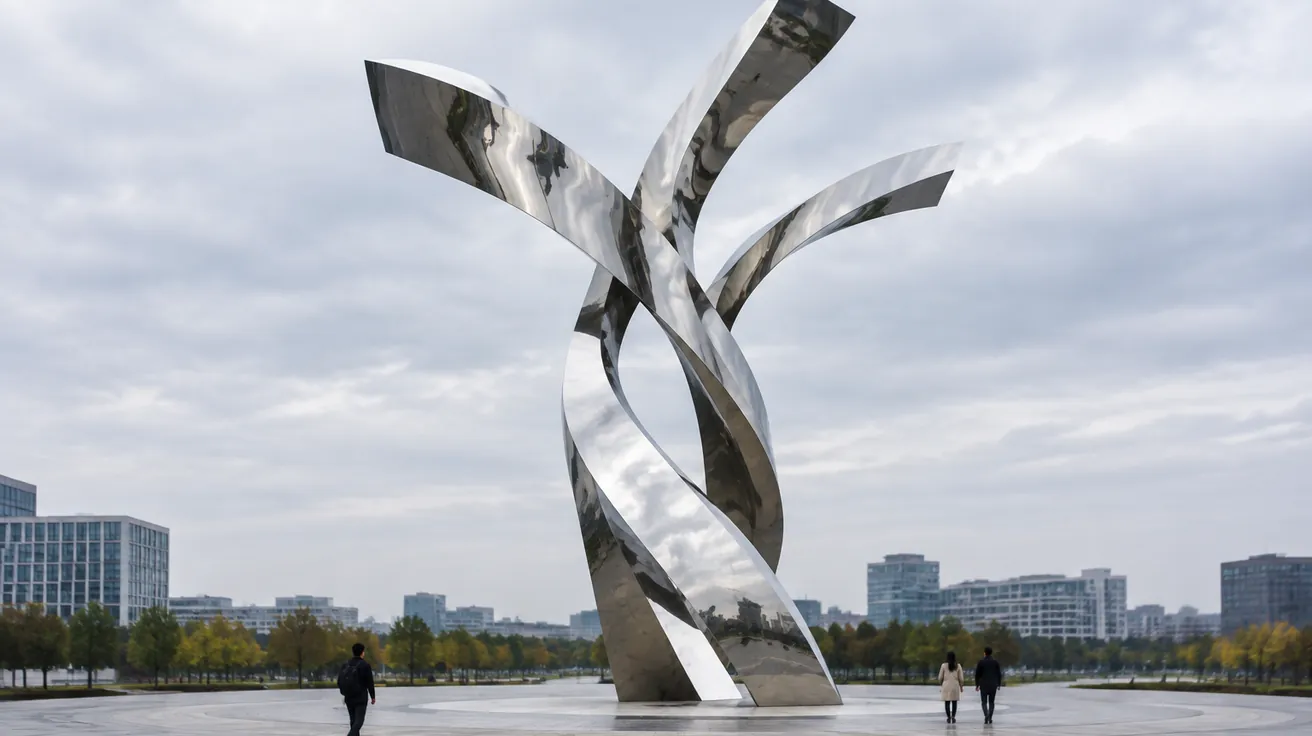
Clients often ask us: “At what point does a sculpture become large-scale?” The answer matters because the engineering, fabrication method, transport logistics, and budget all change at specific size thresholds. This guide gives you the practical definitions we use in our workshop, the three structural classes that drive cost, and real project examples from 2 metres to 30 metres.
1. The Working Definition We Use
In our factory, a sculpture enters the large-scale workflow when any one of these is true:
- Height ≥ 2.5 m (≈ 8 ft) — requires engineered base connection and lifting plan.
- Weight ≥ 500 kg — exceeds manual handling; needs crane/forklift and structural anchorage.
- Longest shipping dimension > 2.3 m — won’t fit in a standard 40 ft container without special loading.
Below those lines the piece can usually be handled as a “standard” sculpture: palletised, containerised, installed by a small crew. Once you cross them, the project moves into a different workstream with structural calculations, transport permits, and site-specific installation methods.
2. Three Structural Classes (Cost Drivers)
We group large-scale projects into three classes. The class determines the engineering depth, the fabrication sequence, and the installation budget.
| Class | Typical Range | Key Engineering | Installation |
|---|---|---|---|
| Class A | 2.5–5 m H 0.5–3 t |
Internal armature + base plate calc | Mobile crane, 1 day |
| Class B | 5–12 m H 3–15 t |
Wind/seismic analysis, foundation design | Crawler crane, 2–3 days |
| Class C | 12 m+ H 15 t+ |
Full structural peer review, transport engineering | Heavy lift, multi-week |
Class A is where most commercial and private commissions land. Class B covers municipal landmarks and theme park icons. Class C is the realm of city-defining monuments.
3. Material Choices by Class
Material isn’t just aesthetic — it decides whether the piece fits in a container, how the armature is designed, and what maintenance looks like in year 10.
- Fiberglass (FRP) — Class A & B. Light (1/5 of bronze), corrosion-proof, mouldable to any organic form. Full material comparison here.
- Stainless Steel — Class A, B & C. Structural by itself; no separate armature needed for many forms. Mirror or brushed finish. Manufacturing process.
- Bronze — Class A & B (rarely C due to weight). Traditional lost-wax, develops patina. See durability table.
- Corten / Carbon Steel — Class B & C. Self-protecting rust layer, high strength-to-weight. Structural engineering mandatory.
4. Real Project Examples by Class
Class A — 2.5 m to 5 m
- 3.2 m H — The Scholar’s Arc (Bronze, university quadrangle). Lost-wax cast in 11 sections, stainless armature, granite plinth.
- 4.5 m H — Victory Circuit (Stainless steel, esports arena forecourt). Brushed + mirror sections, integrated LED edge lighting, 316 steel for coastal site.
- 2.4 m H — The Quiet Bloom (Fiberglass, hospital courtyard). Matte gel-coat, seat-height base, two-person lift off base for cleaning.
Class B — 5 m to 12 m
- 7 m H — Velocity Gate (316L mirror stainless, rail terminus plaza). Three interlacing ribbon blades, self-supporting column, hidden anchorage ring.
- 6 m H — The Urban Sentinel (Stainless steel, public park). Mirror-polished, engineered for 50-year design life in coastal wind zone.
Class C — 12 m+
- 18 m H — Celestial Gateway (Stainless steel, theme park entrance). Twin arches, dynamic lighting, full wind-tunnel validation.
- 15 m H — Tidal Crest (Stainless steel, coastal public art). Cantilevered form, marine-grade 316, foundation designed for storm surge.
5. What Changes at Each Threshold
| Threshold | Engineering | Transport | Installation | Budget Impact |
|---|---|---|---|---|
| ≥ 2.5 m H | Base plate calc | Standard container | Mobile crane | +15–25% |
| ≥ 5 m H | Wind load + foundation | Open-top / flat-rack | Crawler crane | +35–50% |
| ≥ 12 m H | Peer review + transport study | Police escort / route survey | Heavy lift + temp works | +80–120% |
6. Quick Decision Checklist
Use this before you brief a fabricator:
- What is the installed height (including plinth)?
- What is the site wind zone and seismic category?
- Is there crane access to the final position, or must it be rigged from a distance?
- Does the client need a maintenance plan budgeted for years 1, 5, 10?
- Has transport route clearance been checked for the largest segment?
If you answer “yes” to any Class B or C trigger, involve a structural engineer before design freeze — retrofitting anchorage after fabrication is the most expensive mistake in this business.
7. Next Steps
- Need a budget range? Start with our Custom Sculpture Pricing 2026 guide.
- Ready to specify a material? Compare FRP vs Bronze vs Stainless Steel.
- Have a site and a concept? Submit your brief and we’ll return a class assessment with timeline and budget bands within 3 business days.
y
Related Projects
Browse real projects matching this topic
Public Art
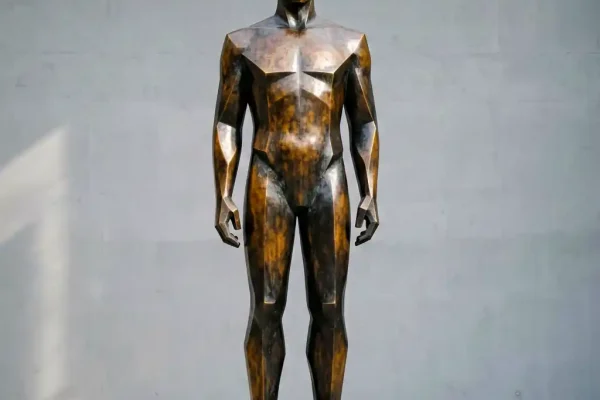
The Civic Guardian — Bronze Monument
Gardens & Resorts
“Whisper Pavilion” — Corten Steel & FRP Botanical Garden Sculpture
Related Insights
Continue reading related articles
Brand Mascot & IP
Oct 13, 2026
Esports Arena & Gaming Venue Sculpture: Landmarks, Trophies & Mascot Statues
Commercial & Hospitality
Oct 13, 2026
Corporate Lobby & Office Sculpture: Commissioning Guide for Developers

Custom Sculpture Insights & Guides
Oct 13, 2026
How Long Do Outdoor Sculptures Last? Material-by-Material Lifespan Guide
Our Sculpture Solutions
Explore our full range of custom sculpture services

IP Character Replication
Beyond 2D: Why IP Replication Drives Brand Engagement A character that lives only on a screen is easy to scroll...
Learn More →
Large Sculpture Custom
Engineering Monumental Scale A sculpture that stands 15 metres tall is not simply a 1.5-metre maquette scaled up ten times....
Learn More →
Original IP Development
From Concept to Icon Most sculpture enquiries begin with a reference: a licensed character, a film hero, an existing artwork...
Learn More →
Solutions Services
One Factory, Every Sculpture Material A sculpture brief rarely arrives pre-sorted by material. A client sends a reference image, a...
Learn More →
Custom Inflatables
Inflatable Sculptures as Brand Media Most sculptural commissions are permanent assets: they are built once, installed once, and admired for...
Learn More →
FRP & Fiberglass Sculpture Manufacturing
Custom FRP and fiberglass sculpture manufacturer - design, fabrication, and finishing.
Learn More →
Stainless Steel & Metal Sculpture Manufacturing
Custom stainless steel, bronze, corten, and aluminum sculpture manufacturer.
Learn More →
Theme Park Sculpture Services – Custom Amusement Park Statues
Custom Theme Park Sculptures – Bringing Imagination to Life Theme parks, amusement parks, zoos, and entertainment destinations thrive on immersive...
Learn More →
Commercial Sculpture Services – Custom Brand Mascots & Mall Art
Custom Commercial Sculptures – Elevate Your Brand & Space In today's competitive retail and commercial environment, first impressions matter. Commercial...
Learn More →