
Custom Sculpture Insights & Guides
Stone Sculpture Guide: Marble, Granite & Sandstone for Outdoor Gardens
Why Stone Sculpture Endures as the Timeless Medium
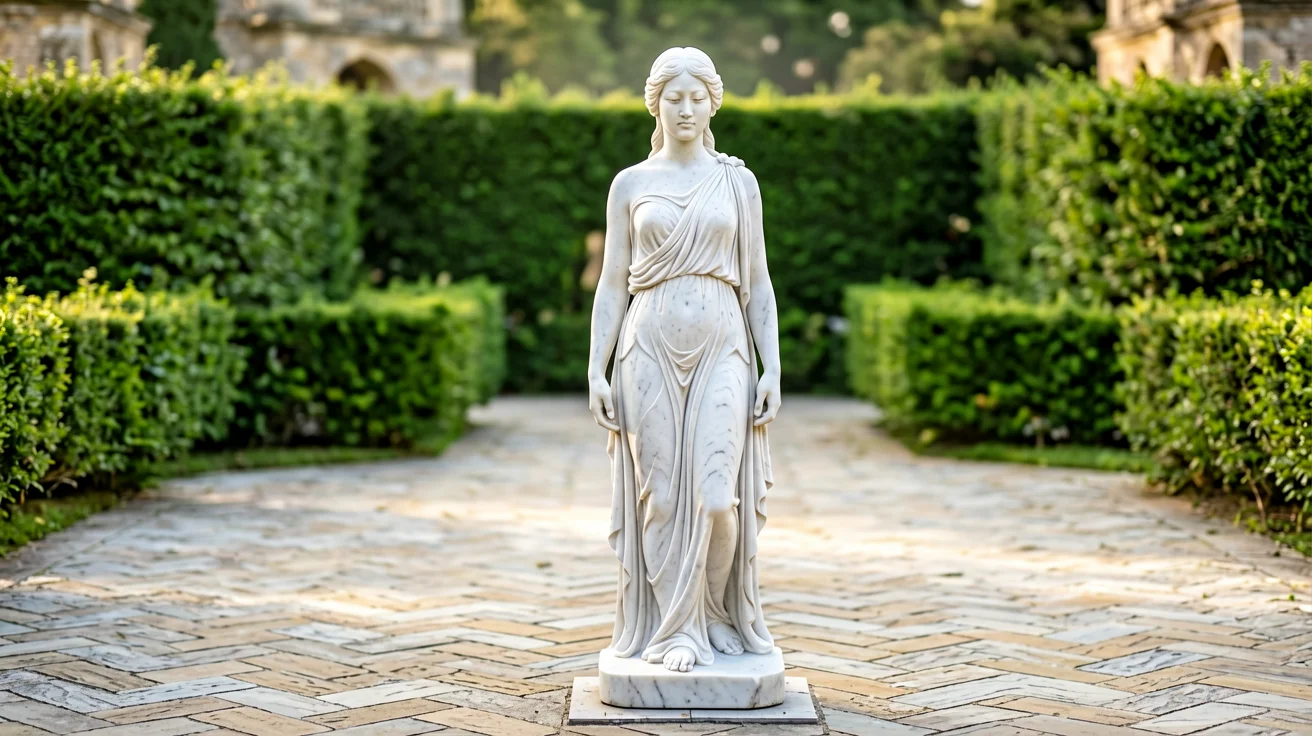
Stone sculpture is one of humanity’s oldest art forms, and it remains one of the most sought after for outdoor gardens, memorials, and architectural installations. From the marble figures of classical antiquity to the granite monuments of modern plazas, stone carries a weight — both literal and symbolic — that no manufactured material can replicate. When you commission a stone sculpture, you are choosing permanence.
Unlike FRP, which relies on surface coatings for weather resistance, stone sculpture is solid from core to surface. This makes it ideal for outdoor settings where the sculpture must survive decades of sun, rain, and freeze-thaw cycles without significant maintenance. However, not all stone is equal, and selecting the right material is critical to the longevity and appearance of your piece.
In this guide, we compare the four most common stone sculpture materials — marble, granite, sandstone, and limestone — across durability, weather resistance, cost, and visual character. Whether you are commissioning a garden feature, a memorial, or a public art installation, understanding these differences will help you make a confident choice. For a broader perspective on how stone compares to FRP, bronze, and steel, read our sculpture material comparison guide.
Marble vs Granite vs Sandstone vs Limestone: A Comparison
Each stone has a distinct mineral composition that determines its hardness, porosity, color range, and suitability for different environments. The table below summarizes the key differences.
| Property | Marble | Granite | Sandstone | Limestone |
|---|---|---|---|---|
| Mohs Hardness | 3–4 (softer) | 6–7 (very hard) | 4–5 (moderate) | 3–4 (soft) |
| Compressive Strength | 60–150 MPa | 150–250 MPa | 50–150 MPa | 50–200 MPa |
| Porosity | Moderate (3–7%) | Very low (0.5–1.5%) | High (10–20%) | High (5–15%) |
| Weather Resistance | Fair (susceptible to acid rain) | Excellent (lowest absorption) | Fair to Good (varies by cementation) | Poor to Fair (dissolves in acid rain) |
| Typical Colors | White, cream, gray, pink, green | Gray, black, pink, red, speckled | Tan, brown, red, buff, yellow | Cream, beige, gray, white |
| Finish Quality | Excellent — takes high polish | Good — polished or honed | Good — honed or textured | Fair — honed or sandblasted |
| Relative Cost | Mid–High | Mid | Low–Mid | Low–Mid |
| Best For | Indoor, sheltered outdoor, classical | High-traffic outdoor, coastal | Garden features, water elements | Memorials, facades, classical forms |
Granite’s low porosity and high compressive strength make it the most durable option for demanding outdoor environments, including coastal installations where salt spray accelerates weathering. Marble, while stunning, requires protective sealing and is better suited to sheltered gardens or indoor commissions. Sandstone offers warm, earthy tones ideal for naturalistic landscape settings, while limestone has a long tradition in classical and memorial sculpture despite its vulnerability to acidic rain.
For a deeper look at how stone sculpture compares against other common materials, our ultimate material comparison guide covers marble, granite, and sandstone in the context of FRP, bronze, and stainless steel options.
Durability & Weather Resistance of Stone Sculpture
Outdoor stone sculpture faces four primary weathering agents: water infiltration, freeze-thaw cycling, UV radiation, and chemical attack from acid rain or salt. How a stone responds depends on its mineralogy and physical structure.
Freeze-Thaw Resistance
Water absorption is the single most important factor in freeze-thaw durability. When water enters stone pores and freezes, it expands by approximately 9%, generating internal pressure that can crack the material from within. Granite, with its near-zero porosity, is virtually immune to freeze-thaw damage. Marble and limestone, with moderate to high absorption, require careful selection in cold climates — denser, less porous varieties perform significantly better. Sandstone’s variable cementation means performance ranges from moderate to poor depending on the source.
Acid Rain & Chemical Weathering
Marble and limestone are calcium carbonate stones, making them chemically vulnerable to acidic precipitation. Acid rain reacts with calcium carbonate to form soluble calcium salts that wash away, gradually eroding carved detail. This is why many classical marble sculptures in urban environments show softened features after decades of exposure. Granite, composed primarily of quartz and feldspar, is largely inert to acid attack. Sandstone, depending on its cementing matrix, may also show chemical weathering, particularly if calcareous.
UV & Color Stability
All natural stone is UV-stable — sunlight does not degrade the mineral structure. However, some stones contain iron-bearing minerals that can oxidize (rust) when exposed to moisture and air, producing surface staining. This is most noticeable in certain marbles and sandstones. Granite’s color is generally stable because its constituent minerals are highly resistant to oxidation.
Biological Growth
Porosity also determines susceptibility to algae, lichen, and mold growth. High-porosity sandstone and limestone can support biological colonization in shaded, damp locations, which may be aesthetically undesirable or, in some cases, damaging. Polished granite surfaces resist biological attachment far more effectively.
Cost of Stone Sculpture: What to Expect
Stone sculpture pricing varies significantly based on material, size, carving complexity, and finishing. Unlike FRP, which benefits from economical mold-based production, stone sculpture is primarily a subtractive process — material is removed from a solid block, and the cost of raw stone plus carving time drives the final price.
| Stone Type | Small (0.5–1m) | Medium (1–2m) | Large (2m+) |
|---|---|---|---|
| Granite | $3,000 – $8,000 | $8,000 – $25,000 | $25,000 – $80,000+ |
| Marble | $4,000 – $10,000 | $10,000 – $35,000 | $35,000 – $120,000+ |
| Sandstone | $2,000 – $5,000 | $5,000 – $15,000 | $15,000 – $40,000 |
| Limestone | $2,500 – $6,000 | $6,000 – $18,000 | $18,000 – $50,000 |
These are indicative ranges for traditionally carved solid stone. Cast reconstituted stone (discussed below) can reduce costs by 30–50% for larger pieces. Shipping and installation are additional costs, particularly for heavy granite and marble works that may require crane-assisted placement.
Carving vs Cast Reconstituted Stone: Which Approach?
Traditional stone sculpture is carved from solid blocks — a subtractive process that preserves the natural integrity of the material but generates significant waste and demands skilled labor. An alternative is cast reconstituted stone, also called artificial or engineered stone, which combines crushed natural stone aggregate with a polymer or cement binder to produce sculptures that mimic the appearance of carved stone at lower cost and weight.
Carved Solid Stone
Solid-carved stone offers unmatched authenticity. The grain, veining, and color variation are natural and run through the entire material — a chip reveals the same stone beneath the surface. This is essential for classical figurative work, where the integrity of the material is part of the artistic statement. However, solid carving is slow, generates 40–60% waste as sawdust and chips, and produces very heavy pieces that require substantial foundations.
Cast Reconstituted Stone
Reconstituted stone is poured into molds — the same mold technology used for FRP production — then cured and finished. The result visually resembles carved stone but weighs approximately 40–60% less, costs 30–50% less to produce, and can be cast in complex geometries that would be prohibitively expensive in solid stone. The trade-off is that surface damage reveals the aggregate matrix beneath rather than homogeneous stone, and the material lacks the depth of natural veining. For outdoor use, reconstituted stone should be sealed and painted with UV-stable coatings to match the appearance of the target natural stone.
At Y Sculptures, we offer both approaches. For heritage-quality memorials and classical commissions, we source and carve solid marble, granite, and limestone. For larger-scale garden and public art projects where budget and logistics are constraints, we produce cast reconstituted stone with a natural stone finish. Explore our Large Sculpture Custom service to discuss which method suits your project.
Maintenance & Care for Outdoor Stone Sculpture
Stone sculpture is durable but not maintenance-free. Proper care extends the lifespan and preserves the appearance of your investment.
Sealing & Protection
Marble, limestone, and sandstone should be treated with a penetrating silane/siloxane sealer within the first year of installation and re-applied every 3–5 years depending on exposure. Granite generally does not require sealing due to its low porosity, but a topical impregnator can enhance color depth. Avoid surface-film sealers, which trap moisture and cause spalling in freeze-thaw climates.
Cleaning
Annual cleaning with low-pressure water and a soft brush removes surface dirt and biological growth. For stubborn organic staining on marble or limestone, a poultice of baking soda and water can draw out discoloration without abrasion. Never use acid cleaners on calcium-based stones — they etch the surface and dull the finish. For granite, a neutral pH stone cleaner is sufficient.
Damage Repair
Minor chips and surface loss in carved stone can be repaired with matching stone dust and epoxy, blended and polished to conceal the repair. Reconstituted stone repairs use matching aggregate and binder. Significant structural damage — cracks from settlement or freeze-thaw — requires professional conservation assessment.
For a broader maintenance framework covering all sculpture materials, see our Sculpture Maintenance Guide, which includes seasonal care calendars and material-specific protocols.
How Y Sculptures Approaches Stone-Commissioned Work
Y Sculptures has over 18 years of experience producing stone sculptures for clients worldwide — from hand-carved marble figures for private gardens to massive granite memorials for civic spaces. Our approach is shaped by three principles: material honesty, structural integrity, and aesthetic longevity.
Material honesty means we never recommend a stone that is unsuited to the client’s environment. A white Carrara marble figure in a coastal Alabama garden would deteriorate rapidly; we would steer that commission toward granite or a sealed reconstituted stone alternative. Structural integrity means every outdoor stone sculpture is engineered with appropriate anchoring, foundation design, and drainage — heavy stone exerts significant load, and the base must be designed to distribute it safely.
Aesthetic longevity guides our finishing decisions. We understand that a polished marble surface will develop a gentle patina over decades, and we discuss this expectation openly with clients. We also offer protective coatings and sealers that slow weathering without altering the stone’s natural appearance. For projects where the visual impact of carved stone is desired but budget or scale presents constraints, our cast reconstituted stone option delivers convincing results at a fraction of the cost and weight.
Whether you are envisioning a classical marble bust for a memorial garden or a rugged granite abstraction for a corporate plaza, our team will guide you from concept through material selection, fabrication, and on-site installation. Contact us to discuss your stone sculpture commission.
D
Written by David Chen
David Chen is Design Director at Y Sculptures with 18+ years in large-scale sculpture design and fabrication. He specializes in FRP, stainless steel, and bronze sculpture engineering, overseeing design-to-production workflows for theme park attractions, public art installations, and brand IP mascots. David has personally directed over 300 custom sculpture projects for clients across 20+ countries.
Related Projects
Browse real projects matching this topic

Related Insights
Continue reading related articles
Brand Mascot & IP
Oct 13, 2026
Esports Arena & Gaming Venue Sculpture: Landmarks, Trophies & Mascot Statues
Commercial & Hospitality
Oct 13, 2026
Corporate Lobby & Office Sculpture: Commissioning Guide for Developers
Custom Sculpture Insights & Guides
Oct 13, 2026
How Long Do Outdoor Sculptures Last? Material-by-Material Lifespan Guide
Our Sculpture Solutions
Explore our full range of custom sculpture services

IP Character Replication
Beyond 2D: Why IP Replication Drives Brand Engagement A character that lives only on a screen is easy to scroll...
Learn More →
Large Sculpture Custom
Engineering Monumental Scale A sculpture that stands 15 metres tall is not simply a 1.5-metre maquette scaled up ten times....
Learn More →
Original IP Development
From Concept to Icon Most sculpture enquiries begin with a reference: a licensed character, a film hero, an existing artwork...
Learn More →
Solutions Services
One Factory, Every Sculpture Material A sculpture brief rarely arrives pre-sorted by material. A client sends a reference image, a...
Learn More →
Custom Inflatables
Inflatable Sculptures as Brand Media Most sculptural commissions are permanent assets: they are built once, installed once, and admired for...
Learn More →
FRP & Fiberglass Sculpture Manufacturing
Custom FRP and fiberglass sculpture manufacturer - design, fabrication, and finishing.
Learn More →
Stainless Steel & Metal Sculpture Manufacturing
Custom stainless steel, bronze, corten, and aluminum sculpture manufacturer.
Learn More →
Theme Park Sculpture Services – Custom Amusement Park Statues
Custom Theme Park Sculptures – Bringing Imagination to Life Theme parks, amusement parks, zoos, and entertainment destinations thrive on immersive...
Learn More →
Commercial Sculpture Services – Custom Brand Mascots & Mall Art
Custom Commercial Sculptures – Elevate Your Brand & Space In today's competitive retail and commercial environment, first impressions matter. Commercial...
Learn More →