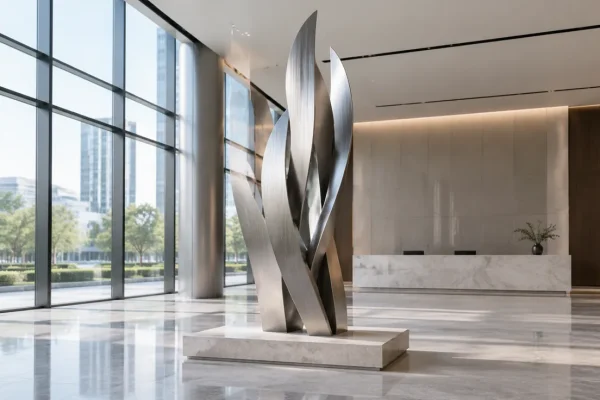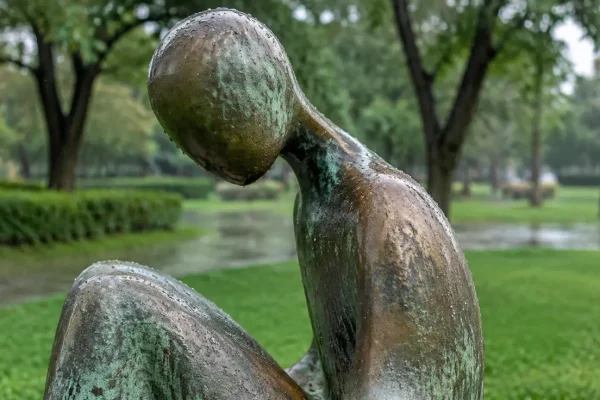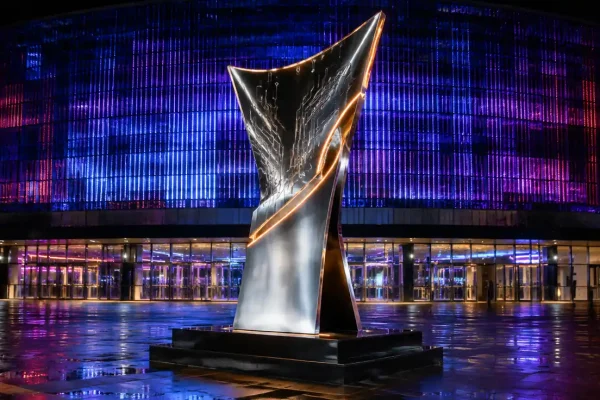

Bluestone Water-Moon Guanyin (Avalokiteshvara) Courtyard Landscape Sculpture
Gardens & Resorts
This project commissions a focal centerpiece sculpture for a high-end, Zen-inspired residential courtyard and meditation garden. The sculpture depicts the Water-Moon Guanyin (Water-Moon Avalokiteshvara), a manifestation symbolizing the illusory nature of reality and the depth of spiritual detachment, gazing at the reflection of the moon in the water.
Carved from premium, weathered natural bluestone, the artwork bridges classical Eastern iconography with contemporary minimalist landscape design. The sculpture aims to create a profound sense of tranquility, mindfulness, and timeless elegance, serving as a spiritual anchor for the outdoor sanctuary.
Project Timeline
-
Total Duration: 14 Weeks (Approx. 3.5 Months)
-
Phase 1: Concept & 3D Modeling Approval: Weeks 1–2
-
Phase 2: Material Selection & Rough Block Roughing: Weeks 3–5
-
Phase 3: Fine Hand-Carving & Detailing: Weeks 6–10
-
Phase 4: Surface Treating, Quality Inspection & Packaging: Weeks 11–12
-
Phase 5: International Shipping & On-Site Installation: Weeks 13–14
-
Project Budget
-
Total Estimated Budget: $24,500 USD
-
Includes: Premium bluestone sourcing, master artisan hand-carving labor, protective wooden crate packaging, ocean freight/logistics, and basic structural installation guidance.
-
Sculpture Dimensions
The proportions are optimized for an outdoor courtyard setting, ensuring a commanding yet harmonious presence.
| Dimension | Measurement (Inches) | Notes |
| Height | 78.5 in (approx. 200 cm) | Total height including the integrated lotus pedestal base. |
| Width | 47.2 in (approx. 120 cm) | Widest point of the rockery and seating posture. |
| Depth | 35.4 in (approx. 90 cm) | Front-to-back clearance required for stable placement. |
Note on Materiality: Because this sculpture is carved from a solid block of natural bluestone, the final weight is estimated to be around 3,300 lbs. Ground reinforcement and a concrete sub-base are highly recommended prior to installation.
Stone Selection for a Contemplative Courtyard
Bluestone is a deliberate choice for this setting, and the weathering is part of the intent rather than a compromise. The stone’s grey-blue tone sits quietly against planting and reads as belonging to the landscape over time, which suits a meditation garden where the piece is meant to be revisited daily rather than encountered once.
Because the sculpture is carved rather than assembled, the stone has to be selected with the composition in mind — the veining, the bed orientation, and the way the figure’s form turns through the block all affect the finished work. A bench-height piece at 78.5 inches is also large enough that the carving is a substantial operation, and the grain direction has to accommodate the seated pose.
Carving, Detailing & the Water-Moon Motif
The Water-Moon Guanyin motif depends on subtlety. The figure is not sculpturally dramatic; the work is in the inclination of the head, the fall of the drapery, and the relationship between the gaze and the reflective water below. Those are the details that decide whether the piece reads as contemplative or as decorative, and they are resolved at the model stage, before stone is cut.
The reflection is part of the composition rather than an addition to it. The piece is positioned so the water surface completes the imagery, which means the siting and the carving have to be designed together — a change to either one alters what the other means.
Placement in a Meditation Garden
In a Zen-inspired courtyard, the sculpture works as a focal point that structures the space rather than as a standalone object. Its position relative to the paths, the planting, and the seating determines whether visitors stop or walk past, and that is usually resolved on site during the design phase rather than after installation.
At this scale the base and the surrounding ground treatment are part of the piece. A carved stone sculpture on a plinth that was specified independently of the sculpture tends to read as assembled rather than made, so the plinth material and height are normally chosen together with the carving.
Weathering, Care & Long-Term Appearance
Natural stone weathers slowly and, in this case, attractively. The surface will soften in texture and the tone will shift with exposure, and for a garden piece that is the desired behaviour — the opposite of a coated finish that fails visibly once it breaks down.
Care is minimal but not zero. Cleaning should avoid acidic products, which can etch the stone surface, and the base should be checked annually for settlement since a bench-height mass on a foundation that moves will crack at the joint. In a landscaped setting, keeping irrigation spray directed away from the stone prevents the staining that would otherwise build up at the base.
Project Gallery