
Custom Sculpture Insights & Guides
Public Art Installation: The Complete Process from Commission to Unveiling
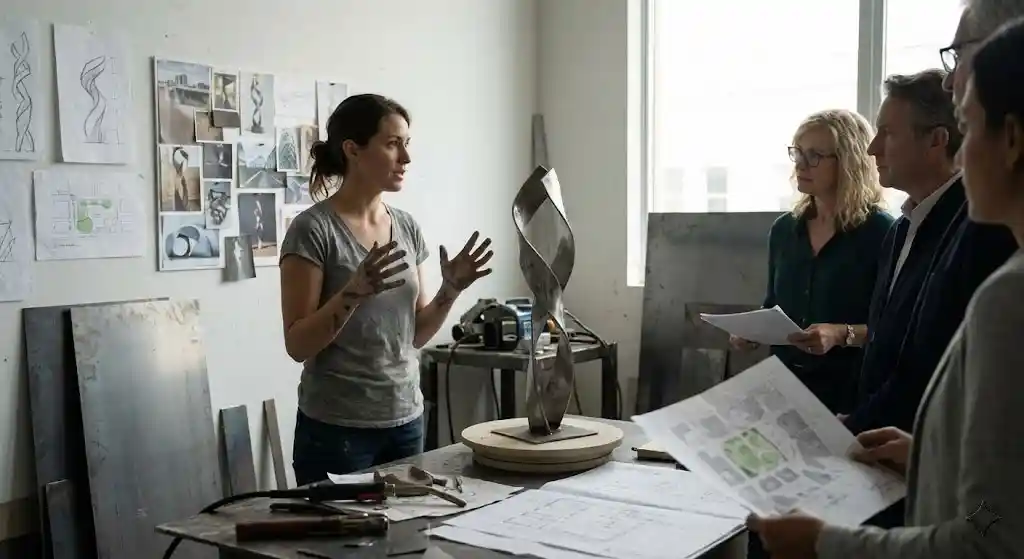
Public art transforms urban spaces, creates community identity, and generates cultural tourism. But the journey from an initial commission brief to a completed installation is complex, involving multiple stakeholders, regulatory approvals, and precise logistical coordination. This guide walks through the complete public art installation process — from the client”’s perspective.
Phase 1: Commission and Concept Development (Weeks 1-4)
Defining the Brief
A strong public art commission begins with a clear brief that addresses:
- Site context: Location dimensions, surrounding architecture, pedestrian flow patterns, viewing angles, and existing landscape features
- Project objectives: Is the goal placemaking, tourism attraction, community engagement, or urban revitalization?
- Stakeholder requirements: City planning department guidelines, community input, private donor preferences
- Budget parameters: All-in budget including design, fabrication, installation, and a maintenance reserve
Artist/Manufacturer Selection
Selection typically follows one of three paths:
- Open call / RFP: Public agencies issue a Request for Proposals; manufacturers submit portfolios and concept proposals
- Invited competition: A shortlist of 3-5 pre-qualified manufacturers is invited to submit detailed proposals
- Direct commission: A specific manufacturer is selected based on past work, reputation, or specialized capability
Phase 2: Design Development and Approval (Weeks 4-12)
Concept Refinement
Once selected, the manufacturer develops the concept into a detailed design package including:
- 3D renderings from multiple viewing angles and distances
- Material samples and finish swatches for approval
- Scale maquette (physical or 3D printed) for spatial evaluation
- Preliminary structural calculations and foundation requirements
- Lighting concept (if applicable), including nighttime renderings
Regulatory Approvals
Public art projects typically require approval from multiple agencies:
- City planning department: Zoning compliance, height restrictions, setback requirements
- Arts commission / public art board: Design review and community impact assessment
- Building department: Structural permit, foundation permit, electrical permit (for lighting)
- Environmental review: May be required for waterfront, park, or environmentally sensitive locations
Timeline note: Regulatory approvals are often the longest phase of the project. Budget 4-12 weeks depending on jurisdiction complexity.
Phase 3: Engineering and Fabrication (Weeks 8-20)
Detailed Engineering
Before fabrication begins, the design package is converted into production documentation:
- Structural engineering calculations (wind loads, seismic, dead loads)
- Foundation design with soil report integration
- Internal armature design and connection details
- Lightning protection system (for tall outdoor sculptures)
- Access and maintenance planning
Fabrication
This is the most visible phase, where the sculpture takes physical form:
- Mold making: CNC-foam or hand-sculpted patterns, silicone or 童话蘑菇雕塑 molds
- Casting/forming: Material application — FRP layup, metal forming and welding, or bronze casting
- Assembly: Sections joined, seams finished, internal structure installed
- Surface finishing: Sanding, priming, color application, clear coating
- Quality control: Dimensional verification, color matching, structural inspection
Phase 4: Logistics, Installation, and Unveiling (Weeks 2-6)
Transportation
Large sculptures are typically transported in custom-built crates via sea freight (international) or flatbed truck (domestic). Key considerations include:
- Custom crating with vibration dampening for fragile elements
- Insurance coverage during transit
- Customs clearance and import duties for international shipments
- Route planning for oversized loads (permits, escorts, bridge clearances)
On-Site Installation
Installation is a carefully orchestrated event requiring:
- Crane mobilization (crane size determined by sculpture weight and lift radius)
- Foundation preparation (concrete curing takes 7-28 days before loading)
- Anchor bolt placement and verification
- Section assembly and seam finishing on-site
- Lighting connection and testing
- Final cleaning and protective coating touch-up
Unveiling and Handover
The project concludes with:
- Final inspection and punch list resolution
- Maintenance manual delivery (cleaning schedule, finish care, inspection points)
- Warranty documentation (typically 2-5 years structural, 1-2 years finish)
- Unveiling event support (optional)
- Professional photography for portfolio and press
Typical Timeline by Project Scale
For budget planning alongside your timeline, see our Custom Sculpture Cost Guide 2026.
| Project Scale | Typical Size | Total Timeline |
|---|---|---|
| Small | 2-4m | 12-20 weeks |
| Medium | 4-8m | 20-32 weeks |
| Large | 8-15m | 32-48 weeks |
| Monumental | 15-20m+ | 48-72 weeks |
FAQ
Who owns the copyright to a public art sculpture?
The commissioning entity typically owns the physical sculpture, while the artist/manufacturer retains copyright unless otherwise negotiated. Usage rights for photography, reproduction, and merchandising should be explicitly addressed in the contract. Our manufacturing guide — Custom Sculpture Manufacturing: 7-Step Process Guide — covers everything from mold-making to final finishing.
What happens if the sculpture is damaged after installation? Learn maintenance and repair procedures in our care guide.
Structural warranties typically cover manufacturing defects for 2-5 years. Damage from vandalism, accidents, or extreme weather events is generally covered by the owner”’s insurance. We provide repair services and can fabricate replacement sections if needed. Our manufacturing guide — How Custom Sculptures Are Made: From Concept to Installation in 10 Steps — covers everything from mold-making to final finishing.
Can public art sculptures be relocated?
Yes, but it requires careful planning. The sculpture must be structurally assessed for the new location (different wind loads, soil conditions). Transportation and re-installation costs typically range from 20-40% of the original project cost depending on distance and complexity.
Planning a public art installation? Contact our public art team for a comprehensive project assessment and timeline estimate.
J
Written by James Liu
James Liu is Project Manager at Y Sculptures, specializing in end-to-end custom sculpture project delivery for commercial, hospitality, and public art sectors. With 12 years in the industry, James coordinates design approvals, material sourcing, fabrication timelines, international shipping logistics, and on-site installation. He has successfully delivered 500+ projects to 30+ countries.
Related Projects
Browse real projects matching this topic
Related Insights
Continue reading related articles
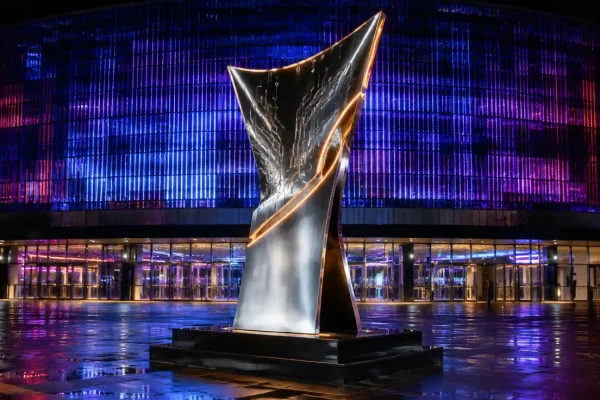
Brand Mascot & IP
Oct 13, 2026
Esports Arena & Gaming Venue Sculpture: Landmarks, Trophies & Mascot Statues
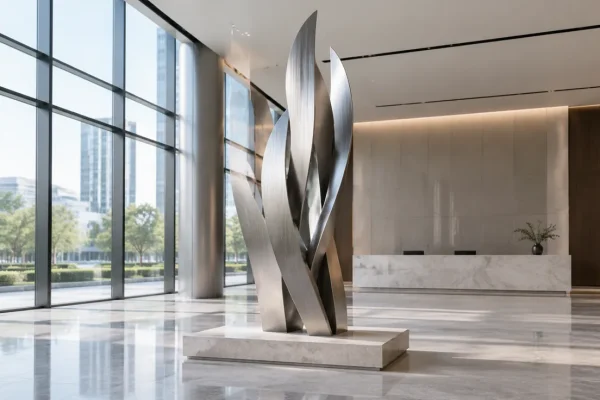
Commercial & Hospitality
Oct 13, 2026
Corporate Lobby & Office Sculpture: Commissioning Guide for Developers
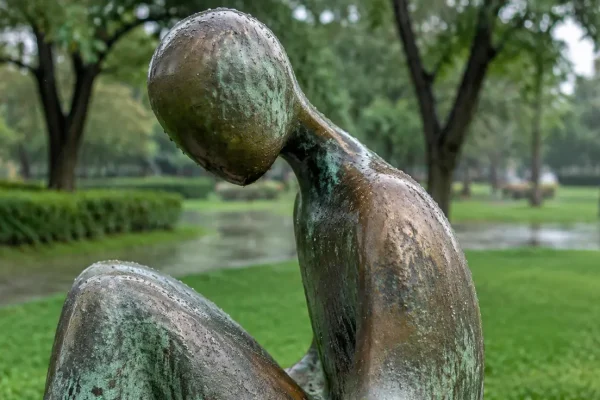
Custom Sculpture Insights & Guides
Oct 13, 2026
How Long Do Outdoor Sculptures Last? Material-by-Material Lifespan Guide
Our Sculpture Solutions
Explore our full range of custom sculpture services

IP Character Replication
Beyond 2D: Why IP Replication Drives Brand Engagement A character that lives only on a screen is easy to scroll...
Learn More →
Large Sculpture Custom
Engineering Monumental Scale A sculpture that stands 15 metres tall is not simply a 1.5-metre maquette scaled up ten times....
Learn More →
Original IP Development
From Concept to Icon Most sculpture enquiries begin with a reference: a licensed character, a film hero, an existing artwork...
Learn More →
Solutions Services
One Factory, Every Sculpture Material A sculpture brief rarely arrives pre-sorted by material. A client sends a reference image, a...
Learn More →
Custom Inflatables
Inflatable Sculptures as Brand Media Most sculptural commissions are permanent assets: they are built once, installed once, and admired for...
Learn More →
FRP & Fiberglass Sculpture Manufacturing
Custom FRP and fiberglass sculpture manufacturer - design, fabrication, and finishing.
Learn More →
Stainless Steel & Metal Sculpture Manufacturing
Custom stainless steel, bronze, corten, and aluminum sculpture manufacturer.
Learn More →
Theme Park Sculpture Services – Custom Amusement Park Statues
Custom Theme Park Sculptures – Bringing Imagination to Life Theme parks, amusement parks, zoos, and entertainment destinations thrive on immersive...
Learn More →
Commercial Sculpture Services – Custom Brand Mascots & Mall Art
Custom Commercial Sculptures – Elevate Your Brand & Space In today's competitive retail and commercial environment, first impressions matter. Commercial...
Learn More →