
The Pinnacle – Iconic IP Sculpture Commission
IP Sculpture
Project Timeline
-
Total Duration: 10 Weeks
-
Phase 1: Concept & 3D Design: Weeks 1–2
-
Phase 2: Client Review & Digital Refinement: Week 3
-
Phase 3: Material Sourcing & Fabrication: Weeks 4–7
-
Phase 4: Hand-Finishing & Polishing: Week 8
-
Phase 5: Logistics, Delivery, and On-Site Installation: Weeks 9–10
-
Budget
-
Total Estimated Budget: $45,000 USD
-
Includes: Artist design fees, premium materials (e.g., electroplated stainless steel/fiberglass with metallic finish), structural engineering, crating, shipping, and professional installation supervision.
-
Sculpture Dimensions
-
Height: 86.6 inches (approx. 220 cm)
-
Width: 47.2 inches (approx. 120 cm)
-
Depth: 39.4 inches (approx. 100 cm)
-
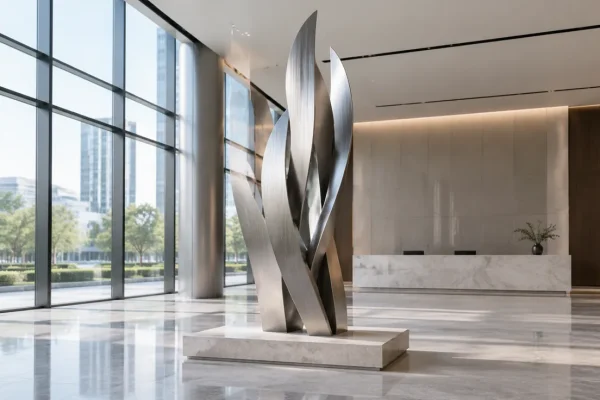
Note: Designed as a hero piece for the main lobby entrance, optimized for member selfies and social media check-ins.
Why FRP for an Icon-Scale IP Character
At 86.6 inches and 45,000 USD, the material decision carries most of the economics of a piece at this scale. FRP was selected because the character needs to be lightweight enough to reposition without equipment, robust enough for a public plaza, and capable of holding the sculpted detail that makes the character recognisable at a distance. A cast bronze piece at these dimensions would weigh several times more and would require a fixed plinth; a steel version would need welded plate work that adds cost without improving the read.
FRP also means the colour is part of the object rather than a coating that can chip. For licensed IP work that matters commercially — the character has to look correct in photographs, and a painted surface that dulls or chips makes the piece read as worn regardless of its actual condition.
Reproduction Fidelity & IP Compliance
For a licensed character, the work begins with the IP owner’s supplied 3D files and design guidelines rather than reference photographs. Working from reference imagery produces a piece that is recognisable but not accurate, and in a commercial setting that is usually the wrong trade. The 3D design phase in this ten-week schedule is therefore a review-and-refinement stage with the client, not a drawing exercise.
Approval of the sculpt is the gate that matters most. Once a full-size model is approved, changes become expensive because the mould has been taken. We recommend locking the design before fabrication begins, even when that feels like a slow step.
Structural & Weather Considerations
Even a 129-word brief carries real engineering. At this height the piece needs a concealed base fix and a lay-up schedule heavy enough through the lower body to handle overturning in wind, while staying light enough to move. A hollow FRP shell with an internal armature gives that balance.
For outdoor commercial placement, the gel coat carries UV stabilisation and the colour system is chosen to fade evenly. A character that fades unevenly — for example, where a hand or face weathers differently from the body — loses recognisability, which defeats the commercial purpose of the commission.
Long-Term Care
Maintenance is a wash and inspect cycle: clean quarterly, and check the base fix annually since soil movement changes the loads a static inspection would miss. The finish will hold its colour for years under UV-stable gel coat, and because the piece is light, an isolated impact or graffiti can be repaired on site without returning the character to the workshop.
What Determines the Cost at This Scale
At 45,000 USD for a character at 86.6 inches, the cost is mostly in the sculpt and the mould rather than in the material. The mould is a fixed cost that a single piece carries entirely; if the brief involves several units, that cost divides, and the same character at a second location is substantially cheaper per piece.
That makes the quantity question worth asking early. A retail group commissioning an IP character for one flagship but planning more locations within a year is in a very different commercial position from a one-off, and the fabrication plan is easier to structure if that is known at enquiry.
Design Approval as the Critical Path
Ten weeks is a workable schedule for a defined IP character, and the design phase is where it is won or lost. Working from the IP owner’s supplied files rather than reference images is the single biggest factor in whether the finished piece is accurate enough to use commercially — a recognisable but inaccurate character does not serve the business case it was commissioned for.
Because the mould is fixed once the sculpt is approved, we recommend a formal sign-off at full size. Changing the pose, the proportions, or the expression after that point means remoulding, and at this scale that is one of the most expensive mistakes available in a project of this type.
Base Fixings for Public Display
An 86.6-inch character in a public place needs a concealed base fix rather than a free-standing shell, even though FRP is light. The overturning moment at that height is governed by the base, not the mass, and a public installation needs to be stable if a visitor leans on it — which happens more often than a brief anticipates.
Where the piece is on paving, a ground plate keeps the fix invisible and allows the character to be lifted for cleaning of the area beneath. Where it is on a lawn or a soft landscape, the base detail has to account for settlement, which is usually resolved on site during installation.
Colours, Finishes & Brand Fidelity
For licensed work the colour is part of the brand specification, not a finishing preference. The palette should be set from the IP guidelines, and the pigments chosen to fade at comparable rates so the character does not develop a differential weathering pattern within a few seasons.
Gloss and satin finishes are both available. Gloss photographs better and matches the cartoon register; satin is more forgiving in a high-traffic public setting where incidental contact is likely, and is often the more practical choice for a character that will be touched.
Project Gallery