

Procurement & Sourcing
International Sculpture Shipping & Installation: Complete Logistics Guide
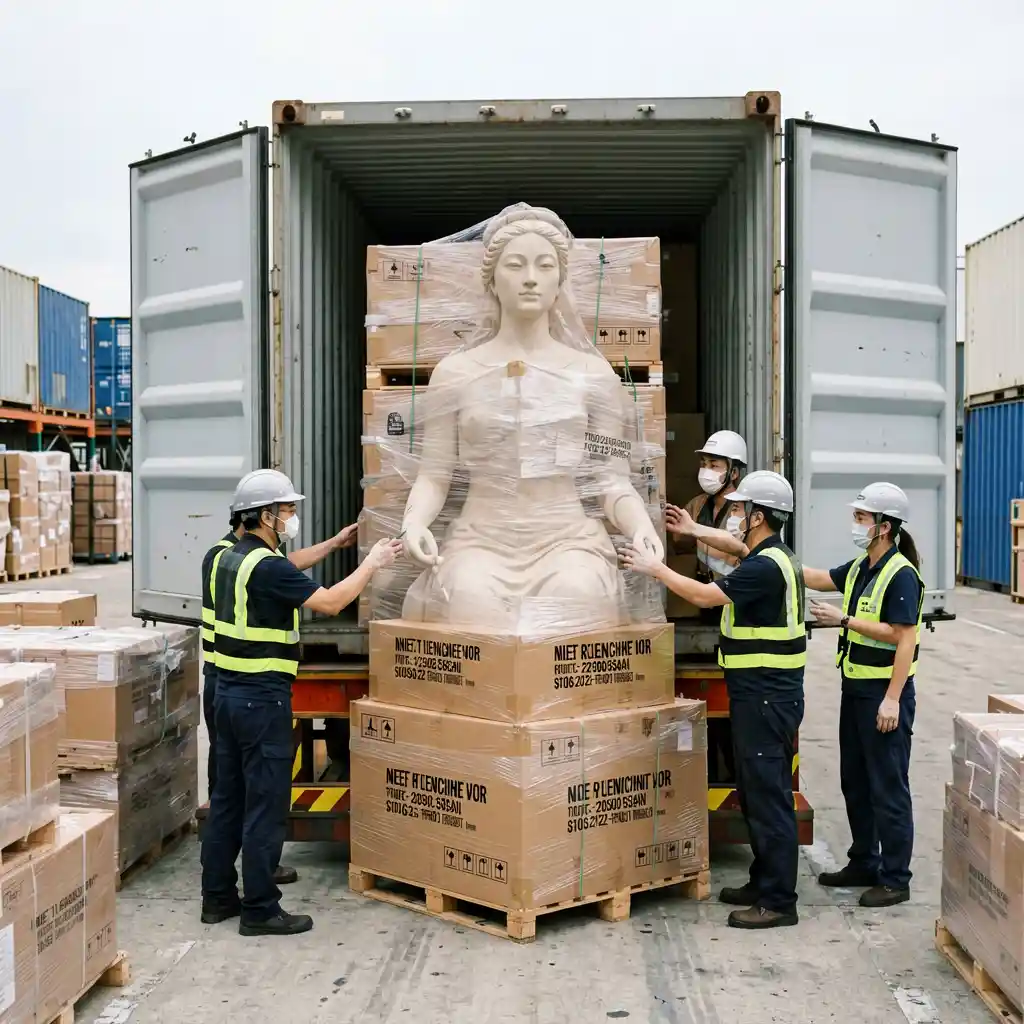
We imported a 4 m fiberglass sculpture from China last year and nearly doubled our budget on logistics. The freight quote looked fine. Then came the custom crating bill, the port handling fees, the export document charge, a customs broker fee we hadn’t budgeted for, and finally a crane hire for installation we assumed the factory would sort out. By the time the piece was standing in the plaza, shipping and installation had cost more than the sculpture itself.
The truth is that international sculpture shipping and installatio
is where most custom sculpture projects go over budget. The art itself is priced up front; the logistics is the wildcard. This guide walks through every step — crating, freight methods, cost breakdown, customs compliance, insurance, and on-site installation — so you can budget accurately and avoid the surprises we hit. If you are still sourcing your piece, our step-by-step custom sculpture import guide covers the procurement side before logistics begins.
Crating & Packaging: The Foundation of a Safe Shipment
Oversized sculptures rarely travel in their raw form. Almost all custom pieces are shipped as modular components — the body, arms, or base are manufactured separately, crated individually, and reassembled on site. The quality of that crating determines whether the piece arrives intact or arrives as a claim.
Professional sculpture crating typically involves three layers:
- Protective wrapping: foam sheeting or polyethylene foam molded to the sculpture surface, taped in place to prevent chafing against the crate walls.
- Shock-absorbing cradle: internal wooden bracing that locks the component in place, preventing movement and vibration damage during sea transit.
- Weatherproof outer crate: plywood or OSB frame, often with a waterproof membrane liner or silica-gel desiccant bags to control humidity and condensation.
For a 3–4 m piece broken into a few components, expect crating to add roughly 10–15% to the total logistics budget. It is not optional spend — unscrated or poorly crated shipments are the single biggest cause of transit damage and insurance claim disputes.
Shipping Methods: Sea Freight, Air Freight, and Express
Your shipping method determines cost, transit time, and how the sculpture must be packed. There are three realistic options for large custom sculpture:
| Method | Best For | Transit Time | Typical Cost (4m FRP piece) |
|---|---|---|---|
| Sea freight – LCL (shared container) | Single pieces, budget-conscious | 4–8 weeks | $800–$2,500 |
| Sea freight – FCL (full container) | Multiple pieces / large batches | 4–8 weeks | $2,500–$6,000 |
| Air freight | Urgent deadlines, high-value pieces | 5–10 days | $4,000–$12,000 |
| Express courier | Small components under 1m | 3–7 days | $1,500–$4,000 |
For a single large sculpture, LCL sea freight is almost always the most economical choice. Just remember LCL rates are quoted per cubic meter (CBM), and oversized crates that exceed container door height or floor-loading limits will attract heavy oversize surcharges — always confirm your crate dimensions with the freight forwarder before booking.
Air freight makes sense only when the schedule genuinely demands it. The freight cost can be 3–5× sea freight, and it does not remove the crating or customs cost. If a project timeline is driving you toward air freight, push the manufacturing schedule first — it is almost always cheaper to expedite production than to fly a 4 m sculpture.
Cost Breakdown: What Shipping & Installation Actually Costs
Here is a realistic line-item breakdown for a 4 m FRP sculpture shipped LCL from a Chinese factory to a US port, then installed:
| Cost Item | Estimated Range | Notes |
|---|---|---|
| Custom crating & packing | $400–$1,500 | 10–15% of logistics total |
| Sea freight (LCL) | $800–$2,500 | Depends on CBM and origin port |
| Export documentatio | $100–$300 | Commercial invoice, packing list, B/L |
| Marine / transit insurance | $150–$600 | ~0.3–0.5% of insured value |
| Destination port handling | $200–$800 | THC, customs clearance, delivery |
| Import duty & taxes | 5–15% of value | Varies by country and HS code |
| Last-mile delivery | $300–$1,000 | Flatbed truck, liftgate |
| On-site installatio | $800–$3,500 | Crane hire, crew, foundation prep |
For most 3–6 m imported sculptures, plan on $3,000–$8,000 total for logistics, customs, and installation combined. The single most common budgeting mistake is ignoring last-mile delivery and installatio
— the piece may arrive at the port for $2,000, then cost another $2,000 to reach the site and stand upright.
Customs & Compliance: Paperwork by Regio
Customs clearance is where first-time importers get stuck. Sculptures are generally classified as works of art or decorative articles, and the correct HS code determines your duty rate. Getting the code right matters — a misclassified shipment can sit in customs for weeks or attract penalties.
| Regio | Key Documentatio | Duty / Notes |
|---|---|---|
| United States | Customs bond, commercial invoice, packing list, bill of lading | ~3.9–6.5% for decorative articles; original artwork may be duty-free |
| European Unio | EORI number, import declaration, customs value declaratio | ~4.5–6.5% duty plus VAT (typically 20–25%) |
| United Kingdom | EORI number, customs declaration, import VAT | 0–5% duty on art; 20% import VAT |
| Australia | Customs declaration, commercial invoice, GST payment | 5% duty; 10% GST |
| Middle East / UAE | Commercial invoice, packing list, certificate of origi | 5% import duty on most goods |
For original commissioned artworks, many countries offer reduced or zero duty rates if you can provide an artwork certificate or provenance documentation proving the piece is an original work, not a mass-manufactured product. Work with a licensed customs broker at the destination — the $150–$400 broker fee is worth every dollar in avoided delays. Our customs and shipping deep-dive has more region-by-region detail.
Installation Services: Getting the Piece Standing
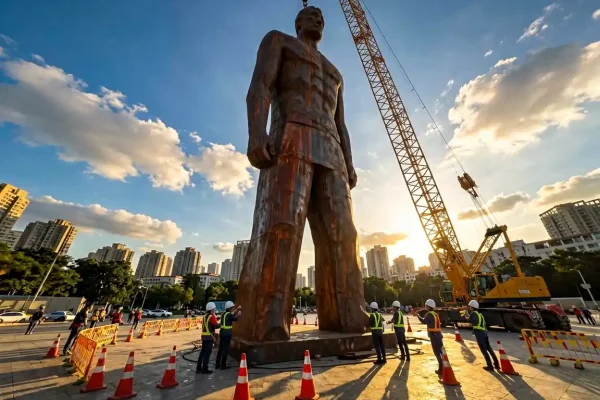
Shipping is only half the job. A 4 m sculpture needs a prepared foundation, heavy lifting equipment, and a crew to align and secure it. Professional sculpture installation services typically cover:
- Site survey & foundation: checking load-bearing capacity and pouring or preparing the concrete base and anchor points.
- Heavy lifting: crane or telehandler hire sized to the weight and reach, with an on-site rigging crew.
- Assembly & alignment: joining modular components, checking level and plumb, securing to anchors.
- Finishing touches: sealing joints, touch-up paint, and final weathering protection.
Installation costs scale with weight and site access — a ground-level plaza install with crane access is far cheaper than a rooftop or interior atrium install requiring a specialist rig. Most of our international project examples include full delivery and on-site installation coordination; browse our project portfolio to see how pieces are mounted across different venues. For complete turnkey handling, our installation services page outlines what the factory can arrange before and after shipment.
Risk Management: Insurance and Damage Claims
International transit is the highest-risk phase of any sculpture project. Rough seas, container handling, and last-mile road bumps all threaten the piece. Transit insurance is non-negotiable — it should cover the full insured value of the sculpture plus freight and crating, typically at 0.3–0.5% of the value.
Three things to get right with insurance:
- Insure the full landed value — sculpture value plus freight plus crating, so a total loss is fully recoverable.
- Choose the right policy — marine cargo insurance (Institute Cargo Clauses A) covers most all-risk transit scenarios; confirm it extends to port handling and last-mile delivery.
- Document everything — photograph the crates at departure and on arrival, and note any damage on the delivery receipt before signing. A clean delivery receipt makes an insurance claim nearly impossible to pursue later.
Damage claims are time-sensitive. Insurers and carriers require claims to be filed within days of delivery, with photographic evidence and survey reports. If you anticipate complex delivery, build a contingency buffer into the timeline — our contracts and insurance risk guide covers claims handling and contract clauses in depth.
Timeline Planning: From Factory Floor to Finished Install
Rushing logistics is how budgets balloon. A realistic end-to-end timeline for an imported custom sculpture looks like this:
| Phase | Typical Duratio |
|---|---|
| Manufacturing & QC | 6–12 weeks |
| Crating & packing | 3–7 days |
| Sea freight transit | 4–8 weeks |
| Customs clearance | 2–10 days |
| Last-mile delivery | 1–5 days |
| On-site installatio | 2–7 days |
Book your freight forwarder and crane hire early, not when the piece is ready to ship. Logistics capacity and rates fluctuate, and last-minute bookings attract premium pricing. Build a 2–3 week buffer into the schedule to absorb customs delays and weather interruptions without blowing the launch date.
Key Takeaways: Your Shipping & Installation Checklist
- Budget 25–35% extra on top of the sculpture price for crating, freight, customs, insurance, and installation combined.
- Invest in professional crating — it is the cheapest insurance you can buy.
- Choose LCL sea freight for single pieces; reserve air freight for genuine deadlines.
- Confirm your HS code and duty rate with a licensed customs broker before shipping.
- Insure the full landed value and photograph crates on arrival.
- Book crane hire and site prep early; don’t let a $2,000 install become a $4,000 emergency.
- Plan a realistic timeline with a 2–3 week buffer for customs and weather.
International sculpture shipping and installation does not have to be a budget bomb — but it rewards planning. Get a logistics quote alongside your sculpture quotation, confirm every line item, and work with a manufacturer that can coordinate crating, freight, and installation as one package. When you’re ready to scope your project, contact our team for a turnkey quotation that covers the full journey from factory floor to finished install.
Shipping & Installatio
Read our international shipping guide for detailed logistics. See installation services. Check our secure payment guide for payment options.
J
Written by James Liu
James Liu is Project Manager at Y Sculptures, specializing in end-to-end custom sculpture project delivery for commercial, hospitality, and public art sectors. With 12 years in the industry, James coordinates design approvals, material sourcing, fabrication timelines, international shipping logistics, and on-site installation. He has successfully delivered 500+ projects to 30+ countries.
Related Projects
Browse real projects matching this topic
Related Insights
Continue reading related articles

Procurement & Sourcing
Aug 3, 2026
How to Commission Custom Sculpture: RFP, Design & Installation Process
Custom Sculpture Insights & Guides
Jul 13, 2026
How to Import Custom Sculptures from China: Procurement & Shipping Guide
Our Sculpture Solutions
Explore our full range of custom sculpture services

IP Character Replication
Learn More →

Large Sculpture Custom
Learn More →

Original IP Development
Learn More →

Solutions Services
Learn More →

Custom Inflatables
Learn More →

FRP & Fiberglass Sculpture Manufacturing
Custom FRP and fiberglass sculpture manufacturer - design, fabrication, and finishing.
Learn More →
Stainless Steel & Metal Sculpture Manufacturing
Custom stainless steel, bronze, corten, and aluminum sculpture manufacturer.
Learn More →
Theme Park Sculpture Services – Custom Amusement Park Statues
Custom Theme Park Sculptures – Bringing Imagination to Life Theme parks, amusement parks, zoos, and entertainment destinations thrive on immersive...
Learn More →
Commercial Sculpture Services – Custom Brand Mascots & Mall Art
Custom Commercial Sculptures – Elevate Your Brand & Space In today's competitive retail and commercial environment, first impressions matter. Commercial...
Learn More →