
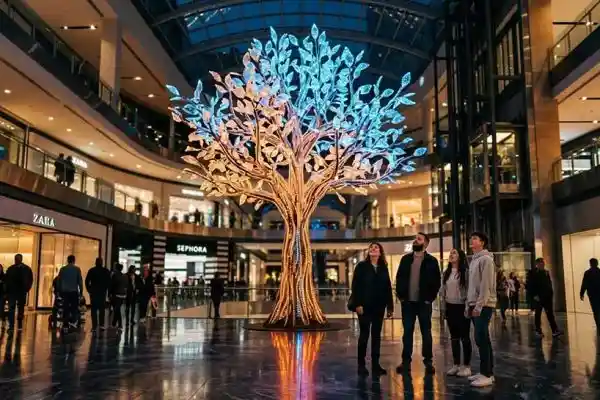
Procurement & Sourcing
How to Commission Custom Sculpture: RFP, Design & Installation Process

“We’re commissioning our first public sculpture — where do we even start?” That question comes up on Reddit’s r/ArtistLounge, r/publicart, r/architecture and r/smallbusiness more than almost any other. Whether you’re a city arts council, a developer, a brand team or a private collector, commissioning a custom sculpture feels like a leap into the unknown: you know the piece you want, but the route from idea to installed artwork is full of RFPs, renderings, fabrication and crane day.
The good news: commissioning a sculpture follows a predictable, seven-phase process that top manufacturers run hundreds of times a year. This guide walks you through every phase — from requirements definition and RFP writing to design, fabrication, installation and aftercare — so you know exactly what to ask for, when to approve, and how to keep the project on budget and on time.
The Commission Process: 7 Phases From Concept to Installatio
Every custom sculpture commission, whether it’s a 25-foot stainless monument or a 4-meter FRP brand mascot, moves through the same seven phases:
- Requirements Definitio
— space, budget, timeline, theme, audience - RFP Writing & Vendor Selectio
— scope, evaluation criteria, shortlisting - Design & Rendering — sketches, 3D modeling, client approval
- Fabricatio
— material sourcing, sculpting, casting, finishing - Installatio
— site prep, delivery coordination, assembly - Commissioning — inspection, documentation, handover
- Aftercare — maintenance planning and warranty coverage
Here is the full process flow from first brief to ribbon cutting:
PROCESS FLOW
Brief & Budget → RFP & Shortlist → Contract & Deposit → Concept Design → 3D Rendering & Approval → Fabrication & QC → Packing & Shipping → Site Prep & Installation → Commissioning & Handover → Aftercare & Warranty
Brief & Budget → RFP & Shortlist → Contract & Deposit → Concept Design → 3D Rendering & Approval → Fabrication & QC → Packing & Shipping → Site Prep & Installation → Commissioning & Handover → Aftercare & Warranty
Phase 1: Requirements Definition — Know Your Space, Budget and Story
Before you write a single line of an RFP, define the project’s non-negotiables. This is the phase where most commissions go off the rails — usually because someone skipped it.
- Site and dimensions. Measure the installation footprint, ceiling or ground clearance, and sightlines. A sculpture that looks elegant at 2 meters can feel lost in a 15-meter atrium. Order-of-magnitude rule: a centerpiece sculpture should occupy roughly one-third to one-half of its primary viewing wall or plaza zone.
- Environment. Indoor vs. outdoor changes everything — weather exposure, UV, wind load, weight limits on a roof or floor, and local building codes. For outdoor public art, engineering for wind and seismic loads is mandatory.
- Theme and story. What should the piece say? Align the concept with your brand, venue identity, or community narrative. The most successful commissions have a clear story the design team can interpret.
- Audience. Who interacts with the piece? A children’s hospital wants approachable, safe, tactile forms; a corporate lobby wants sophistication; a theme park wants photo-worthy spectacle.
- Budget and timeline. Be realistic about both. Custom sculpture is made to order — there is no stock to pull. Know your approval milestones before you start.
Phase 2: RFP Writing — What to Include and How to Evaluate Bids
The request for proposal is your single most important procurement document. A well-written RFP attracts serious manufacturers and filters out guesswork. Here is what to include:
| RFP Sectio | What to Specify |
|---|---|
| Project Overview | Location, site dimensions, environment (indoor/outdoor), installation date |
| Design Intent | Theme, style references, colors, symbolism, any brand assets to incorporate |
| Technical Scope | Material options, target dimensions, weight limits, engineering and safety requirements |
| Budget Range | Give a realistic range so bidders propose appropriate scope — vagueness invites wildly divergent quotes |
| Timeline & Milestones | Design approval date, fabrication window, delivery and installation dates |
| Deliverables | Concept sketches, 3D renderings, material samples, structural drawings, installation pla |
| Evaluation Criteria | Weighted scoring: design quality, relevant experience, timeline, price, warranty, references |
How to evaluate bids. Score each submission against the same weighted criteria rather than price alone. Verify every shortlisted vendor’s portfolio for similar projects (a company that nails restaurant mascots may be wrong for a monumental public monument). Ask for references, check their fabrication facility credentials, and confirm whether they handle shipping and installation or sub-contract it. For a deeper dive into vetting manufacturers, read our how to vet custom sculpture manufacturers checklist.
Phase 3: Design & Rendering — Sketches, 3D Models and Approval
Once a manufacturer is selected and the contract signed, the design phase begins. Expect two or three rounds of concept refinement:
- Concept sketches. The designer translates your brief into 2D concept art — silhouettes, forms, and color directions.
- 3D modeling. A detailed digital model lets you rotate the piece, view it from every angle, and check proportions against your site photos. This is the single most valuable tool for avoiding “it looked different in real life” disappointment.
- Rendering & visualization. Photorealistic renderings show materials, finishes, and how light plays across the surface.
- Approval gate. You sign off on the approved 3D design before any fabrication begins. Change requests after this point are where budgets bloat, so be thorough during review.
The approved 3D model becomes the contract of record for the build — it locks dimensions, materials and finish so fabrication proceeds without ambiguity.
Phase 4: Fabrication — Materials, Quality Checkpoints and Progress Updates
Fabrication is where the sculpture physically comes to life. The process varies by material — FRP is sculpted and molded, stainless steel is welded and polished, bronze is cast — but every reputable manufacturer runs the same quality discipline: our full 10-step manufacturing process guide covers the craft in depth.
Key things to manage in this phase:
- Material sourcing. Confirm the specified grades (e.g., marine-grade stainless, UV-stabilized FRP resin) and any certifications.
- Quality checkpoints. A serious factory holds internal QC at sculpting, finishing and pre-shipment stages. Ask for photo and video updates at each gate.
- Progress updates. Agree on a reporting cadence — weekly photos and milestone approvals keep you informed without micromanaging the shop floor.
- Finishing. Paints, patinas, powder-coating or metallic films are applied and sealed for the environment (outdoor needs UV and weather protection).
Phase 5: Installation — Site Preparation, Delivery and Assembly
Installation is the phase that separates manufacturers who deliver complete solutions from those who just sell you a heavy object. A turnkey partner coordinates the whole chain:
- Site preparation. Foundation or footing requirements, load-bearing checks, and any groundworks are planned in advance.
- Delivery coordination. Specialized transport for oversized pieces, port/airport clearance for international shipments, and site access logistics.
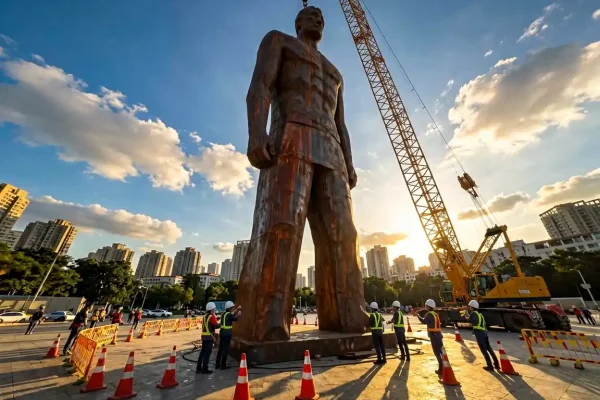
- Assembly & erection. On-site crane or rigging for heavy/large pieces, structural anchoring, and alignment.
- Final touch-ups. Any field repairs, cleaning and protection from construction dust.
For large or monumental installations, engineering for wind load and anchoring is non-negotiable — see our large-scale monument engineering guide for what can go wrong if this is skipped.
Phase 6: Commissioning — Inspection, Documentation and Handover
Commissioning is the formal acceptance of the finished work. Together with the manufacturer you should:
- Inspect the installed piece against the approved design and specification.
- Verify structural integrity, surface finish, lighting (if integrated) and safety compliance.
- Document the as-installed condition with photos and any inspection sign-offs.
- Receive handover documentatio
— material specifications, maintenance instructions, and warranty certificates.
Do not rush this step. Once you sign off, the project moves to aftercare and the manufacturer’s obligation shifts from build quality to warranty support.
Phase 7: Aftercare — Maintenance Planning and Warranty Coverage
A custom sculpture is an asset, and like any asset it needs care. A good manufacturer provides:
- Maintenance pla
— cleaning intervals, recommended products, and seasonal checks (especially for outdoor pieces). - Warranty coverage — structural and finish warranties with clear terms on what’s covered and for how long. Read ours on custom sculpture warranty and after-sales support.
- Repair & touch-up service — availability for future refinishing, re-coating or structural repairs.
Timeline & Cost Milestones: What to Expect
Every commission differs, but these are realistic planning ranges from a factory perspective:
| Milestone | Typical Timeline | Cost Milestone |
|---|---|---|
| Requirements & RFP | 2–4 weeks | — |
| Design & 3D approval | 2–4 weeks | Deposit (30–50%) |
| Fabricatio | 4–10 weeks (material & size dependent) | Progress payment |
| Packing & shipping | 1–4 weeks | Balance before shipment |
| Installatio | 1–3 weeks on site | Installation fee |
| Commissioning & handover | 1–2 days | Final payment |
For a granular view of what drives the price at each stage, see our custom sculpture cost guide.
Key Takeaways: The Commissioning Process Checklist
- Define first, write second. Lock site, budget, theme and timeline before drafting the RFP.
- Write a spec-driven RFP with weighted evaluation criteria — never select on price alone.
- Approve the 3D design in writing before fabrication; changes after that point are expensive.
- Insist on quality checkpoints and regular progress updates through fabrication.
- Plan installation early — site prep, access and rigging are part of the real cost.
- Formalize commissioning with inspection, documentation and a clear handover.
- Keep aftercare and warranty terms in writing from day one.
Ready to commission your custom sculpture? Browse our project case studies to see real commissions from concept to installation, explore our turnkey solutions for design-to-installation service, or contact our team to start your brief today.
J
Written by James Liu
James Liu is Project Manager at Y Sculptures, specializing in end-to-end custom sculpture project delivery for commercial, hospitality, and public art sectors. With 12 years in the industry, James coordinates design approvals, material sourcing, fabrication timelines, international shipping logistics, and on-site installation. He has successfully delivered 500+ projects to 30+ countries.
Related Projects
Browse real projects matching this topic
Related Insights
Continue reading related articles
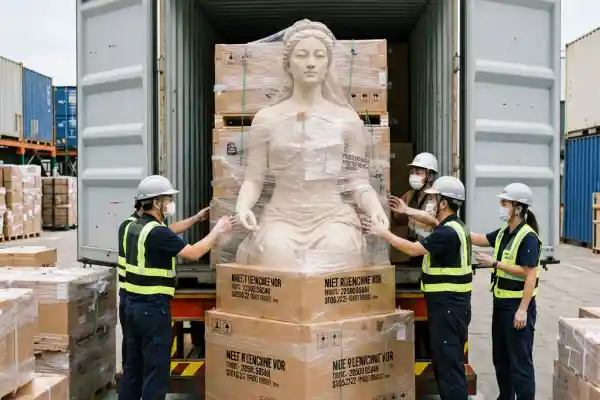
Procurement & Sourcing
Aug 3, 2026
International Sculpture Shipping & Installation: Complete Logistics Guide
Custom Sculpture Insights & Guides
Jul 13, 2026
How to Import Custom Sculptures from China: Procurement & Shipping Guide
Our Sculpture Solutions
Explore our full range of custom sculpture services

IP Character Replication
Learn More →

Large Sculpture Custom
Learn More →

Original IP Development
Learn More →

Solutions Services
Learn More →

Custom Inflatables
Learn More →

FRP & Fiberglass Sculpture Manufacturing
Custom FRP and fiberglass sculpture manufacturer - design, fabrication, and finishing.
Learn More →
Stainless Steel & Metal Sculpture Manufacturing
Custom stainless steel, bronze, corten, and aluminum sculpture manufacturer.
Learn More →
Theme Park Sculpture Services – Custom Amusement Park Statues
Custom Theme Park Sculptures – Bringing Imagination to Life Theme parks, amusement parks, zoos, and entertainment destinations thrive on immersive...
Learn More →
Commercial Sculpture Services – Custom Brand Mascots & Mall Art
Custom Commercial Sculptures – Elevate Your Brand & Space In today's competitive retail and commercial environment, first impressions matter. Commercial...
Learn More →