
Custom Sculpture Insights & Guides
Outdoor Sculpture Durability Guide: How Long Will Your Custom Sculpture Last?
When investing in a custom outdoor sculpture, one of the most important questions is: how long will it last? The answer depends on the material you choose, the environmental conditions it faces, and how well it is maintained. Understanding outdoor sculpture durability helps you make an informed decision that balances aesthetic goals, budget, and longevity expectations.
In this guide, we break down the lifespan of different sculpture materials, the environmental factors that affect durability, and a practical maintenance schedule to protect your investment for decades to come.
Lifespan Comparison by Material
Different materials offer dramatically different lifespans when exposed to outdoor conditions. Below is a comparison of the most common outdoor sculpture materials and their expected longevity with proper maintenance:
| Material | Expected Lifespa | Key Strengths | Key Vulnerabilities |
|---|---|---|---|
| FRP (Fiberglass) | 15–25 years | Lightweight, corrosion-proof, cost-effective | UV degradation, gel coat delaminatio |
| Stainless Steel (316L) | 50+ years | Extremely corrosion-resistant, high strength | Surface scratching, weld corrosion if improperly treated |
| Bronze | 100+ years | Develops beautiful patina, inherently durable | Green staining on adjacent surfaces, requires wax |
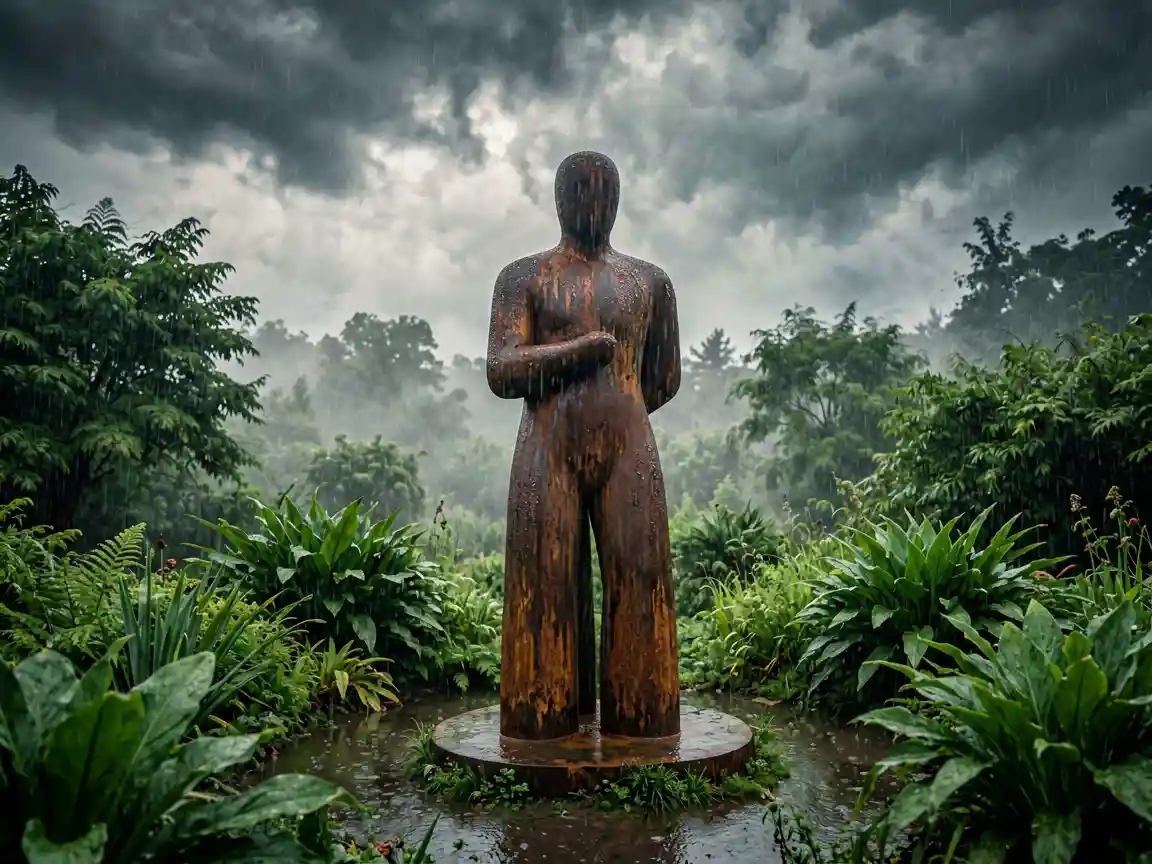
| Corten Steel | 25+ years | Self-protecting rust layer, industrial aesthetic | Rust runoff staining, uneven patina in humid climates |
| Marble/Granite | 100+ years | Timeless, weather-resistant, low maintenance | Heavy, expensive, porous (marble absorbs stains) |
It is important to note that these lifespans assume proper fabrication quality, appropriate material grade selection, and basic routine maintenance. A poorly fabricated sculpture will fail long before its material’s theoretical lifespan.
Environmental Factors That Affect Sculpture Longevity
No two outdoor locations are identical. The following environmental factors have the greatest impact on how long your sculpture will maintain its appearance and structural integrity:
UV Radiatio
Prolonged exposure to sunlight breaks down organic materials. For FRP sculptures, UV radiation causes gel coat fading, chalking, and eventual micro-cracking. Stainless steel and bronze are UV-resistant, though colored PVD coatings on steel can fade over decades. Using UV-stabilized gel coats and clear UV-protective topcoats significantly extends the life of FRP and painted sculptures.
Salt Air (Coastal Environments)
Salt accelerates corrosion dramatically. In coastal installations, standard 304 stainless steel may develop surface pitting within 5–10 years. For coastal locations, we strongly recommend 316L stainless steel (marine grade) which contains molybdenum for superior chloride resistance. Bronze performs excellently in salt air, while FRP is unaffected by salt corrosion.
Temperature Extremes
Repeated freeze-thaw cycles can cause microscopic cracking in porous materials. Metal sculptures expand and contract with temperature changes — proper design accounts for thermal movement with expansion joints and flexible mounting systems. In hot desert climates, dark-colored metal surfaces can reach temperatures exceeding 80°C (176°F), accelerating coating degradation. our the birth of neo spark project
Humidity and Moisture
Consistent high humidity promotes corrosion on ferrous metals and biological growth (moss, algae) on porous surfaces. Proper drainage design — ensuring water cannot pool on horizontal surfaces — is critical for all outdoor sculpture materials. Bronze and stainless steel handle high humidity well, while corten steel may develop an uneven patina in consistently damp conditions.
Wind and Debris
Wind loading is a structural concern for tall or slender sculptures. Proper engineering calculations ensure the sculpture can withstand local wind speeds without stress fractures or fatigue at connection points. Airborne debris and sandblasting effects can erode surface coatings over time, particularly in desert or high-wind areas. For more detail on the production and engineering stages, read How Custom Sculptures Are Made: From Concept to Installation in 10 Steps.
Maintenance Schedule
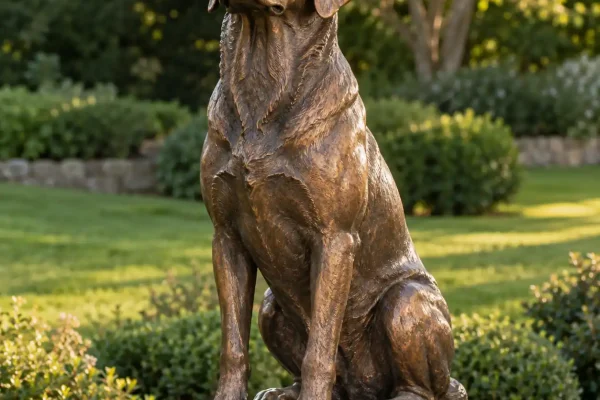
Regular maintenance dramatically extends the life of any outdoor sculpture. Follow this schedule to keep your piece looking its best: our the regal sentinel bronze lion project
Monthly Maintenance
- Visual inspection for visible damage, loose components, or surface abnormalities
- Remove debris, leaves, bird droppings, and nesting materials
- Check for standing water on horizontal surfaces
Quarterly Maintenance
- Gentle cleaning with mild soap and water using soft cloths or sponges
- Inspect mounting hardware, bolts, and anchor points for loosening
- Check for signs of corrosion, rust bloom, or coating failure
- Document any changes with dated photographs for reference
Annual Maintenance
- Deep clean using appropriate materials (pH-neutral cleaner for metal, specialized gel coat cleaner for FRP)
- Reapply protective coatings: wax for bronze, clear coat for corten steel, UV sealant for FRP
- Professional structural inspection including load-bearing welds and foundation conditio
- Touch up any coating damage before it worsens
How to Protect Your Investment
Beyond maintenance, several proactive measures can extend your sculpture’s life:
- Strategic placement: Position sculptures away from sprinkler systems, downspouts, and areas where water pools. Consider partial shade in high-UV environments.
- Quality coatings: Invest in professional-grade protective coatings appropriate for your climate. For coastal areas, industrial-grade marine coatings add years of protection.
- Professional fabrication: Choose a manufacturer with proven expertise in outdoor sculpture fabrication. Proper weld technique, material selection, and surface preparation make the difference between a 20-year sculpture and a 50-year one.
- Documentation: Keep records of materials, coatings, and maintenance history. This information is invaluable when planning future restoration work.
Climate Considerations: Matching Material to Environment
Environmental conditions at your installation site have a dramatic impact on sculpture longevity. Different climates pose different challenges:
| Climate Type | Primary Risk | Best Material Choice | Expected Lifespa |
|---|---|---|---|
| Coastal / Salt Air | Accelerated corrosio | Stainless Steel 316L, Bronze | 25-50 years |
| Desert / High UV | Coating degradation, fading | Corten Steel, FRP with UV coating | 15-30 years |
| Cold / Freeze-Thaw | Moisture penetration, cracking | Stainless Steel, Bronze | 30-60 years |
| Urban / Pollutio | Acid rain damage, staining | Stainless Steel (chemical resistant) | 25-40 years |
| Tropical / High Humidity | Biological growth, coating failure | FRP, Bronze, Powder-coated Steel | 15-25 years |
Discuss your site’s specific conditions with the manufacturer during the design phase. They may recommend material treatments, protective coatings, or design modifications that significantly extend the sculpture’s service life in your environment. our lotus whisper frp fountain sculpture project
Signs Your Sculpture Needs Professional Maintenance
Watch for these warning signs that indicate your sculpture needs expert attention:
- Visible rust or corrosio
on metal surfaces beyond superficial surface rust - Cracking or crazing in FRP gel coat or painted surfaces
- Loose or wobbly mounting indicating foundation or anchor issues
- Patina becoming uneven or blotchy (bronze)
- Delaminatio
where surface layers separate from the substrate - Water infiltratio
signs such as stains, efflorescence, or biological growth
Addressing these issues promptly prevents minor problems from becoming major restoration projects.
Real-World Case Study Examples
Case Study 1: Coastal Stainless Steel Sculpture
A 4-meter abstract stainless steel sculpture installed at a Miami beachfront resort. Fabricated from 316L stainless steel with a brushed satin finish and monthly freshwater rinse maintenance. After 12 years, the sculpture shows minimal surface change — a light even oxidation that actually enhances its aesthetic. Estimated lifespan: 75+ years. The full fabrication workflow, including quality checks at each stage, is detailed in Custom Sculpture Manufacturing: 7-Step Process Guide.
Case Study 2: Urban Bronze Figurative Sculpture
A life-sized bronze figure installed in a Chicago plaza in 2005. Annual wax application and quarterly cleaning have preserved the dark brown patina. Occasional graffiti removal required but no structural issues. Estimated lifespan: 100+ years.
Case Study 3: Desert FRP Monumental Sculpture
An FRP monumental sculpture in Phoenix, Arizona. After 8 years, UV degradation required gel coat refinishing. With UV-stabilized gel coat now in place, refinishing intervals should extend to 12–15 years. Estimated lifespan with proper maintenance: 20+ years.
Frequently Asked Questions
Which material lasts longest outdoors?
Bronze and stone (marble/granite) have the longest proven lifespans at 100+ years, with many historical examples surviving centuries. Stainless steel (316L) follows at 50+ years. FRP has a shorter but respectable lifespan of 15–25 years, with the advantage of being significantly lighter and more affordable.
Do outdoor sculptures need maintenance every year?
At minimum, an annual professional inspection and cleaning is recommended. Bronze sculptures benefit from annual waxing. FRP and painted sculptures may need refinishing every 8–12 years. Stainless steel requires the least maintenance — typically just periodic cleaning.
Can an outdoor sculpture be repaired if it gets damaged?
Yes, most outdoor sculptures can be repaired. Metal sculptures can be rewelded, polished, and refinished. FRP cracks can be filled and recoated. Bronze can be rewelded and repatinated. However, repairs are always more expensive than proper prevention, which is why regular maintenance is so important.
Does warranty cover outdoor sculpture durability?
Most reputable manufacturers, including YSculptures, offer warranties covering fabrication defects and material integrity. Warranty periods vary — typically 5–15 years depending on material and project scope. Ask your manufacturer for specific warranty terms before ordering. Note that warranties typically exclude damage from improper maintenance, vandalism, or extreme weather events.
Ready to invest in a custom outdoor sculpture that will last for generations? Contact YSculptures for expert guidance on material selection and fabrication.
D
Written by David Chen
David Chen is Design Director at Y Sculptures with 18+ years in large-scale sculpture design and fabrication. He specializes in FRP, stainless steel, and bronze sculpture engineering, overseeing design-to-production workflows for theme park attractions, public art installations, and brand IP mascots. David has personally directed over 300 custom sculpture projects for clients across 20+ countries.
Related Projects
Browse real projects matching this topic
Inflatable Sculpture
“The Sky Guardian” — Giant Inflatable Airship Art Installation
IP Sculpture
Panda Mascot – Trendy Art IP Sculptural Realization
Related Insights
Continue reading related articles
Brand Mascot & IP
Oct 13, 2026
Esports Arena & Gaming Venue Sculpture: Landmarks, Trophies & Mascot Statues
Commercial & Hospitality
Oct 13, 2026
Corporate Lobby & Office Sculpture: Commissioning Guide for Developers
Custom Sculpture Insights & Guides
Oct 13, 2026
How Long Do Outdoor Sculptures Last? Material-by-Material Lifespan Guide
Our Sculpture Solutions
Explore our full range of custom sculpture services

IP Character Replication
Beyond 2D: Why IP Replication Drives Brand Engagement A character that lives only on a screen is easy to scroll...
Learn More →
Large Sculpture Custom
Engineering Monumental Scale A sculpture that stands 15 metres tall is not simply a 1.5-metre maquette scaled up ten times....
Learn More →
Original IP Development
From Concept to Icon Most sculpture enquiries begin with a reference: a licensed character, a film hero, an existing artwork...
Learn More →
Solutions Services
One Factory, Every Sculpture Material A sculpture brief rarely arrives pre-sorted by material. A client sends a reference image, a...
Learn More →
Custom Inflatables
Inflatable Sculptures as Brand Media Most sculptural commissions are permanent assets: they are built once, installed once, and admired for...
Learn More →
FRP & Fiberglass Sculpture Manufacturing
Custom FRP and fiberglass sculpture manufacturer - design, fabrication, and finishing.
Learn More →
Stainless Steel & Metal Sculpture Manufacturing
Custom stainless steel, bronze, corten, and aluminum sculpture manufacturer.
Learn More →
Theme Park Sculpture Services – Custom Amusement Park Statues
Custom Theme Park Sculptures – Bringing Imagination to Life Theme parks, amusement parks, zoos, and entertainment destinations thrive on immersive...
Learn More →
Commercial Sculpture Services – Custom Brand Mascots & Mall Art
Custom Commercial Sculptures – Elevate Your Brand & Space In today's competitive retail and commercial environment, first impressions matter. Commercial...
Learn More →