Inflatable Sculpture

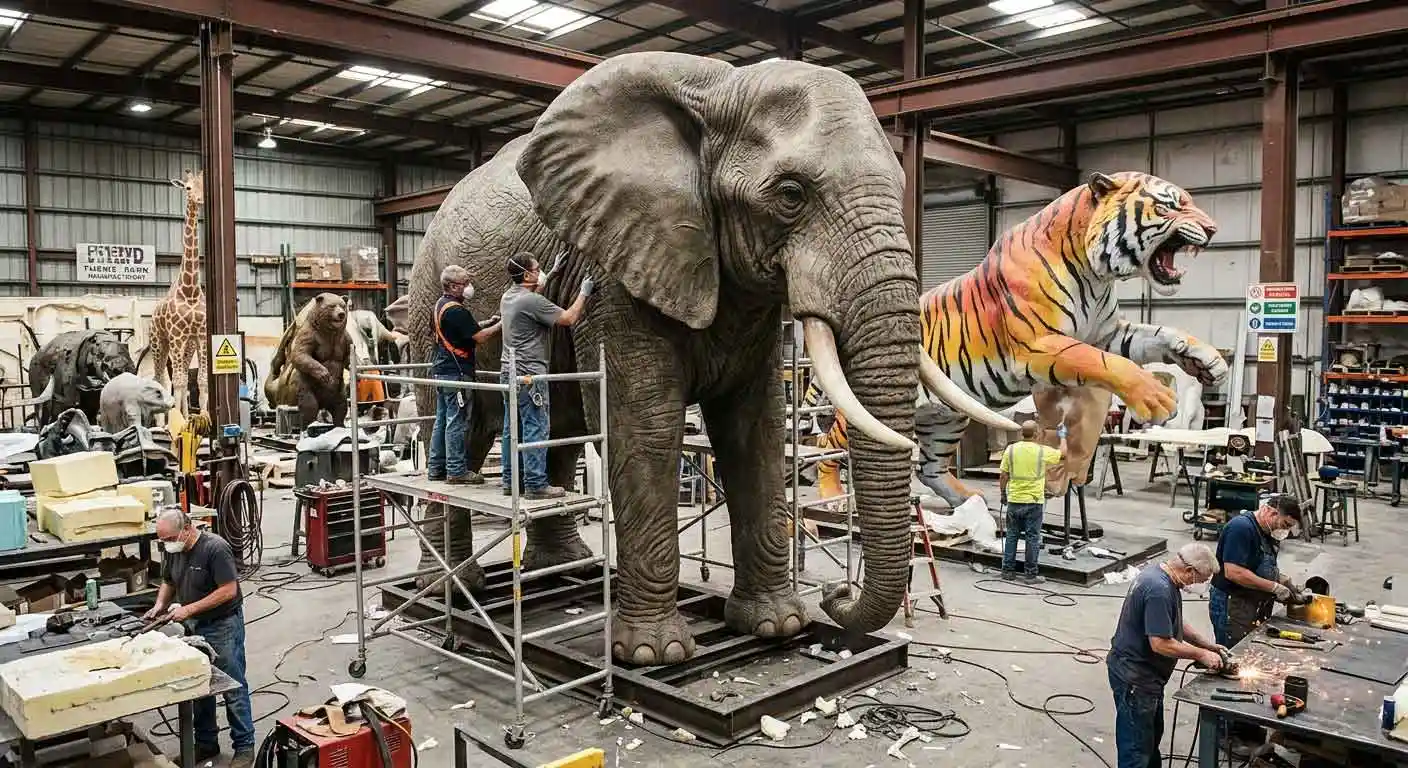
Giant animal sculptures are among the most visually impactful elements in theme parks, zoos, water parks, and family entertainment centers. A larger-than-life gorilla looming over a jungle-themed area, a colossal fiberglass dinosaur at the entrance of a prehistoric exhibit, or a photorealistic whale breaching beside a splash zone — these monumental animal forms create instant landmarks, drive visitor engagement, and reinforce thematic storytelling.
For park designers, developers, and attraction owners, commissioning a giant animal sculpture for theme park use requires careful consideration of materials, structural engineering, weather resistance, and theming integration. This guide covers everything you need to know about designing, manufacturing, and installing custom large-scale animal sculptures.
Animal sculptures at monumental scale serve multiple functions beyond decoration:
From towering large fiberglass animal statues to polished stainless steel forms, the material choice directly affects the sculpture’s appearance, durability, and cost.
FRP fiberglass sculpture manufacturing is the most common method for large animal sculptures due to its unique combination of properties. FRP is lightweight (important for structural loading on buildings or themed structures), corrosion-proof, paintable in any color and texture, and cost-effective at scale. It can replicate organic forms — fur texture, scales, wrinkles — with remarkable fidelity.
For fiberglass animal statues for commercial use, the fabrication process involves creating a precise sculpted clay or foam maquette, taking a mold from it, and laying up fiberglass mat and resin within the mold. The resulting hollow shell is lightweight yet strong, with internal steel armature for structural rigidity.
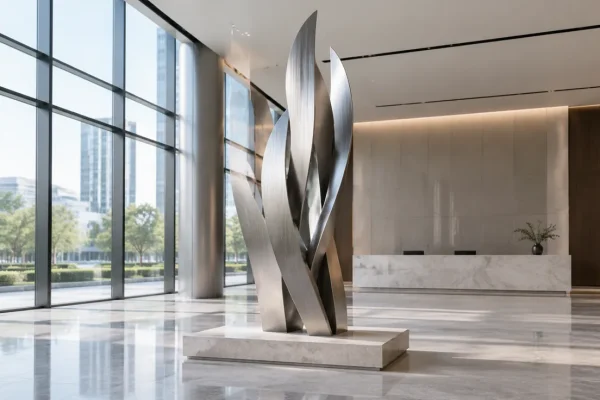
For a more contemporary or premium aesthetic, stainless steel offers unmatched durability and a striking visual presence. Mirror-polished stainless steel animal sculptures create dramatic reflections and blend into modern park environments. Steel is heavier and more expensive than FRP but offers a distinctly different design language.
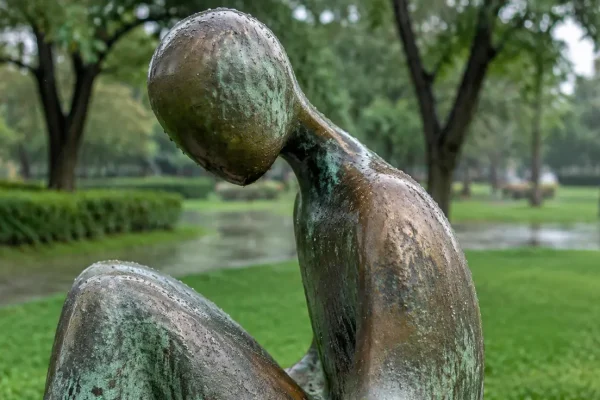
Bronze is typically reserved for smaller-scale or highly detailed life-size animal sculpture custom pieces, particularly in premium settings like zoo entryways or memorial installations. Bronze offers exceptional detail retention and develops a beautiful natural patina over time.
Glass-fiber-reinforced concrete is used for ultra-durable installations where a stone-like appearance is desired. It is heavy and requires substantial foundations but offers extreme weather resistance and a natural rock texture.
Every giant animal sculpture begins with research. Our team studies reference photography, anatomical drawings, and, where possible, real animals to ensure accurate proportions and characteristic poses. For fantasy or stylized creatures, we work from concept art and design briefs to capture the intended aesthetic — whether cartoonish, hyper-realistic, or abstracted.
During this phase, scale is a critical decision. A giant animal sculpture for theme park installation must be sized appropriately for its setting: large enough to read from a distance, but not so large that it overwhelms adjacent structures or sightlines. We use 3D modeling to preview the sculpture in context, helping clients visualize the final piece within their space.
Once the concept is approved, we create a detailed 3D digital model. This serves multiple purposes:
For theme park sculpture services, structural engineering is especially critical. Park sculptures must withstand high wind loads, seismic activity, temperature extremes, and potential climbing impact from visitors. We engineer all pieces to meet or exceed local building codes. Our manufacturing guide — How Custom Sculptures Are Made: From Concept to Installation in 10 Steps — covers everything from mold-making to final finishing.
For FRP sculptures, a full-scale or scaled maquette is sculpted in clay or foam. This physical model allows final refinement of form, texture, and proportion before mold-making. For highly detailed pieces, the maquette may include every scale, feather, or fur ridge.
A production mold is taken from the finished maquette. For large sculptures, this is typically a multi-piece mold that can be disassembled for part removal. Fiberglass layers — mat, woven roving, and surfacing veil — are hand-laid within the mold with catalyzed polyester or epoxy resin. Internal reinforcement (steel or aluminum armature) is integrated during lay-up. The finished parts are demolded, trimmed, and prepared for assembly.
Individual FRP sections are assembled and bonded. Seams are filled, sanded, and blended to create a seamless surface. Painting is a multi-stage process: primer, base coat, detailed airbrushing for realistic coloration, and clear protective topcoat. For outdoor installations, we use UV-stable, marine-grade paints formulated for long-term color retention.
Large sculptures are crated in modular sections with foam padding and bracing. Our team provides on-site installation supervision, ensuring proper assembly, anchoring, and final touch-up. Many of our theme park projects are visible on our portfolio, demonstrating installations across Asia, the Middle East, Europe, and the Americas.
| Consideratio | Why It Matters | Our Approach |
|---|---|---|
| Weather resistance | Outdoor sculptures face sun, rain, heat, cold, and humidity year-round | Marine-grade gel coats, UV-stable paints, stainless steel fasteners |
| Visitor interactio | Guests may touch, climb, or lean on the sculpture | Reinforced load-bearing zones, smooth seams, no sharp edges |
| Fire safety | Theme parks require fire-rated materials | Fire-retardant resin systems, compliant with local codes |
| Modular desig | Large pieces must fit through doors, be transported on trucks | Engineered break-down into transportable sections |
| Color permanence | Vivid colors must not fade in intense sun exposure | Automotive-grade paints with UV stabilizers and clear coat |
With extensive experience delivering giant animal sculptures for theme parks worldwide, Y Sculptures offers an unmatched combination of artistic capability and industrial manufacturing scale. Our 200,000-square-foot facility allows us to fabricate multiple monumental sculptures simultaneously, while our in-house design team ensures every piece meets the creative vision and structural requirements of your project. We walk through the complete fabrication process in our manufacturing guide: Custom Sculpture Manufacturing: 7-Step Process Guide.
From large fiberglass animal statues to life-size animal sculpture custom commissions, we deliver turnkey solutions — from concept through installation — backed by a commitment to quality that has made us a trusted partner for theme parks, zoos, and entertainment destinations globally.
Contact Y Sculptures to discuss your next giant animal sculpture project, or browse our theme park portfolio for inspiration.
Learn more about our large custom sculpture projects and how we can help with your project.
David Chen is Design Director at Y Sculptures with 18+ years in large-scale sculpture design and fabrication. He specializes in FRP, stainless steel, and bronze sculpture engineering, overseeing design-to-production workflows for theme park attractions, public art installations, and brand IP mascots. David has personally directed over 300 custom sculpture projects for clients across 20+ countries.
Browse real projects matching this topic
Continue reading related articles
Explore our full range of custom sculpture services

Beyond 2D: Why IP Replication Drives Brand Engagement A character that lives only on a screen is easy to scroll...
Learn More →
Engineering Monumental Scale A sculpture that stands 15 metres tall is not simply a 1.5-metre maquette scaled up ten times....
Learn More →
From Concept to Icon Most sculpture enquiries begin with a reference: a licensed character, a film hero, an existing artwork...
Learn More →
One Factory, Every Sculpture Material A sculpture brief rarely arrives pre-sorted by material. A client sends a reference image, a...
Learn More →
Inflatable Sculptures as Brand Media Most sculptural commissions are permanent assets: they are built once, installed once, and admired for...
Learn More →
Custom FRP and fiberglass sculpture manufacturer - design, fabrication, and finishing.
Learn More →
Custom stainless steel, bronze, corten, and aluminum sculpture manufacturer.
Learn More →
Custom Theme Park Sculptures – Bringing Imagination to Life Theme parks, amusement parks, zoos, and entertainment destinations thrive on immersive...
Learn More →
Custom Commercial Sculptures – Elevate Your Brand & Space In today's competitive retail and commercial environment, first impressions matter. Commercial...
Learn More →