Custom Bronze Memorial Statue — A Lasting Garden Tribute
Public Art
1. Project Background
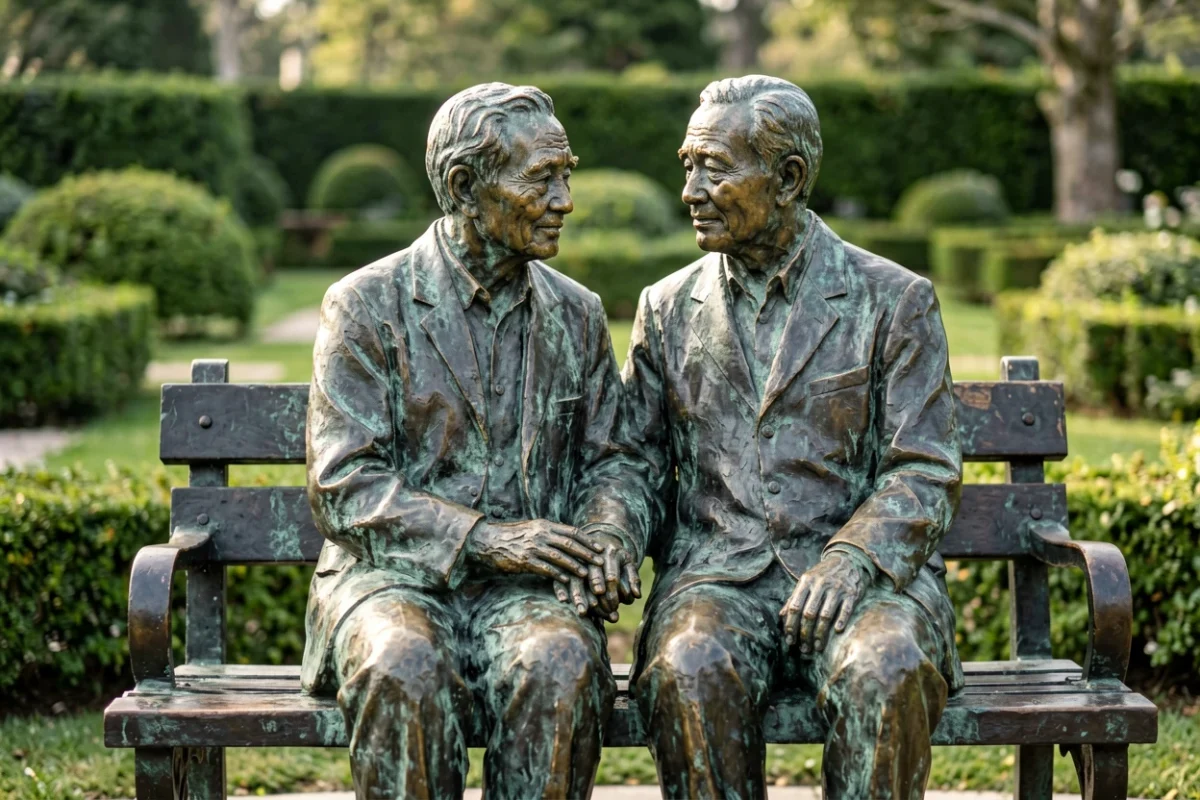
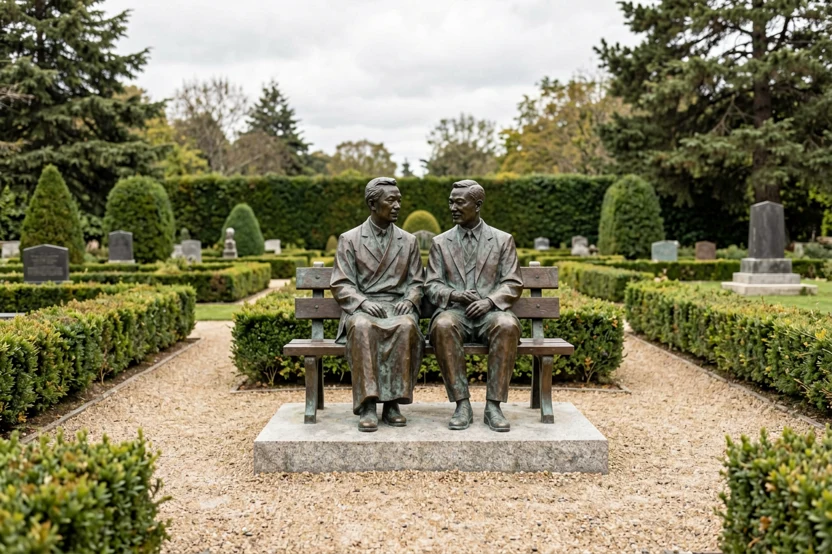
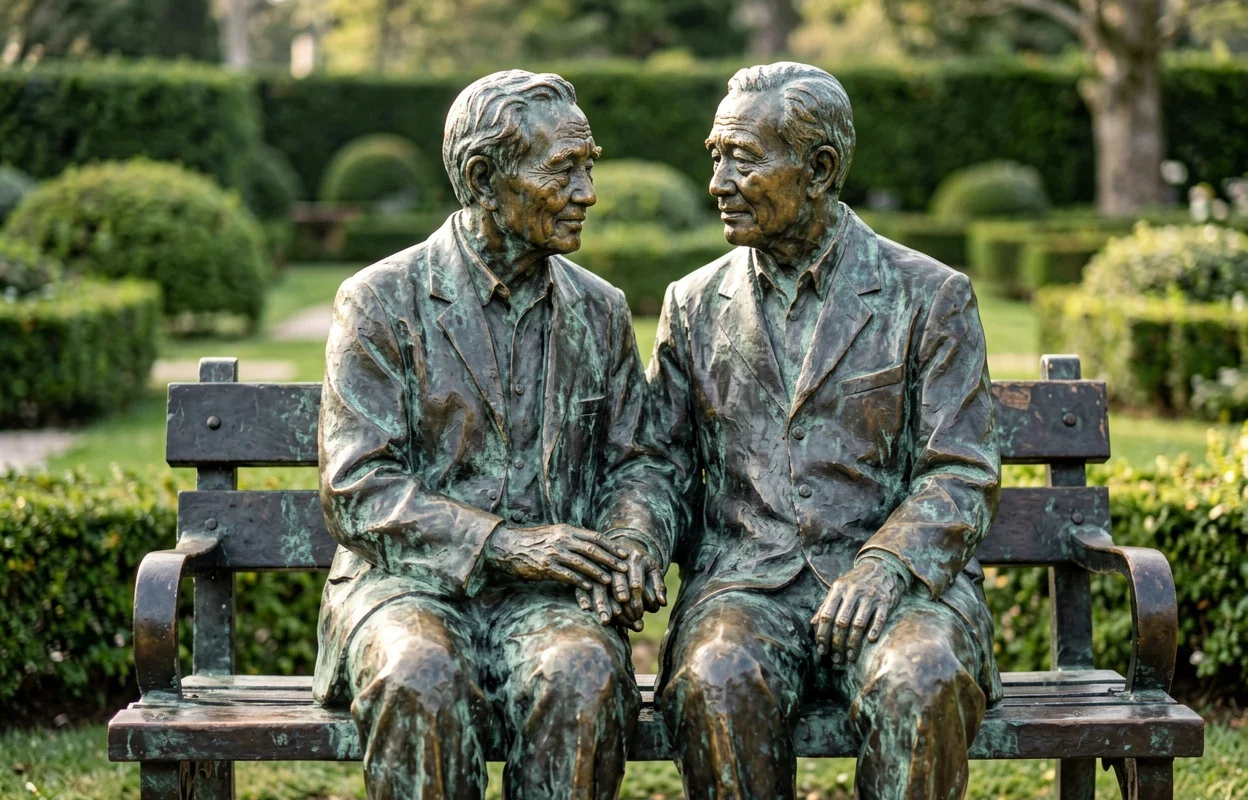
This custom bronze memorial statue was commissioned by a family to honor their late parents on a private estate. Unlike a conventional headstone, they wanted a warm, life-affirming figure set within a garden they could visit daily. Working closely with the family and their landscape architect, we designed a pair seated on a shared bench — a moment of quiet companionship that captures the relationship at its most gentle.
2. Key Features
- Material:Premium bronze (CuSn12), traditional lost-wax casting
- Finish: Hand-applied natural patina with protective wax sealant
- Height: 1.6 meters — intimate, garden-appropriate scale
- Base: Reinforced bronze plinth with ground anchoring system
- Weathering: Patina stabilizes and deepens outdoors, designed for decades
- Personalization: Portrait likeness, engraved names and dates on plinth
3. Design & Sculpting
The portrait likeness was developed from family photographs. Our sculptors worked in clay at full size, refining the facial features and the natural resting pose until the gesture felt right. The family approved a clay maquette before any metalwork began — a standard step in every custom memorial commission.
4. The Casting Process
Once the clay master was approved, we produced a silicon mold and a wax positive, invested it in ceramic shell, and cast the bronze at 1150°C. After cooling and chasing (filing, blending, and refining weld seams), the patina was applied by hand in layers before the wax sealant set — a process documented in our lost-wax casting guide.
5. Installation & Aftercare
The completed sculpture was crated, shipped, and installed by our team on a reinforced base. The client receives a maintenance guide covering seasonal cleaning and wax renewal. For families considering a comparable commission, see our memorial & monument manufacturing guide.
Why Bronze for a Memorial Commission
Bronze is the traditional material for a memorial figure, and at 38,000 USD for a 160cm piece the cost sits where a family expects it to. The material choice here is less about durability — although bronze weathers well outdoors — and more about how it handles a human likeness. A cast surface holds expression, and the hand-patinined finish can be adjusted until the face reads correctly.
CuSn12 with lost-wax casting was specified, which is the alloy and process used for public monument work. It takes a patina that deepens over years rather than degrading, and it can be repaired locally if the piece is ever struck — a real consideration for something intended to remain on the estate.
The Design Brief: Companionship Rather Than Portrait
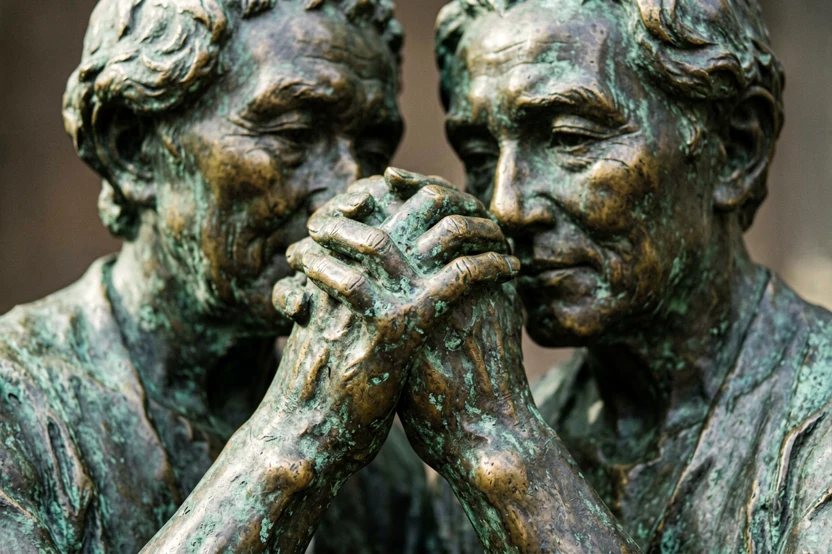
The family asked for something different from a headstone, and the concept came out of that conversation: two figures on a shared bench rather than a single formal portrait. The gesture does the emotional work, and it is the reason the piece works as a garden feature rather than a memorial marker.
Working with the landscape architect was part of the brief rather than a later coordination step. A bench-height piece in a private garden has to sit in the planting and the paving as part of the composition, and the final position was settled against the garden layout rather than in isolation.
Foundry Work & Finishing
Lost-wax casting means the sculpt is modelled in wax, then burnt out and cast in bronze — a process that allows fine detail in the hands, the drapery, and the facial modelling. For a figure at this scale the pattern work and the chasing are where the quality of the result is actually decided.
Patination is applied by hand and sealed after. Because this piece will be looked at daily, the finish matters in a way it might not for a purely public work — the family chose a warm tone against the bronze rather than a green, and the sealed surface holds that tone without the streaking that an unseated patina develops.
Installation on a Private Estate
At bench height the piece is set directly on a prepared foundation, and the base detail is designed to be invisible so the figures appear seated on the ground rather than on a plinth. On a private estate the installation is discreet and the site is not a public space, so the practical constraints are ground conditions rather than public access.
The eighteen-week schedule from design to installation includes the family’s approval stages. For a memorial commission that review is genuinely part of the process, and it is worth building the time into the schedule rather than compressing it.
Long-Term Care
Bronze in a garden needs little. The patina will continue to settle over the first few years, and annual washing with mild soapy water keeps it moving in the right direction. The main ongoing item is the foundation — a bench-height mass on a private estate will move if the ground beneath it settles, and the joint at the base should be inspected each year.
We also recommend the estate’s grounds team has the cleaning method in writing. A memorial piece will be cleaned as part of normal garden maintenance, and knowing that the finish should be washed rather than pressure-washed is a small thing that prevents an avoidable problem.
Project Gallery