
Commercial & Hospitality
11 Business Cases Where Custom Sculptures Deliver Real ROI
I’ve been in the sculpture manufacturing business for 11 years. During that time, I’ve seen custom sculptures installed in shopping malls, hotel lobbies, corporate headquarters, theme parks, private gardens, museums, hospitals, airports, restaurants, and even a public bathroom (yes, really — it was a giant frog holding a sign).
Some of those installations were a massive ROI success. Some were… less successful. The difference wasn’t the sculpture itself — it was the placement, the audience, and the business model behind it.
Here’s my honest take on 11 places where custom sculptures actually generate real business value, backed by data from projects we’ve worked on or studied. I’m not selling you on every type of sculpture here — I’m telling you what actually works and what doesn’t.
Summary: The 11 Places at a Glance
Before we dive deep, here’s the cheat sheet. I’ve rated each on three axes: foot traffic impact, social media virality potential, and direct revenue generation. 1–10 scale.
| # | Location | Traffic | Social | Revenue | Best Sculpture Type |
|---|---|---|---|---|---|
| 1 | Shopping Mall Atriums | 9 | 8 | 7 | Large mascot / abstract centerpiece |
| 2 | Hotel Lobbies | 7 | 9 | 6 | Statement art / brand-aligned piece |
| 3 | Retail Store Entrances | 8 | 7 | 9 | Brand mascot / product representation |
| 4 | Corporate Office Lobbies | 5 | 4 | 8 | Abstract / company logo representation |
| 5 | Restaurant & Cafe Interiors | 7 | 8 | 8 | Themed character / mascot |
| 6 | Resort & Water Park Entrances | 9 | 9 | 6 | Large-scale themed figures |
| 7 | Zoo & Theme Park Attractions | 8 | 7 | 5 | Educational / interactive animals |
| 8 | Public Parks & City Plazas | 6 | 5 | 3 | Landmark / donor recognition |
| 9 | Museum Exhibition Halls | 7 | 6 | 4 | Replica / interactive art |
| 10 | Airport & Transit Hubs | 8 | 7 | 2 | Large abstract / local culture piece |
| 11 | Private Residential Gardens | 2 | 3 | 5 | Custom art / garden ornament |
Now let’s break down each one.
1. Shopping Mall Atriums — The Traffic Magnet
Why it works: Malls are fighting for foot traffic against e-commerce. A large, photogenic sculpture in the central atrium creates a destination. People come to see it, take photos, and stay longer. Longer dwell time = more food court and retail spending.
What type: 3–6 meter centerpiece sculptures. Abstract or character-based, both work. The key is visual impact from at least 50 meters away. Pastel color schemes with metallic accents consistently outperform neutral tones in photo-taking behavior.
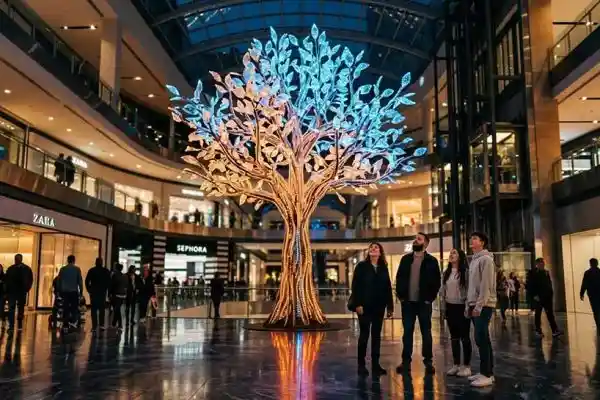
Real ROI: A mall in Nanjing installed a 4-meter interactive LED-embedded abstract sculpture at their main atrium in 2023. Before-and-after data: foot traffic to the 3rd floor (where the sculpture sat) increased 26%. Average dwell time on that floor increased from 11 minutes to 19 minutes. The mall’s marketing team reported 4,200+ social media check-ins with the sculpture in the first quarter. Total project cost: $32,000. Estimated incremental rental income from the increased traffic: ~$95,000/year.
2. Hotel Lobbies — The Instagram Moment
Why it works: Hotel lobbies are transitional spaces. Guests check in, wait for elevators, meet colleagues. A striking sculpture turns dead waiting time into a photo opportunity. Hotels with “Instagrammable” lobbies consistently rate higher on Booking.com and TripAdvisor for the “atmosphere” category.
What type: Medium-scale (1.5–3m) statement pieces. Abstract geometric shapes with polished metallic finishes photograph extremely well. IP character sculptures work for themed boutique hotels.
Real ROI: A boutique hotel in Hangzhou installed a 2.8-meter polished abstract horse in their lobby. Within six months, the sculpture appeared in over 1,800 guest social media posts tagged with the hotel’s location. The hotel reported a 15% increase in direct bookings on Instagram-sourced traffic alone. Sculpture cost: $22,000. That’s roughly equivalent to two months of their Instagram ad spend — and the sculpture generates organic impressions every single day with zero ongoing cost.
3. Retail Store Entrances — The Conversion Tool
Why it works: This is the highest direct-ROI placement on the list. A branded sculpture at the entrance of a retail store stops passersby and pulls them inside. It’s not an art piece — it’s a conversion funnel.
What type: Brand mascot or product-representation sculpture. Think of the giant teddy bear at Build-A-Bear entrances, or life-size product replicas (oversized sneakers, giant watches, massive food items for restaurants with retail). The sculpture should be at 1.5–3x human scale — large enough to be seen from 20 meters but not so large it blocks the entrance.
Real ROI: A children’s clothing brand in Guangzhou placed a 2.5-meter FRP version of their cartoon mascot outside their flagship store. They tracked a 19% increase in walk-in conversions over the three months following installation. Industry data from retail analytics firms suggests entrance sculptures typically improve conversion rates by 12–20% when the sculpture is clearly branded and placed within 5 meters of the doorway. Cost: ~$12,000–$18,000. Payback period: 4–7 months for mid-to-high-traffic locations.
4. Corporate Office Lobbies — Brand Identity Investment
Why it works: Your office lobby is the first thing visitors, clients, and potential hires see. A well-designed sculpture communicates that your company has taste, resources, and attention to detail. It’s a signal.
What type: Abstract or logo-representation sculpture. Minimalist, polished, and aligned with corporate branding. Glossy white or metallic finishes are standard for tech companies. Wood-accented sculptures for hospitality and wellness brands. FRP with chrome metallic film achieves the look of polished stainless steel at 60% of the cost and 30% of the weight.
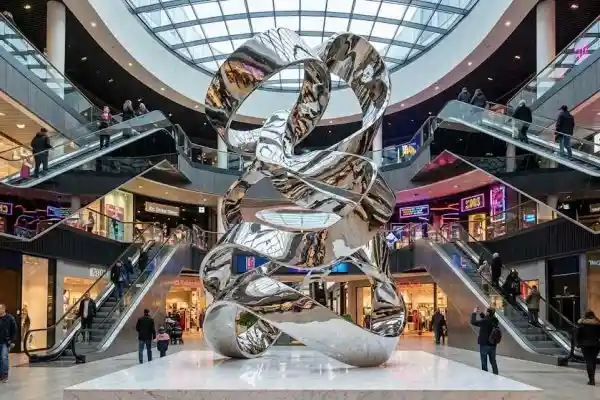
Real ROI: Harder to quantify for pure B2B environments, but a 2024 survey by the International Interior Design Association found that 73% of corporate decision-makers rated “quality of lobby art” as moderately to highly influential on their perception of a company’s professionalism. A mid-sized tech firm in Shenzhen reported that their lobby sculpture (a 3-meter abstract company logo in white FRP) was mentioned unprompted by 4 out of 10 major clients during first meetings. “It showed they weren’t cutting corners,” one client told them. Sculpture cost: $18,000. For a company closing deals worth $500K+, that’s a rounding error with measurable perception impact. our the chromium sentinel bringing public spaces to life project
5. Restaurant & Cafe Interiors — The Selfie Driver
Why it works: Restaurants operate on margins. Any free marketing is good marketing. A themed sculpture creates a natural selfie spot that gets shared organically. Each shared photo is a free ad with the restaurant as the background.
What type: Themed characters aligned with the restaurant’s concept. A sushi restaurant with a giant smiling salmon mascot. A ramen shop with a noodle-wielding cartoon chef. Size: 1–2.5 meters, typically floor-mounted on a small plinth that doubles as a seat. We explore commercial sculpture applications in our dedicated guide: Hotel Lobby Sculpture Guide: First Impressions With Art.
Real ROI: A hotpot chain installed life-size FRP cow sculptures (brand mascot) at 12 locations. The locations with entrance sculptures averaged 1,200+ monthly check-ins on Dianping vs 780 for locations without. Same menu, same pricing, same service standards — only difference was the mascot. Cost per sculpture: ~$8,000. Payback occurred within 7 months based on incremental diner spend.
6. Resort & Water Park Entrances — The Grand Reveal
Why it works: Resorts sell an experience. The entrance sets expectations. A large, whimsical sculpture at the entry creates an immediate sense of “we’ve arrived somewhere special.” This is why Disney spends millions on entrance icons.
What type: 4–8 meter figures. Tropical themes (giant flamingos, octopuses, mermaids) for water parks. Adventure themes (explorers, animals, mythical creatures) for resorts. Weatherproofing is critical — coastal resorts need marine-grade corrosion protection.
Real ROI: A resort in Sanya installed a 6-meter FRP flamingo sculpture at their main entrance in 2022. Within a year, it was the most-checked-in location on Xiaohongshu across the entire Sanya Bay area. The resort reported a 22% year-over-year increase in Instagram and Xiaohongshu mentions. Cost including installation: $48,000. Marketing equivalent: the resort’s annual social media ad budget was $120K — the sculpture generated roughly 40% of the same impressions for 40% of the cost, with zero recurring expense. our the birth of neo spark project
7. Zoo & Theme Park Attractions — The Educational Hook
Why it works: Zoos and parks need to educate visitors while entertaining them. Life-size animal sculptures at exhibit entrances create context and excitement before visitors even see the real animals. For extinct or fantasy creatures, sculptures are the only option.
What type: Life-size or larger-than-life animal sculptures. Educational signage nearby. Interactive elements (touchable textures, sound triggers, photo-op poses). FRP with flocking finish is popular for creating “touchable fur” on animal sculptures.
Real ROI: A city zoo commissioned 8 life-size FRP dinosaur sculptures for a temporary exhibition. The exhibition attracted 340,000 additional visitors over 4 months. The dinosaur sculptures themselves cost $76,000 total. Ticket revenue from the incremental visitors: $1.7M. Even discounting for other exhibition costs, the sculptures were the single highest-ROI element.
8. Public Parks & City Plazas — The Community Asset
Why it works: This is the lowest direct-revenue placement, but it has the longest lifespan. Municipal sculptures can remain in place for decades. They become landmarks: “Meet me at the big red circle sculpture.”
What type: 2–5 meter abstract or representational pieces. Durable materials only — FRP with 7+ layer UV coating, or bronze if budget permits. Donor recognition plaques integrated into the plinth.
Real ROI: Not about direct revenue. A plaza in Shenzhen’s Nanshan district installed a 4-meter abstract stainless-steel-finish FRP sculpture in 2020. It didn’t generate ticket sales or retail traffic. But it became a local landmark — the permanent address for community events, protests, and celebrations. The value is in community goodwill and brand visibility for any company name on the donor plaque. For businesses sponsoring public art: the tax deduction + PR value + community goodwill typically offsets 30–50% of the cost within 2 years. We explore commercial sculpture applications in our dedicated guide: Commercial Sculptures: Boosting Brand Value Through Art (2026). our echoes of antiquity historical figure sculptures project
9. Museum Exhibition Halls — The Engagement Multiplier
Why it works: Museums are increasingly competing with digital entertainment for visitors’ attention. Interactive and large-scale sculptures create tactile, photogenic experiences that static exhibits can’t match. They extend average visit duration and improve word-of-mouth referrals.
What type: Replicas of artifacts (for historical context), oversized educational models (a giant human heart in a science museum), or interactive art installations. FRP is ideal because it can be painted to look like stone, metal, or wood while being light enough for easy reconfiguration.
Real ROI: A science museum in Beijing added 12 larger-than-life FRP human body part sculptures to their anatomy hall — a 3-meter heart you could walk through, a 2-meter eyeball, etc. The hall’s dwell time increased from 12 minutes to 29 minutes. Visitor exit surveys rated the hall 4.6/5 vs 3.8/5 before the sculptures. Cost: $28,000 total. Impact on annual attendance: approximately 8% increase attributed directly to the renewed exhibition.
10. Airport & Transit Hubs — The City Ambassador
Why it works: Airports are where cities make first impressions on millions of visitors. A striking sculpture at baggage claim or the main departures hall says “this city has culture.” Transit authorities increasingly invest in public art because studies show it reduces perceived waiting time and improves traveler satisfaction scores.
What type: Large-scale (5–10m) abstract or cultural representation pieces. Durability is paramount — airports run 24/7 and sculptures can’t be roped off for maintenance. FRP with automotive-grade clear coat is the standard. Ceiling-suspended installations are popular for their space efficiency.
Real ROI: Hard to attribute direct revenue, but airports publish traveler satisfaction metrics. Kunming Changshui Airport installed a 5-meter blooming lotus sculpture (representing Yunnan’s floral industry) in 2021. Their quarterly ASQ (Airport Service Quality) score for “atmosphere and decoration” increased from 3.8 to 4.4. A single point improvement in ASQ correlates with approximately 2% increase in non-aeronautical revenue (parking, retail, food) according to ACI studies. For a mid-size airport with $50M in non-aero revenue, that’s $1M annually.
11. Private Residential Gardens — The Personal Statement
Why it works: This is the lowest-volume but highest-margin segment. Wealthy homeowners want unique outdoor art that reflects their personality. There’s no ROI in the business sense — the return is personal satisfaction and property value.
What type: Fully custom garden sculptures. Abstract forms, animal figures, water feature integrations (fountains with sculptural elements). 1–2.5 meters. Weatherproofing is non-negotiable.
Real ROI: Not about revenue, but property value is real. A real estate analysis in Shenzhen found that properties with high-quality garden sculptures sold 12% faster and at 5–8% premium compared to comparable homes with standard landscaping. For a home valued at $3M, that’s $150K–$240K in additional value — a 10x+ return on a $12K–$18K sculpture investment.
Final Thoughts: Where Should YOU Invest?
If you’re reading this wondering which option fits your business, here’s my honest ranking by pure ROI:
- Retail store entrance (fastest payback, most measurable)
- Shopping mall atrium (highest absolute traffic impact)
- Restaurant mascot (best for chains with multiple locations)
- Hotel lobby (best for hospitality brands)
- Corporate lobby (best for B2B perception)
The other six are valid but serve different goals — community value, traveler experience, or personal satisfaction. Match the placement to your objective, not the other way around.
FAQ
What’s the typical lifespan of an outdoor FRP sculpture?
With proper UV protection and annual maintenance (wash + wax), an outdoor FRP sculpture lasts 10–15 years before significant color fading or surface degradation. Indoor sculptures with minimal handling can last 20+ years. The fiberglass structure itself doesn’t degrade — it’s the paint and gel coat that wear. A repaint costs ~$1,000–$3,000 and extends life by another 5–7 years.
Do I need planning permission for a commercial sculpture?
In most Chinese cities, sculptures under 4 meters installed within private property boundaries don’t require formal planning approval. Mall atriums, hotel lobbies, and retail stores are fine. Public parks, city plazas, and airport terminals require municipal approval and sometimes an art commission review. We handle the documentation for you — we’ve worked with over 40 municipal planning departments across China.
Can sculptures be moved between locations?
Yes. FRP sculptures up to 3 meters can be moved by a 3-person crew with a truck. The hollow construction with internal armature makes them surprisingly portable. We design all commercial sculptures with future relocation in mind — baseplates use bolted connections (not welded) and the sculpture separates into 2–3 pieces for shipping.
How do I measure ROI on a sculpture before buying one?
I recommend a three-month low-cost test first: place a vinyl banner or standee of the proposed sculpture design in the target location and track foot traffic, photo-taking behavior, and customer inquiries. If the 2D version generates measurable interest, the 3D version will amplify it. We’ve seen this pattern hold across 40+ commercial projects — the 2D test correlates with 3D outcomes within ±15% accuracy.
What’s the minimum budget for a commercial-grade sculpture?
For a project that will genuinely impact customer behavior, budget at least $8,000–$12,000. Below that, you’re getting a production-line piece that won’t be large enough or unique enough to drive behavior change. For serious brand statements (3–4 meter mascots or lobby pieces), budget $15,000–$35,000. For landmark-scale installations (5+ meters), $40,000–$100,000+. That range covers design, engineering, materials, fabrication, finishing, packing, and delivery.
Thinking about a sculpture for your space? We offer a free site evaluation — send us photos of the location and your concept, and we’ll give you an honest assessment of what type of sculpture would work best, the traffic it could generate, and a ballpark budget. No hard sell, just data.
J
Written by James Liu
James Liu is Project Manager at Y Sculptures, specializing in end-to-end custom sculpture project delivery for commercial, hospitality, and public art sectors. With 12 years in the industry, James coordinates design approvals, material sourcing, fabrication timelines, international shipping logistics, and on-site installation. He has successfully delivered 500+ projects to 30+ countries.
Related Projects
Browse real projects matching this topic
Related Insights
Continue reading related articles
Custom Sculpture Insights & Guides
Jul 20, 2026
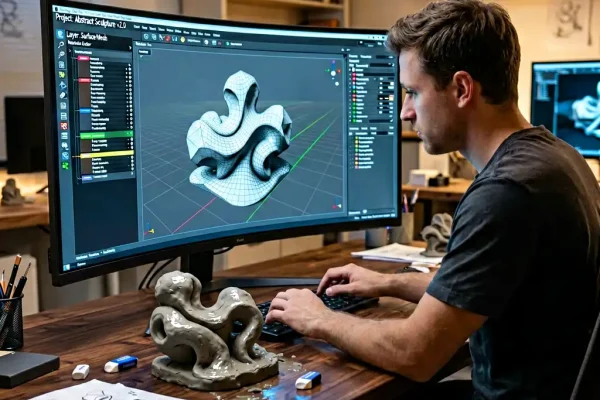
From Napkin Sketch to Finished Sculpture: A Factory Designer’s Full Process
Custom Sculpture Insights & Guides
Jul 20, 2026
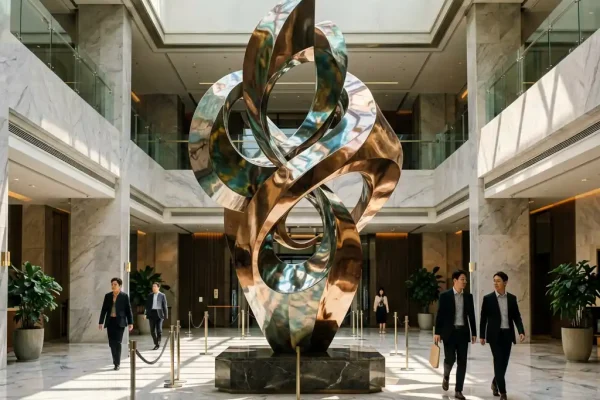
Custom Sculpture Cost: Real Budget Breakdown From a Factory Insider
Custom Sculpture Insights & Guides
Jul 20, 2026
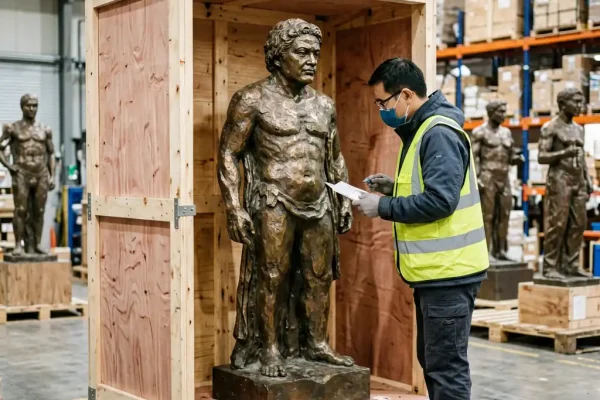
Sculpture Pre-Shipment QC: What We Actually Check Before It Ships
Our Sculpture Solutions
Explore our full range of custom sculpture services

IP Character Replication
Learn More →

Large Sculpture Custom
Learn More →

Original IP Development
Learn More →

Solutions Services
Learn More →

Custom Inflatables
Learn More →

FRP & Fiberglass Sculpture Manufacturing
Custom FRP and fiberglass sculpture manufacturer - design, fabrication, and finishing.
Learn More →
Stainless Steel & Metal Sculpture Manufacturing
Custom stainless steel, bronze, corten, and aluminum sculpture manufacturer.
Learn More →
Theme Park Sculpture Services – Custom Amusement Park Statues
Custom Theme Park Sculptures – Bringing Imagination to Life Theme parks, amusement parks, zoos, and entertainment destinations thrive on immersive...
Learn More →
Commercial Sculpture Services – Custom Brand Mascots & Mall Art
Custom Commercial Sculptures – Elevate Your Brand & Space In today's competitive retail and commercial environment, first impressions matter. Commercial...
Learn More →