
Custom Sculpture Insights & Guides
International Sculpture Sourcing from China: Customs, Shipping
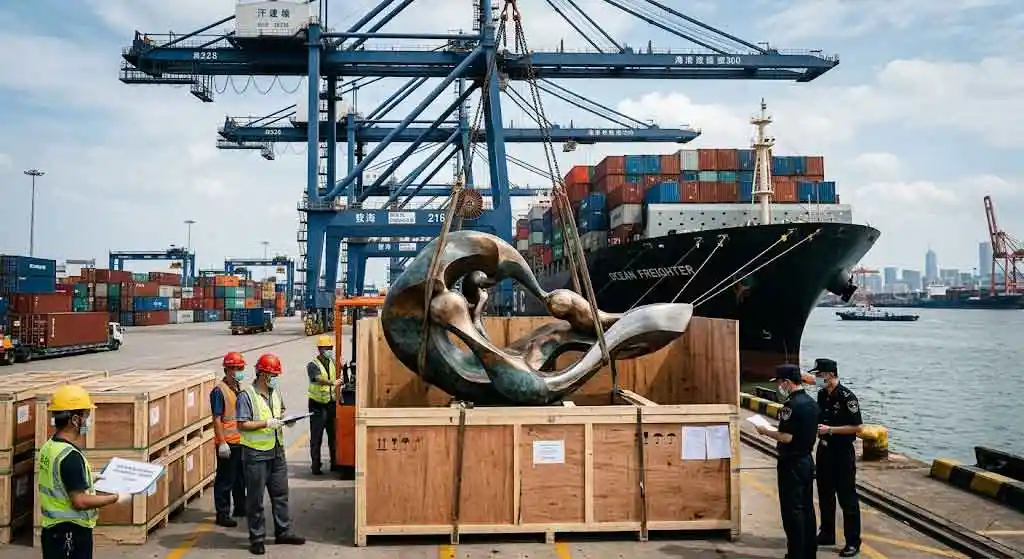
China is the world’s largest producer of custom sculptures, with thousands of specialized foundries and fabrication facilities serving international buyers. For procurement professionals, sourcing from Chinese manufacturers offers compelling advantages: competitive pricing, broad material expertise (FRP, stainless steel, bronze, stone), and the ability to produce large-scale works that would be cost-prohibitive in Western markets. Read our sculpture project risk management guide
However, international sourcing introduces complexities in logistics, customs compliance, quality assurance, and contract terms that domestic procurement does not. This guide covers the essential knowledge for successfully importing custom sculptures from China—from the factory floor to final installation.
Shipping Process Overview
Importing a custom sculpture from China typically follows a six-stage process:
- Pre-Production & Quality Planning — Material selection, prototype approval, and inspection schedule agreed between buyer and manufacturer.
- Fabrication & In-Process QC — The manufacturer builds the sculpture with agreed checkpoints (raw material inspection, weld/finish inspection, surface finish approval).
- Pre-Shipment Inspectio
— A third-party inspector or buyer’s representative examines the completed sculpture against approved samples and specifications. - Crating & Documentatio
— The sculpture is professionally crated, fumigated if required (ISPM-15), and all export documentation is prepared. - International Shipping — Typically sea freight via FCL (Full Container Load) or LCL (Less than Container Load) to the destination port.
- Customs Clearance & Last-Mile Delivery — The shipment is cleared through destination customs, duties are paid, and the crate is delivered to the installation site or a local warehouse.
Customs Documentation Checklist
Missing or incorrect paperwork is the leading cause of customs delays and penalties. Ensure the following documents are prepared:
- Commercial Invoice — Must include accurate HS code (typically 9703.90 for original sculptures, or 8306.29 for decorative metalware), product description, value, and country of origin.
- Packing List — Detailed weight, dimensions, and contents of each crate.
- Bill of Lading (B/L) — Original or telex release; confirms carrier and shipment details.
- Certificate of Origi
— Issued by the China Chamber of Commerce; often required for preferential tariff treatment under Free Trade Agreements. - ISPM-15 Fumigation Certificate — Required for wooden crates to prove they are free of pests.
- Material Certificates — Mill test reports for stainless steel or bronze composition, if specified in the contract.
- Inspection Certificate — Pre-shipment inspection report from an accredited third party (SGS, Bureau Veritas, or equivalent).
- Marine Insurance Certificate — Protects against loss or damage during transit; strongly recommended for high-value sculptures.
The Y Sculptures team manages all export-side documentation as part of its standard service package, ensuring your shipment is customs-ready when it leaves the factory.
Incoterms Explained for Sculpture Imports
Incoterms define who is responsible for shipping costs, insurance, and risk at each stage. The three most common terms for sculpture imports from China are:
| Incoterm | Seller Responsibilities | Buyer Responsibilities | Best For |
|---|---|---|---|
| FOB (Free on Board) | Delivery to the port, export customs clearance, loading onto vessel. | Ocean freight, insurance, destination customs, inland delivery. | Buyers with established freight forwarders and customs brokers. |
| CIF (Cost, Insurance & Freight) | Export clearance, ocean freight, and minimum marine insurance to destination port. | Destination customs clearance, duties, inland delivery. | Buyers who want a simple, all-inclusive quote to the destination port. |
| DAP (Delivered at Place) | Full transport to buyer’s named location, including customs duties and taxes at destination. | Unloading and installation at the delivery site. | Buyers who want a true delivered cost with minimal logistics management. |
Many first-time importers prefer CIF as it bundles ocean freight and basic insurance into a single price, making total cost clearer. Experienced buyers with volume shipping operations often prefer FOB to control freight costs directly.
Understanding MOQ (Minimum Order Quantity)
Unlike mass-produced goods, custom sculptures rarely have a hard MOQ in the traditional sense. However, manufacturers apply MOQ logic to certain cost drivers:
- Mold & Tooling Costs — For FRP sculptures, the mold is a one-time cost. Spreading that cost across multiple units reduces per-piece pricing.
- Material Procurement — Stainless steel sheets and bronze ingots have minimum purchase quantities from mills. Single-piece orders may carry a material surcharge.
- Factory Setup — For large or complex sculptures, factories allocate dedicated workspace and specialized labor. A single sculpture may be quoted with a “minimum project value” (typically $5,000–$10,000) rather than a unit MOQ.
- Container Utilizatio
— Shipping a single sculpture via LCL is more expensive per cubic meter than a full container. Combining multiple sculptures in one shipment can significantly reduce per-unit logistics costs.
When discussing MOQ with a Chinese manufacturer, always ask: “What is driving the minimum—mold costs, material purchasing, or container loading?” This helps you negotiate effectively. For example, you might supply your own materials or accept a longer lead time to reduce setup charges.
Quality Assurance When Sourcing Remotely
You cannot inspect a custom sculpture from 5,000 miles away. Remote quality assurance requires a structured approach:
1. Pre-Production Sample or Prototype
Always request a prototype, maquette, or 3D-printed scale model before full-scale production begins. This confirms the design interpretation before expensive materials and labor are committed.
2. Photo & Video Progress Reports
Contract for weekly progress updates with high-resolution photos and video walkarounds under natural and artificial lighting.
3. Third-Party Inspectio
Engage an inspection company such as SGS, Bureau Veritas, or Intertek to perform a pre-shipment inspection covering dimensions, material verification, workmanship quality, and packaging adequacy.
4. Virtual Factory Tour
Many manufacturers including Y Sculptures offer live video walkthroughs of the factory floor for real-time production status. For more detail on the production and engineering stages, read How Custom Sculptures Are Made: From Concept to Installation in 10 Steps.
5. Milestone-Based Approval Gates
Structure your contract with approval gates at design approval, prototype sign-off, half-production inspection, and final pre-shipment approval.
Conclusio
International sculpture sourcing from China offers exceptional value and quality when approached with proper diligence. The key success factors are clear specifications, complete customs documentation, appropriate Incoterms selection, realistic MOQ expectations, and a structured quality assurance process (see our QC checklist). By investing in these upfront processes, you can access world-class Chinese fabrication capabilities with confidence. For more detail on the production and engineering stages, read Custom Sculpture Manufacturing: 7-Step Process Guide.
Y Sculptures works with buyers worldwide to manage every aspect of the international procurement process. Explore our portfolio: The Ethereal Node, Urban Elegance, and The Chromium Sentinel.
Ready to source your next sculpture internationally? Contact Y Sculptures for a consultatio
.
L
Written by Lisa Wang
Lisa Wang is Production & Quality Manager at Y Sculptures, bringing 14 years of hands-on experience in sculpture manufacturing, material science, and quality control. She leads the factory's ISO-compliant QC process, from raw material inspection to pre-shipment verification. Lisa has managed production for 2,800+ sculptures, ensuring precision in color matching, structural integrity, and surface finishing.
Related Projects
Browse real projects matching this topic
Inflatable Sculpture
Dream Flight – Giant Transparent TPU Multi-Balloon Aircraft Art Installation
Gardens & Resorts
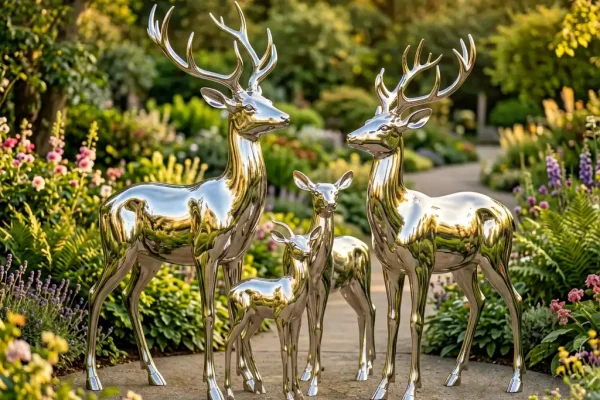
Dynamic Geometric Deer: Fiberglass Meadow Sculpture Installation
Gardens & Resorts
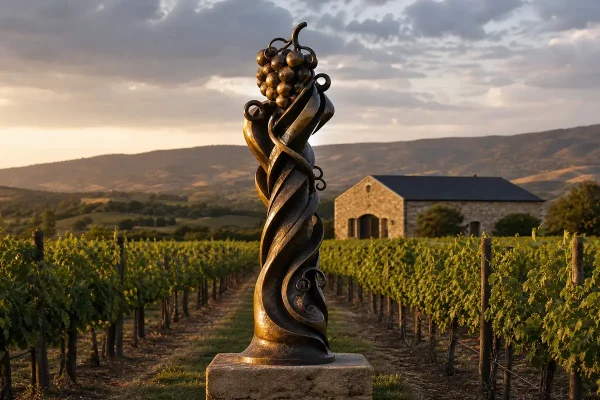
“Vintner’s Crown” — Bronze Sculpture for a Winery Estate
Public Art
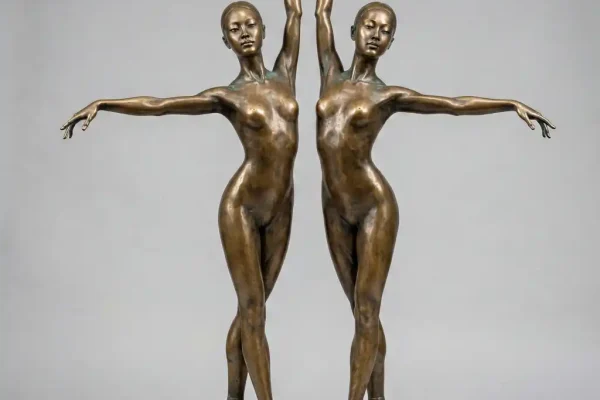
The Unity Pulse — Bronze Dance Duo
Related Insights
Continue reading related articles
Brand Mascot & IP
Oct 13, 2026
Esports Arena & Gaming Venue Sculpture: Landmarks, Trophies & Mascot Statues
Commercial & Hospitality
Oct 13, 2026
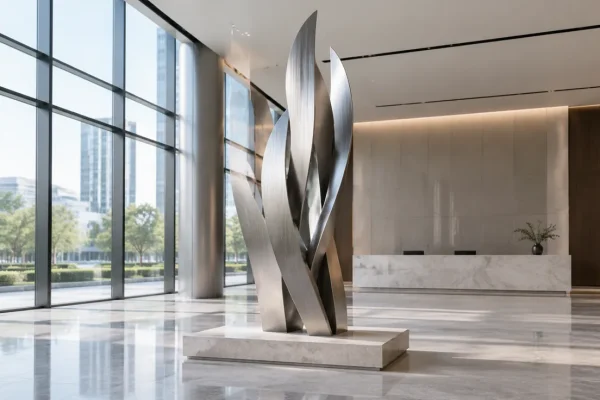
Corporate Lobby & Office Sculpture: Commissioning Guide for Developers
Custom Sculpture Insights & Guides
Oct 13, 2026
How Long Do Outdoor Sculptures Last? Material-by-Material Lifespan Guide
Our Sculpture Solutions
Explore our full range of custom sculpture services

IP Character Replication
Beyond 2D: Why IP Replication Drives Brand Engagement A character that lives only on a screen is easy to scroll...
Learn More →
Large Sculpture Custom
Engineering Monumental Scale A sculpture that stands 15 metres tall is not simply a 1.5-metre maquette scaled up ten times....
Learn More →
Original IP Development
From Concept to Icon Most sculpture enquiries begin with a reference: a licensed character, a film hero, an existing artwork...
Learn More →
Solutions Services
One Factory, Every Sculpture Material A sculpture brief rarely arrives pre-sorted by material. A client sends a reference image, a...
Learn More →
Custom Inflatables
Inflatable Sculptures as Brand Media Most sculptural commissions are permanent assets: they are built once, installed once, and admired for...
Learn More →
FRP & Fiberglass Sculpture Manufacturing
Custom FRP and fiberglass sculpture manufacturer - design, fabrication, and finishing.
Learn More →
Stainless Steel & Metal Sculpture Manufacturing
Custom stainless steel, bronze, corten, and aluminum sculpture manufacturer.
Learn More →
Theme Park Sculpture Services – Custom Amusement Park Statues
Custom Theme Park Sculptures – Bringing Imagination to Life Theme parks, amusement parks, zoos, and entertainment destinations thrive on immersive...
Learn More →
Commercial Sculpture Services – Custom Brand Mascots & Mall Art
Custom Commercial Sculptures – Elevate Your Brand & Space In today's competitive retail and commercial environment, first impressions matter. Commercial...
Learn More →