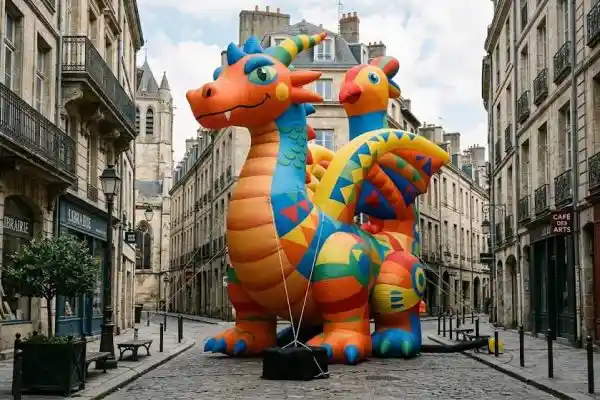
Inflatable Sculpture

Even experienced project owners can be caught off guard by costs that fall outside the obvious fabrication line items. When budgeting for a custom sculpture, it is natural to focus on design fees, materials, and fabrication labor. Yet hidden costs — from foundation engineering to crane rental, permits, and travel expenses — can add 15–30% to the total project cost if not anticipated. A thorough sculpture procurement process begins by identifying every potential expense category upfront.
This guide identifies the most common hidden cost categories in custom sculpture projects, provides real-world examples, and offers actionable tips to build a complete, realistic budget from day one.
Typical cost: $2,000–$15,000+
A sculpture does not simply sit on the ground. For outdoor installations, a reinforced concrete foundation is usually required to ensure stability against wind loads, seismic activity, and soil settling. The foundation design must be engineered by a structural professional, and the excavation and pouring require heavy equipment. A 10-foot bronze sculpture may require a foundation costing $5,000–$10,000 — often equaling the installation cost itself.
Budgeting tip: Ask your manufacturer for a foundation specification sheet early in the design phase. Share it with a local civil contractor for a separate foundation quote before finalizing your sculpture budget.
Typical cost: $1,500–$8,000
Large sculptures cannot be positioned by hand. A 12-foot stainless steel piece weighing 800+ lbs requires a boom truck or mobile crane for hoisting. The cost depends on the crane capacity, duration (half-day vs. full-day), and site accessibility. Tight urban sites may require special long-reach cranes, adding a premium.
Real-world example: During the installation of a monumental bronze elephant sculpture (see our Healing Presence Elephant installatio
), a 50-ton crane was required for a full day to lift and position the sculpture onto its pre-built foundation. The crane rental alone added over $5,000 to the installation budget. For a broader view of freight and on-site delivery costs, our transportation and logistics guide covers shipping, crating, and site access planning.
Typical cost: $500–$5,000
Public art installations, especially in civic spaces, often require building permits, zoning approvals, and sometimes public art commission reviews. The permitting timeline — which can stretch 4–12 weeks — is often a larger hidden cost than the fee itself, because it impacts the overall project schedule.
Budgeting tip: Contact your local planning department early. Ask about conditional use permits, sign permits (if the sculpture includes branding), and any historic district restrictions. Factor a 2-month buffer into your timeline for permit processing.
Typical cost: $800–$3,000
Most project owners insure the sculpture during transit and after installation, but fewer consider installation liability insurance. If the installation contractor is not bonded and insured, the property owner may be exposed to liability in case of damage or injury. Some venues (museums, municipal buildings) also require proof of additional insured status or umbrella coverage.
Budgeting tip: Verify that your sculpture manufacturer carries product liability insurance and that your installation contractor has general liability and workers’ compensation coverage. A certificate of insurance (COI) request is standard and should be made before any on-site work begins.
Typical cost: $1,500–$6,000
If your sculpture manufacturer or a specialist installation team travels to your site, their travel costs — flights, accommodation, per diem, and ground transportation — are typically billed to the project. For international projects, these costs can escalate significantly, especially when a senior sculptor or engineer is required for on-site finishing or patination.
Real-world example: For a custom sculpture delivered to a resort in Southeast Asia (see The Flowing Dimensio
), the installation team’s two-week on-site stay for assembly and finishing added $8,000 in travel and accommodation costs — roughly 8% of the total project budget.
Recommended reserve: 10–15% of total budget
Change orders are the most frequent source of hidden cost in custom sculpture projects. A client request during fabrication — “can we make the base larger” or “let’s add LED lighting” — triggers rework that is almost always more expensive than if it had been specified initially. Without a contingency reserve, these mid-project changes create budget strain and delays.
Budgeting tip: Build a 10–15% contingency line item into your budget from the start. Make sure your contract has a clear change-order process that defines pricing, approval authority, and timeline impact before any variation work begins. Our sculpture project risk management guide provides detailed guidance on contracts, insurance, and contingency planning.
Typical cost: 5–30% of goods value (varies by country)
For sculptures manufactured overseas (common for FRP and bronze fabrication in China), import duties, VAT/GST, customs brokerage fees, and port handling charges can represent a significant budget item. These are often overlooked in initial price quotations that only cover EXW (Ex Works) or FOB (Free on Board) terms.
Budgeting tip: Request a CIF (Cost, Insurance, Freight) or DDP (Delivered Duty Paid) quotation from your manufacturer. Obtain a customs broker quote in advance so there are no surprises at the border. Our pricing guide — Custom Sculpture Pricing 2026: Cost Breakdown by Material & Size — covers every cost factor in detail with real examples.
Typical cost: $200–$1,000/year
While not an upfront cost, maintenance is a recurring hidden expense. Bronze sculptures require waxing every 1–2 years to maintain patina and prevent corrosion. Stainless steel in coastal environments needs periodic cleaning to prevent pitting. FRP and fiberglass may need gelcoat repairs every 8–12 years.
For a real-world example of a large-scale installation that required careful maintenance planning, see The Regal Sentinel Bronze Lio
, which receives annual patina maintenance to preserve its museum-quality appearance.
The difference between a smooth sculpture project and one plagued by budget surprises is almost always thorough pre-project planning. By identifying these eight hidden cost categories and building them into your initial budget — rather than treating them as afterthoughts — you can commission a custom sculpture with confidence, knowing your financial picture is complete. For a comprehensive overview of all cost categories and phase-by-phase budgeting, refer to our complete custom sculpture cost guide. For a complete breakdown of sculpture costs and pricing factors, see our detailed guide: How Much Does a Custom Sculpture Cost? A Complete 2026 Pricing Guide.
Y Sculptures provides transparent, all-in quotations that help clients avoid hidden-cost surprises. Contact us to discuss your project requirements and receive a comprehensive, itemized budget.
Lisa Wang is Production & Quality Manager at Y Sculptures, bringing 14 years of hands-on experience in sculpture manufacturing, material science, and quality control. She leads the factory's ISO-compliant QC process, from raw material inspection to pre-shipment verification. Lisa has managed production for 2,800+ sculptures, ensuring precision in color matching, structural integrity, and surface finishing.
Browse real projects matching this topic
Continue reading related articles
Explore our full range of custom sculpture services

Beyond 2D: Why IP Replication Drives Brand Engagement A character that lives only on a screen is easy to scroll...
Learn More →
Engineering Monumental Scale A sculpture that stands 15 metres tall is not simply a 1.5-metre maquette scaled up ten times....
Learn More →
From Concept to Icon Most sculpture enquiries begin with a reference: a licensed character, a film hero, an existing artwork...
Learn More →
One Factory, Every Sculpture Material A sculpture brief rarely arrives pre-sorted by material. A client sends a reference image, a...
Learn More →
Inflatable Sculptures as Brand Media Most sculptural commissions are permanent assets: they are built once, installed once, and admired for...
Learn More →
Custom FRP and fiberglass sculpture manufacturer - design, fabrication, and finishing.
Learn More →
Custom stainless steel, bronze, corten, and aluminum sculpture manufacturer.
Learn More →
Custom Theme Park Sculptures – Bringing Imagination to Life Theme parks, amusement parks, zoos, and entertainment destinations thrive on immersive...
Learn More →
Custom Commercial Sculptures – Elevate Your Brand & Space In today's competitive retail and commercial environment, first impressions matter. Commercial...
Learn More →