Inflatable Sculpture

Inflatable art installations have become a defining medium for contemporary public art, brand activations, and immersive event experiences. From soaring indoor atrium centrepieces to towering outdoor sculptures that withstand coastal winds, the engineering requirements differ dramatically depending on the environment. This technical guide examines the critical factors that separate successful installations from structural failures: wind rating calculations, anchoring methodologies, material selection, and the safety certifications that responsible specifiers must demand.
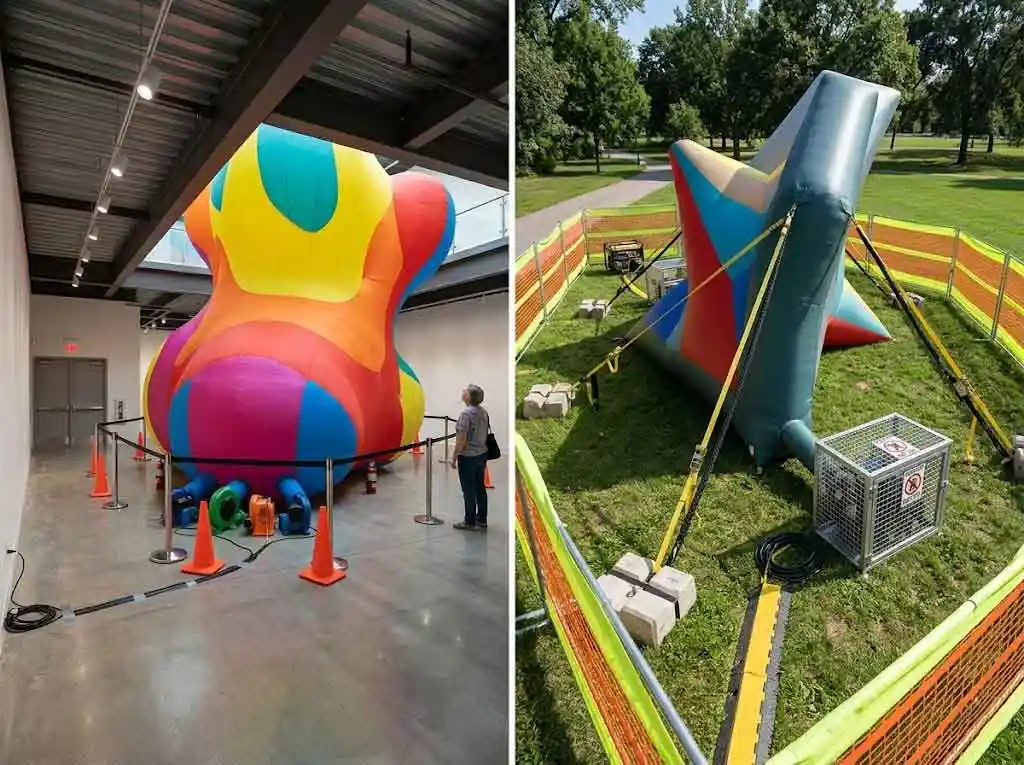
The primary distinction between indoor and outdoor inflatable installations is the environmental loading they must withstand. Indoor inflatables face minimal wind load, controlled temperatures, and predictable humidity. Outdoor installations contend with variable wind forces, UV radiation, temperature extremes, precipitation, and potential debris impact.
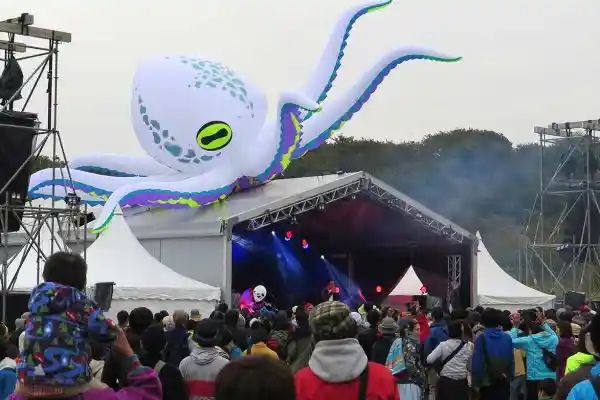
This distinction drives every downstream engineering decision — from material specification to anchoring design. A spectacular indoor piece like the Nebula Nexus Inflatable Street Art would require entirely different structural reinforcement, anchoring, and material treatment if relocated outdoors. Theme parks and outdoor entertainment venues frequently specify theme park sculpture installations that must meet stringent wind and safety standards.
Every outdoor inflatable sculpture must carry a manufacturer-stated wind rating based on structural engineering analysis, not aesthetic intuition. The following table maps Beaufort scale wind forces to inflatable operating limits and the resulting safety actions: For more detail on the production and engineering stages, read How Custom Sculptures Are Made: From Concept to Installation in 10 Steps.
| Beaufort Force | Wind Speed (km/h) | Wind Speed (mph) | Descriptio | Inflatable Operating Limit | Required Actio |
|---|---|---|---|---|---|
| 0–2 | 0–11 | 0–7 | Calm to light breeze | SAFE — Full operatio | Normal display; no restrictions |
| 3 | 12–19 | 8–12 | Gentle breeze | SAFE — Full operatio | Monitor conditions; check anchor tensio |
| 4 | 20–28 | 13–18 | Moderate breeze | CAUTION — Monitor closely | Reduce operating pressure; increase ballast; limit public access near base |
| 5 | 29–38 | 19–24 | Fresh breeze | WARNING — Enhanced monitoring | Deploy secondary tie-downs; restrict public zone to 1.5x sculpture height |
| 6 | 39–49 | 25–31 | Strong breeze | LIMIT — Many inflatables at design threshold | Evaluate structural stability; partial deflation may be required for larger pieces |
| 7 | 50–61 | 32–38 | Near gale | CRITICAL — Deflate most large inflatables | Begin controlled deflation for pieces over 5m; small sculptures with engineered tie-downs may remai |
| 8+ | 62+ | 39+ | Gale or higher | DEFLATE — All inflatables | Full deflation, secure/stow the sculpture, clear area |
Important note: Wind ratings are specific to each sculpture’s geometry, anchoring configuration, and site exposure. A ground-level compact sculpture may safely operate in Force 6 conditions where a tall, sail-like form would need deflation at Force 4. Always follow the manufacturer’s specific wind rating for your individual piece. The full fabrication workflow, including quality checks at each stage, is detailed in Custom Sculpture Manufacturing: 7-Step Process Guide.
The anchoring system is the single most critical safety element of any outdoor inflatable installation. The appropriate method depends on the surface type, sculpture size, anticipated wind loads, and whether the installation is temporary or semi-permanent.
| Anchoring Method | Best For | Holding Capacity | Surface Requirements | Installation Time | Notes |
|---|---|---|---|---|---|
| Sandbags / Water Ballast | Temporary events (1–7 days) on paved surfaces, lawns, or artificial turf | Moderate (15–30 kg per point) | Flat, stable surface; no damage to substrate | 15–30 minutes | Most versatile for touring installations; weight must be calculated based on surface area exposed to wind |
| Ground Screws / Earth Anchors | Semi-permanent outdoor installations (1–12 months) on grass or soil | High (100–500 kg per anchor depending on soil type) | Compacted soil, turf, or gravel; geotechnical assessment recommended | 30–60 minutes per anchor | Excellent holding power; removable with minimal ground disturbance; load-rated to engineering standards |
| Concrete Ballast Blocks | Permanent or long-term outdoor installations (1+ year) on hard surfaces | Very high (200–1000+ kg per block) | Must be placed on reinforced load-bearing surface | 2–4 hours (requires crane or forklift for large blocks) | Pre-cast blocks with embedded attachment points; most secure option for permanent artworks |
| Bolt-Down Base Plates | Permanent installations on concrete slabs or structural decking | Very high (load-rated to substrate capacity) | Concrete minimum 150mm thick; structural engineer must approve anchor patter | 4–8 hours (drilling, epoxy anchoring, curing) | Requires irreversible modification to substrate; highest structural integrity for large-scale pieces |
| Internal Pressure Anchoring | Small-to-medium sculptures on any flat surface | Low-to-moderate | Relies on internal air pressure and sculpture shape geometry | 10–20 minutes | Secondary system only; must always be supplemented with physical anchoring for outdoor use |
For complex large-scale works such as the Urban Guardian Inflatable Street Art, professional engineering analysis should determine the anchor type, quantity, and placement pattern. A combination of anchoring methods is often the safest approach.
The material specification for an inflatable sculpture is determined primarily by its deployment environment:
Safety certifications are not optional — they are legal requirements in most regulated markets. The following certifications are the most relevant for inflatable art installations:
When commissioning a custom inflatable, request copies of current certification documentation for both the base material and the finished fabrication. Certifications should be from accredited, independent testing laboratories — not self-declarations.
The choice between indoor and outdoor inflatable art installations is not simply a matter of location — it is a cascading set of engineering, material, and safety decisions. Use the following framework to guide your specification:
For a full-spectrum custom inflatable solution — from indoor atrium centrepieces to outdoor public art that withstands coastal conditions — explore Y Sculptures Custom Inflatables. Projects such as the Dream Flight Giant Transparent TPU Multi-Balloon Aircraft and the Jurassic Gateway Giant Inflatable T-Rex Theme Park Art demonstrate how proper engineering, material selection, and safety compliance come together in world-class inflatable installations.
Lisa Wang is Production & Quality Manager at Y Sculptures, bringing 14 years of hands-on experience in sculpture manufacturing, material science, and quality control. She leads the factory's ISO-compliant QC process, from raw material inspection to pre-shipment verification. Lisa has managed production for 2,800+ sculptures, ensuring precision in color matching, structural integrity, and surface finishing.
Browse real projects matching this topic
Continue reading related articles
Explore our full range of custom sculpture services

Beyond 2D: Why IP Replication Drives Brand Engagement A character that lives only on a screen is easy to scroll...
Learn More →
Engineering Monumental Scale A sculpture that stands 15 metres tall is not simply a 1.5-metre maquette scaled up ten times....
Learn More →
From Concept to Icon Most sculpture enquiries begin with a reference: a licensed character, a film hero, an existing artwork...
Learn More →
One Factory, Every Sculpture Material A sculpture brief rarely arrives pre-sorted by material. A client sends a reference image, a...
Learn More →
Inflatable Sculptures as Brand Media Most sculptural commissions are permanent assets: they are built once, installed once, and admired for...
Learn More →
Custom FRP and fiberglass sculpture manufacturer - design, fabrication, and finishing.
Learn More →
Custom stainless steel, bronze, corten, and aluminum sculpture manufacturer.
Learn More →
Custom Theme Park Sculptures – Bringing Imagination to Life Theme parks, amusement parks, zoos, and entertainment destinations thrive on immersive...
Learn More →
Custom Commercial Sculptures – Elevate Your Brand & Space In today's competitive retail and commercial environment, first impressions matter. Commercial...
Learn More →