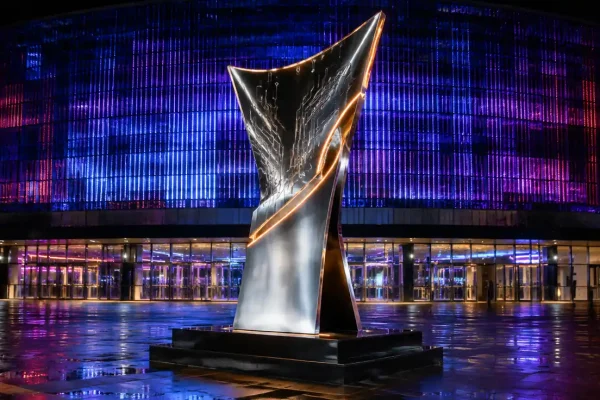

“The Urban Sentinel” art installation
Inflatable Sculpture
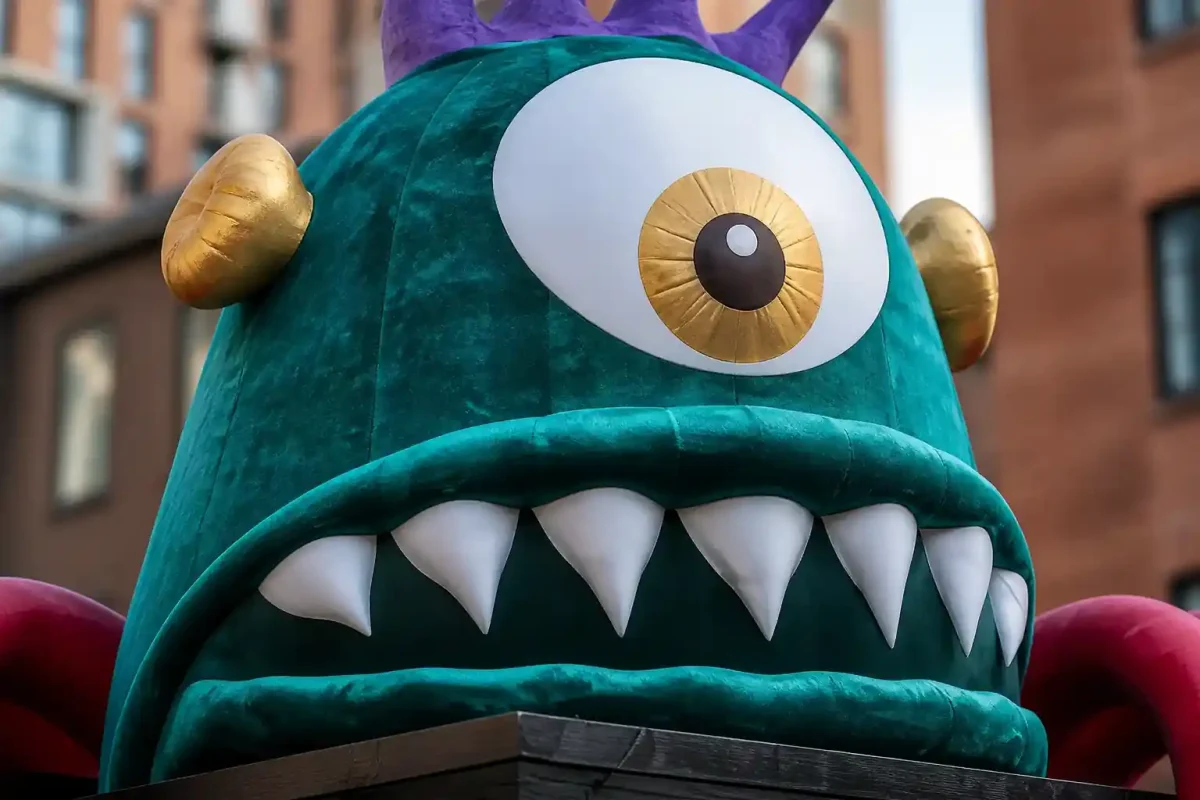
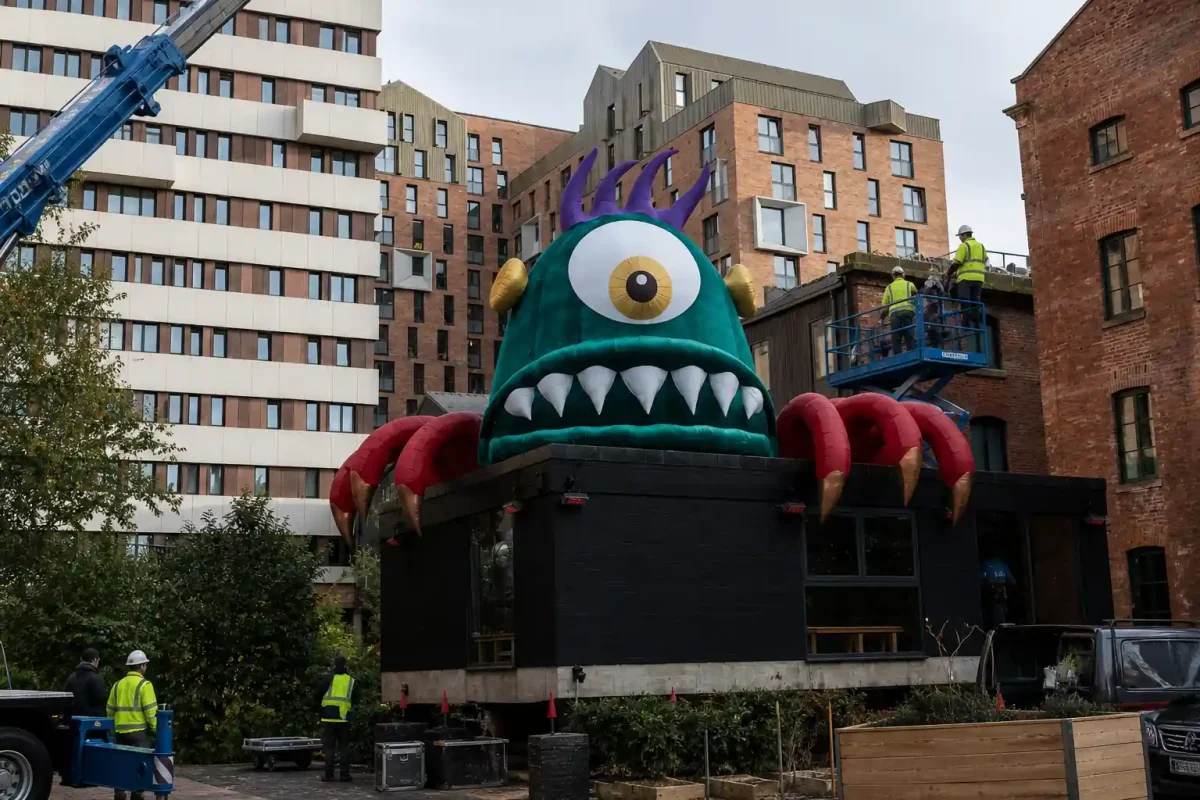
The “Urban Sentinel” project, situated in the Kampus development in Manchester, was an ambitious art installation designed to celebrate the city’s rich industrial heritage and its dynamic, modern future. It was a fusion of public art, history, and urban planning. The centerpiece was a massive, inflatable, one-eyed monster, a playful yet imposing figure, “guarding” the new development.
Design Philosophy:
The Urban Sentinel’s design is a powerful blend of contrast and symbiosis. The monster itself, a striking, one-eyed, deep green inflatable with vibrant purple hair, is a symbol of nature’s playful resilience and the whimsical side of human creativity. It stands as a fantastical guardian, contrasting sharply with the raw, textures of the surrounding brickwork and steel.
The location, atop the modern Kampus development, creates a symbolic link between the old and new. The surrounding Victorian mills, with their original brickwork and industrial charm, provide a historical backdrop. The monster, with its unique color palette (deep green for nature, red-orange for energy, and purple for royalty), embodies Manchester’s creativity and its ability to continually reinvent itself. It is not an alien presence but a unique part of the urban fabric.
Dimensions:
-
Height: 12 meters (from base to the tip of the hair spikes)
-
Width: 10 meters
-
Depth: 8 meters
Materials:
-
Main Body: Premium, heavy-duty, commercial-grade PVC-coated fabric (green and red-orange) for maximum durability and UV resistance.
-
Secondary Elements: Lighter, rip-stop nylon (purple) for dynamic, wind-blown effect on the hair and other accents.
-
Internal Structure: Strategic internal webbing and double-stitching ensure structural integrity.
-
Inflation: High-volume, industrial blower with integrated pressure monitoring system for stable inflation.
-
Tethering: Custom-fabricated, heavy-duty stainless steel cable and anchor points, hidden within the development’s infrastructure.
Budget:
-
Design and Engineering: £25,00
-
Fabrication: £100,00
-
Installation: £35,00
-
Tethering and Site Preparation: £20,00
-
Contingency: £20,00
-
Total: £200,00
Project Timeline:
-
Phase 1: Design and Approval (3 Months): Finalizing the monster’s design, conducting engineering studies, and securing necessary permissions.
-
Phase 2: Fabrication (4 Months): Manufacturing the inflatable structure, conducting quality control tests, and sourcing materials.
-
Phase 3: Installation and Setup (1 Month): Transporting the monster to the site, preparing the roof for tethering, and managing the delicate inflation process.
-
Total Project Duration: 8 Months
Scale & Why Inflatable Was the Right Medium
At 12 metres, this piece could not have been built in rigid material within the project’s constraints. An inflatable of that height is a different proposition from a temporary event structure: it is meant to read as a permanent presence on the development, and it has to hold its form against wind, weather, and time rather than being deflated after a season.
Commercial-grade PVC-coated Oxford fabric was specified for that reason. The fabric is heavy enough to resist UV degradation over a long installation and stiff enough to hold the sculpted volume without internal air pressure fighting the shape, which is the failure mode that makes smaller inflatables look temporary.
Engineering at 12 Metres
The engineering problem at this height is wind, not air pressure. A tall inflatable presents a large sail area, and the anchoring system has to resist both uplift and the dynamic loading that gusts create. Internal pressure is maintained continuously to hold the form, which makes the blower and the power supply a permanent part of the installation rather than an accessory.
The eye motif is significant structurally as well as compositionally. A tall form needs its volume distributed to stay stable, and the shape of the massing is doing aerodynamic work — a piece at this height that was designed purely visually would need substantially more anchoring.
Eight Months & Public Context
An eight-month programme is long for an inflatable and reflects the public setting. It covers design and engineering, prototyping at reduced scale, fabrication, and site installation, with the prototype stage doing real work — at this height, the first full-scale build frequently reveals aerodynamic issues that a model cannot.
Because the piece is a permanent installation in a public development, approval processes and structural sign-off form a substantial part of that schedule. A temporary event inflatable is engineered very differently from one that will stand through multiple seasons of public exposure.
Continuous Operation & Maintenance
This piece runs continuously, which is a different maintenance model from anything that is packed away between events. The blower, the pressure system, and the anchoring all need periodic inspection, and the fabric needs regular cleaning — a dirty inflatable in a public space reads as neglected regardless of its condition.
We recommend a documented service schedule agreed with the site operator before installation, covering pressure checks, fabric inspection and repair, and the anchoring. Anchoring is the item most often missed in a maintenance plan and the one with the highest consequence on a piece this size, particularly in a location with open exposure.
Project Gallery