Adorable Cartoon Plush — Custom Realistic Plush-Coated FRP Figures for Displays
IP Sculpture
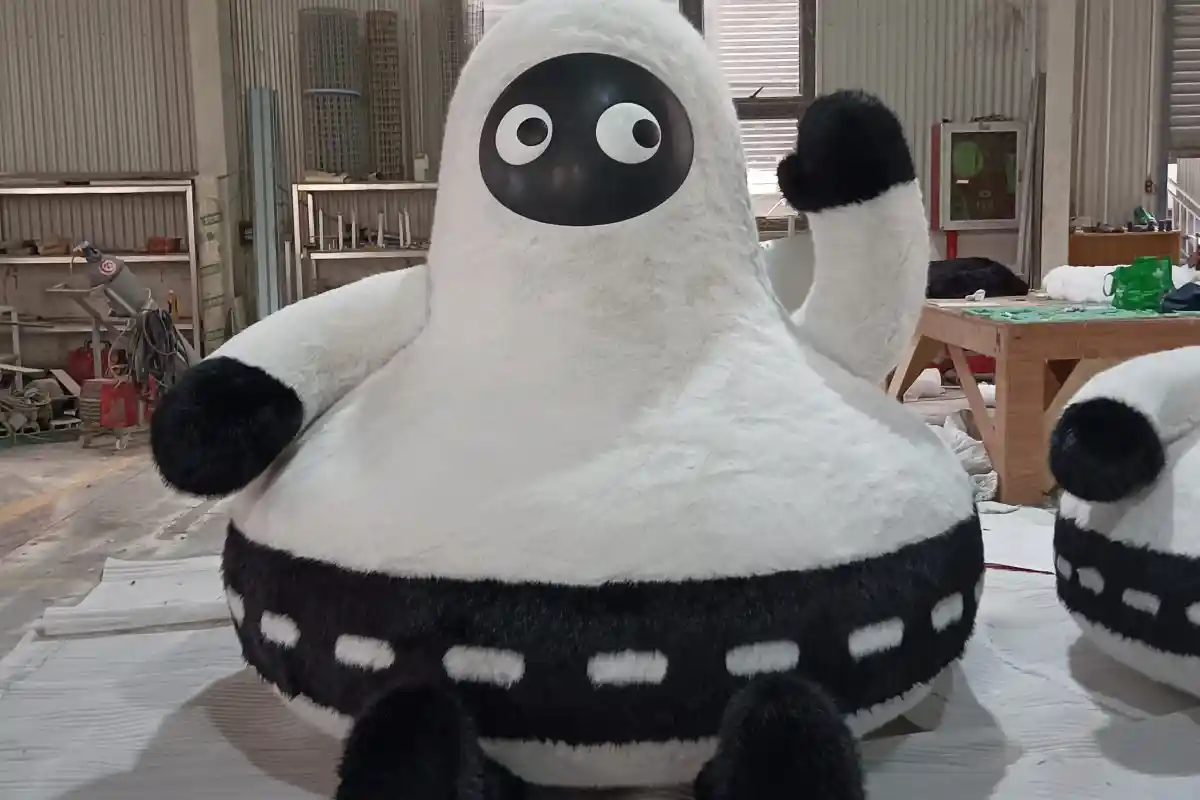
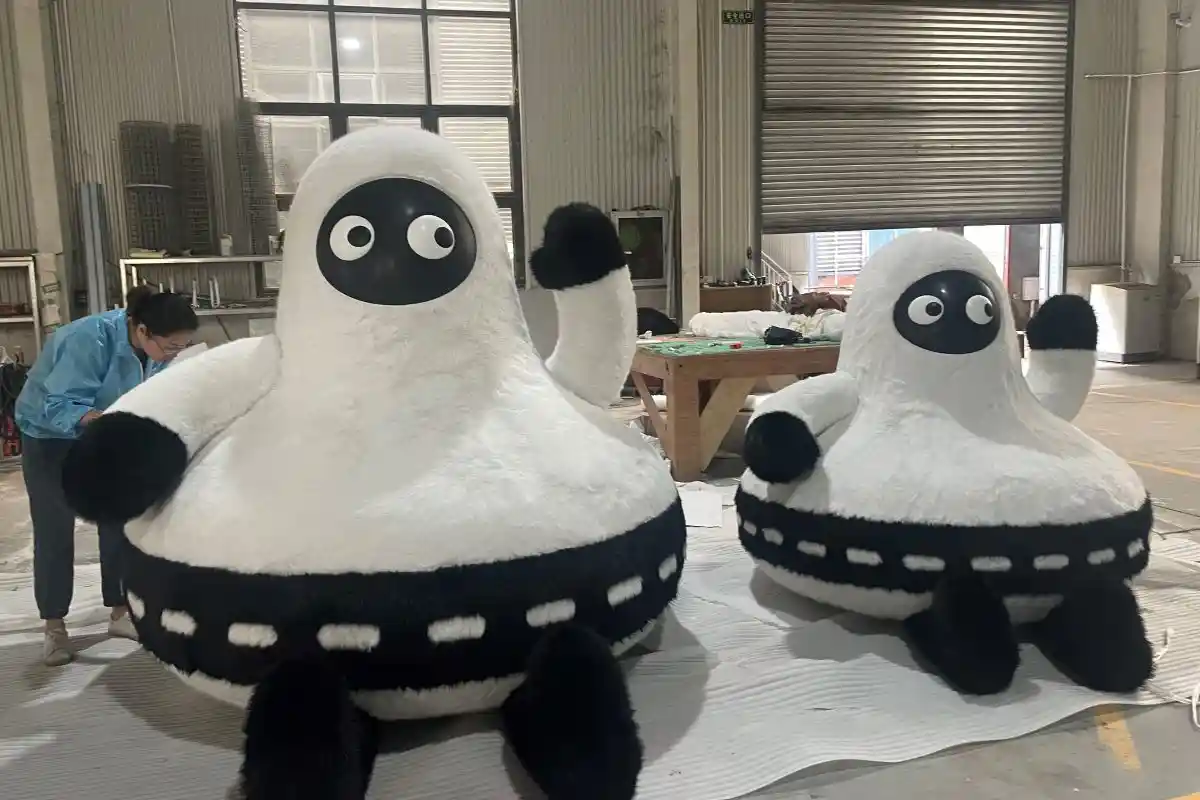
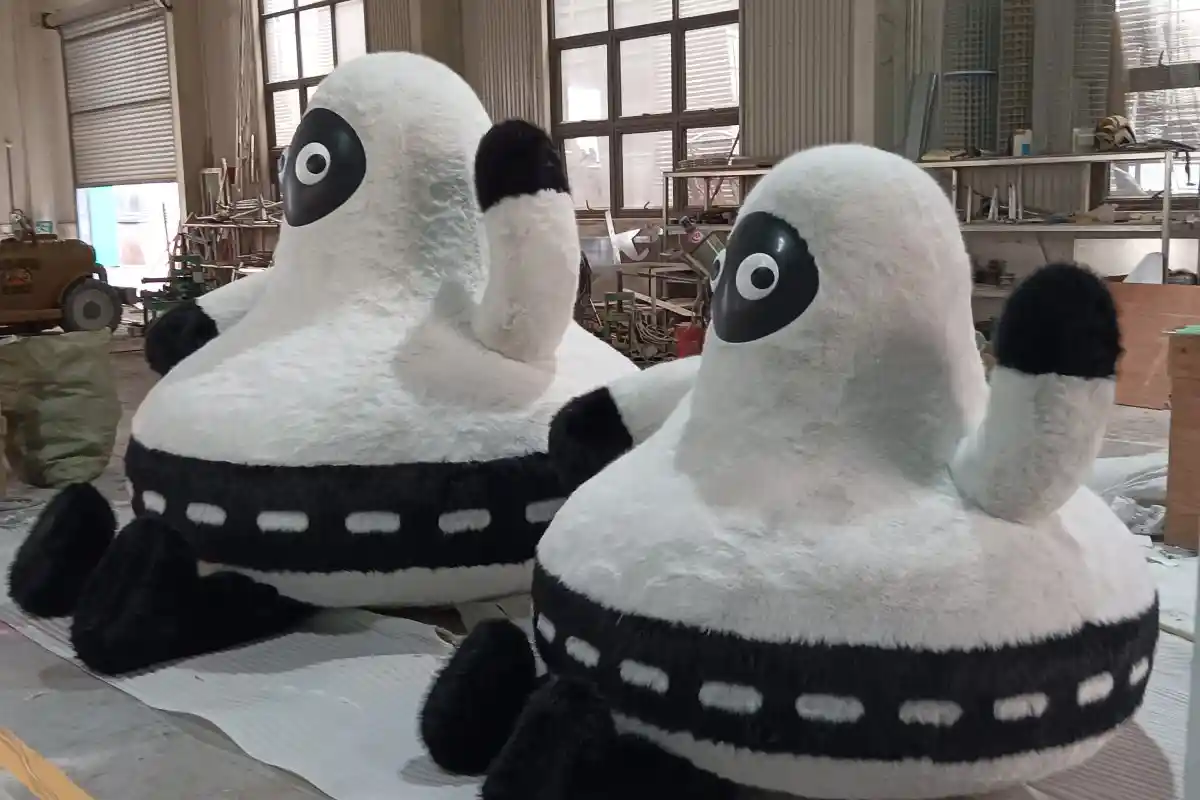
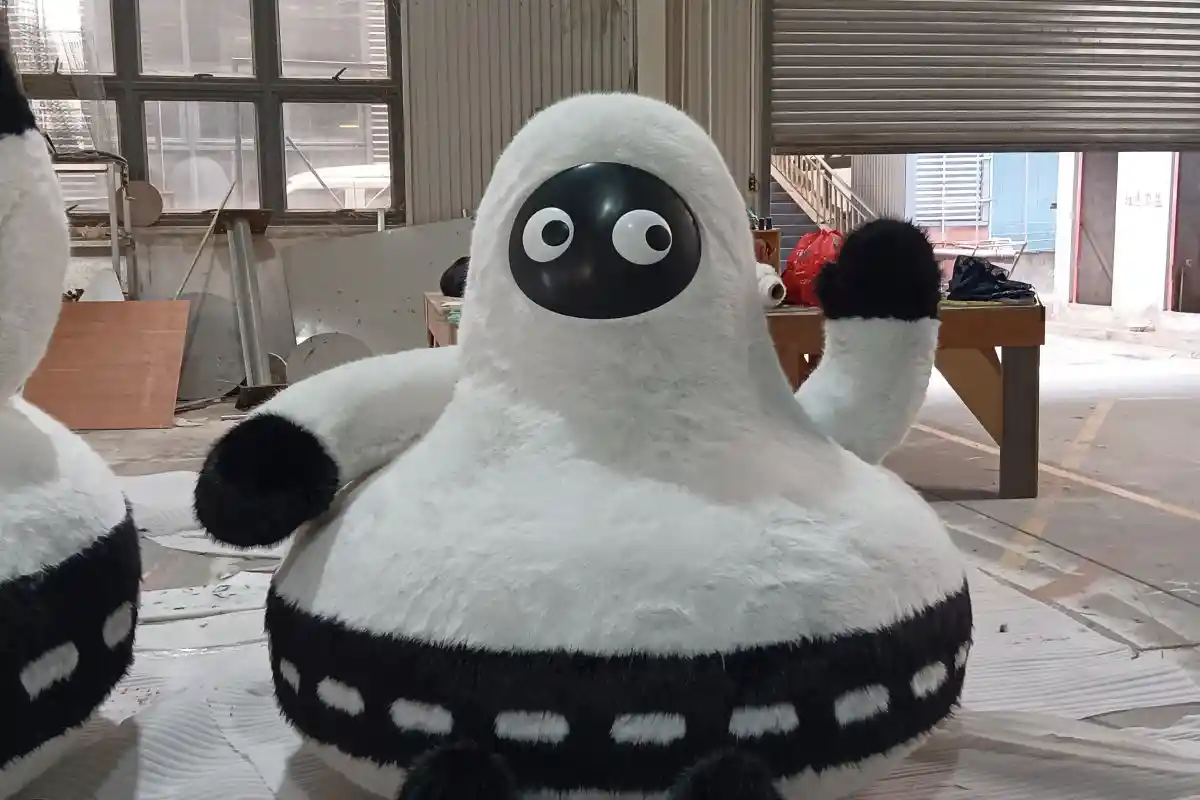
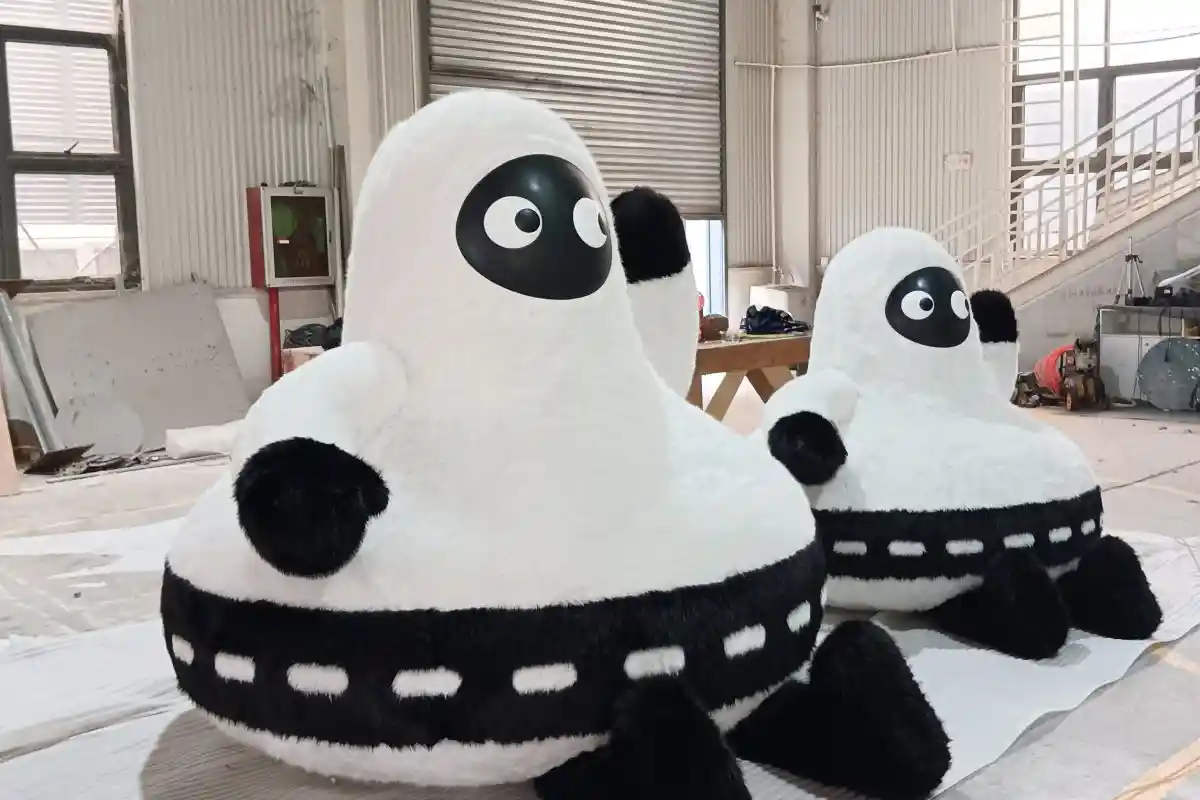
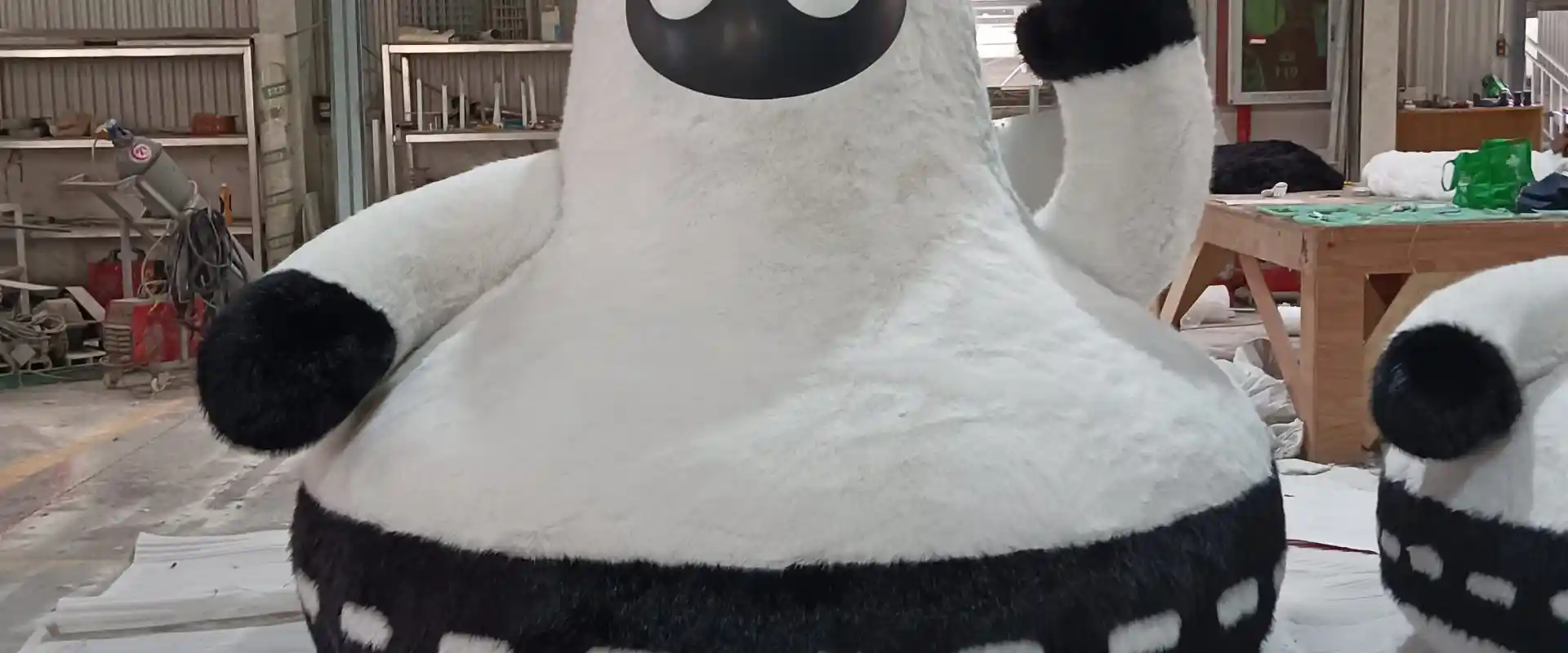
In the world of retail and brand activation, tactile experiences are becoming increasingly important. Shoppers — particularly children and young adults — are drawn to displays they can touch, feel, and interact with. In mid-2025, a leading international toy retailer headquartered in Hong Kong approached Y Sculptures with an innovative concept: they wanted a series of large-scale plush-coated cartoon character figures for their flagship store displays. Unlike traditional FRP sculptures with smooth painted finishes, these figures would feature a realistic plush texture coating that made them look and feel like giant stuffed toys — but with the durability and structural integrity of fiberglass. The goal was to create display pieces so soft-looking and huggable that customers would be irresistibly drawn to them, driving foot traffic and social media engagement.
The client had been searching for a manufacturer capable of combining FRP structural fabrication with textile-based surface finishes. This required expertise that few sculpture manufacturers possess: the ability to create a seamless bond between fiberglass and plush fabric, maintaining the structural strength of the sculpture while achieving the soft, fuzzy texture of a premium stuffed animal. After an extensive search, the client discovered Y Sculptures through our reputation for innovative material applications and custom finish techniques. Our team had previously experimented with hybrid FRP-textile finishes for themed entertainment projects, making us uniquely qualified for this challenging brief.
Background & Client Vision
The toy retailer operates over 200 stores across Asia, Europe, and North America, and their flagship locations in major cities serve as brand showcases that define the company’s image. The Hong Kong flagship store, located in a prime shopping district in Tsim Sha Tsui, was undergoing a major renovation aimed at creating a more immersive and experiential shopping environment. The store design team had identified the need for a “hero display” — a centerpiece installation that would stop customers in their tracks and create a memorable brand moment. They wanted figures that blurred the line between sculpture and toy, inviting physical interaction in a way that traditional retail displays rarely achieve.
The characters selected for the plush coating treatment were the retailer’s original mascots: a friendly bear, a playful bunny, and a curious cat — each with its own distinct personality and color scheme. These characters had been used in the retailer’s packaging, advertising, and digital content for years, but had never been brought to life as life-sized, touchable figures. The client specified that the sculptures should range in height from 1.2 to 1.8 meters, creating a visually engaging composition when displayed together. The bear, the largest of the three, would stand at the center with the bunny and cat positioned on either side at slightly lower heights to create a dynamic triangular arrangement.
Design Concept & Inspiration
The design concept was centered on the idea of “hyper-realistic softness” — creating sculptures that looked so soft and cuddly that customers would instinctively want to hug them. This required a complete rethinking of the traditional FRP sculpture approach. Instead of a smooth painted surface, each figure would be covered in a custom-engineered plush fabric that matched the exact color, texture, and pile height of the retailer’s premium stuffed toys. The fabric needed to be bonded to the FRP substrate in a way that prevented bubbling, wrinkling, or separation over time, while still allowing the underlying form to maintain its precise sculptural contours.
Our design team worked closely with the client’s character designers to create 3D models that preserved the exact proportions and expressions of the original 2D mascots. Each character required subtle anatomical adjustments to work in three dimensions — features that look charming in flat illustration can appear distorted when rendered in 3D if not carefully adapted. The bear’s round snout, the bunny’s long ears, and the cat’s whiskers were all carefully studied and refined through multiple clay mock-up iterations before proceeding to production. The poses were designed to be stable and inviting: the bear with arms slightly open as if offering a hug, the bunny seated with one ear perked up, and the cat reaching forward with a paw as if to greet visitors.
Technical Specifications
The technical requirements for this project were among the most complex our team has ever tackled. The combination of FRP structural fabrication with textile surface finishing required expertise across multiple disciplines, from fiberglass engineering to textile manufacturing and adhesive chemistry. Each sculpture was built in multiple stages, with the FRP structure serving as the rigid internal skeleton and the plush fabric applied as a permanent bonded outer layer.
- Structural Material: Fiberglass Reinforced Plastic (FRP), hand-laid with woven roving and chopped strand mat, internal steel armature for large pieces
- Surface Material: Custom-milled premium acrylic plush fabric (18mm pile height), color-matched to retailer’s existing toy specifications
- Bonding Method: Industrial-grade contact adhesive applied under controlled temperature and humidity, with mechanical fastening at stress points
- Bear Dimensions: H: 1.8m x W: 1.2m x D: 0.9m (seated pose), Weight: ~45 kg
- Bunny Dimensions: H: 1.4m x W: 0.8m x D: 0.6m (seated pose with raised ear), Weight: ~30 kg
- Cat Dimensions: H: 1.2m x W: 0.7m x D: 0.7m (reaching pose), Weight: ~25 kg
- Base: Concealed steel plate with floor-anchoring system; sculptures can support adult leaning weight without tipping
- Fire Safety: All materials treated with fire-retardant chemicals meeting international retail safety standards (Class 1/ASTM E84)
- Maintenance: Surface can be gently vacuumed or spot-cleaned with mild soap and water; fabric is anti-static and lint-resistant
- Warranty: 3 years against structural defects and fabric delamination
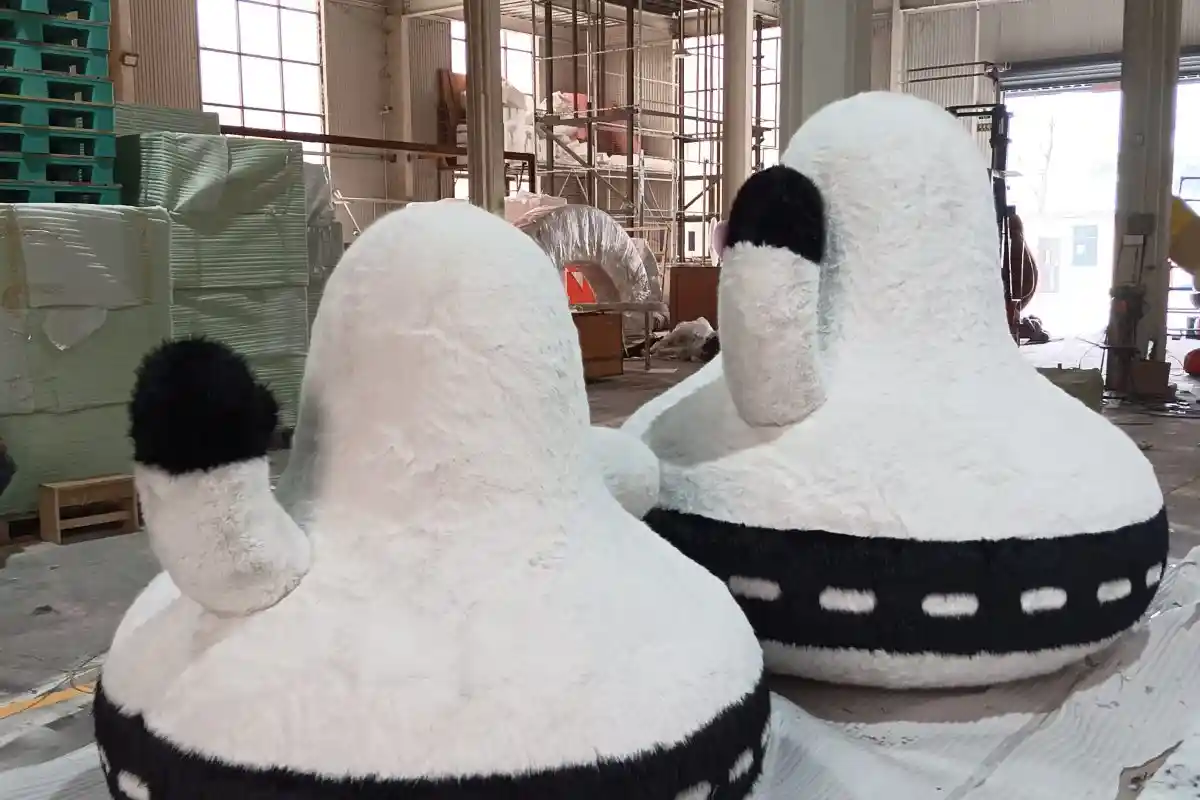
The most technically challenging aspect was the application of the plush fabric to the complex three-dimensional surfaces. Unlike flat fabric applications where material can simply be cut and sewn, the sculptures’ curved surfaces required the fabric to be carefully stretched, shaped, and heat-set to conform to the underlying form without visible seams or wrinkles. Our textile engineering team developed a custom technique involving pre-shaped fabric panels that were bonded to the FRP substrate using a combination of vacuum forming and contact adhesion, with the seams strategically placed in less visible areas such as under the arms and along the back. The result is a surface that appears completely seamless to the casual observer, with the plush texture flowing naturally around all curves and contours of the sculpture.
Project Budget & Timeline
The total project budget was $22,000 USD, reflecting the innovative materials, extensive research and development, and specialized labor required for the plush-coating process. This was a significant investment for the client, but one that they recognized as necessary to achieve the groundbreaking visual and tactile effect they envisioned. The budget allocation was carefully structured to cover all aspects of the project:
- R&D and Design (15% — $3,300): Material research, fabric testing, 3D modeling, and design refinement
- Mold and Tooling (20% — $4,400): Master clay sculpting, silicone mold creation, and fabric pattern development
- FRP Fabrication (25% — $5,500): Structural fabrication, armature integration, and initial finishing
- Plush Application and Finishing (30% — $6,600): Fabric cutting, bonding, heat-setting, seam finishing, and quality control
- Packaging and Logistics (10% — $2,200): Custom protective packaging, wooden crates, and international air freight
Production was scheduled for 10 weeks — two weeks longer than a standard FRP sculpture project due to the additional complexity of the plush coating process. The timeline included:
- Week 1-2: Design finalization, 3D modeling, client approval, and fabric material sourcing
- Week 3-4: Clay sculpting of all three master models and silicone mold fabrication
- Week 5-6: FRP hand lay-up, curing, demolding, and structural finishing
- Week 7-8: Fabric panel cutting, trial fitting, bonding, and heat-setting
- Week 9: Final finishing, seam inspection, quality control, and base installation
- Week 10: Protective packaging, documentation, and air freight shipping to Hong Kong
The project was delivered on schedule, with the three sculptures arriving at the Hong Kong flagship store three weeks before the grand reopening. The client’s installation team was able to position and secure the sculptures in the allocated display area with assistance from our detailed installation manual.
Key Challenges & Solutions
This project presented a cascade of technical challenges, each requiring innovative solutions. The foremost challenge was developing a reliable bonding method between the FRP substrate and the plush fabric. Standard adhesives either failed to create a permanent bond on the smooth FRP surface or caused the fabric backing to degrade over time. Our materials team tested over a dozen adhesive formulations before developing a custom two-part epoxy-contact adhesive hybrid that created a chemical bond with the FRP surface while remaining flexible enough to accommodate the fabric’s movement. The bonding process was conducted in a climate-controlled environment at precisely 24 degrees Celsius with 45% humidity to ensure optimal curing conditions.
A second major challenge was managing the seams where fabric panels met. On a flat stuffed toy, seams are a natural and expected part of the design. But on a large-scale sculpture meant to appear seamless, visible seams would ruin the illusion of a single continuous plush surface. Our team developed a “hidden seam” technique where the edges of adjacent fabric panels were bevel-cut at a 45-degree angle and butted together before being bonded to the substrate from behind. The seam was then carefully brushed to blend the pile fibers, making the joint virtually invisible. This technique required painstaking precision — each seam took an average of four hours to complete.
The third challenge was ensuring the sculptures could withstand the tactile interaction that was central to their purpose. Unlike traditional display sculptures that are viewed from a distance, these figures were designed to be touched, hugged, and leaned on by customers. This meant the structural engineering had to account for lateral forces, compression loads, and repeated impact. The internal steel armature for the largest bear sculpture was engineered to support up to 150 kg of leaning weight without deflection. The plush fabric was tested for abrasion resistance exceeding 50,000 cycles — equivalent to years of daily touching — without visible wear.
Finally, there was the logistical challenge of shipping plush-coated sculptures without damaging the delicate fabric surface. Standard foam packaging would leave impressions on the plush pile. Our packaging team developed a solution using soft non-woven fabric covers over the sculptures, surrounded by inflatable air cushions within a rigid wooden crate. The sculptures arrived in Hong Kong with the plush surface untouched, ready for immediate display.
Client Feedback & Impact
The unveiling of the plush-coated sculptures at the Hong Kong flagship store was a major success. On opening day, the figures drew crowds of shoppers who were immediately drawn to touch and photograph them. The store reported that the area around the sculptures had the highest foot traffic density in the entire store, with an average dwell time of over three minutes per visitor. Social media engagement exceeded all projections — within the first week, photos and videos of the sculptures generated over 500,000 impressions across Instagram, TikTok, and Xiaohongshu, with many users commenting on how “huggable” and “realistic” the figures looked.
The client’s head of visual merchandising wrote: “The plush-coated sculptures have transformed our flagship store into a destination. Customers are not just looking at these figures — they’re interacting with them, posing for photos, and sharing their experiences online. The quality of the plush finish is extraordinary; it genuinely looks and feels like a giant stuffed animal. We’ve already received inquiries from our London and Tokyo stores about similar installations. Thank you, Y Sculptures, for pushing the boundaries of what’s possible in retail display design.”
Perhaps the most telling measure of success came from the children who visited the store. Parents reported that their children were immediately drawn to the sculptures, hugging them and asking to return to the store specifically to see the “big soft friends.” The sculptures had achieved exactly what the client intended — they created an emotional connection between customers and the brand that no conventional display could replicate. Three months after installation, the store manager reported that the plush-coated figures remained in pristine condition despite daily handling by hundreds of visitors, validating the durability of our material choices and fabrication methods.
This project represents a landmark achievement in Y Sculptures’ history of innovation. By successfully combining FRP structural fabrication with premium plush textile finishing, we have opened up new possibilities for retail display design, brand activation, and experiential marketing. The techniques developed for this project have since been applied to several subsequent projects, and we continue to refine and expand our capabilities in hybrid material sculpture fabrication. We are proud to have helped this client create a truly unique and impactful brand experience that will delight customers for years to come.
Project Gallery