

Custom Sculpture Insights & Guides
Fiberglass vs Bronze vs Stone: The Ultimate Material Comparison Guide
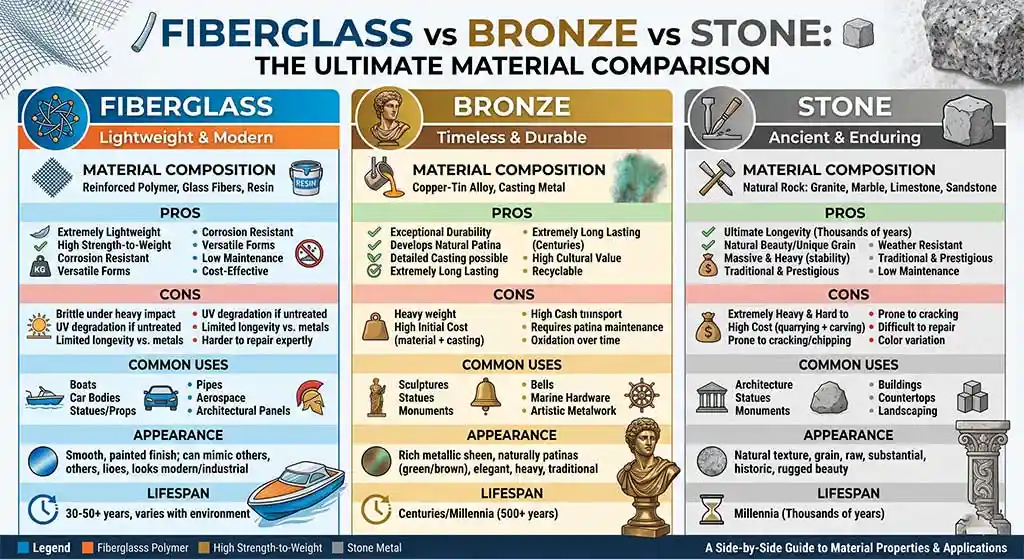
When it comes to selecting the perfect material for sculptures, large-scale planters, architectural elements, or outdoor fountains, you will inevitably find yourself staring down three heavyweights: Fiberglass, Bronze, and Stone.
Each material carries its own historical weight, aesthetic charm, and physical properties. Choosing the wrong one can lead to costly mistakes, structural failures, or aesthetic mismatch. Whether you are a landscape architect designing a public park, a homeowner looking for the perfect garden centerpiece, or an artist deciding on your next medium, this comprehensive guide will break down everything you need to know.
1. Fiberglass: The Modern Innovator
For an in-depth look at FRP durability and outdoor performance, read our complete FRP durability guide.
Fiberglass (or Fiber-Reinforced Plastic/FRP) is the newcomer on this list, but it has completely revolutionized modern manufacturing and design. Made from fine fibers of glass woven into a fabric and bonded together with a liquid polymer resin, fiberglass is a synthetic marvel.
The Pros of Fiberglass
-
Incredible Strength-to-Weight Ratio: Fiberglass is remarkably lightweight yet exceptionally strong. A life-sized fiberglass statue can easily be lifted by two people, whereas its stone or bronze counterpart might require a crane.
-
Unmatched Versatility: Because it is cast in molds while in a liquid-like state, fiberglass can capture intricate details, smooth geometric lines, and complex curves that would be nearly impossible to carve from stone.
-
Aesthetic Mimicry: One of fiberglass’s greatest tricks is its ability to look like almost anything. With the right finishes and gel coats, fiberglass can convincingly mimic aged bronze, heavy granite, terracotta, or sleek high-gloss plastic.
-
Cost-Effective: Both the raw materials and the manufacturing process are significantly cheaper than bronze or natural stone. Shipping and installation costs are also a fraction of the price due to the low weight.
The Cons of Fiberglass
-
Perceived Value: No matter how beautiful it looks, fiberglass will never carry the historical prestige or “heirloom” status of bronze or natural stone.
-
Vulnerability to High Winds:Because it is lightweight, outdoor fiberglass installations must be securely anchored to the ground to prevent them from blowing over in heavy storms.
-
UV Degradation Over Time: If exposed to harsh, direct sunlight for decades without proper UV-resistant topcoats, the resin can eventually degrade, leading to fading, chalking, or minor structural brittleness.
2. Bronze: The Timeless Masterpiece
Bronze—an alloy composed primarily of copper combined with tin and other metals—has been the gold standard for premium art and structural accents for millennia. There is a reason we refer to a golden age of human advancement as the “Bronze Age.”
The Pros of Bronze
-
Heirloom Longevity: Bronze is practically indestructible. It does not rust like iron; instead, it forms a protective layer. A well-cast bronze sculpture can easily last for thousands of years, even when submerged in water or exposed to the elements.
-
The Living Patina: As bronze exposes itself to oxygen, moisture, and time, it undergoes a chemical process called oxidation. This creates a beautiful, unique green, brown, or blue-black surface coating known as a patina. Far from ruining the material, the patina adds depth, character, and immense aesthetic value.
-
High Prestige and Intrinsic Value: Bronze holds raw material value. It feels heavy, substantial, and premium. Investing in bronze is viewed as a true asset acquisition.
-
Structural Resilience: Bronze expands and contracts minimally with temperature fluctuations, meaning it won’t crack during freezing winters or warp during blistering summers.
The Cons of Bronze
-
Prohibitive Cost: Bronze is highly expensive. The material costs are high, and the traditional casting process (often using the intricate lost-wax casting method) requires intensive, skilled labor.
-
Extreme Weight: Moving and installing bronze requires serious logistical planning, heavy machinery, and reinforced concrete foundations.
-
Theft Risk: Because scrap copper and bronze carry high market value, unsecured outdoor bronze installations can unfortunately become targets for thieves.
3. Stone: The Earth’s Original Medium
For natural stone and garden installations, our guide to commissioning park and garden sculptures covers essential considerations.
From the marble statues of ancient Greece to the granite facades of neoclassical banks, stone represents permanence, organic beauty, and a direct connection to the Earth. In this comparison, “stone” encompasses natural carved stones (like marble, granite, and limestone) as well as high-quality cast stone (engineered stone made from refined concrete mixes). FRP vs stainless steel vs bronze material guide
The Pros of Stone
-
Organic, Unique Beauty: No two pieces of natural stone are identical. The veining in marble, the crystalline speckles in granite, and the earthy textures of limestone offer an organic authenticity that synthetic materials cannot truly replicate.
-
Substantial Permanence: Like bronze, stone commands respect. It looks and feels rooted to the ground. A stone element conveys a sense of stability, tradition, and timelessness.
-
Weather Integration: Stone ages beautifully alongside nature. Moss, lichens, and weather staining often enhance its appearance, making it look like a seamless part of a landscape or garden.
The Cons of Stone
-
Brittleness and Tensile Weakness: While stone is incredibly strong under compression (carrying weight downward), it has poor tensile strength. It can crack, chip, or snap if struck sharply or if subjected to uneven stress.
-
Freeze-Thaw Vulnerability: Porous stones (like limestone or low-grade cast stone) can absorb water. When that water freezes, it expands, which can cause micro-fractures, spalling, or major cracking over consecutive winters.
-
Difficult to Modify: Once stone is carved away, it cannot be put back. Repairing a chipped stone statue or structural pillar is incredibly difficult and often leaves visible scars.
Head-to-Head Comparison Metrics
Material choice directly impacts your project budget. See our Custom Sculpture Cost Guide 2026 for detailed pricing breakdowns by material.
To help you make the ultimate decision for your specific project, let’s look at how these three materials stack up against each other across five critical categories.
1. Cost & Long-Term Value
If budget is your primary constraint, Fiberglass wins by a landslide upfront. However, if you are looking at return on investment (ROI) or long-term asset value, Bronze is the undisputed champion. Stone occupies the middle-to-high tier depending on whether it is locally sourced limestone or imported Italian Carrara marble. FRP vs stainless steel vs bronze material guide
2. Weight & Installation Logistics
-
Fiberglass: Feather-light. Easy to ship, carry through standard doorways, and install without specialized structural engineering.
-
Bronze & Stone: Extremely heavy. They require structural engineering assessments for indoor or rooftop installations, high shipping fees, and professional rigging crews.
3. Maintenance Requirements
-
Fiberglass: Low maintenance. Requires occasional washing with soap and water and a fresh coat of wax or UV protectant every few years.
-
Bronze: Medium maintenance. To maintain a specific color, it must be cleaned and waxed annually. If you prefer the natural aging process, you can leave it alone to develop its patina.
-
Stone: Medium-to-high maintenance. Porous stone needs to be sealed regularly to protect it from water penetration and staining. It may also require specialized biocides to clear away destructive algae or mold growth.
Summary Reference Table
| Feature | Fiberglass | Bronze | Stone (Natural/Cast) |
| Primary Material | Glass fibers & Resin | Copper & Tin Alloy | Geological rock / Concrete mix |
| Weight | Very Light | Very Heavy | Extremely Heavy |
| Relative Cost | Budget-Friendly ($) | Premium ($$$) | Moderate to High ($$-$$$) |
| Lifespan | 20–50+ Years | Centuries / Millennia | Centuries (with proper care) |
| Best For | Commercial spaces, roofs, temporary displays, budget projects | Memorials, high-end art, public monuments, heirlooms | Traditional gardens, classic architecture, organic integrations |
| Vulnerability | High winds (if unanchored), prolonged UV rays | Theft, surface tarnishing | Cracking from freezing water, chipping |
The Verdict: Which Material Should You Choose?
Once you’ve chosen your material, explore our Large Sculpture Custom Service to bring your project to life. Our team specializes in FRP, bronze, and stone fabrication for public art installations worldwide.
The decision ultimately hinges on your specific project goals, environmental conditions, and budget.
-
Choose Fiberglass if: You are working with a tight budget, need to install items on weight-restricted surfaces (like rooftops, balconies, or drywall), require a modern or hyper-specific color finish, or need to move the items frequently.
-
Choose Bronze if: You want to make a permanent statement, create an heirloom-quality investment, require unmatched durability against accidental impact or freezing weather, and want a material that actually looks better as it gets older.
-
Choose Stone if: Your design aesthetic relies on organic, natural textures, you want your installation to blend seamlessly into a natural or historical landscape, and you value the heavy, grounding presence of natural geology.
D
Written by David Chen
David Chen is Design Director at Y Sculptures with 18+ years in large-scale sculpture design and fabrication. He specializes in FRP, stainless steel, and bronze sculpture engineering, overseeing design-to-production workflows for theme park attractions, public art installations, and brand IP mascots. David has personally directed over 300 custom sculpture projects for clients across 20+ countries.
Related Projects
Browse real projects matching this topic
Gardens & Resorts
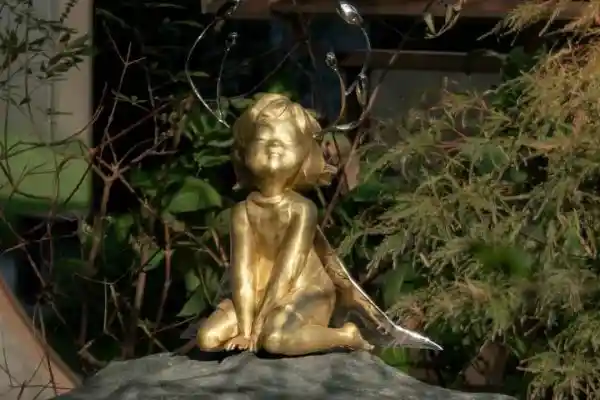
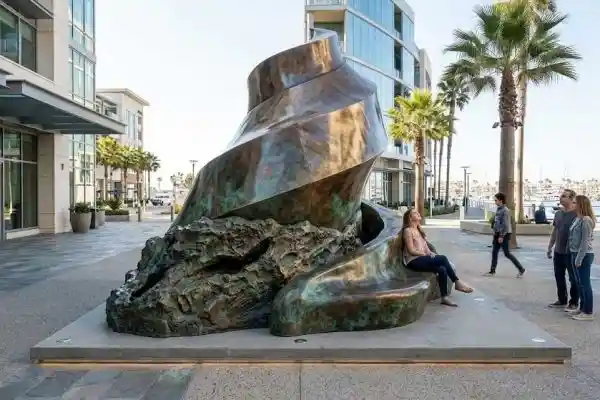
Whispers of Nature — FRP Kneeling Nature-Spirit Garden Sculpture
Gardens & Resorts
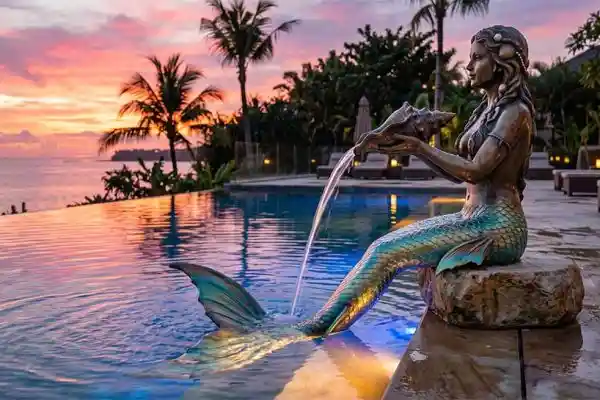
“Aqua Nymph” — Mermaid Poolside Fountain Sculpture
Related Insights
Continue reading related articles


Commercial & Hospitality
Sep 8, 2026
Winery & Brewery Sculpture: Rustic Aesthetics That Sell the Experience
Our Sculpture Solutions
Explore our full range of custom sculpture services

IP Character Replication
Beyond 2D: Why IP Replication Drives Brand Engagement A character that lives only on a screen is easy to scroll...
Learn More →
Large Sculpture Custom
Engineering Monumental Scale A sculpture that stands 15 metres tall is not simply a 1.5-metre maquette scaled up ten times....
Learn More →
Original IP Development
From Concept to Icon Most sculpture enquiries begin with a reference: a licensed character, a film hero, an existing artwork...
Learn More →
Solutions Services
One Factory, Every Sculpture Material A sculpture brief rarely arrives pre-sorted by material. A client sends a reference image, a...
Learn More →
Custom Inflatables
Inflatable Sculptures as Brand Media Most sculptural commissions are permanent assets: they are built once, installed once, and admired for...
Learn More →
FRP & Fiberglass Sculpture Manufacturing
Custom FRP and fiberglass sculpture manufacturer - design, fabrication, and finishing.
Learn More →
Stainless Steel & Metal Sculpture Manufacturing
Custom stainless steel, bronze, corten, and aluminum sculpture manufacturer.
Learn More →
Theme Park Sculpture Services – Custom Amusement Park Statues
Custom Theme Park Sculptures – Bringing Imagination to Life Theme parks, amusement parks, zoos, and entertainment destinations thrive on immersive...
Learn More →
Commercial Sculpture Services – Custom Brand Mascots & Mall Art
Custom Commercial Sculptures – Elevate Your Brand & Space In today's competitive retail and commercial environment, first impressions matter. Commercial...
Learn More →