Gardens & Resorts

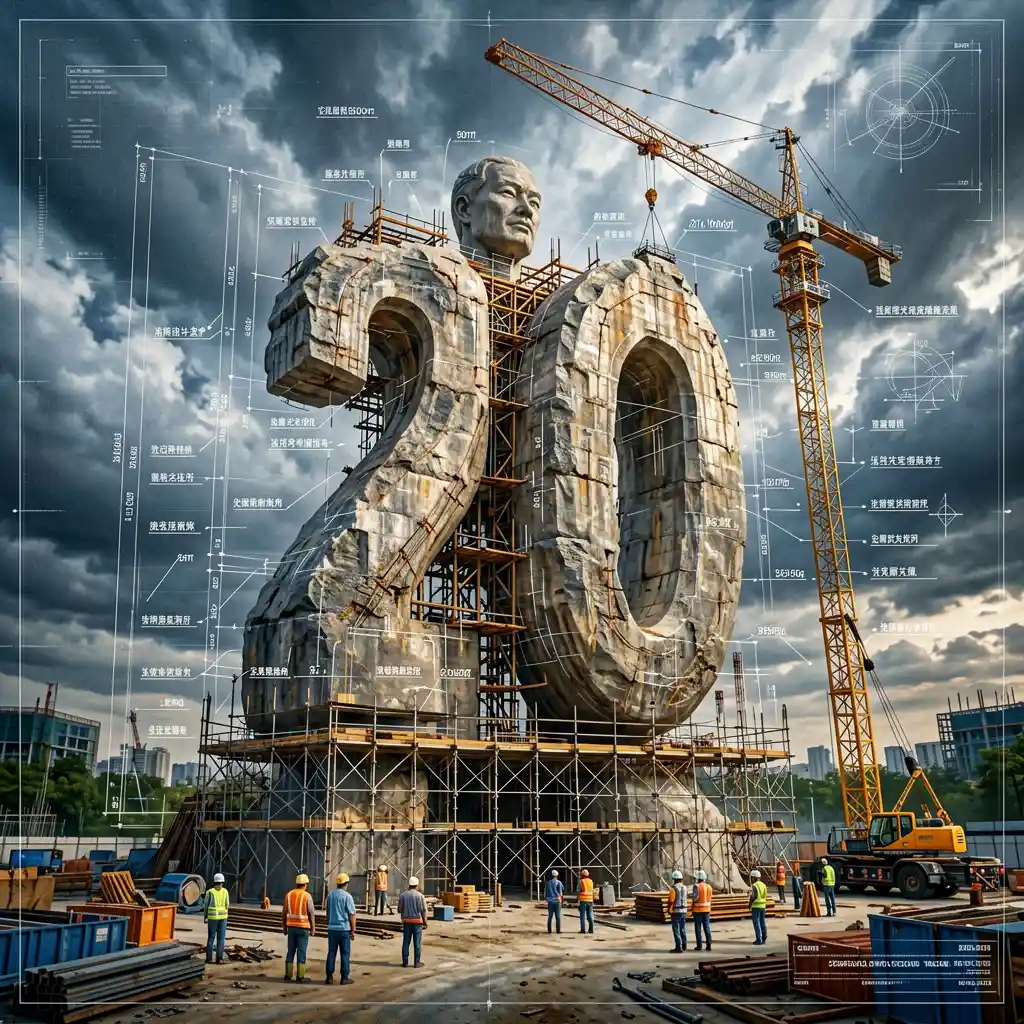
“Our city approved a 50-foot monument for the new civic plaza, but none of us on the committee understands the engineering requirements. What foundation does a structure that tall and heavy actually need?” This question, posted in r/StructuralEngineering, is one we hear constantly from architects, developers, and public-art managers. A monumental sculpture is a structure first and an artwork second — get the engineering wrong and you can face wind-induced fatigue, foundation settlement, or a catastrophic collapse years after unveiling.
This guide breaks down the structural engineering of monumental and large-scale sculptures: scale categories, wind and seismic loads, material strength, foundation design, engineering documentation, and installation. Whether you are writing an RFP, choosing a custom sculpture fabricatio
partner, or commissioning a landmark, these are the parameters that keep your project safe, compliant, and buildable.
Engineering complexity scales faster than physical size. A 2-meter garden sculpture can lean on an art stand; a 25-meter tower must be analyzed like a freestanding structure. We classify projects into four brackets that drive the depth of engineering required:
| Category | Height | Typical Weight | Engineering Required |
|---|---|---|---|
| Small | < 3 m | up to 500 kg | Simple base plate; site-level anchoring |
| Medium | 3 – 10 m | 0.5 – 3 tonnes | Engineered foundation; wind load check |
| Large | 10 – 20 m | 3 – 15 tonnes | Full structural analysis; seismic & wind per code |
| Monumental | 20 m + | 15+ tonnes | Dedicated structural engineer; peer review; site survey |
Once a piece crosses about 10 meters or 3 tonnes, treating it as “sculpture art” instead of “engineered structure” is the most common — and most expensive — mistake we see. At that scale, the budget line for engineering certification becomes as essential as the materials budget.
Wind load dominates for tall, slender, or large-surface-area pieces (which describes most public sculpture). An outdoor sculpture acts like a sail — a 20-foot figure with broad surface area can experience several tonnes of lateral force in a high wind event. Engineers calculate this using the site’s basic wind speed from the local building code, the sculpture’s exposed area, a shape/drag coefficient, and a height-exposure factor.
Seismic load matters in active regions (the US West Coast, Japan, Chile). A heavy bronze or stone monument on a tall pedestal creates a large overturning moment during an earthquake. Design must account for the seismic zone coefficient and the weight concentrated high up.
Overturning and stability is the practical risk: wind or seismic force tries to tip the sculpture over about its base edge. The resisting moment comes from the sculpture’s self-weight times its base width, plus anchorage to the foundation. If the destabilizing moment exceeds the resisting moment, the piece tips — regardless of how strong the material is. That is why top-heavy figurative monuments need widened bases or added ballast below grade.
Material choice determines not just appearance and cost but the entire structural envelope. Here is an engineering comparison of the three workhorses of monumental sculpture:
| Property | Stainless Steel | FRP (Fiberglass) | Cast Bronze |
|---|---|---|---|
| Tensile strength | Very high | High (directional) | Moderate |
| Weight per volume | Heavy (~7.9 g/cm³) | Light (~1.6–1.9 g/cm³) | Heaviest (~8.8 g/cm³) |
| Wind load impact | Lower (heavy self-weight resists) | Higher (light — needs ballast) | Lower (very heavy) |
| Foundation demand | Moderate | Low – moderate | High |
| Corrosion / weathering | Excellent (mirror or brushed) | Good with gel coat / UV protectio | Good (patina develops) |
| Seismic behavior | Ductile, forgiving | Light, low inertia | Heavy — high seismic demand |
Stainless steel is our default for monumental work because it combines high strength with low maintenance and a contemporary finish. FRP is the lightweight champion for large, complex, or high-mounted forms — a 12-meter FRP figure may weigh a fraction of its bronze equivalent, dramatically cutting foundation and crane costs, but it needs internal steel armature and base ballast to resist wind overturning. Cast bronze delivers gravitas and traditional patina but is heavy and slow to produce. Many large projects choose FRP with a bronze-patina finish to get the look at a fraction of the weight and cost — a strategy detailed in our large-scale sculpture engineering guide.
The foundation is the most invisible — and most critical — part of a monumental sculpture. Its job is to spread the sculpture’s load and resist overturning. Key design decisions:
If you are putting a sculpture on an existing structure — a roof, plaza slab, or building podium — a structural engineer must verify the supporting structure can carry the added dead and live load. This is where many retrofits stall, so plan for it early.
Monumental public art is nearly always subject to local building codes and permit review. Complete engineering documentation typically includes:
Engineering certification cost is a real budget line — a common Reddit question. Expect a few thousand dollars for a small engineered piece, rising to tens of thousands for peer-reviewed monumental work. Budget it from the start; it is far cheaper than a redesign after a permit rejection.
How a sculpture gets from the truck to its foundation is itself an engineering problem. A 15-tonne, 12-meter piece may require a mobile crane rated well above the lift weight, a rigging plan, and a lifting frame to avoid bending the sculpture under its own weight. Positioning tolerance on anchor bolts is typically millimeters, which is why many pieces are set on temporary supports and grouted in place. Structural connections — base plate to anchor bolts, welded splices, or bolted segments — must be executed and inspected per the drawings. For high, inaccessible work, a fabrication crew experienced in custom sculpture design and build will have the lifting, scaffolding, and on-site quality processes down cold. See our 25-foot monument installation case for real-world lessons on cranes, foundations, and assembly.
Concrete numbers make engineering tangible. Representative monumental projects we have engineered:
| Project | Scale | Material | Foundatio | Key Engineering Notes |
|---|---|---|---|---|
| City plaza abstract tower | 14 m tall | Stainless steel | 3.5 m × 3.5 m × 2 m RC footing | Wind-speed zone critical; internal ring stiffeners; 16 anchor bolts |
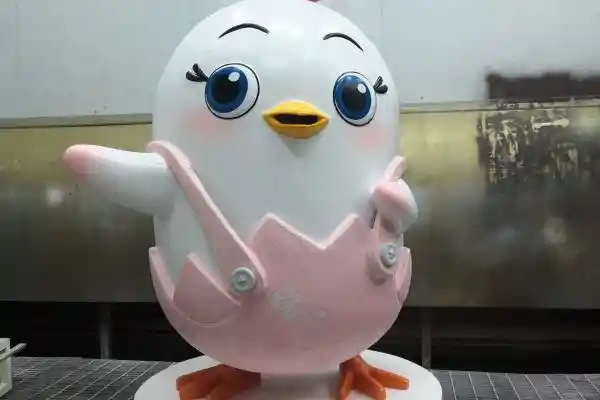
| Esports team mascot | 4 m tall | FRP over steel armature | 2 m × 2 m × 1 m block | Lightweight FRP; ballast added to resist wind overturning |
| Waterfront memorial figure | 6 m tall, 3 t | FRP, bronze patina | 1.8 m × 1.8 m × 1.2 m | Reclaimed-fill site; deeper footing below fill; epoxy anchors |
| Theme park entrance sculpture | 10 m tall | Stainless + FRP | Pile-supported grade beam | High traffic + seismic zone; PE peer review required |
These cases illustrate the pattern: material choice and foundation design are inseparable. A lightweight FRP form on a modest footing can be engineered quickly; a heavy bronze monument on soft soil is a multi-discipline project. Every monumental project should be reviewed by a structural engineer before fabrication.
Before you finalize any large-scale sculpture project, run this checklist:
Monumental sculpture engineering is about discipline, not luck. When the wind loads are calculated, the foundation is sized for the soil, and the documentation is complete, a landmark can stand for decades. Get in touch with our engineering and fabrication team to discuss your next large-scale project.
David Chen is Design Director at Y Sculptures with 18+ years in large-scale sculpture design and fabrication. He specializes in FRP, stainless steel, and bronze sculpture engineering, overseeing design-to-production workflows for theme park attractions, public art installations, and brand IP mascots. David has personally directed over 300 custom sculpture projects for clients across 20+ countries.
Browse real projects matching this topic
Continue reading related articles

Explore our full range of custom sculpture services

Beyond 2D: Why IP Replication Drives Brand Engagement A character that lives only on a screen is easy to scroll...
Learn More →
Engineering Monumental Scale A sculpture that stands 15 metres tall is not simply a 1.5-metre maquette scaled up ten times....
Learn More →
From Concept to Icon Most sculpture enquiries begin with a reference: a licensed character, a film hero, an existing artwork...
Learn More →
One Factory, Every Sculpture Material A sculpture brief rarely arrives pre-sorted by material. A client sends a reference image, a...
Learn More →
Inflatable Sculptures as Brand Media Most sculptural commissions are permanent assets: they are built once, installed once, and admired for...
Learn More →
Custom FRP and fiberglass sculpture manufacturer - design, fabrication, and finishing.
Learn More →
Custom stainless steel, bronze, corten, and aluminum sculpture manufacturer.
Learn More →
Custom Theme Park Sculptures – Bringing Imagination to Life Theme parks, amusement parks, zoos, and entertainment destinations thrive on immersive...
Learn More →
Custom Commercial Sculptures – Elevate Your Brand & Space In today's competitive retail and commercial environment, first impressions matter. Commercial...
Learn More →