
Custom Sculpture Insights & Guides
Installing a 25-Foot Monument in a City Park: What Nobody Prepares You For
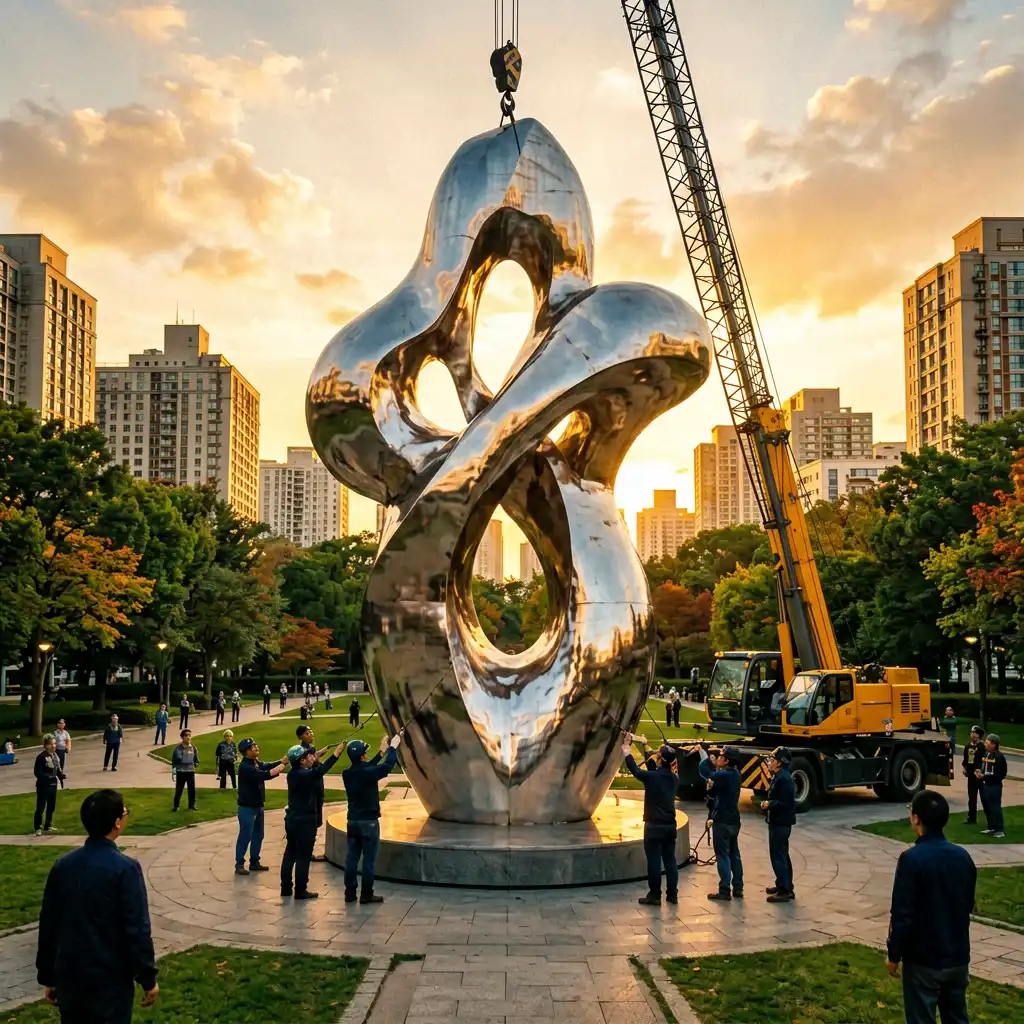
The day the crane arrived, I realized nothing had prepared me for this
I’m a project manager at a fabrication shop that specializes in large scale sculpture. A few years ago, we won the contract for a 25-foot monumental sculpture destined for a city park. The client — a municipal arts council — had a beautiful rendering, a generous budget, and zero understanding of what actually goes into installing a 7.6-meter structure in a public space. I learned every lesson the hard way so you don’t have to.
Here’s everything I wish someone had told me about large scale sculpture projects before we broke ground.
1. The Foundation Is 50% of the Budget — And Nobody Warns You
When you design a monumental sculpture that stands 25 feet tall, the visible piece is only half the story. The other half is underground and it’s not glamorous.
What’s Actually Under There
For a 25-foot stainless steel sculpture weighing approximately 3,000 kg, our foundation looked like this:
- Excavation: 8 feet deep, 12 feet square — that’s 96 cubic yards of soil removed
- Concrete: 12 cubic yards of 4,000 PSI concrete with fiber reinforcement
- Rebar cage: #5 rebar on 12-inch centers, double mat top and bottom
- Anchor bolts: 12 bolts of 1.5-inch diameter, Grade B7, set to a template with ±1/8 inch tolerance
- Grounding: Copper grounding rod driven 10 feet into the earth (for lightning protection)
Total foundation cost: roughly $28,000. That’s before the sculpture is even bolted down. If you don’t budget for sculpture foundatio
engineering, you’ll be asking for a change order before the first shovel hits the dirt.
Geotechnical Surveys Are Not Optional
The city park site looked fine on the surface. But the geotech report revealed 6 feet of loose fill soil over clay — not enough bearing capacity for a 3-ton point load. We had to go deeper and wider. If we’d skipped the survey and poured a standard slab, the sculpture would have settled unevenly within two years. That means leaning. In a public park. With kids climbing on it.
Always, always, always get a geotechnical survey before finalizing the foundation design for any large scale sculpture.
2. Wind Load Is the Real Design Constraint
People think weight is the challenge. It’s not. Wind is. A 25-foot sculpture acts like a sail. Even a perforated or open-form piece catches enough wind to generate massive overturning moments.
What We Had to Model
Our structural engineer ran a wind analysis that considered:
| Factor | Value Used | Why It Matters |
|---|---|---|
| Basic wind speed (per ASCE 7) | 115 mph (3-second gust) | Site exposure category C — open terrain with scattered obstructions |
| Shape coefficient | 1.6 for non-building structures | Flat-plate forms catch more wind than ASHRAE standard shapes |
| Gust effect factor | 1.1 | Dynamic response amplifies loading on tall slender structures |
| Ice loading | 0.5 inches radial ice | Ice doubles the cross-sectional area and adds weight at the top |
The resulting overturning moment at the base: 87,000 foot-pounds. That number drove the anchor bolt pattern, the base plate thickness, and the foundation dimensions. Without that analysis, we’d have guessed — and guessed wrong.
Natural Frequency Matters
A wind event can cause a structure to vibrate at its natural frequency. If that frequency matches wind eddy shedding frequency (known as vortex shedding), the oscillations amplify. The Tacoma Narrows Bridge is the classic example. We added internal stiffeners to shift the natural frequency above 3 Hz — outside the range where wind excitation is problematic.
If your fabricator isn’t doing modal analysis on sculpture engineering for tall pieces, find one who does. Public art projects have a responsibility to be safe, not just beautiful.
3. Transportation — The Part Everyone Forgets
Getting a 25-foot sculpture from the shop to the site is a logistical puzzle. Our piece had to be fabricated in three sections because:
- Road width: Maximum oversize load width in our state is 14 feet without a special permit. The sculpture base was 10 feet — tight but manageable.
- Bridge clearance: Interstate overpasses have a minimum clearance of 14 feet. Our tallest section was 13 feet on the truck bed. We had exactly one foot of margin and had to route around three overpasses that measured 13’6″.
- Power lines: Two intersections along the route had low-hanging utility lines. The utility company had to temporarily lift them — at $2,500 per lift.
We spent $8,400 on permits, escorts, and route planning. If you’re commissioning a waterfront sculpture or entrance sculpture that requires over-dimensional transport, budget 5-8% of the fabrication cost for logistics alone.
4. Installation — Where Plans Meet Reality
Installation day was supposed to take 8 hours. It took 14. Here’s why:
The Crane
We needed a 50-ton crane to lift the center section. The city park had a turf surface that had been watered the night before. The crane’s outriggers sank 6 inches into the soft ground. We spent 2 hours laying crane mats (thick timber cribbing) to distribute the load. If we’d checked the ground condition and weather forecast more carefully, we’d have had the mats ready. Instead, we were scrambling.
The Bolting Sequence
Bolting a three-section sculpture together at height is not like assembling IKEA furniture. Each section has a flange with 24 bolt holes. The sections must be aligned within 1/16 inch before the bolts are torqued. We used a procedure where we:
- Lifted the top section, aligned it roughly with guide pins
- Installed 4 temporary bolts at cardinal points
- Checked plumb with a digital inclinometer — we were 1/4 inch out
- Used a hydraulic jack on one corner to nudge it into alignment
- Tightened all 24 bolts to 450 ft-lbs in a star patter
- Re-checked plumb — 1/16 inch. Acceptable.
Each section connection took about 90 minutes. If you’re planning sculpture engineering for a multi-piece installation, don’t underestimate the time required for alignment. And have shims ready — steel shim packs of 1/16, 1/8, and 1/4 inch thickness saved our alignment more than once.
Grouting the Base
After the sculpture was bolted down, we needed to pack non-shrink grout between the base plate and the concrete foundation. This filled any gaps and distributed the load evenly. The grout has a 30-minute working time. We mixed five 50-pound bags in sequence, packed them with a trowel, and smoothed the surface. Then we waited 72 hours before releasing the crane — the grout needed to cure to full strength.
That 72-hour wait is a line item nobody includes in their project timeline. Plan for it.
5. Maintenance — What Happens After the Ribbon Cutting
The mayor cut the ribbon. Cameras flashed. Everyone left. Six months later, we got a call: the sculpture didn’t look right. Here’s what we found:
Birds
Our stainless steel large scale sculpture had horizontal ledges. Pigeons loved them. Within weeks, the ledges were coated in droppings that etched the polished surface. We retrofitted bird spikes on all horizontal surfaces. Cost: $600. We should have done it during fabrication for $80.
Graffiti
Urban plaza sculptures attract markers, stickers, and spray paint. We applied a sacrificial anti-graffiti coating in the shop, which made cleanup possible with solvent without damaging the finish. That coating costs about $200 for a 25-foot piece and saves thousands in refinishing if the piece gets tagged.
We now include anti-graffiti coating and bird deterrents as standard on every urban plaza sculpture we fabricate. It’s inexpensive during fabrication and expensive to retrofit.
Seasonal Inspection Checklist
We gave the city a maintenance schedule:
| Frequency | Task |
|---|---|
| Monthly | Visual inspection for graffiti, bird droppings, surface damage |
| Quarterly | Check bolt torque, inspect for vibration loosening |
| Bi-annually | Clean surface per material specification, reapply wax (bronze) or protective coating |
| Annually | Full structural inspection by a qualified engineer, check foundation for cracking or settling |
| After major storm | Immediate inspection for damage, loose connections, debris impact |
Without this schedule, the sculpture will degrade faster than anyone expects. Outdoor sculpture maintenance is not optional — it’s the difference between a piece that lasts 20 years and one that lasts 5.
6. Community & Stakeholder Engagement — The Soft Cost That’s Actually Hard
This was the biggest surprise. The city park sculpture was delayed by 4 months because of community pushback. The local historical society objected to the modern design. The park conservancy wanted more greenery around the base. A neighborhood group was concerned about lighting glare hitting nearby apartments.
Our client (the arts council) had to hold 3 public meetings, revise the lighting plan twice, and add interpretive signage about the artist before the installation permit was approved. This added $15,000 in soft costs and 4 months to the schedule.
For any monumental sculpture in a public space, factor community engagement into your timeline. The engineering is the easy part. Getting everyone to agree? That’s the hard part.
7. Lessons in a Nutshell
- Foundation first. Get a geotech report before you design the sculpture base. The ground will tell you what you need.
- Wind loads rule. For anything over 15 feet, wind load analysis should drive the structural design. Not weight.
- Transport is a project in itself. Route survey, permits, escorts, and crane mats — budget for all of it.
- Installation takes longer than you think. Alignment, grouting, curing — none of it can be rushed.
- Plan for maintenance before installation. Bird spikes, anti-graffiti coating, and a yearly inspection plan are cheap during fabrication. Retrofitting is expensive.
- Engage the community early. Public meetings are cheaper than delays. Bring renderings, models, and a clear explanation of the benefits.
Got questions? Drop them below — happy to help.
8. Lighting Design — The Nighttime Sculpture Nobody Talks About
A monumental sculpture in a city park needs to look good after dark. But lighting a 25-foot object is completely different from lighting a building facade. Here’s what we learned:
Uplighting vs Downlighting
We initially designed the lighting scheme with ground-based uplights. On paper, they’d illuminate the sculpture’s underside and create dramatic shadows. In reality, the lights attracted bugs, got splashed by sprinklers, and had to be repositioned three times because lawnmowers kept hitting them.
The better solution was a hybrid approach: two ground-mounted floodlights (shielded and recessed into concrete housings) plus a single downlight mounted on a nearby light pole. The downlight provided even illumination while the uplights added drama. Total lighting budget: $4,200 including installation.
Light Pollution Considerations
The adjacent residential buildings complained about glare. We ended up installing full-cutoff fixtures that direct light only onto the sculpture, not into the sky or neighboring properties. Dark-sky compliant fixtures cost about 20% more but eliminate complaints.
We also installed a timer that dims the lights to 30% intensity after midnight. This saved electricity and kept the neighbors happy. If you’re designing an urban plaza sculpture with lighting, budget for full-cutoff fixtures and a dimming schedule from day one.
9. Accessibility & Safety Compliance
Public sculptures in the US must comply with ADA (Americans with Disabilities Act) requirements. We learned this when a community member pointed out that the sculpture’s base — a 12-inch raised platform — was inaccessible to wheelchair users who wanted to touch the surface.
What We Had to Change
- Tactile warning strips at the edge of the platform to alert visually impaired visitors
- A ramp as an alternative to the three steps we’d originally designed
- Clear sightlines — the sculpture had to be visible from all approach paths at a height accessible to someone seated
- No sharp edges below 80 inches from ground level (eye height for children and seated visitors)
These changes added $3,200 to the budget and 2 weeks to the schedule. Doing them during design would have cost $400 and zero schedule impact.
Seismic Considerations
Our site was in a moderate seismic zone. The local building code required that the sculpture survive a design-level earthquake without overturning. Our structural engineer ran a seismic analysis showing that the overturning moment during a seismic event was 60% higher than wind loading. We increased the anchor bolt size from 1.25 inches to 1.5 inches and added a shear key — a concrete block cast into the foundation that resists lateral movement. The full fabrication workflow, including quality checks at each stage, is detailed in How Custom Sculptures Are Made: From Concept to Installation in 10 Steps.
For any monumental sculpture in a seismic zone, the sculpture engineering must include seismic analysis. We used ASCE 7 Chapter 15 for non-building structures, which provided the design base shear and overturning requirements. Don’t let a fabricator tell you that wind load analysis is sufficient for seismic zones — it’s not. We walk through the complete fabrication process in our manufacturing guide: Custom Sculpture Manufacturing: 7-Step Process Guide.
10. Documentation & As-Built Records
After installation, we compiled a complete documentation package for the city:
- Shop drawings showing dimensions, materials, and connections
- Structural calculations signed by a licensed professional engineer
- Foundation desig
with rebar placement, concrete mix design, and anchor bolt layout - Material certifications (mill certificates for steel, foundry certifications for any bronze elements)
- Weld inspection reports from an AWS-certified welding inspector
- Maintenance manual with cleaning procedures, inspection intervals, and repair protocols
- As-built photos from every angle, including foundation pour, anchor bolt placement, and final installatio
This documentation proved essential when a city council member asked whether the sculpture met building codes. We handed them the signed structural calculations and the question was resolved in five minutes. Without those documents, the project could have been delayed by months while the city brought in an independent engineer to verify.
11. Lessons From Other Monumental Projects
Over the years, I’ve gathered stories from colleagues who worked on other large-scale installations. A few that stand out:
- The museum courtyard sculpture — Installed on a roof terrace without confirming that the structural slab could support the load. The sculpture had to be cut into three pieces and the columns reinforced underneath. Add $45,000 and 8 weeks.
- The corporate headquarters entrance sculpture — A polished stainless steel piece was installed facing direct afternoon sun in a glass atrium. The concentrated sunlight created a 150°F hot spot on an adjacent wall, triggering the fire suppression system. They had to install UV-filtering film on the glass.
- The waterfront park sculpture — Installed in a flood zone without accounting for buoyancy. During a 100-year flood event, the hollow stainless steel base filled with water and the entire sculpture shifted 4 inches off its foundation. They had to drain and seal the base with internal baffles.
Each of these failures was preventable with better planning. That’s why I’m so insistent on geotechnical surveys, wind load analysis, and foundation engineering — they’re cheap insurance against catastrophic failure.
The Bottom Line on Large Scale Sculpture
Installing a 25-foot large scale sculpture in a public space is a complex engineering project that happens to have an artistic component. The engineering is what keeps it standing for decades. The art is why anyone cares. If you neglect either, the project fails.
The best monumental sculpture projects I’ve seen are the ones where the artist, the engineer, the fabricator, and the client all work together from the earliest concept stage. When the structural requirements inform the design rather than constraining it, you get something that’s both beautiful and built to last.
J
Written by James Liu
James Liu is Project Manager at Y Sculptures, specializing in end-to-end custom sculpture project delivery for commercial, hospitality, and public art sectors. With 12 years in the industry, James coordinates design approvals, material sourcing, fabrication timelines, international shipping logistics, and on-site installation. He has successfully delivered 500+ projects to 30+ countries.
Related Projects
Browse real projects matching this topic
Related Insights
Continue reading related articles
Brand Mascot & IP
Oct 13, 2026
Esports Arena & Gaming Venue Sculpture: Landmarks, Trophies & Mascot Statues
Commercial & Hospitality
Oct 13, 2026
Corporate Lobby & Office Sculpture: Commissioning Guide for Developers
Custom Sculpture Insights & Guides
Oct 13, 2026
How Long Do Outdoor Sculptures Last? Material-by-Material Lifespan Guide
Our Sculpture Solutions
Explore our full range of custom sculpture services

IP Character Replication
Beyond 2D: Why IP Replication Drives Brand Engagement A character that lives only on a screen is easy to scroll...
Learn More →
Large Sculpture Custom
Engineering Monumental Scale A sculpture that stands 15 metres tall is not simply a 1.5-metre maquette scaled up ten times....
Learn More →
Original IP Development
From Concept to Icon Most sculpture enquiries begin with a reference: a licensed character, a film hero, an existing artwork...
Learn More →
Solutions Services
One Factory, Every Sculpture Material A sculpture brief rarely arrives pre-sorted by material. A client sends a reference image, a...
Learn More →
Custom Inflatables
Inflatable Sculptures as Brand Media Most sculptural commissions are permanent assets: they are built once, installed once, and admired for...
Learn More →
FRP & Fiberglass Sculpture Manufacturing
Custom FRP and fiberglass sculpture manufacturer - design, fabrication, and finishing.
Learn More →
Stainless Steel & Metal Sculpture Manufacturing
Custom stainless steel, bronze, corten, and aluminum sculpture manufacturer.
Learn More →
Theme Park Sculpture Services – Custom Amusement Park Statues
Custom Theme Park Sculptures – Bringing Imagination to Life Theme parks, amusement parks, zoos, and entertainment destinations thrive on immersive...
Learn More →
Commercial Sculpture Services – Custom Brand Mascots & Mall Art
Custom Commercial Sculptures – Elevate Your Brand & Space In today's competitive retail and commercial environment, first impressions matter. Commercial...
Learn More →