Giant Inflatable Aircraft Sculpture
Inflatable Sculpture
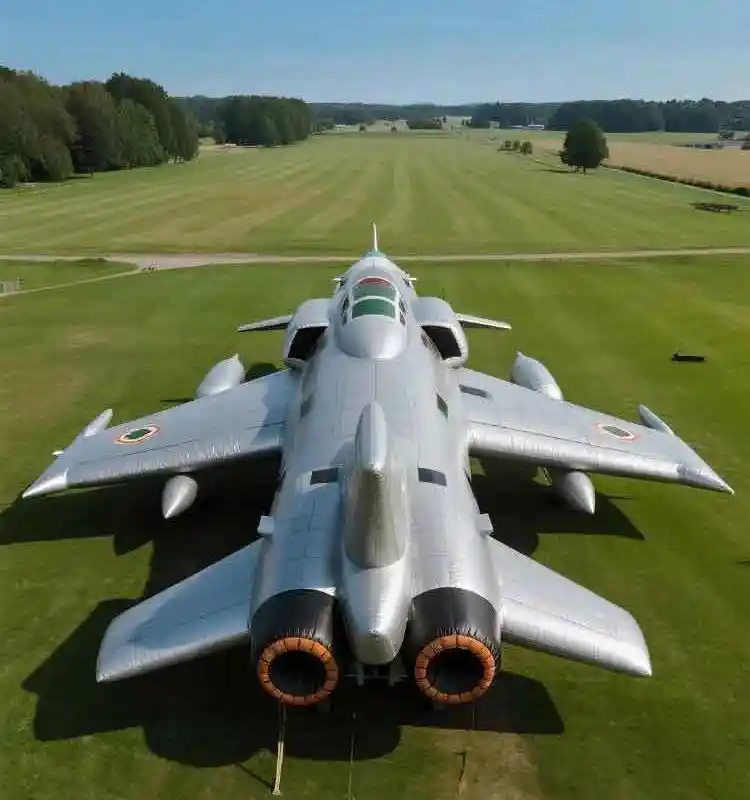
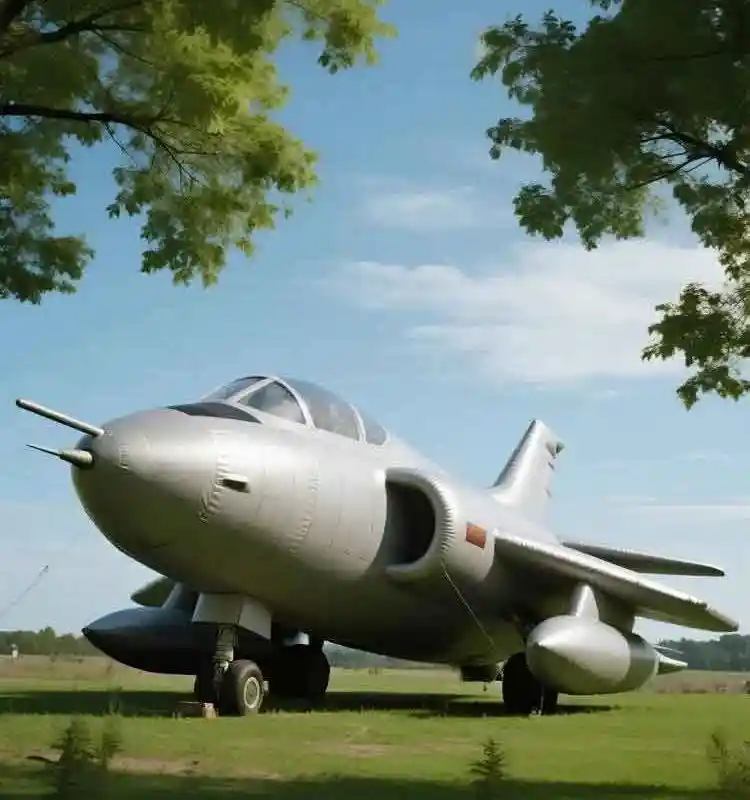
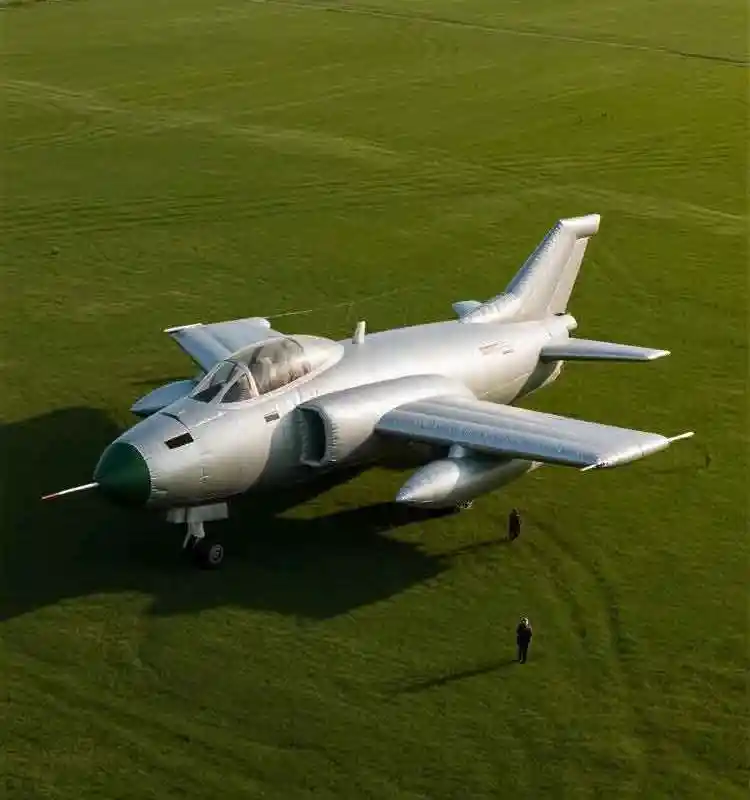
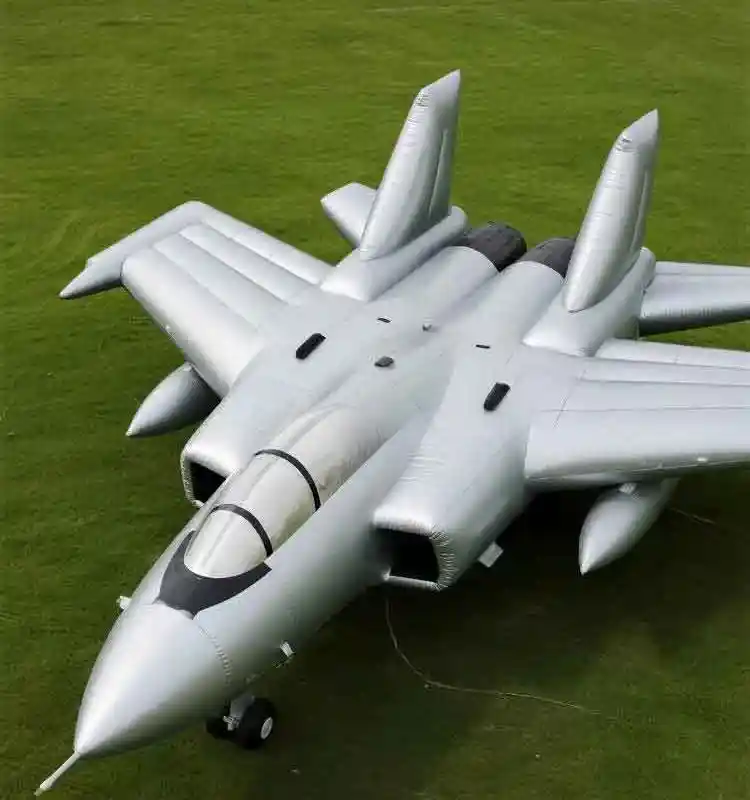
In modern commercial display and outdoor art exhibitions, capturing the public’s attention requires a perfect blend of visual shock and emotional resonance. This project introduces a Giant Inflatable Aircraft Sculpture—a stunning fusion of industrial hardware and outdoor romance.
Featuring a sleek, metallic silver fuselage resting on a vibrant green lawn, this installation is designed to be the ultimate “Visual Center” for aviation-themed events, music festivals, and contemporary art exhibitions. It effortlessly infuses any venue with a high-tech, futuristic aesthetic, turning the space into an instant social media hotspot where the boundary between hard-core engineering and artistic romance is seamlessly blurred.
Project Timeline
-
Design & Blueprint Approval: 1–2 weeks
-
Manufacturing & Factory Testing: 3–4 weeks
-
Shipping & Logistics: 2–3 weeks (subject to location)
-
On-site Installation & Inflation: 1 day
-
Total Duration: Approximately 6–10 weeks
Budget
-
Estimated Cost: $8,500 – $15,000 USD (Note: Final pricing depends on specific customization requirements, internal LED lighting integration, and shipping logistics.)
Material
-
Primary Fabric: High-density, commercial-grade Silver Metallic PVC-coated Oxford Cloth or 0.4mm PVC Tarpaulin.
-
Features: Fire-retardant, waterproof, UV-resistant, and high-tensile strength to withstand diverse outdoor weather conditions.
-
Accessories Included: High-power commercial air blowers (110V/220V), heavy-duty tie-down d-rings, repair kits, and sandbags for secure anchoring.
Dimensions
-
Length: 787.4 inches (approx. 65.6 feet)
-
Wingspan: 708.6 inches (approx. 59 feet)
-
Height: 236.2 inches (approx. 19.6 feet) (Dimensions can be scaled down or customized based on specific venue restrictions.)
Pro-Tip for Event Organizers: To maximize the “hard-core romance” vibe, we highly recommend installing internal programmable RGB LED lighting. At night, the silver skin will glow from within, turning the aircraft into a breathtaking, sci-fi night installation.
Seam Construction for a Large Smooth Hull
An aircraft form is unforgiving of seam work because the hull is a long, smooth, highly visible surface with no detail to disguise a ridge. Where a character shape has appendages and markings to break up the surface, a fuselage is judged entirely on the line. That pushes the specification towards a cut-and-weld process with the panel layout designed to follow the curvature — seams running along the fuselage rather than across it, so the eye follows the form instead of the construction.
Welded seams are also the pressure boundary. High-frequency welding gives a consistent bond along the full length of a long seam, which hand welding on a large panel does not reliably achieve. Every seam is pressure-tested at production, and the seams around the nose and the tail are the ones to inspect most often in service, because those are the areas where the curvature is tightest and the load is least evenly distributed.
Rigging, Ballast and Stability
A six-metre hull shape presents a long side to the wind and very little of its own weight to resist it, so stability comes entirely from the rigging arrangement. The tether points are positioned to give the piece a wide base of support relative to its height, and the lines run shallow, which is what prevents the hull from swinging or leaning in gusty conditions.
Ballast is sized from the wind-facing area rather than the piece’s mass. For an outdoor exhibition the ground arrangement is usually weighted plates or water ballast on paved surfaces and ground anchors on soft ground, with the tether hardware rated well above the calculated load. The structural weight of the assembly, not the sculpture, is what the site team is actually installing, and the installation plan should reflect that.
Blower Redundancy and Site Power
The figure depends on continuous airflow, so the blower is a critical component rather than an accessory. For an exhibition installation we specify a primary and a backup blower, on separate circuits where the site allows, so that a single tripped breaker does not bring a six-metre display down in front of a crowd.
Power requirements are modest in electrical terms but need to be reliable and weather-protected. The blower enclosure should be lockable, positioned so that its intake is not blocked or flooded, and connected through a supply that is not shared with temporary event equipment that will be switched off at the end of the night. Noise from the blower is also worth locating for: it should not sit directly beside a seating area or an information point.
Operational Care and Repair
Running the piece means a daily routine: pressure check at start-up, blower and cable inspection, a walk-round of the tether and ballast arrangement, and a check of the pressure boundary at the nose and tail seams. Anything found at that stage is a five-minute fix; the same issue found under load is a deflation event.
Field repair is straightforward and should be treated as routine rather than as damage. Matching fabric and adhesive are supplied with the unit, and a patch applied to a clean, dry surface will hold for the rest of the display. The piece is then cleaned, dried and folded for storage in a crate, with an annual inspection of seams and blower before the next season rather than on arrival at the next site.
Project Gallery