Gardens & Resorts

Large outdoor metal animal sculptures command attention in a way that smaller pieces simply cannot. When you commit to scale — whether it is a life-size stainless steel dog at a property entrance or a soaring butterfly wall sculpture behind a garden pond — the piece becomes a landmark, not just a decoration. The drama comes from three things: the material itself, the size, and the choice of animal.
Metal has always been the go-to for large-scale outdoor art because it does not rot, warp, or fade the way wood or resin can. A well-finished metal sculpture will outlast the garden around it by decades. The weather becomes part of the story, too: rain washes the surface, sunlight brightens a mirror finish, and winter snow creates striking contrast against dark corten or brushed steel.
That is why owners of estates, ranches, resorts, and public parks keep choosing large metal animals. They want a piece that feels permanent, bold, and unmistakably alive — even when the animal is made entirely of steel.
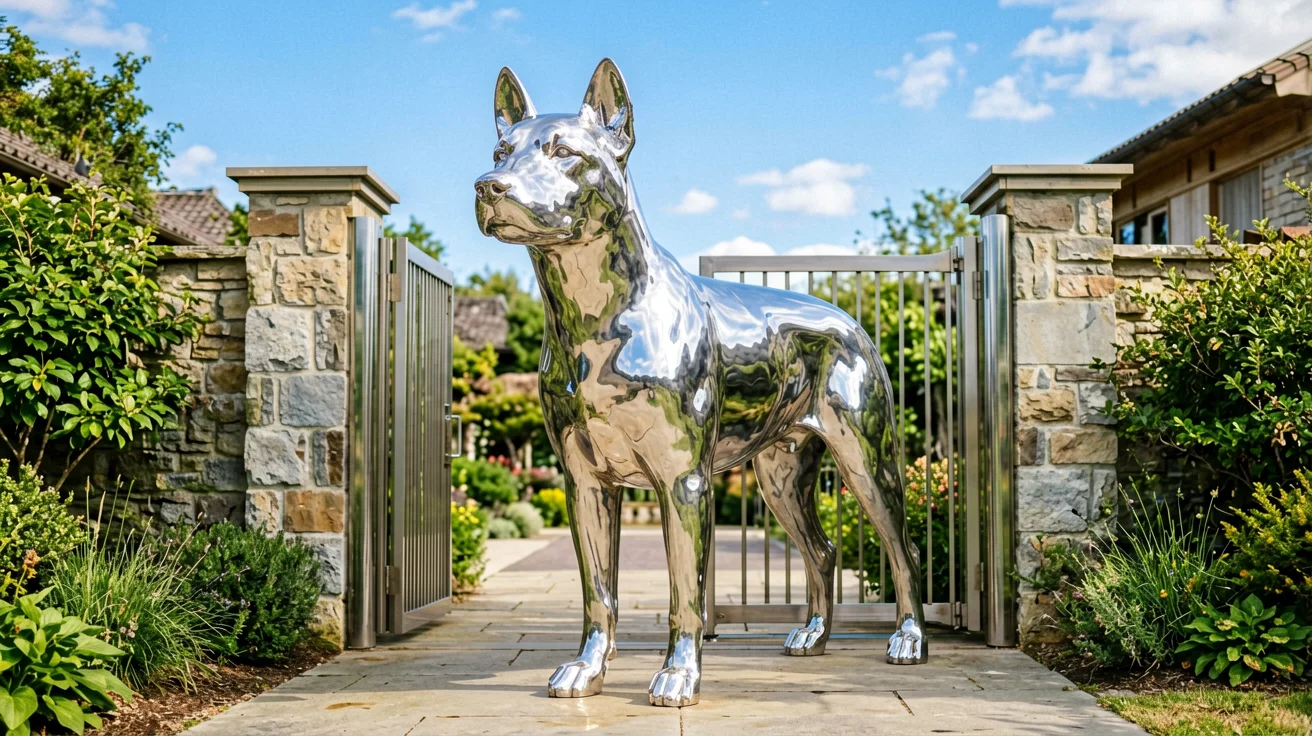
A large metal dog sculpture is one of the most popular choices for property entrances and grand driveways. Think a German Shepherd or Great Dane at two meters tall, cast in mirror-polished stainless steel, standing on a stone plinth at the end of a tree-lined approach. The effect is regal and welcoming at the same time.
At this scale the dog works as both guardian and artistic statement. Mirror-finish stainless steel reflects the surrounding garden, so the sculpture appears to shift with the seasons — green in spring, gold in autumn, white with snow in winter. Place it near a gate, beside a water feature, or at the head of a long walkway for maximum impact.
Butterfly sculptures at large scale lean into abstraction. A single butterfly wing spanning two or three meters creates a striking architectural element when mounted on a garden wall or pergola. The open negative space inside the wing lets light and sky show through, which makes the piece feel weightless despite being made of steel.
Corten butterfly sculptures work especially well against a dark green hedge or stone wall, the rust patina echoing autumn leaves. Mirror-finish versions look dramatic at dusk when uplighting turns the surface into a golden beacon. For freestanding installations, a wide-spread butterfly on a tapered steel stem reads as both sculpture and trellis feature.
A life-size metal cow or bull is an immediate conversation starter on any ranch, farm, or expansive suburban lawn. The challenge here is making the animal feel grounded rather than cartoonish — and that comes down to proportion and surface treatment.
Stainless steel with a brushed finish gives the animal a solid, weighty presence. A mirror finish bounces the landscape around it, which can feel playful on a family estate or formal on a corporate campus. For a more rustic feel, corten steel develops a warm, earthy tone that complements dry grasses and stone walls perfectly. Consider a grazing pose with the head lowered for naturalism, or an alert stance with ears forward for a bold silhouette against the sky.
There is something universally charming about a large metal frog at the edge of a water feature. It plays with the idea of scale — a frog usually feels small and delicate, but in stainless steel or bronze at 1.5 meters it becomes sculptural and slightly surreal.
A polished frog reflects the pond surface and surrounding foliage, doubling as a living mirror. For a more sculptural approach, choose a sitting pose with one eye raised, as if watching the garden. Corten frogs pair beautifully with natural stone edging and aquatic plants, the rust color blending with bark mulch and peat. These pieces work especially well in children gardens, botanical conservatories, and resort landscapes where a touch of whimsy is welcome.
When you are committing to a large outdoor animal sculpture, the choice between stainless steel and corten steel is the most important decision you will make. Each metal gives the piece a completely different personality.
Stainless steel, especially in grade 316 marine quality, is the premium choice for large-scale work. It resists corrosion indefinitely, and a mirror polish creates a dramatic reflective surface that changes with the time of day. The downside is cost — large pieces in polished stainless can run significantly higher than corten alternatives. Maintenance is minimal; occasional washing with mild detergent is usually sufficient.
Corten steel, also called weathering steel, develops a stable rust patina that protects the metal underneath. This is not surface rust that flakes away — it is a controlled oxidation that hardens into a protective layer. Corten gives sculptures a warm, earthy tone that ages gracefully and requires zero painting or sealing. The trade-off is that corten can leave slight rust runoff on surrounding surfaces during the first few months after installation. It is also slightly less reflective, which some owners find more approachable for residential gardens.
For a bold landmark animal, mirror stainless steel is unmatched. For a piece that feels integrated into a natural landscape, corten is the better choice. See our material cost comparison for a detailed breakdown across all sculpture metals.
A large metal animal sculpture is not a piece you simply set on the ground and forget. Proper engineering and installation are what separate a sculpture that lasts fifty years from one that tips, corrodes, or settles unevenly.
The base plate is the first critical component. For a stainless steel dog or cow at two meters or more, we fabricate a thick steel base plate with anchor bolt holes spaced to match the foot placement of the sculpture. The base plate is then bolted to a reinforced concrete footing — typically 600 millimeters deep and 900 millimeters wide for pieces in this size range. The footing must extend below the local frost line to prevent heaving in cold climates.
Wind load is a serious consideration for large flat or winged forms. A butterfly sculpture with a two-meter wingspan presents a significant sail area in a strong breeze. We address this by increasing the base plate diameter, using heavier anchor bolts, and sometimes adding a secondary ground anchor through the stem or tail. For freestanding pieces over two meters, a structural engineer sign-off is standard practice on commercial and public projects.
Internal bracing matters just as much as the foundation. Large hollow steel forms need cross-bracing inside the legs, wings, or torso to prevent flexing and rattling. At our large-scale sculpture manufacturing facility, every piece over one and a half meters includes an internal armature welded to the outer skin before welding is completed.
Even the most beautifully crafted large metal animal sculpture can look lost in the wrong setting. Placement is everything, and a few guiding principles will help you get it right.
First, think about sightlines. The best location for a large animal is one where it is seen before the viewer reaches it — at the end of a driveway, at the top of a garden path, or framed by an opening in a hedge. The sculpture should be discoverable, not just visible.
Second, frame the piece with planting rather than competing with it. A tall ornamental grass behind a stainless steel butterfly, or a low box hedge in front of a corten cow, gives the sculpture a natural stage. Avoid placing large metal animals directly against a plain wall unless the wall itself is a design feature — the reflection and shadow play need room to work.
Third, avoid clutter. A large metal animal thrives in a relatively open setting where it has breathing room. Too many smaller garden ornaments, birdbaths, or statues around it will dilute its impact. One bold piece in a clear setting is always more powerful than several medium pieces competing for attention.
Finally, consider evening lighting. A well-placed uplight from the ground will make a stainless steel dog glow from below at dusk, and a copper wire path leading to a corten frog creates a warm approach in the garden at night. Lighting transforms a daytime sculpture into a nighttime focal point as well.
For large pieces that need to withstand full weather exposure, grade 316 stainless steel is the gold standard. It offers the highest corrosion resistance and can be finished in mirror, brushed, or bead-blasted textures. Corten steel is a strong second choice, especially when you want a warmer, more natural patina that blends with garden landscapes. Both metals are included in our guide to FRP vs stainless steel vs bronze material guide.
Weight depends on the metal choice and scale. A two-meter stainless steel dog typically weighs between 180 and 280 kilograms, while the same size in corten steel may be slightly heavier due to thicker plate requirements. We always design the base plate and anchoring system to match the calculated weight, so the piece is secure for decades.
Yes — any metal animal sculpture over one and a half meters requires a proper concrete footing. The footing size is determined by the sculpture height, weight, and local wind conditions. For smaller pieces under one meter, a heavy base plate anchored to a patio slab may suffice, but larger animals need a dedicated pour below the frost line.
Corten does leave a slight iron oxide runoff during the first three to six months after installation, especially in wet climates. This is normal and stops once the patina fully stabilizes. To protect surrounding hardscaping, we recommend applying a clear sealant to nearby stone or concrete before placing the sculpture, or positioning the piece on a gravel bed rather than directly on a patio surface.
Pricing varies widely based on size, metal choice, finish, and complexity. A one-and-a-half-meter mirror stainless steel dog typically starts around eight to twelve thousand dollars, while a two-and-a-half-meter corten cow can range from ten to eighteen thousand depending on the level of detail. Our custom sculpture pricing guide covers the full range of factors that influence the final quote, from material selection to installation and shipping.
David Chen is Design Director at Y Sculptures with 18+ years in large-scale sculpture design and fabrication. He specializes in FRP, stainless steel, and bronze sculpture engineering, overseeing design-to-production workflows for theme park attractions, public art installations, and brand IP mascots. David has personally directed over 300 custom sculpture projects for clients across 20+ countries.
Browse real projects matching this topic

Continue reading related articles

Explore our full range of custom sculpture services

Beyond 2D: Why IP Replication Drives Brand Engagement A character that lives only on a screen is easy to scroll...
Learn More →
Engineering Monumental Scale A sculpture that stands 15 metres tall is not simply a 1.5-metre maquette scaled up ten times....
Learn More →
From Concept to Icon Most sculpture enquiries begin with a reference: a licensed character, a film hero, an existing artwork...
Learn More →
One Factory, Every Sculpture Material A sculpture brief rarely arrives pre-sorted by material. A client sends a reference image, a...
Learn More →
Inflatable Sculptures as Brand Media Most sculptural commissions are permanent assets: they are built once, installed once, and admired for...
Learn More →
Custom FRP and fiberglass sculpture manufacturer - design, fabrication, and finishing.
Learn More →
Custom stainless steel, bronze, corten, and aluminum sculpture manufacturer.
Learn More →
Custom Theme Park Sculptures – Bringing Imagination to Life Theme parks, amusement parks, zoos, and entertainment destinations thrive on immersive...
Learn More →
Custom Commercial Sculptures – Elevate Your Brand & Space In today's competitive retail and commercial environment, first impressions matter. Commercial...
Learn More →