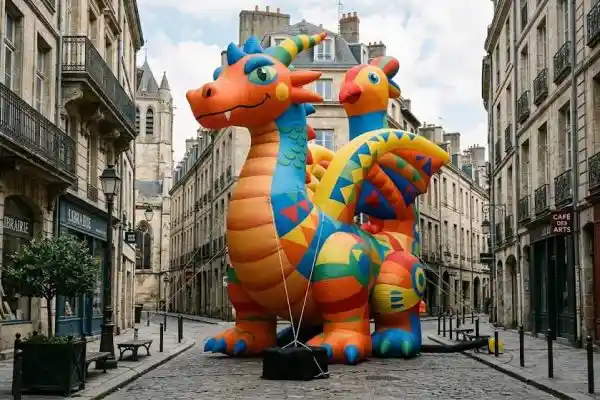
Inflatable Sculpture

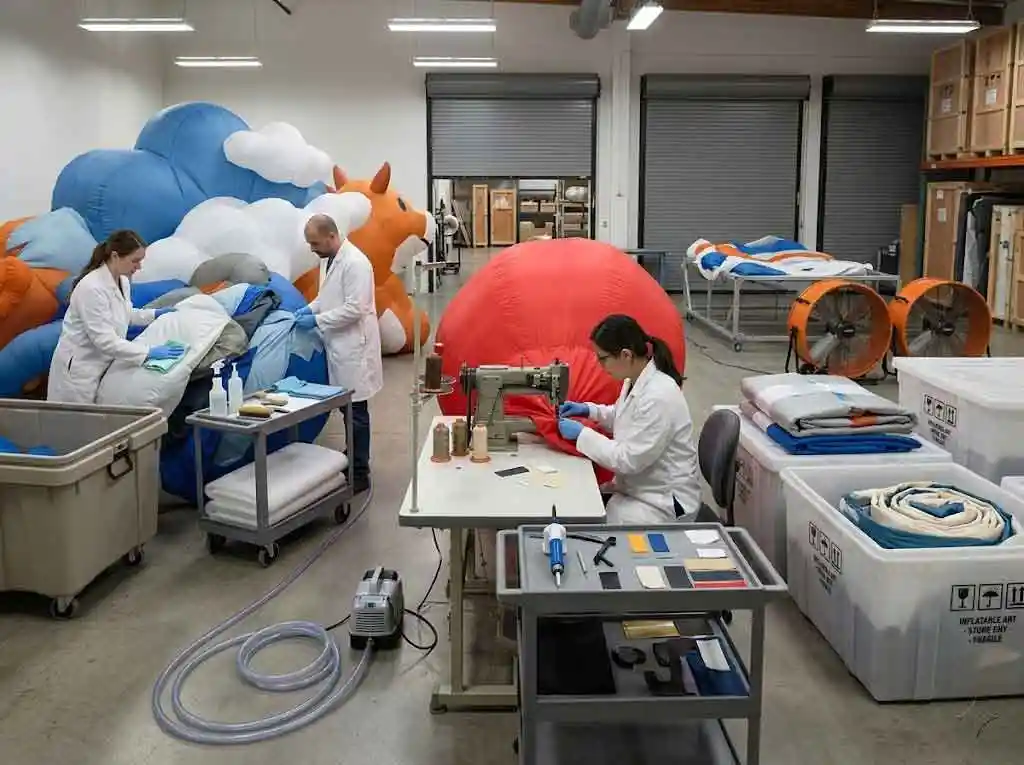
Custom inflatable sculptures are an investment in visibility — whether deployed for brand activations, trade shows, public art installations, or events. Like any professional-grade asset, they require proper care to deliver maximum lifespan and consistent performance. For context on how maintenance costs factor into total ownership, see our custom sculpture budgeting guide. A well-maintained PVC or TPU inflatable can last 5 to 10 years or more, while a neglected one may fail within a single season. This guide covers everything from daily inspections to professional restoration, helping you protect your investment and ensure every deployment looks as spectacular as the first.
Safety Warning: Always disconnect power to inflation fans and lighting systems before performing any maintenance or repair. Never work on an inflatable while it is fully inflated under pressure. Use only approved cleaning agents and repair materials — solvent-based adhesives and cleaners can permanently damage PVC, TPU, and nylon fabrics.
Establish a brief pre-use inspection routine. Catching small issues before they become large problems is the single most effective way to extend the life of an inflatable sculpture.
Regular cleaning prevents dirt, grease, and environmental pollutants from degrading the fabric’s surface and UV-resistant coatings.
For heavily soiled sculptures (especially those used outdoors or at festivals), a deeper clean with a specialist PVC/TPU cleaner is recommended. Apply with a low-pressure garden sprayer, agitate with a soft brush, and rinse thoroughly. Pressure washers are not recommended — even at low pressure they can force water into seams and accelerate fabric wear.
Small punctures and tears up to 50 mm can be repaired on-site with a patch kit. Larger damage requires professional restoration (see below).
Safety Warning: Work in a well-ventilated area. PVC and TPU repair adhesives contain volatile solvents — avoid inhalation and skin contact. Wear nitrile gloves and a respirator rated for organic vapours.
How you store an inflatable between deployments has a direct impact on its lifespan. Improper storage is the leading cause of premature fabric degradation, mildew growth, and zipper failure.
When damage exceeds the capacity of on-site patching — large tears (over 50 mm), seam delamination, UV degradation, or structural fatigue — professional restoration is required. Y Sculptures and other specialist fabricators offer comprehensive restoration services that can return an inflatable sculpture to near-original condition at a fraction of the cost of replacement.
Professional restoration typically includes:
If your inflatable sculpture was originally fabricated by Y Sculptures, our team can match the original material, colour, and welding specifications precisely. When sourcing restoration services, refer to our custom sculpture procurement guide for evaluating service providers. Contact our custom inflatables divisio
to discuss restoration options. Our manufacturing guide — Custom Sculpture Manufacturing: 7-Step Process Guide — covers everything from mold-making to final finishing.
The material you choose at fabrication time significantly determines maintenance frequency and overall lifespan. For a broader comparison of how inflatable materials compare with FRP, metal, and other sculpture mediums, see our ultimate material comparison guide. Below is a comparison of the three most common inflatable sculpture materials.
| Property | PVC (Polyvinyl Chloride) | TPU (Thermoplastic Polyurethane) | Nylon (Coated) |
|---|---|---|---|
| Typical lifespan (indoor use) | 5–10 years | 7–12 years | 3–6 years |
| Typical lifespan (outdoor use) | 3–6 years with UV coating | 5–8 years with UV coating | 1–3 years |
| UV resistance | Moderate (requires UV coating) | Good (naturally more UV stable) | Poor (degrades rapidly in sun) |
| Tensile strength | High (10–30 kN/m) | Very high (20–50 kN/m) | Moderate (5–15 kN/m) |
| Tear resistance | Good | Excellent | Moderate |
| Flexibility at low temperatures | Moderate (stiffens below -10°C) | Excellent (flexible to -30°C) | Good |
| Cleaning frequency | After each outdoor use | Every 2–3 deployments | Light cleaning only — avoid chemicals |
| Repair complexity | Easy (solvent welding or RF weld) | Moderate (requires TPU-specific adhesive or RF weld) | Difficult (stitching or TPU patch with adhesive) |
| Cost per m² (approx.) | Low–Medium | Medium–High | Low |
| Best suited for | Ground-based installations, frequent deployments, budget-conscious projects | Suspended or helium-assisted designs, architectural inflatables, long-term installations | One-time events, lightweight airborne designs, disposable or short-term applications |
Well-maintained inflatable sculptures from custom TPU projects like the Dream Flight balloon aircraft through to giant PVC aircraft sculptures have demonstrated lifespans well beyond industry averages when the care guidelines above are followed consistently. For detailed guidance specific to your sculpture’s material and design, consult the Y Sculptures inflatables team. For more detail on the production and engineering stages, read How Custom Sculptures Are Made: From Concept to Installation in 10 Steps.
Lisa Wang is Production & Quality Manager at Y Sculptures, bringing 14 years of hands-on experience in sculpture manufacturing, material science, and quality control. She leads the factory's ISO-compliant QC process, from raw material inspection to pre-shipment verification. Lisa has managed production for 2,800+ sculptures, ensuring precision in color matching, structural integrity, and surface finishing.
Browse real projects matching this topic
Continue reading related articles
Explore our full range of custom sculpture services

Beyond 2D: Why IP Replication Drives Brand Engagement A character that lives only on a screen is easy to scroll...
Learn More →
Engineering Monumental Scale A sculpture that stands 15 metres tall is not simply a 1.5-metre maquette scaled up ten times....
Learn More →
From Concept to Icon Most sculpture enquiries begin with a reference: a licensed character, a film hero, an existing artwork...
Learn More →
One Factory, Every Sculpture Material A sculpture brief rarely arrives pre-sorted by material. A client sends a reference image, a...
Learn More →
Inflatable Sculptures as Brand Media Most sculptural commissions are permanent assets: they are built once, installed once, and admired for...
Learn More →
Custom FRP and fiberglass sculpture manufacturer - design, fabrication, and finishing.
Learn More →
Custom stainless steel, bronze, corten, and aluminum sculpture manufacturer.
Learn More →
Custom Theme Park Sculptures – Bringing Imagination to Life Theme parks, amusement parks, zoos, and entertainment destinations thrive on immersive...
Learn More →
Custom Commercial Sculptures – Elevate Your Brand & Space In today's competitive retail and commercial environment, first impressions matter. Commercial...
Learn More →