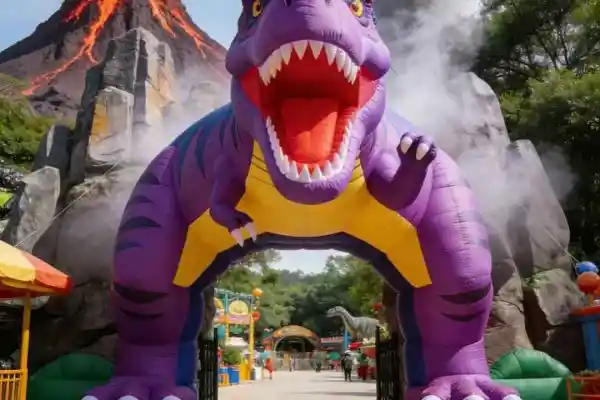
Inflatable Sculpture

A well-crafted Request for Quotation (RFQ) is the single most important document in custom sculpture procurement. It is the bridge between your creative vision and a fabricator’s ability to price, schedule, and build your project. An incomplete or vague RFQ leads to ambiguous pricing, missed deadlines, and costly change orders. A thorough RFQ produces accurate bids, aligned expectations, and a smoother project from concept to installation. We walk through the complete fabrication process in our manufacturing guide: How Custom Sculptures Are Made: From Concept to Installation in 10 Steps.
This article breaks down the essential sections of a sculpture RFQ, provides a ready-to-use structure, highlights common mistakes, and explains what information suppliers actually need to give you their best price and timeline. See our complete guide to large-scale sculpture manufacturing
Unlike standardized products, each custom sculpture is unique. Without a detailed RFQ, manufacturers must make assumptions about materials, finishes, structural requirements, and scope of work. Those assumptions introduce variance into pricing—and risk for your project. A precise RFQ eliminates ambiguity and enables you to compare supplier proposals on a level playing field.
When you work with Y Sculptures, our team can help refine your RFQ to ensure all critical parameters are captured before quoting begins. Explore different sculpture procurement models
Describe the installation environment: indoor or outdoor, expected foot traffic, climate conditions (UV exposure, wind loads, temperature extremes), and sightlines. Include photos of the installation site if available. This helps the fabricator propose appropriate materials, anchoring methods, and protective coatings.
Provide sketches, 3D renderings, reference images, or mood boards. Indicate which aspects are fixed (e.g., silhouette, theme) and which are flexible (e.g., surface texture, color palette). The more visual reference you provide, the more accurate the quote.
State whether you need one piece, an edition of identical pieces, or multiple variations. For editions, specify whether all pieces ship at once or phased.
Providing a realistic budget bracket (see our custom sculpture budgeting guide) (e.g., $15,000–$25,000) allows suppliers to propose appropriate fabrication methods and material grades. Without a budget, you risk receiving quotes optimized for very different cost levels.
List all key dates: design freeze, prototype approval, fabrication completion, crating, shipping departure, and on-site installation. Distinguish between hard deadlines (e.g., grand opening date) and flexible targets.
Specify preferred crate type (plywood, OSB, steel frame), fumigation requirements (ISPM-15 for international shipments), and Incoterms preference (FOB, CIF, DAP). For international sourcing, see our guide on International Sculpture Sourcing from Chinese Manufacturers.
Ask suppliers to provide: line-item pricing, proposed fabrication timeline, material samples, references from similar projects, and terms & conditions.
Use this checklist to verify your RFQ is complete before sending:
Here is a clean, professional RFQ outline you can adapt:
RFQ: [Project Name]
Date: [Date]
Issued by: [Company/Organization]
Contact: [Name, Email, Phone]

1. PROJECT OVERVIEW
   - Site description, location, environmental conditions
   - Artistic intent and thematic requirements
   - Installation method (ground-mounted, wall-mounted, suspended)

2. DESIGN SPECIFICATIONS
   - Reference files attached: [sketches, 3D models, images]
   - Dimensions: [L x W x H, weight limits]
   - Primary material: [FRP / SS304 / SS316 / Bronze / Other]
   - Finish: [polished / painted / patina / texture]
   - Lighting/mechanical: [yes/no — describe requirements]

3. QUANTITY & SCALE
   - Number of units: [1 / edition of X / multiple variations]
   - Phasing: [single shipment / phased delivery]

4. BUDGET
   - Target range: [$X – $Y]

5. TIMELINE
   - Design freeze: [date]
   - Prototype approval: [date]
   - Fabrication complete: [date]
   - Shipment ready: [date]
   - On-site installation: [date]

6. PACKAGING & SHIPPING
   - Preferred Incoterms: [FOB / CIF / DAP]
   - Destination port/address: [location]
   - Packaging requirements: [ISPM-15 fumigation / custom crate / steel frame]

7. SUPPLIER SUBMISSION
   - Line-item pricing (materials, fabrication, crating, shipping)
   - Proposed fabrication timeline
   - Material samples (if available)
   - Three references from similar projects
   - Standard terms and conditions
Investing time in your RFQ pays dividends throughout the procurement lifecycle. A detailed RFQ produces accurate pricing, reduces the need for change orders, and builds trust between buyer and manufacturer. When both sides start with the same complete picture, the project runs smoother from first sketch to final installation. Our manufacturing guide — Custom Sculpture Manufacturing: 7-Step Process Guide — covers everything from mold-making to final finishing.
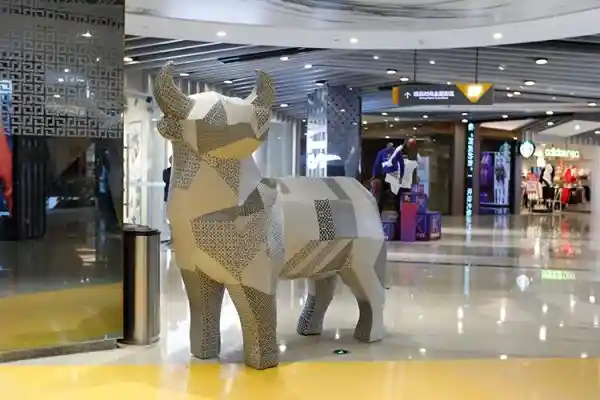
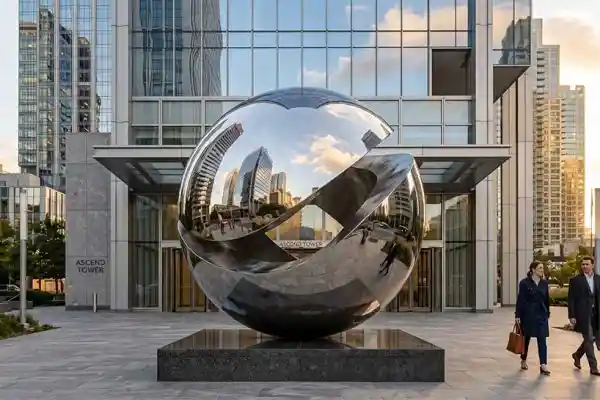
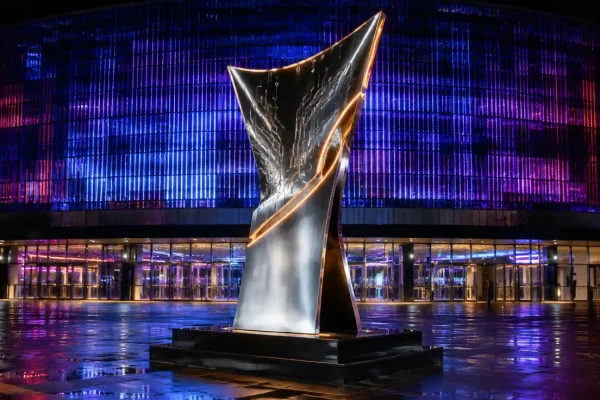
For inspiration on how detailed specifications translate into finished work, explore our recent projects: The Flowing Dimensio
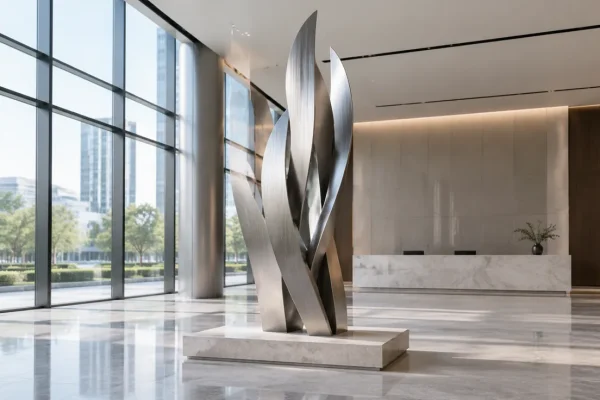
and Mister Duria
.
Ready to start your project? Contact Y Sculptures and we will help you build an RFQ that gets results.
Lisa Wang is Production & Quality Manager at Y Sculptures, bringing 14 years of hands-on experience in sculpture manufacturing, material science, and quality control. She leads the factory's ISO-compliant QC process, from raw material inspection to pre-shipment verification. Lisa has managed production for 2,800+ sculptures, ensuring precision in color matching, structural integrity, and surface finishing.
Browse real projects matching this topic



Continue reading related articles

Explore our full range of custom sculpture services

Beyond 2D: Why IP Replication Drives Brand Engagement A character that lives only on a screen is easy to scroll...
Learn More →
Engineering Monumental Scale A sculpture that stands 15 metres tall is not simply a 1.5-metre maquette scaled up ten times....
Learn More →
From Concept to Icon Most sculpture enquiries begin with a reference: a licensed character, a film hero, an existing artwork...
Learn More →
One Factory, Every Sculpture Material A sculpture brief rarely arrives pre-sorted by material. A client sends a reference image, a...
Learn More →
Inflatable Sculptures as Brand Media Most sculptural commissions are permanent assets: they are built once, installed once, and admired for...
Learn More →
Custom FRP and fiberglass sculpture manufacturer - design, fabrication, and finishing.
Learn More →
Custom stainless steel, bronze, corten, and aluminum sculpture manufacturer.
Learn More →
Custom Theme Park Sculptures – Bringing Imagination to Life Theme parks, amusement parks, zoos, and entertainment destinations thrive on immersive...
Learn More →
Custom Commercial Sculptures – Elevate Your Brand & Space In today's competitive retail and commercial environment, first impressions matter. Commercial...
Learn More →