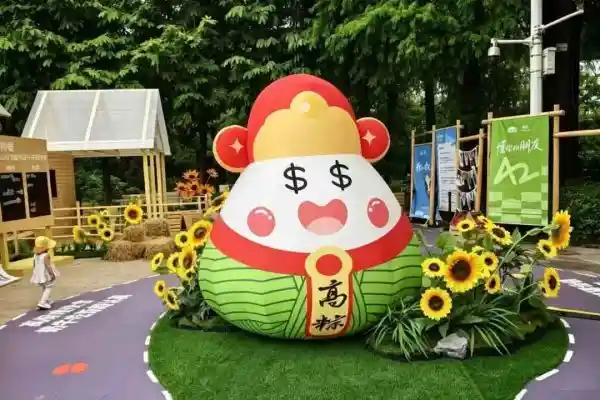
Inflatable Sculpture

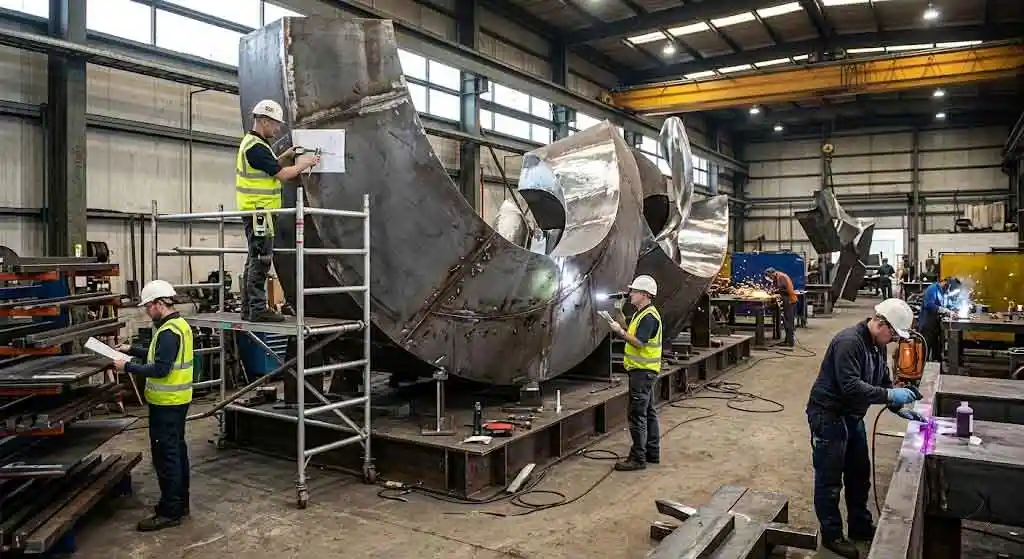
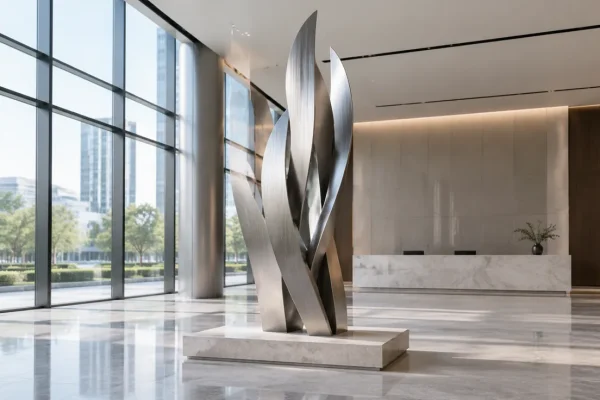
When commissioning a large-scale custom sculpture, quality control (QC) is the single most important factor separating a world-class installation from a costly disappointment. Whether you are procuring an FRP animal for a children’s zoo, a stainless-steel abstract for a shopping mall, or a monumental bronze lion for a corporate headquarters, understanding how a reputable factory verifies quality at every stage empowers you to ask the right questions and demand the right standards. Our complete procurement guideprovides additional context on RFQ development and supplier evaluation.
At Y Sculptures, with over 50 engineers and decades of experience manufacturing and shipping sculptures worldwide, our QC framework covers every phase from raw material receipt to final inspection before crating. This guide gives you a complete QC checklist organized by production phase, the industry certifications your factory should hold, and red flags that signal inadequate quality control. Our quality control guide — Chinese Sculpture Factory QC: Inside the 7-Stage Inspection Process — details every inspection stage from raw material to pre-shipment.
Quality begins with the raw materials. Before any fabrication starts, the factory must verify that incoming materials meet specification. Deficiencies here propagate through every subsequent phase.
| # | QC Check | Descriptio |
|---|---|---|
| 1 | Resin batch certificatio | Verify resin type (orthophthalic, isophthalic, vinyl ester) matches specification; check manufacturer lot number and expiry date. |
| 2 | Fiberglass reinforcement quality | Inspect glass mat/roving for weave consistency, weight per unit area, and absence of contamination. |
| 3 | Steel/aluminum grade verificatio | Confirm mill certificates for structural steel or aluminum armatures; check tensile strength and yield values. |
| 4 | Bronze ingot compositio | Verify alloy chemistry (typically C22000 or C23000) via spectrometer analysis. |
| 5 | Gelcoat and paint batch testing | Check colour match against approved reference sample; verify UV-stability rating and VOC compliance. |
Sculpture quality is determined by mold quality. A poor mold guarantees a poor final piece regardless of the finishing effort.
| # | QC Check | Descriptio |
|---|---|---|
| 6 | Plug/pattern surface finish | Inspect master model for smoothness, symmetry, and conformance to approved 3D scan or drawing. |
| 7 | Mold release applicatio | Verify correct release agent cycle to prevent resin adhesion or surface defects. |
| 8 | Mold dimensional accuracy | Measure critical dimensions against CAD model; tolerance should be ±2 mm for large-scale pieces. |
| 9 | Mold rigidity and reinforcement | Check backing structure for sufficient stiffness to prevent distortion during lamination. |
This is where the sculpture’s structural integrity is built. For FRP pieces, lamination quality is paramount; for metal sculptures, weld integrity is the focus. For a detailed walkthrough of the FRP fabrication process, see our step-by-step FRP manufacturing process guide.
| # | QC Check | Descriptio |
|---|---|---|
| 10 | Layer-by-layer resin-to-glass ratio | Verify 30:70 to 35:65 resin-to-glass ratio by weight; excessive resin causes brittleness. |
| 11 | Air bubble / void inspectio | Visual and tap-test every square foot; voids larger than 5 mm must be ground out and re-laminated. |
| 12 | Armature embedment verificatio | Confirm internal steel armature is centred, fully encapsulated, and corrosion-protected with epoxy primer. |
| 13 | Weld continuity test (metal sculptures) | 100% visual inspection of all welds plus dye-penetrant or magnetic-particle testing on critical load-bearing joints. |
| 14 | Cure schedule compliance | Verify ambient temperature, humidity, and cure time logged against specification; accelerated cure is a red flag. |
Large sculptures are typically fabricated in multiple sections. Assembly QC ensures they mate correctly on site.
| # | QC Check | Descriptio |
|---|---|---|
| 15 | Flange/bonding surface fit | Dry-fit adjoining sections; gap must not exceed 3 mm at any point. |
| 16 | Bolt-hole alignment | Verify all bolt patterns align within ±1 mm using a jig or template. |
| 17 | Section marking and labelling | Each section must be indelibly marked with a unique number matching the assembly drawing. |
| 18 | Lifting-point load test | Test all embedded lifting inserts at 1.5× the section weight before final finishing. |
Finishing determines the visual appeal and long-term durability of the sculpture.
| # | QC Check | Descriptio |
|---|---|---|
| 19 | Surface defect remediatio | Identify and fill pinholes, scratches, or air entrapment marks before coating. |
| 20 | Coating thickness measurement | Use dry-film thickness gauge; gelcoat must be 0.5–0.8 mm, paint 80–120 μm. |
| 21 | Colour and gloss verificatio | Compare against approved colour standard under D65 illumination (colour tolerance ΔE ≤ 2.0). |
| 22 | Texture consistency (if applicable) | Sandblasted, stone, wood-grain, or flocked finishes must be visually uniform across all sections. |
Before the sculpture leaves the factory, a comprehensive sign-off process involving the quality team and (optionally) the client’s representative.
| # | QC Check | Descriptio |
|---|---|---|
| 23 | Full-dimension verificatio | Measure overall length, width, height against approved drawing; tolerance ±0.5% or ±10 mm, whichever is tighter. |
| 24 | Weight check | Weigh sculpture or sections; compare to calculated weight (+5% tolerance). |
| 25 | Outdoor weathering simulation (if specified) | QUV accelerated weathering test per ASTM G154 for UV-stable coatings. |
| 26 | Packing and crating inspectio | Verify foam padding, VCI corrosion protection, and crate structural soundness per shipping specification. See our logistics and shipping guide for detailed crating standards. |
| 27 | Documentation package | Assemble material certificates, inspection reports, photos, and as-built drawings for client handover. |
A qualified sculpture manufacturer should operate under recognized quality management systems. Key certifications to look for include:
Even with a comprehensive checklist, certain warning signs indicate a factory may be cutting corners:
At Y Sculptures, every custom project follows this structured QC framework from concept to crate. Our team of 50+ engineers works with each client to define acceptance criteria upfront, and we provide full photographic documentation throughout the production cycle. Whether we are fabricating a bronze sentinel lio
, an FRP elephant installatio
, or an abstract shopping mall figure, the same rigorous checks apply. If you want to know exactly what we check before shipping, read Quality Assurance in Custom Sculpture Manufacturing: Standards & Inspection Process.
For projects exceeding standard dimensions or requiring unique structural engineering, our large sculpture custom solutio
page details our approach to engineering-grade quality control for monumental works.
David Chen is Design Director at Y Sculptures with 18+ years in large-scale sculpture design and fabrication. He specializes in FRP, stainless steel, and bronze sculpture engineering, overseeing design-to-production workflows for theme park attractions, public art installations, and brand IP mascots. David has personally directed over 300 custom sculpture projects for clients across 20+ countries.
Browse real projects matching this topic
Continue reading related articles

Explore our full range of custom sculpture services

Beyond 2D: Why IP Replication Drives Brand Engagement A character that lives only on a screen is easy to scroll...
Learn More →
Engineering Monumental Scale A sculpture that stands 15 metres tall is not simply a 1.5-metre maquette scaled up ten times....
Learn More →
From Concept to Icon Most sculpture enquiries begin with a reference: a licensed character, a film hero, an existing artwork...
Learn More →
One Factory, Every Sculpture Material A sculpture brief rarely arrives pre-sorted by material. A client sends a reference image, a...
Learn More →
Inflatable Sculptures as Brand Media Most sculptural commissions are permanent assets: they are built once, installed once, and admired for...
Learn More →
Custom FRP and fiberglass sculpture manufacturer - design, fabrication, and finishing.
Learn More →
Custom stainless steel, bronze, corten, and aluminum sculpture manufacturer.
Learn More →
Custom Theme Park Sculptures – Bringing Imagination to Life Theme parks, amusement parks, zoos, and entertainment destinations thrive on immersive...
Learn More →
Custom Commercial Sculptures – Elevate Your Brand & Space In today's competitive retail and commercial environment, first impressions matter. Commercial...
Learn More →