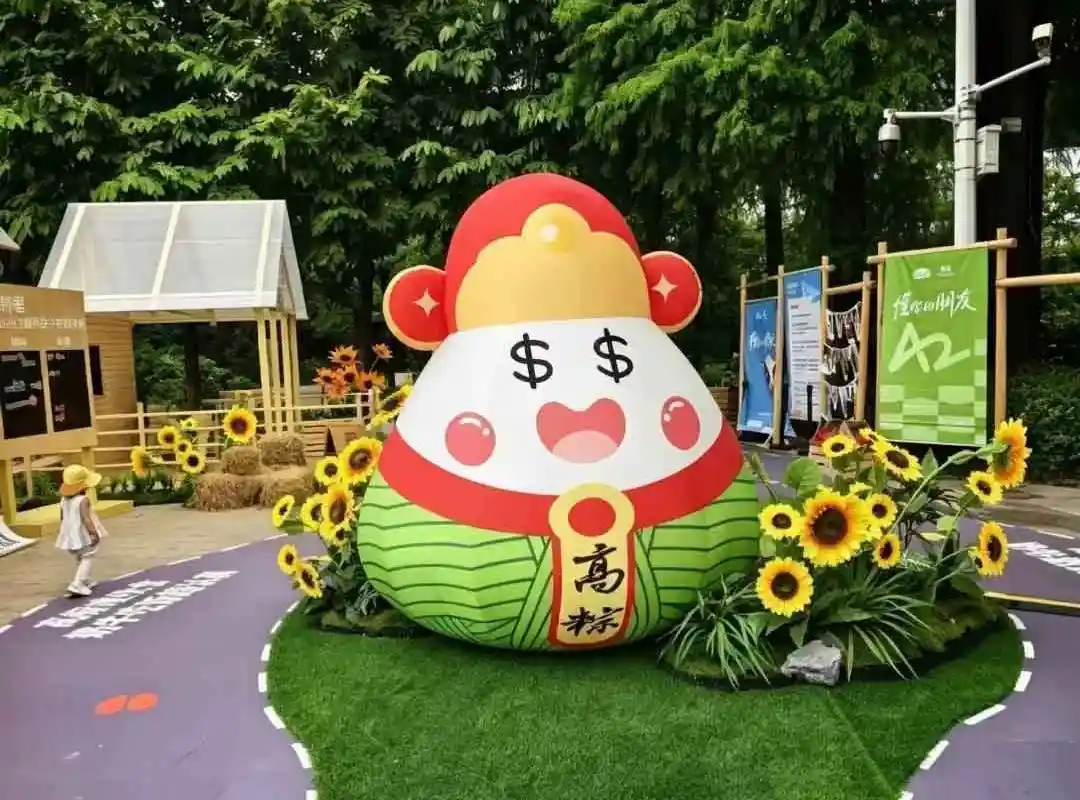
Giant Inflatable Zongzi (Rice Dumpling) Sculptures
Inflatable Sculpture
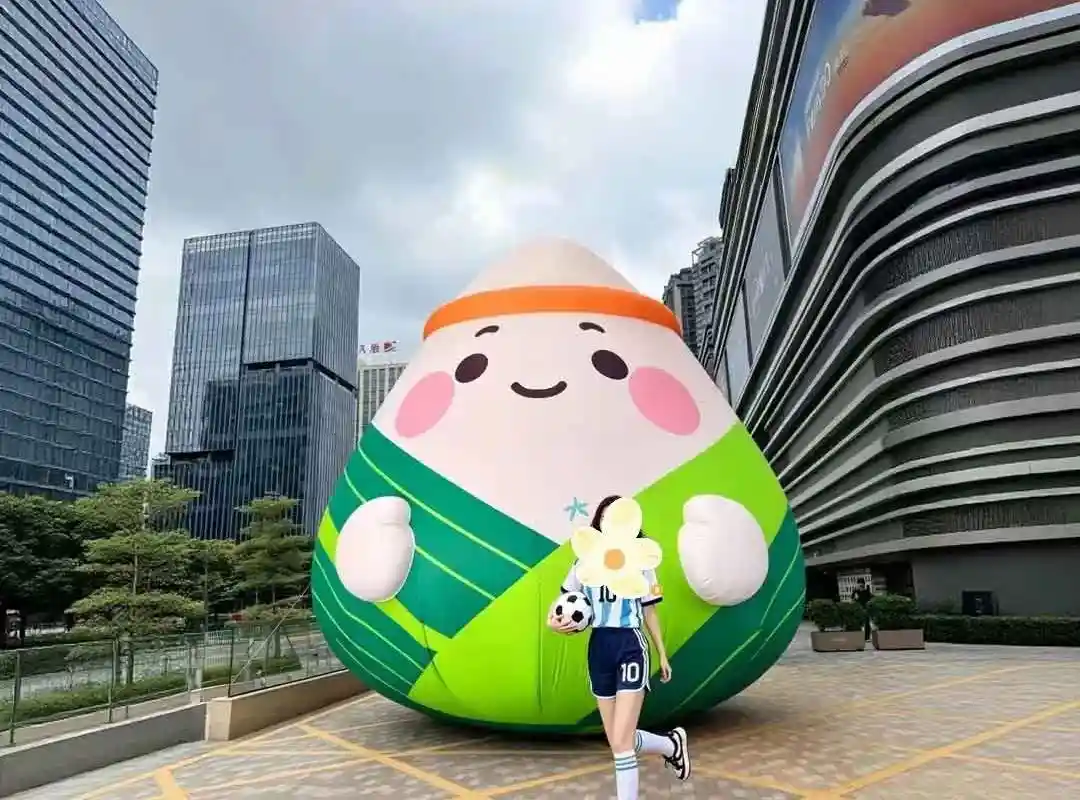
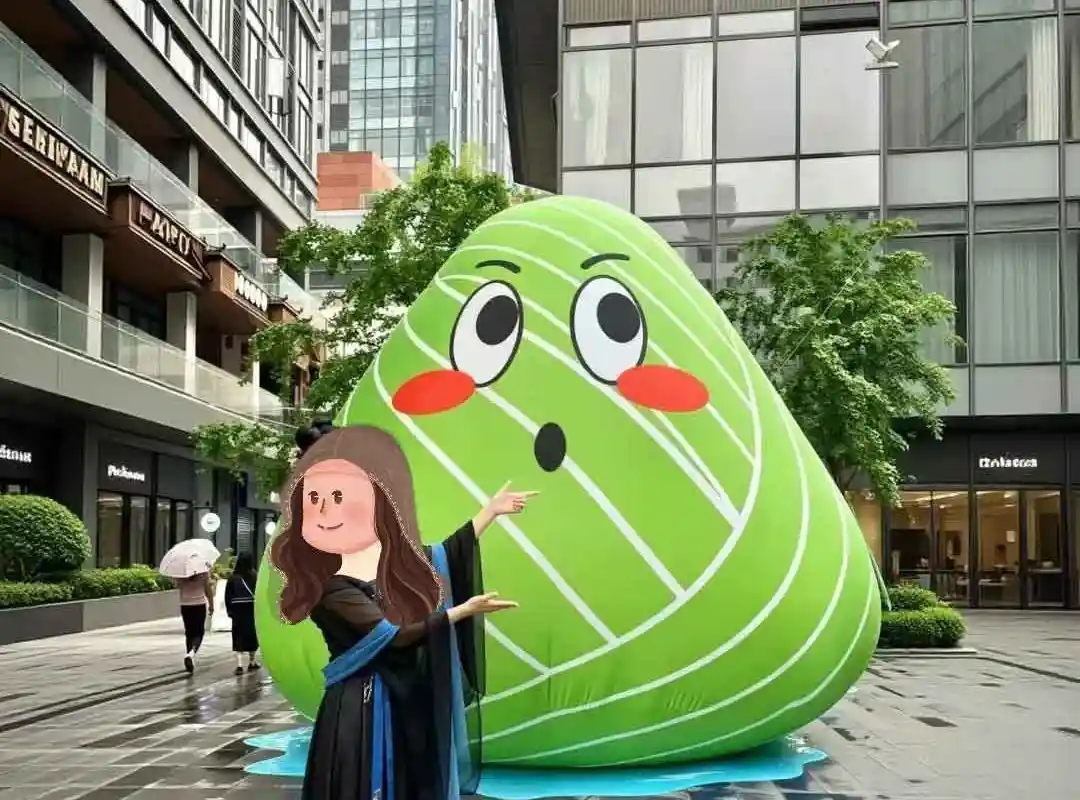
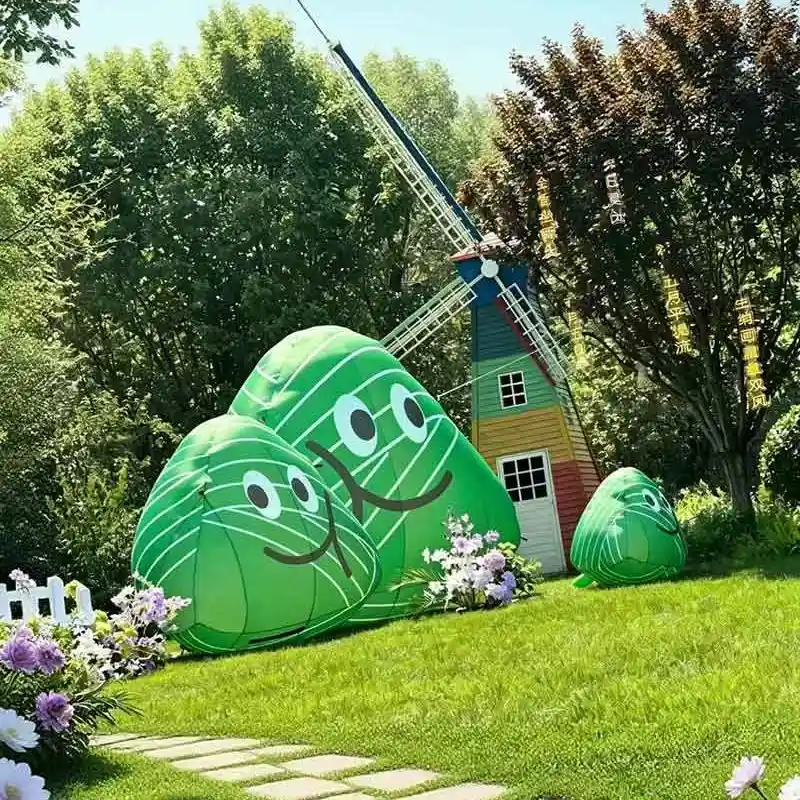
The Dragon Boat Festival (Duanwu Festival) is a culturally significant celebration, and capturing the attention of modern consumers requires a blend of tradition and contemporary appeal. This project introduces a series of giant, adorable, and highly customizable inflatable Zongzi (rice dumpling) sculptures. Ranging from “Chibi/Q-version” cute faces to wealth-inviting “Yuanbao” (gold sycee) shapes, these installations are designed to instantly transform shopping malls, plazas, and outdoor lawns into viral, Instagram-worthy landmarks. By creating a visually stunning and photogenic environment, businesses can naturally encourage visitors to snap photos and share them on social media, generating massive organic marketing and foot traffic.
Project Timeline
-
Design & Customization Phase: 5–7 business days (Concept art, 3D modeling, and client approval)
-
Production & Manufacturing Phase: 10–15 business days (Printing, cutting, sewing, and quality control)
-
Shipping & Logistics: 7–12 business days (Depending on destination and air/sea freight choice)
-
Total Estimated Duration: 4–6 weeks from initial deposit to delivery.
Budget
-
Estimated Cost Per Unit: $350 – $1,800 USD
(Note: Final pricing depends heavily on the chosen dimensions, shape complexity, customization details, and whether internal LED lighting systems are included.)
-
Bulk Order Discounts: Available for commercial installations requiring multiple characters or sizes.
Materials
-
Primary Fabric: High-density, commercial-grade 210D/420D Oxford Cloth (with waterproof and UV-resistant coatings) or heavy-duty 0.4mm PVC Tarpaulin for enhanced durability in outdoor environments.
-
Accessories Included:
-
CE/UL certified heavy-duty air blower (continuous airflow).
-
Secure tie-down ropes, ground stakes, and sandbags for wind resistance.
-
Heavy-duty storage/carrying bag and a patch repair kit.
-
Dimensions
We offer fully customizable sizing to fit both indoor atriums and sprawling outdoor lawns. Common commercial sizes include:
| Model Scale | Height (Inches) | Width (Inches) | Best Suited For |
| Compact / Indoor Display | 78.7″ (approx. 6.5 ft) | 70.8″ | Mall walkways, store entrances, photo booths |
| Standard Commercial | 118.1″ (approx. 10 ft) | 106.3″ | Central atriums, small plazas, indoor event stages |
| Giant Landmark | 196.8″ (approx. 16.5 ft) | 177.1″ | Outdoor lawns, main squares, music festivals |
| Mega Landmark | 236.2″+ (approx. 20+ ft) | Customizable | Large-scale outdoor marketing campaigns |
Note: Proportions may vary slightly based on the customized shape (e.g., a wider base for the “Yuanbao” wealth-zongzi variant).
Material Spec and Why Thickness Matters
At this size the choice of fabric is the single biggest determinant of how the piece behaves. A 0.4 mm PVC tarpaulin holds pressure and shape well, keeps the inflatable’s printed detail from distorting, and resists the scuffing that a festival installation takes when it is packed and unpacked several times a season. The lighter oxford options inflate faster and cost less, but they crease more visibly, which shows immediately on a glossy printed surface.
Seams are the other half of the spec. The panels are high-frequency welded rather than stitched, because a needle hole is a permanent leak path. Every welded seam is the strongest part of the piece if it is done properly and the weakest if it is rushed, so seam testing on the production line is what separates a festival display that survives a windy week from one that has to be patched on site.
Blower, Pressure and Power Supply
The figure runs on a continuous blower rather than on sealed air, which means it is defined by pressure rather than by inflation. That has two practical consequences: the piece has to be tethered to a power supply for as long as it is standing, and if the blower stops — power cut, tripped circuit, unplugged lead — the figure deflates rather than staying up.
The site requirement is therefore modest but non-negotiable: a dedicated circuit at the installation point, protection from rain on the blower itself, and a power feed that no one else will unplug. For a festival installation we normally also supply a backup blower, because a single point of failure on a display that only runs for a few days is an avoidable risk. Running pressure is set at the manufacturer’s figure and checked on commissioning; over-inflating to make the shape crisper shortens seam life and is the most common way an inflatable is damaged in its first week.
Anchoring and Wind Limits Outdoors
An inflatable this size is a sail, and the anchoring plan is an engineering document rather than an afterthought. On paved ground the usual solution is water ballast or weighted base plates tied to the tether points; on grass, ground stakes are effective if the soil will hold them. The manufacturer’s wind limit should be written into the event plan: most festival inflatables are specified for operation up to a defined wind speed, with the figure taken down or deflated above it.
The tether geometry matters as much as the anchor weight. Guy lines run at a shallow angle from high on the figure to points spread wider than the base give far more resistance to crosswind than vertical straps, and they also stop the shape from leaning, which is what a deflating inflatable does before it goes down completely.
Duty Cycle, Storage and Repairs
Continuous-running inflatables have a duty cycle, and the blower is the component that sets it. A quality blower will run for weeks on end, but the fabric and the seams benefit from the figure being brought down during non-event hours where the site allows it — the pressure that keeps the shape taught is also what loads the seams over time.
Storage practice determines how many festivals an inflatable survives. The piece is cleaned and fully dry before it is folded, and it is folded along the original panel lines rather than crushed. A repair kit of matching fabric and adhesive is supplied with each unit, and patching is a routine field operation rather than a workshop job — the important thing is that the patch is applied on a dry, clean surface, since a patch over damp fabric will fail in a matter of days.
Project Gallery